
A Playground for Everyone: Accessibility and the Common Good
Students examine community needs and propose an accessible playground feature that promotes fairness and serves the common good.
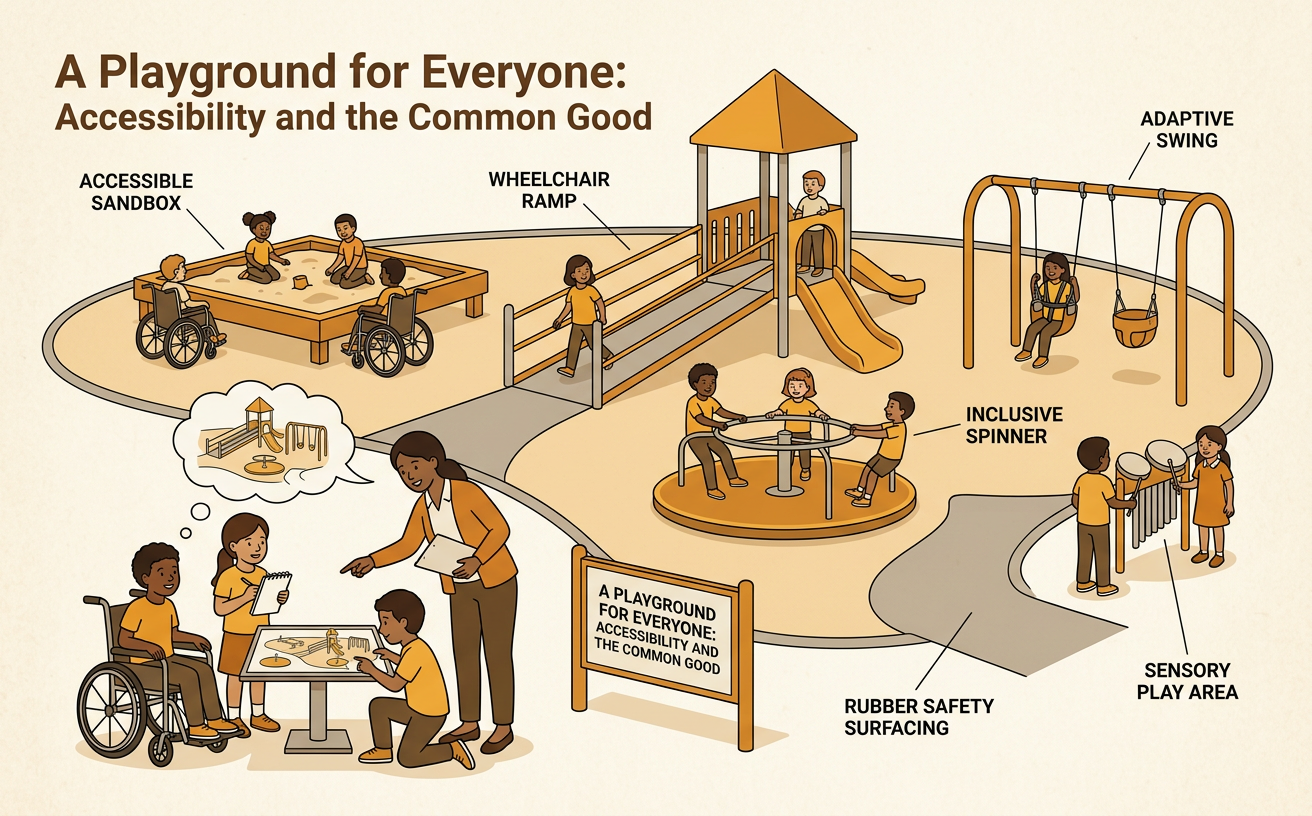
Illustrations are auto-generated and may be placeholders. They can be refreshed to match the narration.
What Is the Common Good?
The common good is what helps a whole community live, learn, and play well together. People support the common good when they notice shared needs and take fair action. Fair does not always mean giving everyone exactly the same thing. It can mean giving people the support they need to participate. For example, suppose a playground has only a tall climbing structure. Some children can use it, but others cannot. Community members might ask the town to add ground-level activities and a wide ramp. These changes would give more children ways to play together. Citizens can help by sharing ideas, attending meetings, writing letters, or joining a community project. Civic actions like these can solve problems and make public spaces better for everyone.

Identifying Playground Barriers
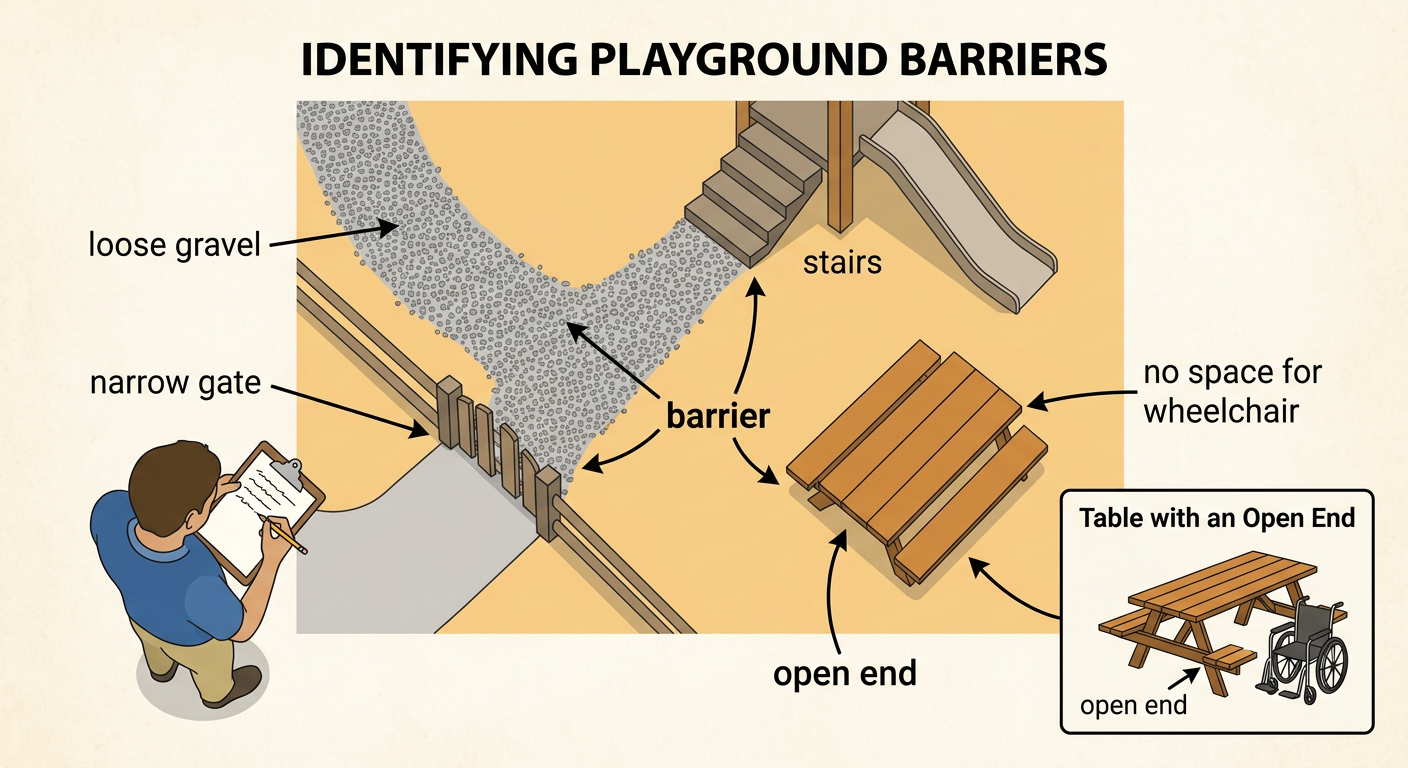
A barrier is something that makes it difficult or impossible for a person to enter, use, or enjoy a place. Playground barriers can be physical or social. Loose gravel may be hard for a wheelchair or walker to cross. Steps without a ramp can block access to raised equipment. A narrow gate may prevent some people from entering. Signs that are difficult to read can also cause problems. To identify barriers, students can observe the playground, measure paths, and ask users about their experiences. They should avoid guessing what another person needs. For example, students might notice that a picnic table has attached benches with no open space for a wheelchair. They could record this barrier and suggest a table with an open end as a possible improvement.
Understanding Accessibility
Accessibility means designing places, tools, and information so people with different abilities can use them. An accessible playground provides more than a way to enter. It also offers meaningful ways to move, communicate, rest, and play. Features might include firm, smooth paths; ramps with safe slopes; play panels at reachable heights; clear picture signs; shaded seating; and equipment that provides different kinds of movement. For example, an accessible swing with supportive seating may help a child who needs extra body support. A ground-level music panel can be enjoyed by children who stand, sit, or use mobility devices. Accessibility benefits many people, including children, family members, and caregivers. A wide path can serve wheelchairs, walkers, and strollers while also making it easier for groups to travel together.

Comparing Possible Improvements
Before choosing an improvement, a community should compare possible solutions. Criteria are the things a successful design must do. For an accessible playground feature, criteria might include safe use, fair access, enjoyable play, and enough space for several children. Constraints are limits such as cost, available land, construction time, and safety rules. Imagine that students compare a ramp to a play structure, a ground-level music area, and one new bench. The ramp gives access to raised activities but may cost more and require extra space. The music area may fit a smaller space and encourage children to play together, but it does not provide access to the raised structure. The bench provides rest but little active play. A comparison chart can help students use evidence rather than simply choosing their favorite idea.

Writing a Community Proposal
A community proposal explains a problem, states an opinion about the best action, and supports that opinion with reasons and evidence. Begin by naming a specific playground barrier. Then recommend one improvement and explain how it meets the design criteria while respecting constraints. For example, a student might write, “Our town should add a firm path to the play area because loose gravel blocks some wheelchairs and walkers. The path would improve access, fit within the existing route, and help families using strollers.” The proposal should also mention limits, such as cost or drainage, and suggest a realistic next step. Students can send the proposal to a parks department, present it to a school council, or speak at a community meeting. A clear, respectful proposal is a civic action that can encourage leaders to serve the common good.
