Air Is Matter and Takes Up Space
Students trap air in bags and balloons, observe its effects, and record evidence that invisible air takes up space.

Illustrations are auto-generated and may be placeholders. They can be refreshed to match the narration.
What Do We Know About Air?
Air is all around us, even though we usually cannot see it. Air is matter because it takes up space. We can notice air by observing what it does. When you wave your hand near your face, you may feel moving air. When you blow through a straw, the air can make bubbles in water. Look around the classroom and share an idea about where air might be. Listen to classmates and take turns speaking. A cup that looks empty still contains air. If you turn the cup upside down and lower it straight into water, the trapped air keeps some water out. These observations give us evidence that invisible air is present.

Trap Air in a Bag
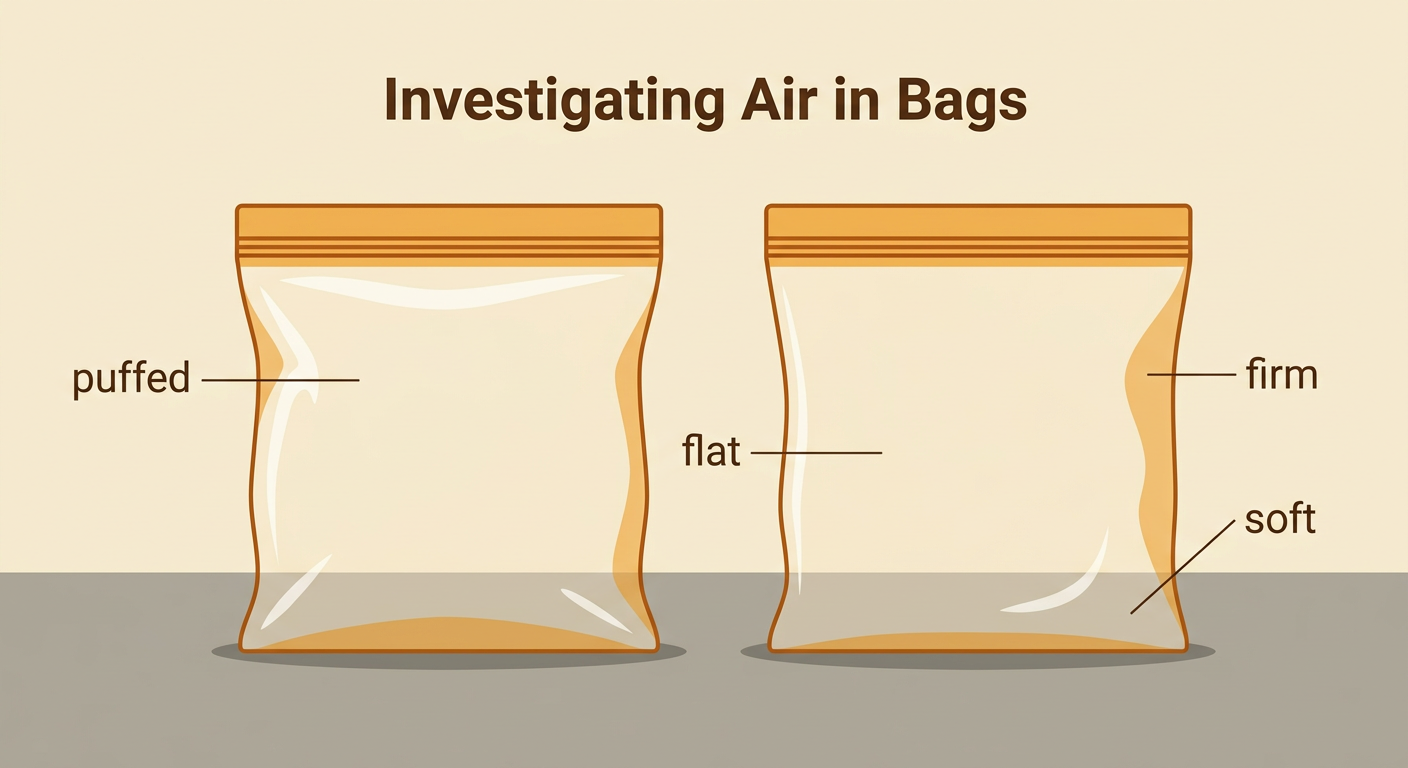
Open a plastic zipper bag and move it through the air. Close the bag while it is puffed up. The bag now has air trapped inside it. Gently press the bag with one finger. It pushes back because the air inside takes up space. Compare this bag with a second bag that has been pressed flat before closing. The puffed bag is thicker and takes up more room. For example, it may not fit through the same narrow space as the flat bag. Tell a partner what you see and feel. Use evidence words such as puffed, flat, firm, and soft. Do not place the bag over anyone's face. Air should be investigated safely.
Inflate and Compare Balloons
An adult can add air to balloons so the class can compare them safely. Begin with two balloons of the same kind. Leave one balloon flat and put air into the other. The inflated balloon becomes rounder and larger because air fills space inside it. Next, compare a small inflated balloon with a large inflated balloon. The large balloon contains more air and takes up more space. Sort the balloons into categories such as flat, small, and large. Describe only properties you can observe, including size, shape, and how much space each balloon uses. For example, a large balloon may fill most of a box while a flat balloon lies at the bottom. Keep balloons away from mouths and broken pieces.

Record Evidence About Air
Scientists record observations so they can explain what happened. Make a class chart with three categories: flat, small, and large. Look at each balloon and place one tally mark in the matching category. Count the tally marks, write the totals, and compare the groups. Which category has the most balloons? Which has the fewest? If two categories have the same number, they are equal. Then draw a bag before and after air was trapped inside it. Add words that describe the change, such as flat before and puffed after. For example, if the chart shows two flat balloons, four small balloons, and three large balloons, the small category has the most. The drawings and data are evidence that air takes up space.

Connect Air to Wind and Daily Life
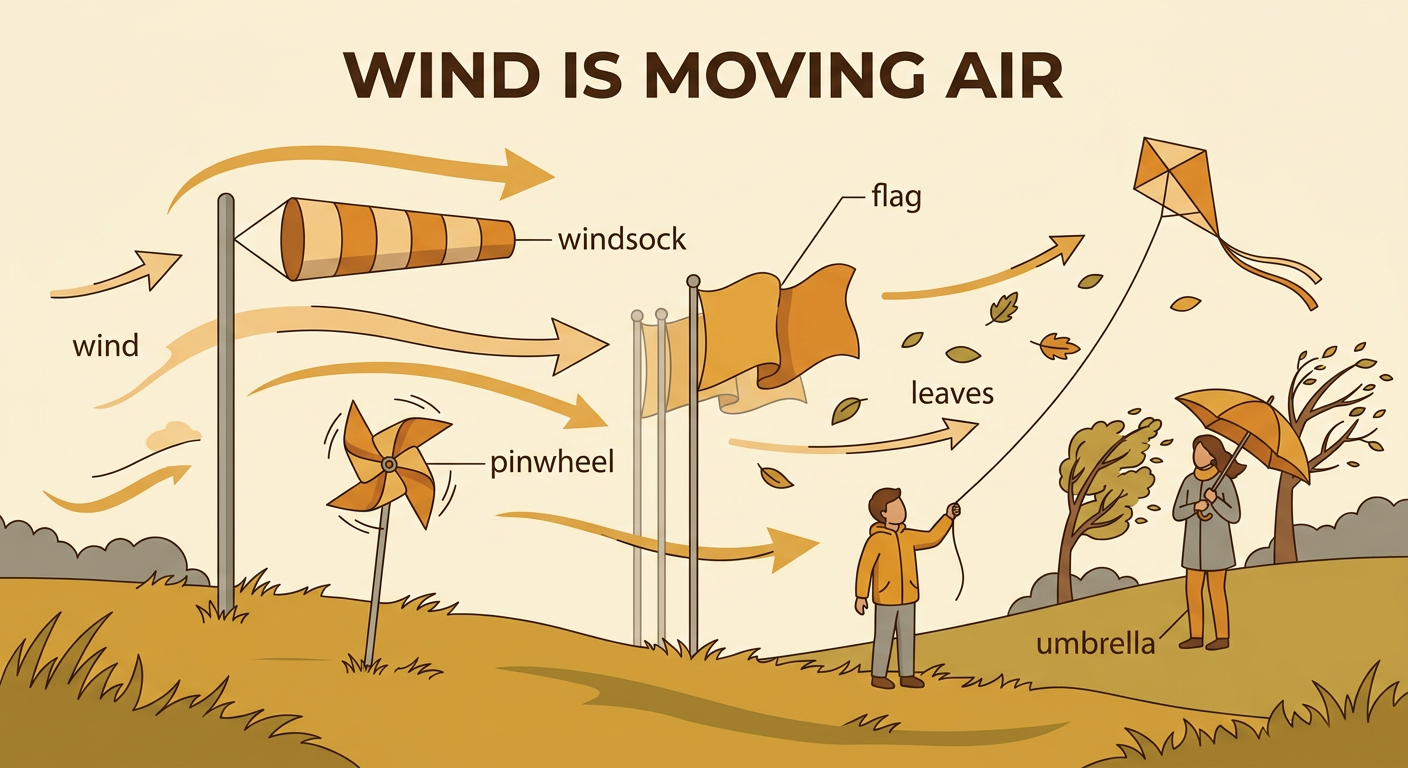
Wind is moving air. We cannot usually see wind itself, but we can observe its effects on people and places. Wind can move leaves, turn a pinwheel, push a sailboat, and help dry wet clothes. It can also make a day feel cooler or make walking and biking harder. People use flags and windsocks to notice the direction the wind is moving. For example, a windsock stretches toward the direction the air is traveling. Observe outdoors from a safe place. Look for moving branches, flags, or clouds, and describe your evidence to a partner. Explain how the wind affects something people do, such as choosing a jacket, flying a kite, or holding an umbrella firmly.