
Air Is Matter: Watch a Balloon Grow
Students observe teacher-inflated balloons and compare them with empty balloons to discover that invisible air takes up space.

Illustrations are auto-generated and may be placeholders. They can be refreshed to match the narration.
What Is Inside the Balloon?
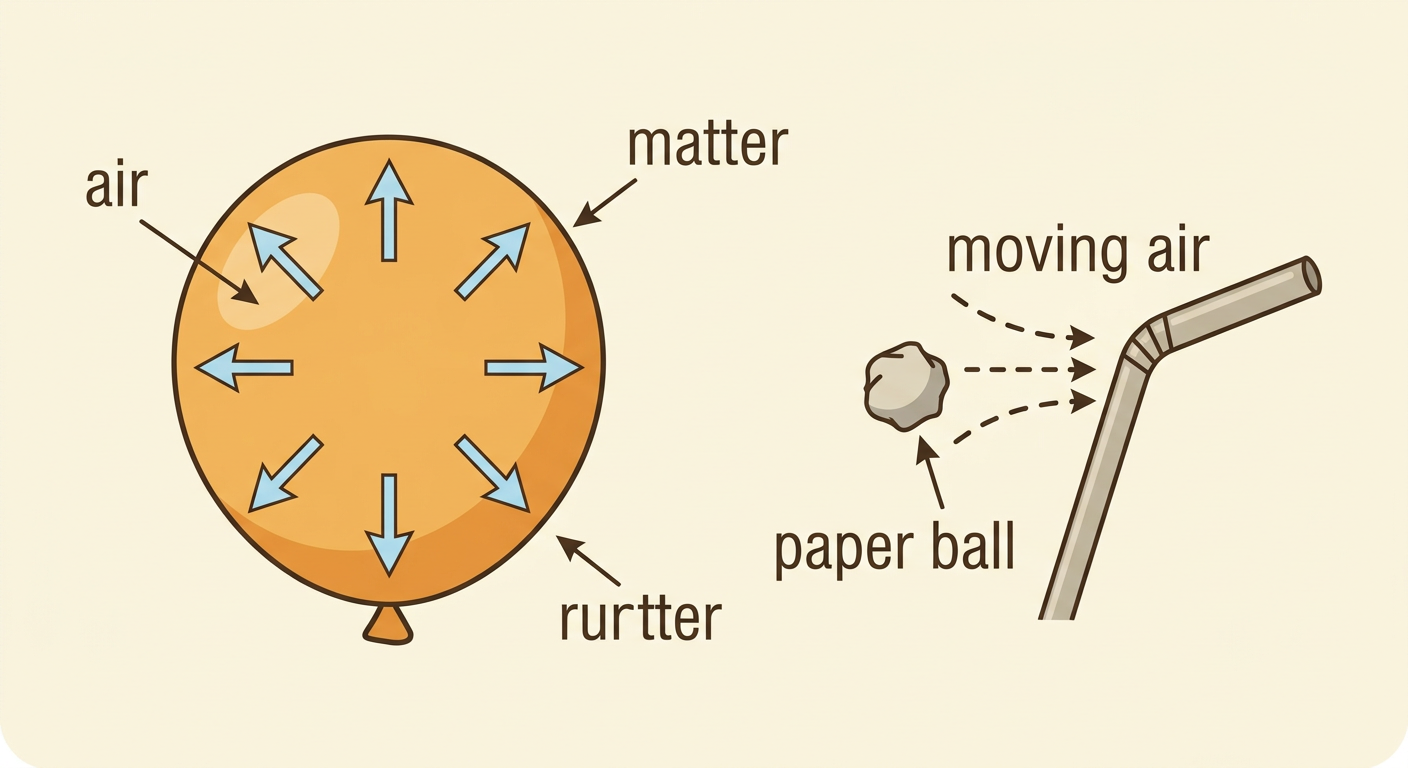
Look at a balloon that is round and puffy. What is inside it? You may not see anything, but the balloon holds air. Air is invisible, which means our eyes cannot see it. Air is matter because it takes up space. We can notice what air does even though we cannot see it. For example, when you blow through a straw, moving air can push a small paper ball across a table. The air inside a puffy balloon pushes outward on the rubber and gives the balloon its shape. Share what you notice with a partner. Take turns speaking, listen carefully, and respond to your partner’s idea. You might say, “I think air is inside because the balloon is puffed up.”
Observe an Empty Balloon
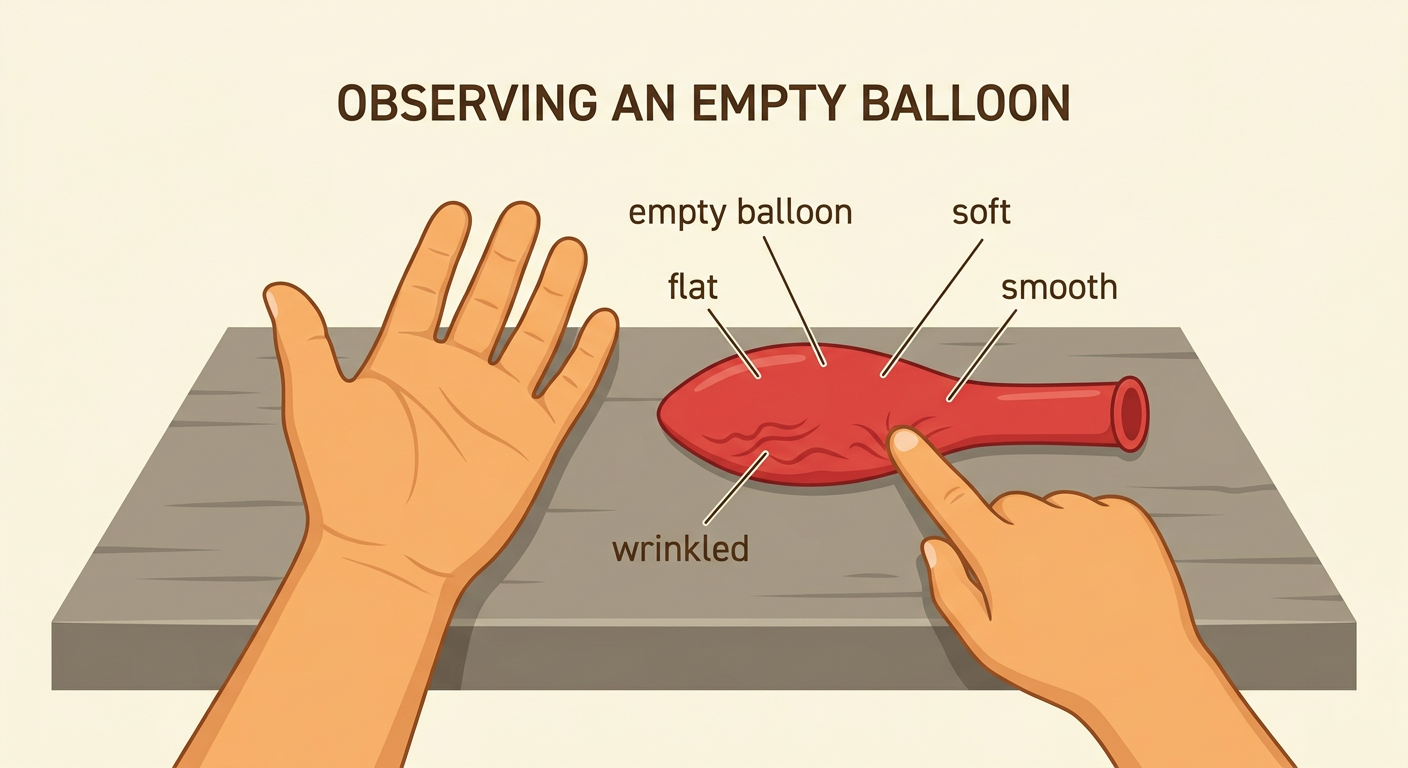
Place an empty, uninflated balloon on a table and look closely without stretching it. This balloon has not been filled with extra air. It looks flat, soft, and wrinkled. Its rubber sides lie close together, so it takes up only a small amount of space. Gently touch the balloon with one finger. Describe only what you can observe, such as its color, shape, size, or texture. For example, you might say, “The red balloon is smaller than my hand and feels smooth.” Listen while classmates share their observations. Use kind words, wait for your turn, and keep your eyes on the speaker. These agreed-upon rules help everyone examine the same object and learn from one another.
Teacher Adds Air
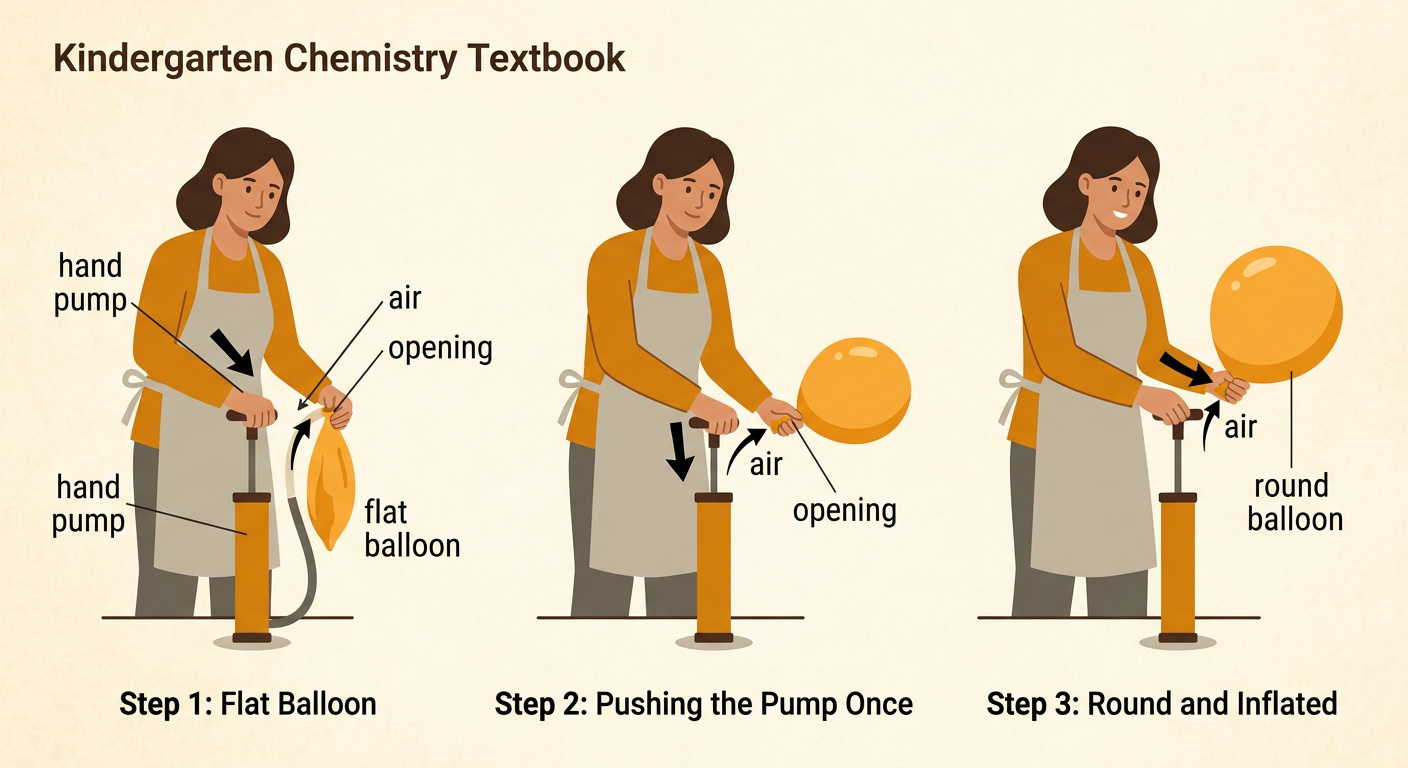
Watch as the teacher safely adds air to the balloon with a hand pump. The pump moves air from the room into the balloon. At first, the balloon is flat. With each push of the pump, more air enters, and the rubber begins to stretch. The balloon becomes wider and rounder because the air needs space. The teacher stops before the balloon becomes too full and ties the opening so the air stays inside. For example, after one pump the balloon may be small, but after several pumps it may be as wide as a plate. Keep your hands away while the teacher works. Tell a partner what changed, using a complete sentence such as, “The balloon grew when the teacher added air.”
Compare Balloon Sizes
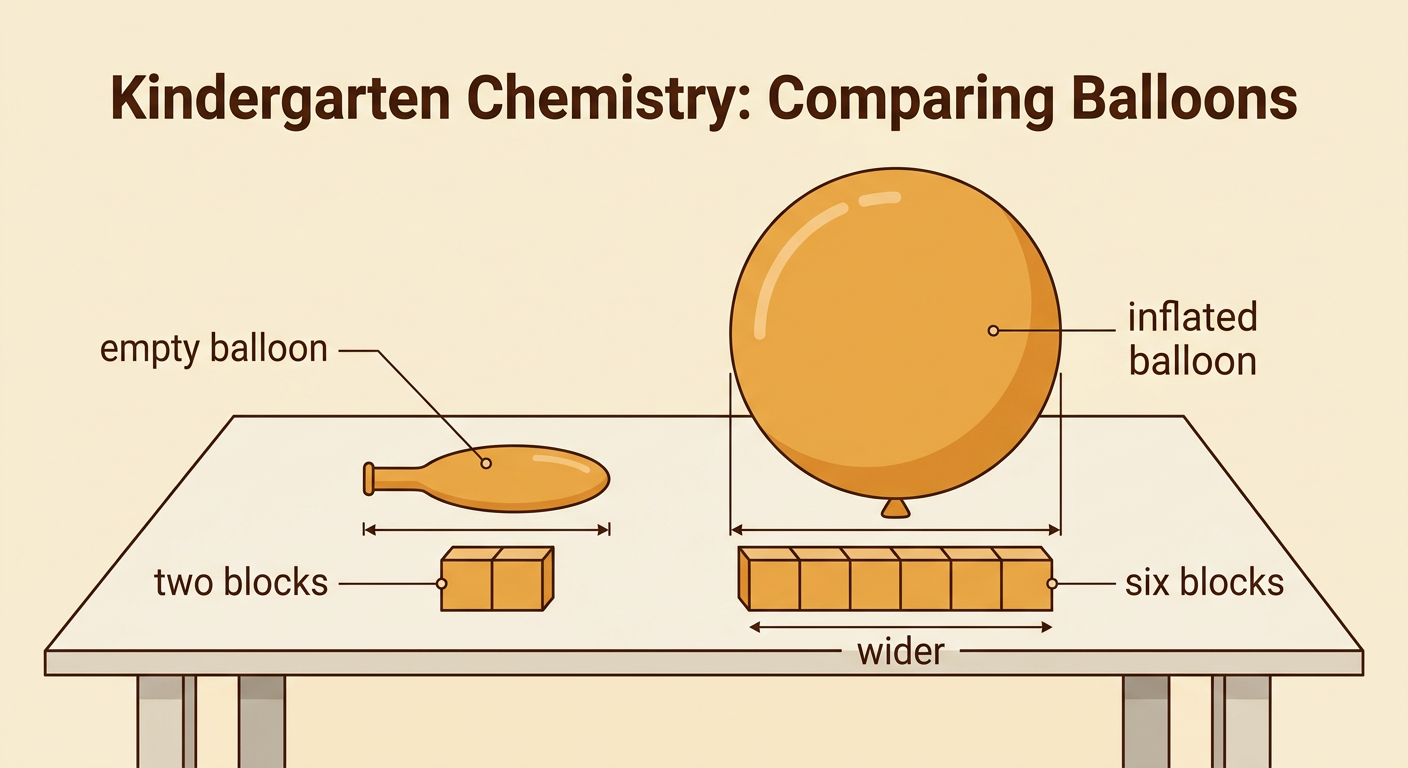
Now compare an empty balloon with an inflated balloon. Place them next to each other on the same table. Look at how much space each one takes up. The empty balloon is flat and small. The inflated balloon is round, wide, and tall. You can compare their width by placing a row of equal-size blocks beside each balloon. For example, the empty balloon might be about two blocks wide, while the inflated balloon might be about six blocks wide. Six blocks is more than two blocks, so the inflated balloon is wider. Take turns sharing the measuring tools and reporting what you notice. You can say, “The inflated balloon is wider than the empty balloon.” Listen attentively when another student gives a comparison.
Explain What the Air Did
The balloon grew because the teacher added air. Air entered through the opening and spread through the inside of the balloon. It took up space and pushed outward on the rubber. The rubber stretched, so the balloon became larger. This observation is evidence that air is matter, even though air is invisible. Think about a paper bag as another example. When you open the bag and move it through the air, the bag can puff out because air fills space inside it. Work with a partner to explain the balloon investigation. One student might say, “The balloon became bigger.” The other might add, “Air took up space inside it.” Follow the class rules by taking turns, listening, and connecting your idea to what your partner said.
