
Analyzing an Unreliable Narrator
Students analyze how discrepancies between a narrator’s claims and textual evidence shape point of view, tone, and interpretation in a complex literary passage.

Illustrations are auto-generated and may be placeholders. They can be refreshed to match the narration.
Define Narrative Reliability
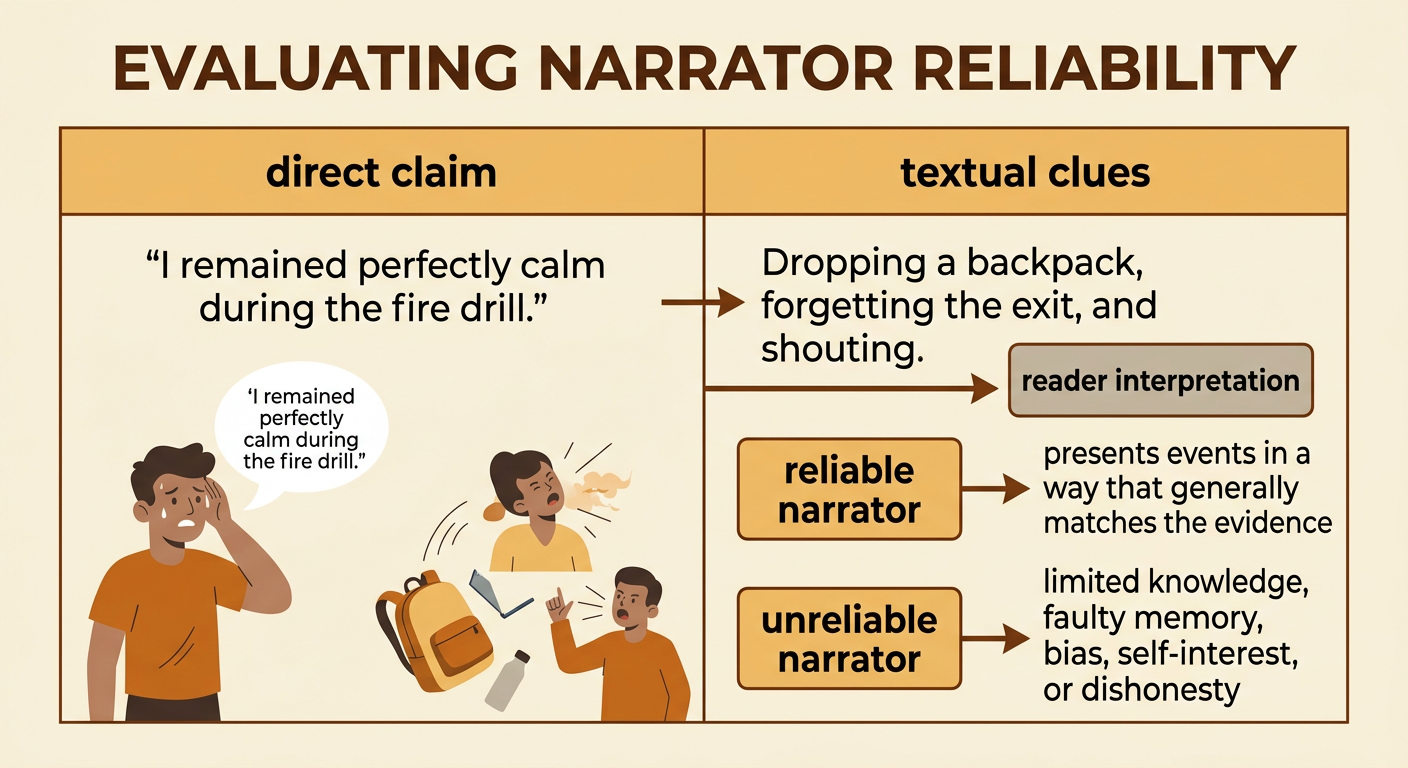
A narrator is the voice that tells a story, but that voice is not automatically trustworthy. A reliable narrator presents events in a way that is generally consistent with the text’s evidence. An unreliable narrator gives an account shaped by limited knowledge, faulty memory, bias, self-interest, or dishonesty. Readers must separate what the narrator directly claims from what the details imply. For example, a narrator might say, “I remained perfectly calm during the fire drill,” but then describe dropping a backpack, forgetting the exit, and shouting at classmates. These actions conflict with the claim of calmness. The contradiction does not necessarily mean every statement is false. Instead, it signals that readers should question the narrator’s judgment and construct a more accurate interpretation from multiple textual clues.
Read and Annotate the Passage
Read once for the basic event, then reread to mark claims, actions, word choices, and contradictions. Consider this passage: “Naturally, I had no interest in the museum’s ridiculous contest. I only entered because Ms. Lee insisted. When the winner was announced, I smiled politely and congratulated Lena. I may have asked why the judges ignored historical accuracy, and perhaps my voice carried across the silent gallery. As I left, the display card beside Lena’s model somehow slipped beneath my shoe.” The narrator claims not to care, but several details suggest disappointment or jealousy. Annotate “no interest” as a direct claim. Mark the public complaint, the raised voice, and the damaged display card as evidence. Circle “somehow” because it avoids responsibility. Annotation makes the gap between the narrator’s version and the implied situation visible.

Compare Claims with Evidence
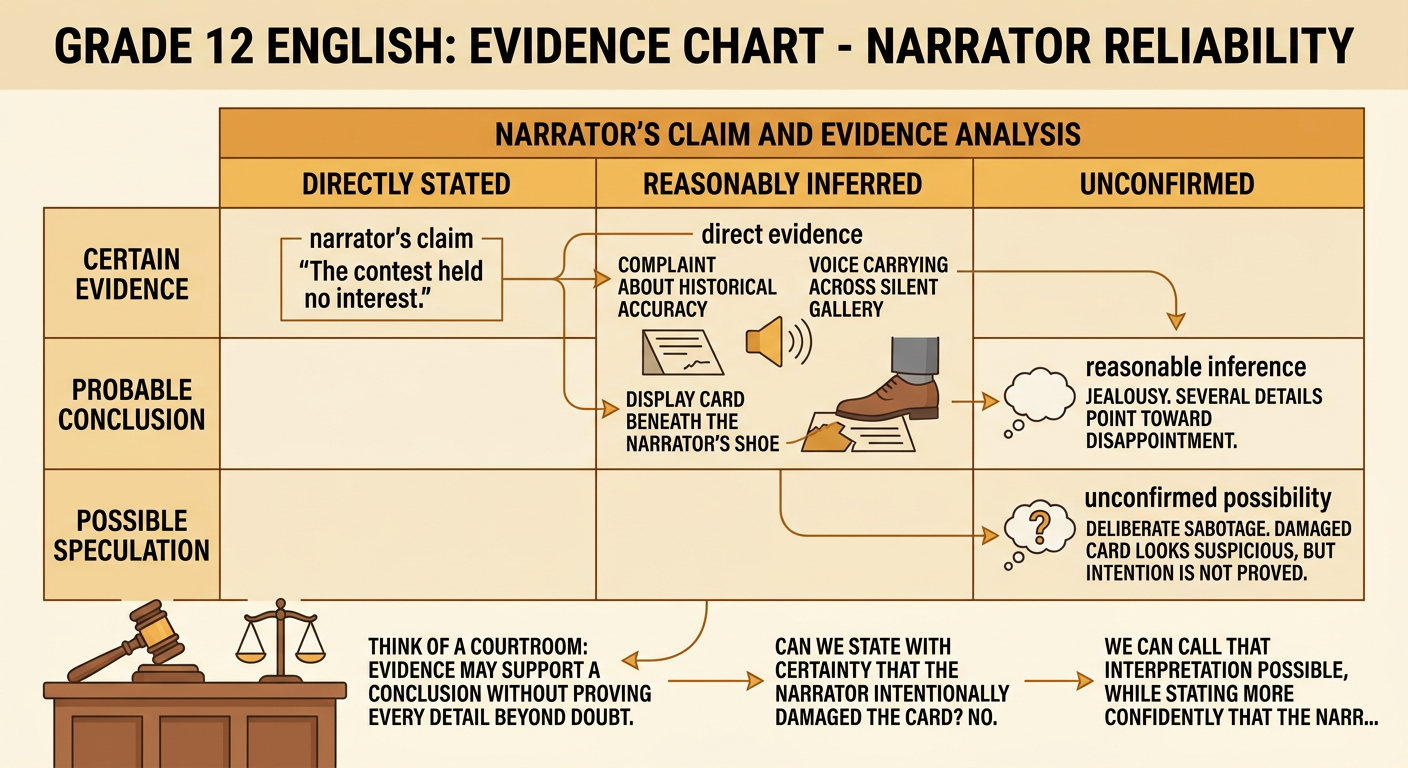
Build a claim-evidence comparison before deciding whether a narrator is reliable. In one column, record the narrator’s exact or closely paraphrased claim. In another, list specific actions, dialogue, setting details, or reactions that support or contradict it. Then explain the discrepancy without overstating your conclusion. In the museum passage, the claim “I had no interest” conflicts with the narrator’s complaint about the judges and attention to Lena’s display. The narrator’s polite smile could support self-control, but the voice carrying across a silent gallery weakens that impression. The display card slipping beneath the narrator’s shoe is also suspicious, although the passage does not prove deliberate damage. Strong analysis distinguishes certainty from inference: the complaint is directly stated, jealousy is reasonably inferred, and intentional sabotage remains possible but unconfirmed.
Identify Irony and Understatement
Verbal irony occurs when a speaker’s intended meaning differs from the literal words. Understatement deliberately presents something as less important or intense than it is. Both devices can reveal an unreliable point of view. In the museum passage, “I may have asked” understates a complaint loud enough to cross a silent gallery. The weak verb “asked” minimizes behavior that may have been an angry protest. Similarly, saying the display card “somehow slipped” avoids naming the narrator as the likely cause. These phrases create an ironic gap between the narrator’s calm self-portrait and the disruptive scene readers imagine. To identify the effect, ask what literally happened, how the narrator labels it, and why the narrator might choose that label. The mismatch can produce a defensive, comic, bitter, or self-deceiving tone.

Evaluate the Narrator’s Reliability
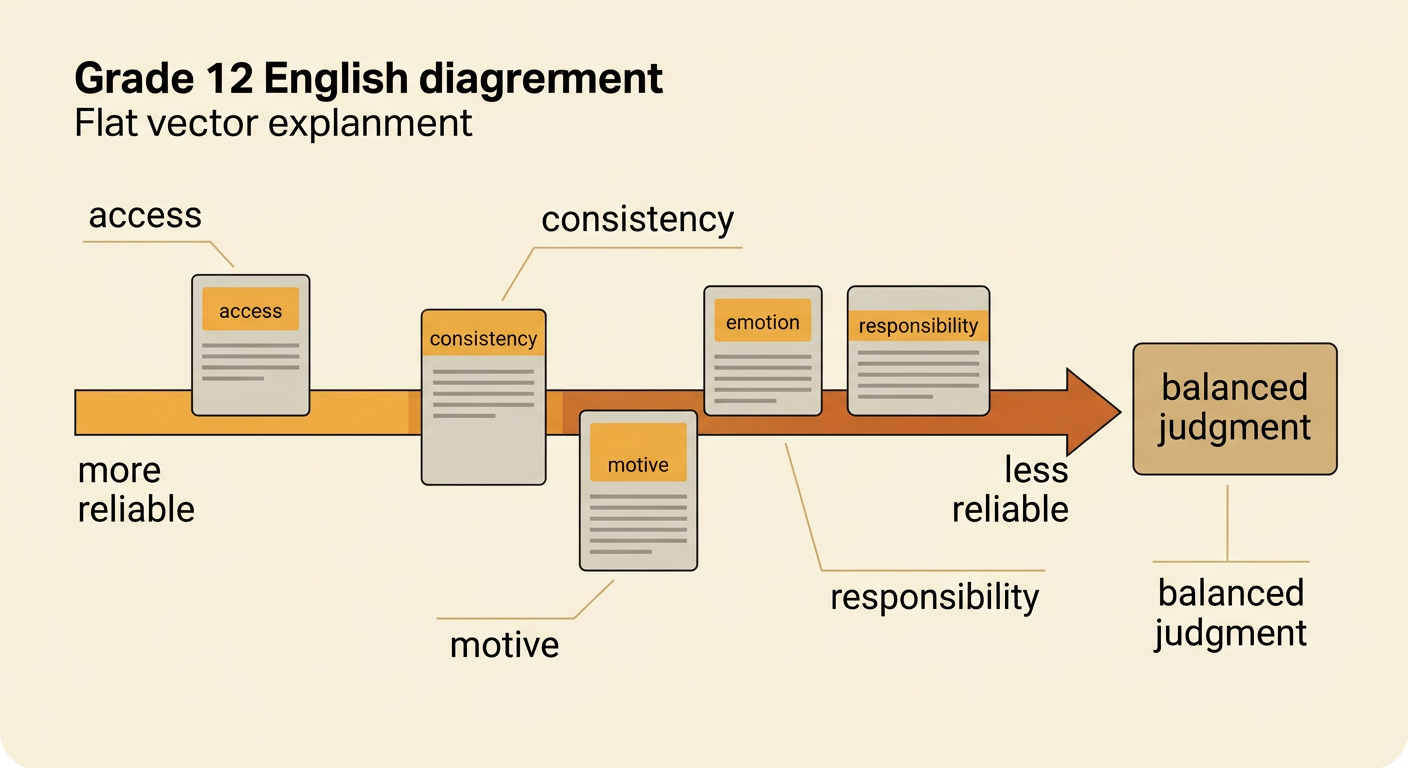
Reliability is often a matter of degree rather than a simple reliable-or-unreliable label. Evaluate the narrator using several criteria: access to information, consistency, accuracy, motive, emotional state, and willingness to accept responsibility. The museum narrator directly witnessed the contest, so access to the event is strong. However, the narrator has a motive to protect a positive self-image after losing. The phrases “no interest,” “may have asked,” and “somehow slipped” repeatedly minimize involvement. This pattern makes the account emotionally biased and unreliable about motive and behavior. Still, basic facts, such as Lena winning and the gallery becoming silent, may remain dependable. A balanced judgment might state that the narrator is reliable about the sequence of events but unreliable when explaining personal feelings and responsibility. Support the judgment with more than one textual clue.
Write a Text-Based Interpretation
A strong interpretation states how the narrator’s unreliability shapes point of view, tone, and meaning. Begin with a precise claim, add quoted or paraphrased evidence, explain the discrepancy, and connect it to the reader’s understanding. For example: “The first-person narrator’s self-protective account creates a defensive and subtly comic tone. Although the narrator claims to have ‘no interest’ in the contest, the public criticism of the judges and the evasive statement that Lena’s display card ‘somehow slipped’ beneath a shoe suggest jealousy and denied responsibility. The gap between the narrator’s calm description and disruptive actions encourages readers to distrust the narrator’s account of personal motives.” Notice that the interpretation does not merely announce that the narrator is unreliable. It explains how specific language creates that unreliability and why the discrepancy matters to the passage as a whole.
