
Analyzing Complex Character Development
Students analyze how a complex character’s motivations, interactions, and responses to conflict develop over the course of a literary text and advance the plot.
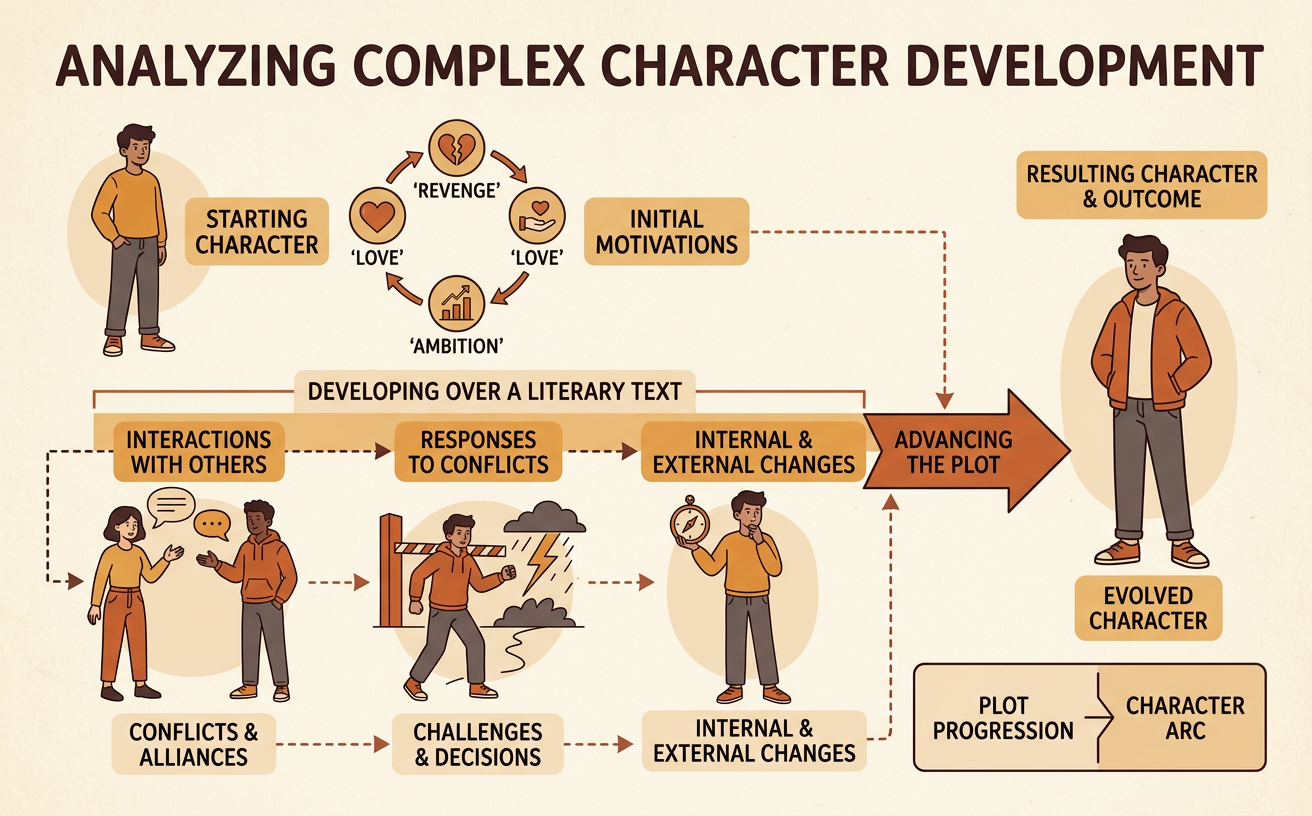
Illustrations are auto-generated and may be placeholders. They can be refreshed to match the narration.
Recognizing Complex Characters
A complex character has multiple traits, desires, and pressures that may conflict with one another. Unlike a character defined by one simple quality, a complex character can behave differently in different situations while still remaining believable. Look for contradictions, difficult choices, hidden feelings, strengths, and flaws. For example, Maya is confident during school debates but avoids speaking honestly with her best friend, Tessa. Maya values courage, yet she fears that telling Tessa the truth about a broken promise will end their friendship. Her public confidence and private fear create complexity. As you read, avoid reducing Maya to a single label such as brave or dishonest. Instead, gather details from her words, thoughts, actions, and other characters’ observations. These details reveal the competing qualities that shape her decisions.
Identifying Motivations and Conflicts
A motivation is the reason a character wants, chooses, or does something. Motivations may come from needs, values, fears, past experiences, or goals. Conflict occurs when something blocks a character’s goal. An internal conflict happens within the character, while an external conflict involves another person, society, nature, or another outside force. Maya wants to repair her friendship with Tessa because she values their shared history. However, she also wants to protect her reputation and fears admitting that she broke a promise. Her internal conflict is honesty versus self-protection. Her external conflict begins when Tessa learns part of the truth from someone else and confronts her. Identifying what Maya wants, what stands in her way, and what is at stake helps explain why she hesitates and predicts what she may do next.
Examining Character Interactions
Interactions reveal character because people often expose different sides of themselves when speaking or acting with others. Examine dialogue, body language, decisions, and power relationships. Also consider how each character influences the other. When Tessa confronts Maya, Maya first jokes and changes the subject. Tessa responds by becoming quiet rather than arguing. This silence makes Maya recognize how deeply she has damaged their trust. Later, Maya admits the truth without making excuses. The interaction develops both characters: Tessa shows that she values honesty and will not accept avoidance, while Maya moves from defensiveness toward responsibility. Their exchange also creates a turning point because Maya’s confession would not happen without Tessa’s response. Ask what each person wants from the interaction, what changes during it, and what the outcome reveals.
Tracing Responses and Changes
Complex characters develop through their responses to events and conflicts. To trace that development, compare the character’s behavior, beliefs, or self-understanding at several points in the text. Do not assume every change is sudden or complete; growth may be gradual, uneven, or temporary. At the beginning, Maya hides her mistake and believes silence will protect her friendship. During the confrontation, she avoids responsibility but begins to notice Tessa’s hurt. After reflecting on the conflict, Maya confesses and accepts that Tessa may not forgive her immediately. By the end, Maya understands that trust depends on honesty rather than avoiding consequences. Evidence from each stage supports this interpretation. A strong analysis explains both what changes and why, linking the change to specific pressures, choices, and consequences instead of merely listing events.
Connecting Character Development to Plot
Character development and plot are closely connected because a character’s choices cause events, and those events create new pressures that shape the character. Trace this relationship as a chain: motivation leads to a decision, the decision creates a consequence, and the consequence prompts another response. Maya’s fear of losing Tessa motivates her to hide the broken promise. That choice allows a rumor to spread, leading Tessa to confront her. The confrontation forces Maya to choose between continued avoidance and confession. When Maya tells the truth, the immediate plot conflict reaches a climax, but the friendship remains uncertain. Her development advances the plot because her changing response produces the major turning points. It may also develop a theme: honest relationships require accountability. When analyzing a text, explain how the character’s inner change causes action rather than discussing character and plot separately.