
Analyzing Complex Character Motivations
Students analyze how a character’s conflicting motivations shape decisions, interactions, and plot development in a literary passage.
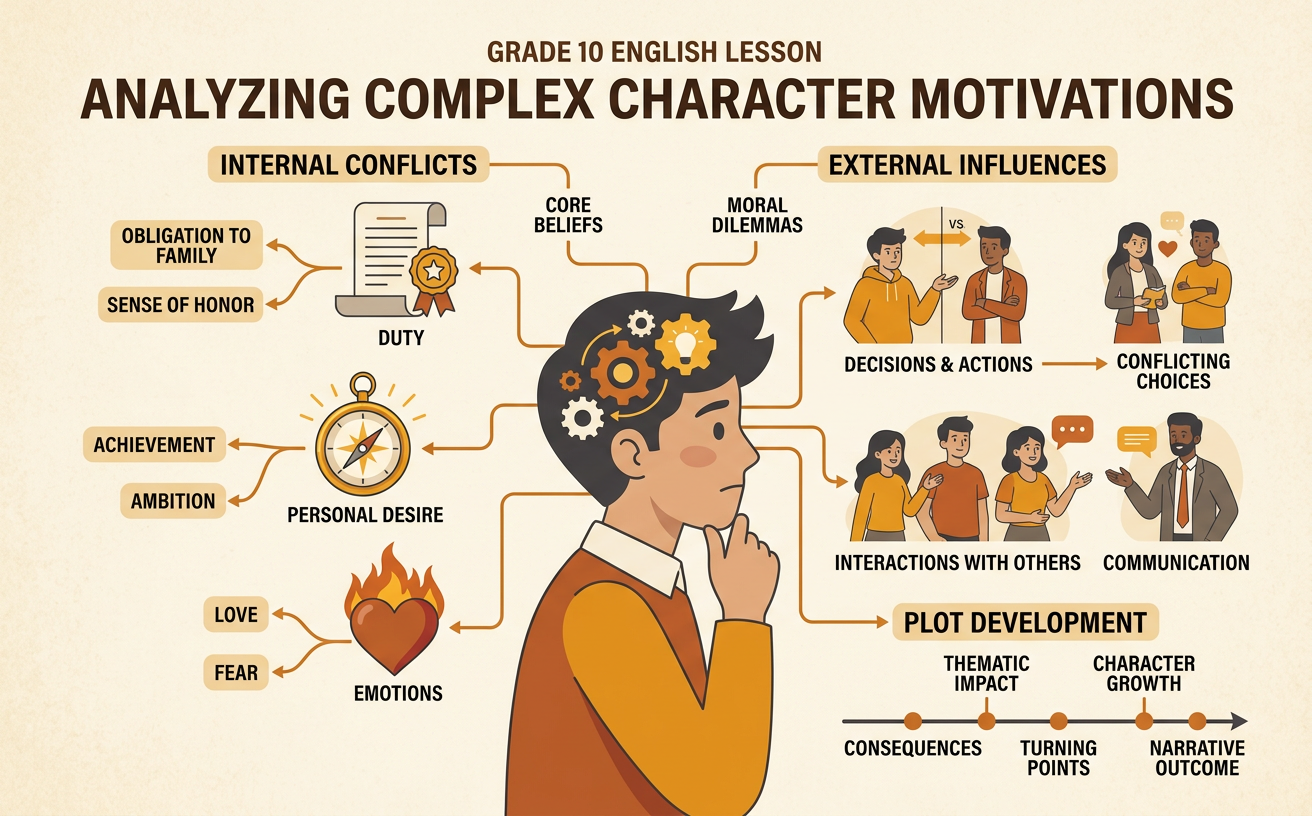
Illustrations are auto-generated and may be placeholders. They can be refreshed to match the narration.
Define Complex Characters
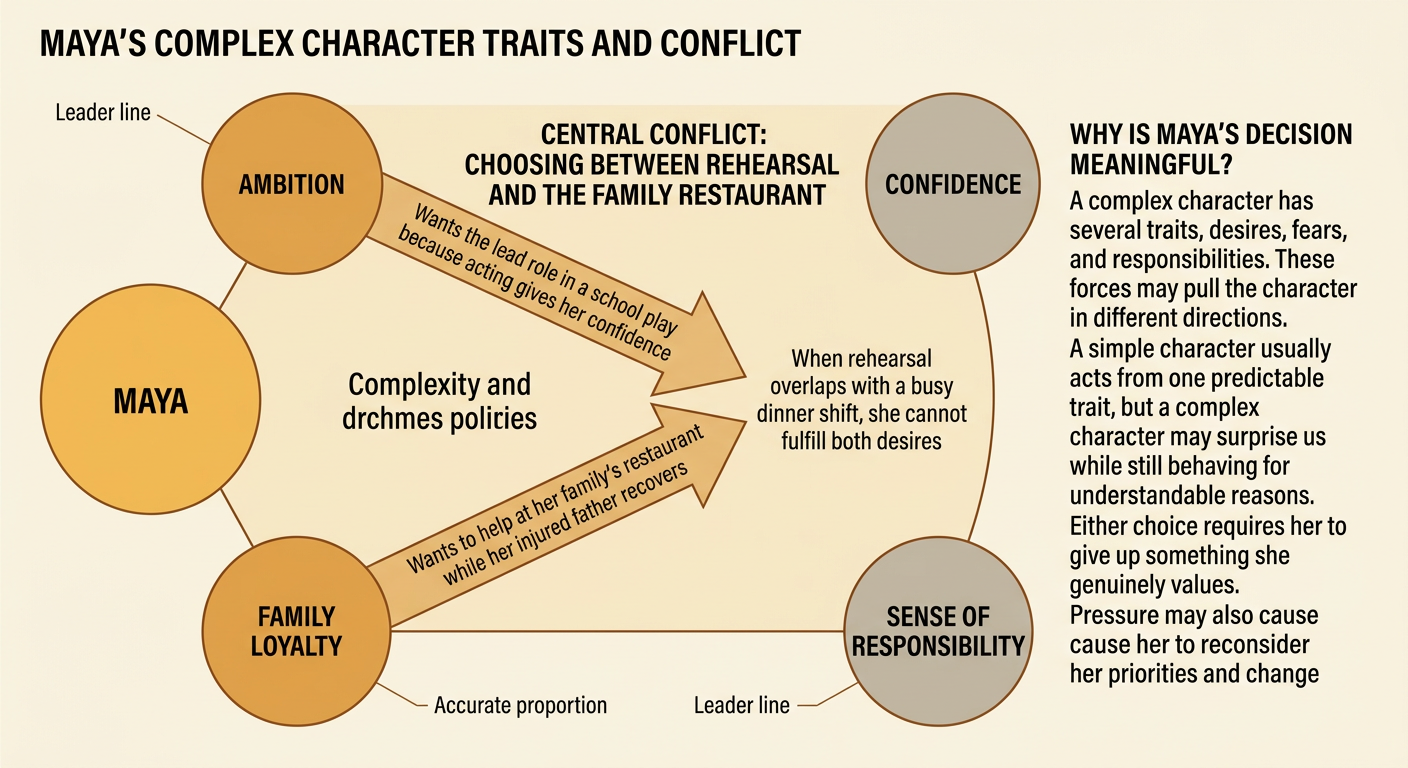
A complex character has multiple traits, desires, fears, and responsibilities that may pull in different directions. Unlike a simple character who acts mainly from one predictable trait, a complex character can surprise readers while still acting for understandable reasons. Complex characters often change as events pressure them to reconsider what matters most. For example, Maya wants the lead role in the school play because acting gives her confidence. She also feels responsible for helping at her family’s restaurant while her father recovers from an injury. Her ambition and loyalty are both genuine. When rehearsal conflicts with a busy dinner shift, Maya cannot satisfy both goals. This tension makes her decision meaningful and creates an opportunity for her character to develop.
Identify Conflicting Motivations
A motivation is a reason a character thinks, speaks, or acts in a certain way. To identify conflicting motivations, ask what the character wants, why the character wants it, and what prevents the character from achieving every goal. Some motivations are stated directly, while others must be inferred from details. Maya tells her friend, “I have waited all year for this audition,” clearly revealing her desire to perform. Later, she checks her father’s bandaged hand and quietly puts the audition form in her backpack. That action suggests concern for her family, even though she does not explain it aloud. The conflict is not simply rehearsal versus work. It is Maya’s desire for personal growth competing with her loyalty and sense of duty to her family.

Examine Key Words and Actions
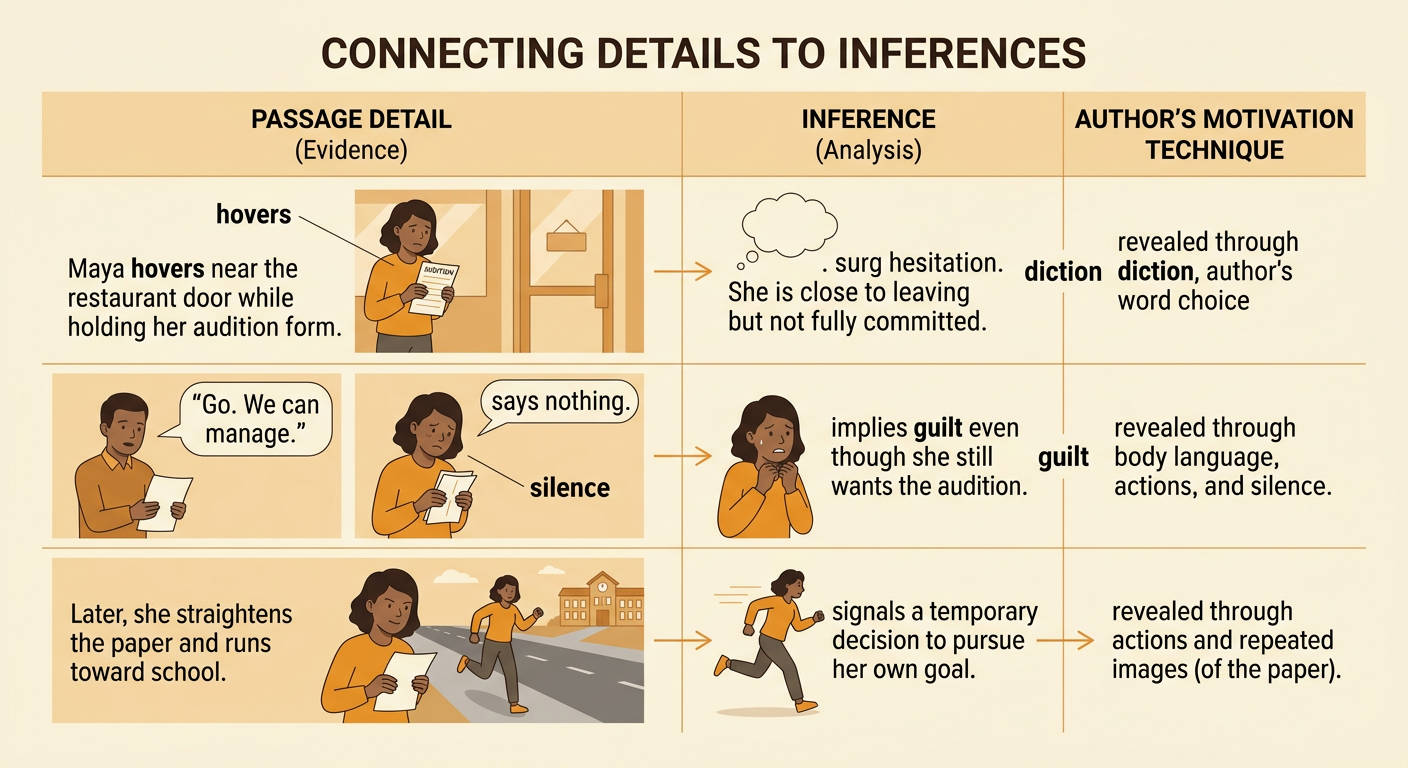
Authors reveal motivation through diction, dialogue, body language, repeated images, actions, and even silence. Look closely at verbs and descriptive words because they can show hesitation or determination. Suppose Maya “hovers” near the restaurant door while holding her audition form. The verb “hovers” suggests that she is uncertain and not ready to leave. When her father says, “Go. We can manage,” Maya folds the form “into a tight square” instead of answering. Her silence and nervous action imply guilt, although she still wants to audition. Later, she straightens the paper and runs toward school. That action signals a temporary decision in favor of her own goal. Together, these details provide stronger evidence than simply stating that Maya feels conflicted.
Connect Decisions to Character Interactions
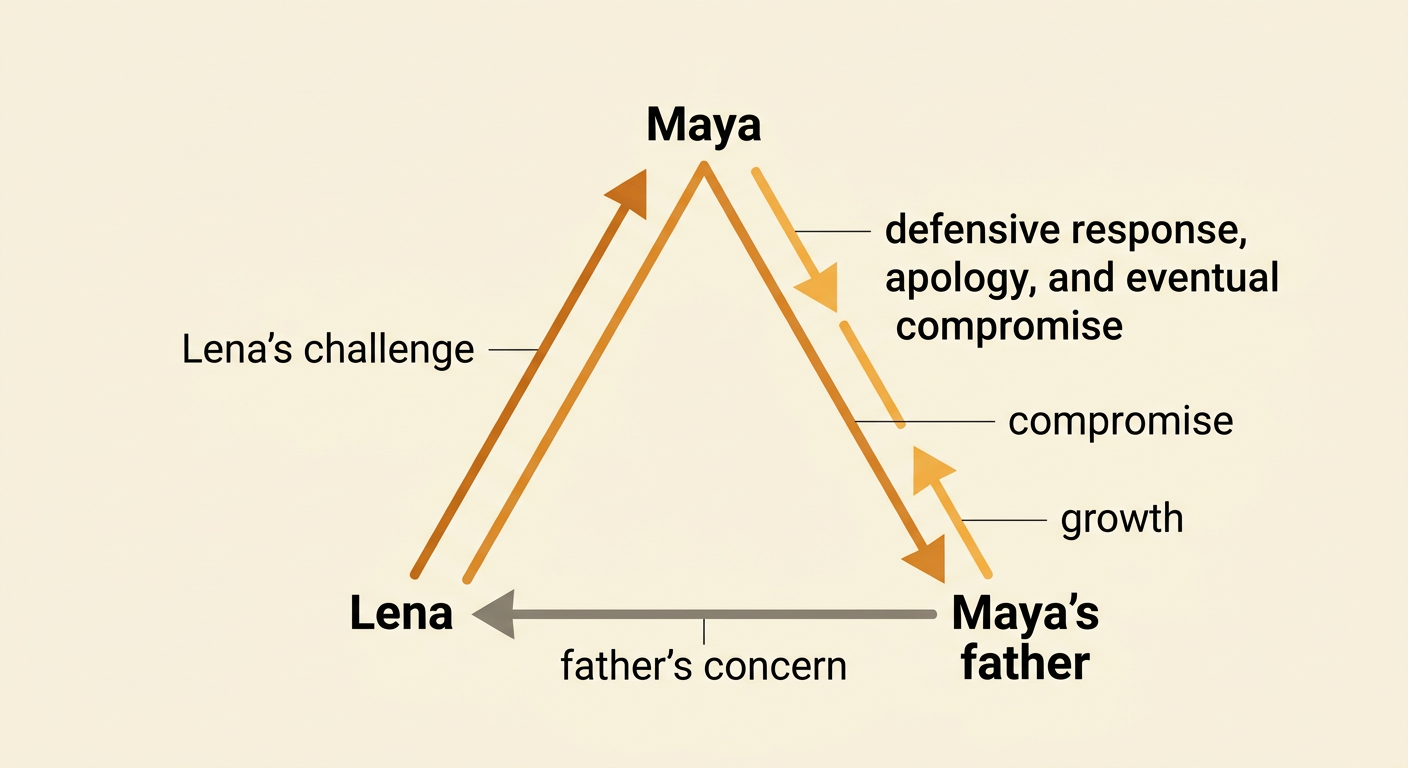
A character’s motivations affect how that character treats others, and those interactions can create new pressures or reveal change. Examine what each person wants from the conversation and how the main character responds. Maya’s friend Lena urges her to leave the restaurant, arguing that Maya always sacrifices her own opportunities. Maya becomes defensive because Lena’s words challenge her identity as a loyal daughter. Her father, however, encourages her to audition and admits that he worries she will resent the family. These interactions force Maya to examine both motivations more honestly. She apologizes to Lena for snapping at her and asks her father to call if the restaurant becomes too busy. Her compromise shows growth: she begins communicating instead of silently carrying the entire responsibility herself.
Trace Effects on the Plot
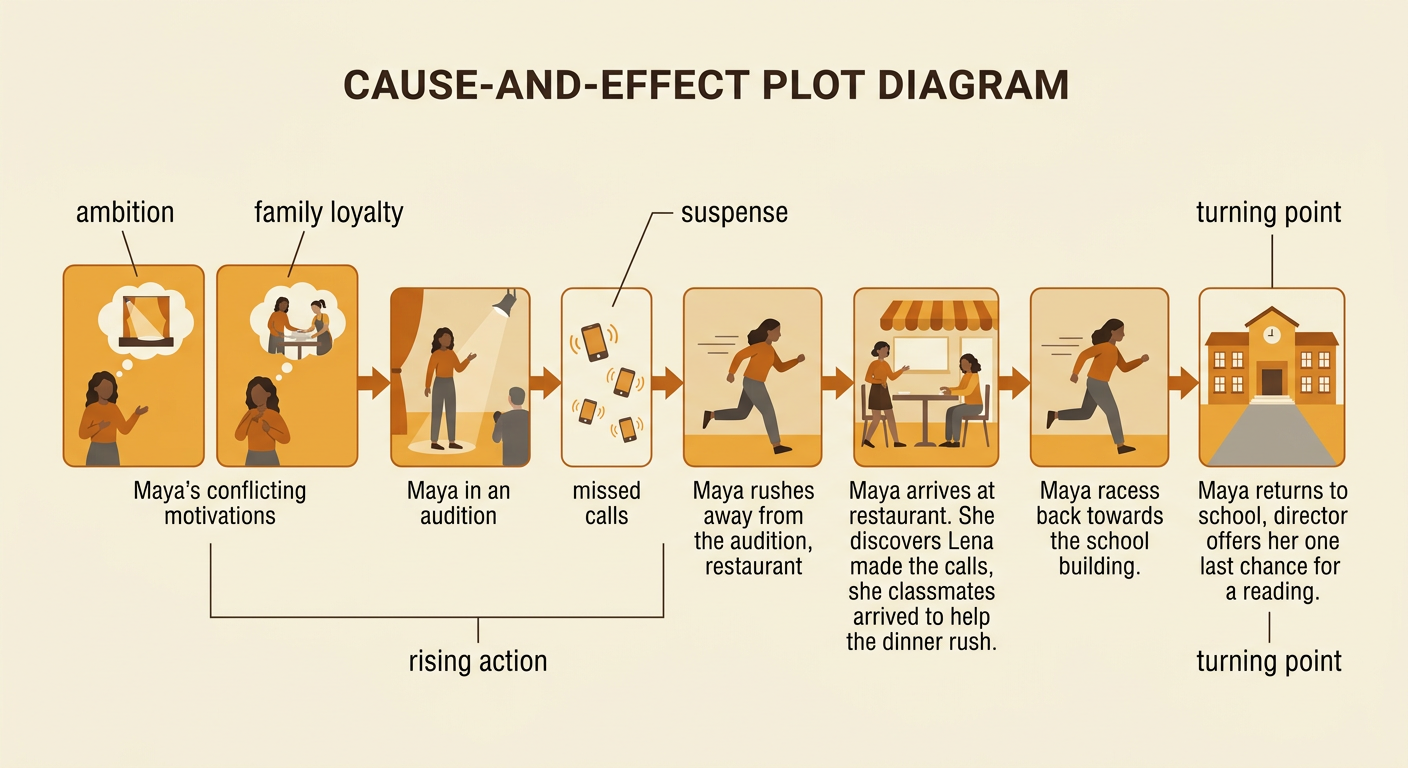
Character motivation advances the plot when an internal conflict causes a decision that leads to consequences. Trace this process as a chain rather than listing unrelated events. Maya’s ambition leads her to attend the audition, but her family loyalty causes her to keep checking her phone. When she sees several missed calls, she leaves before her final reading and returns to the restaurant. There she learns that the calls came from Lena, who arranged for classmates to help during the dinner rush. Maya races back to school and arrives just as the director offers one last chance. Her conflicting motivations create the rising action, the missed calls produce suspense, and her return creates a turning point. The plot develops because Maya’s choices cause each event, not because events merely happen around her.
Write an Evidence-Based Analysis
An evidence-based analysis explains how and why a character develops, interacts with others, or advances the plot. Begin with a clear claim about the character’s conflicting motivations. Then provide relevant textual evidence and explain how each detail supports the claim. Avoid dropping in a quotation without interpretation. For example: Maya’s ambition and family loyalty cause her to hesitate, but they eventually teach her to accept help. When she folds the audition form “into a tight square,” the action reveals guilt about leaving the restaurant. Later, her decision to return to school after Lena organizes help shows that Maya no longer believes loyalty requires giving up every personal goal. Her change advances the plot by making the last-chance audition possible. This analysis connects motivation, evidence, character development, and plot consequence.
