
Analyzing Cultural Point of View in World Literature
Students examine how a narrator’s cultural experiences and perspective shape the portrayal of events, values, and conflicts in a literary passage from outside the United States.

Illustrations are auto-generated and may be placeholders. They can be refreshed to match the narration.
Introduce Cultural Point of View
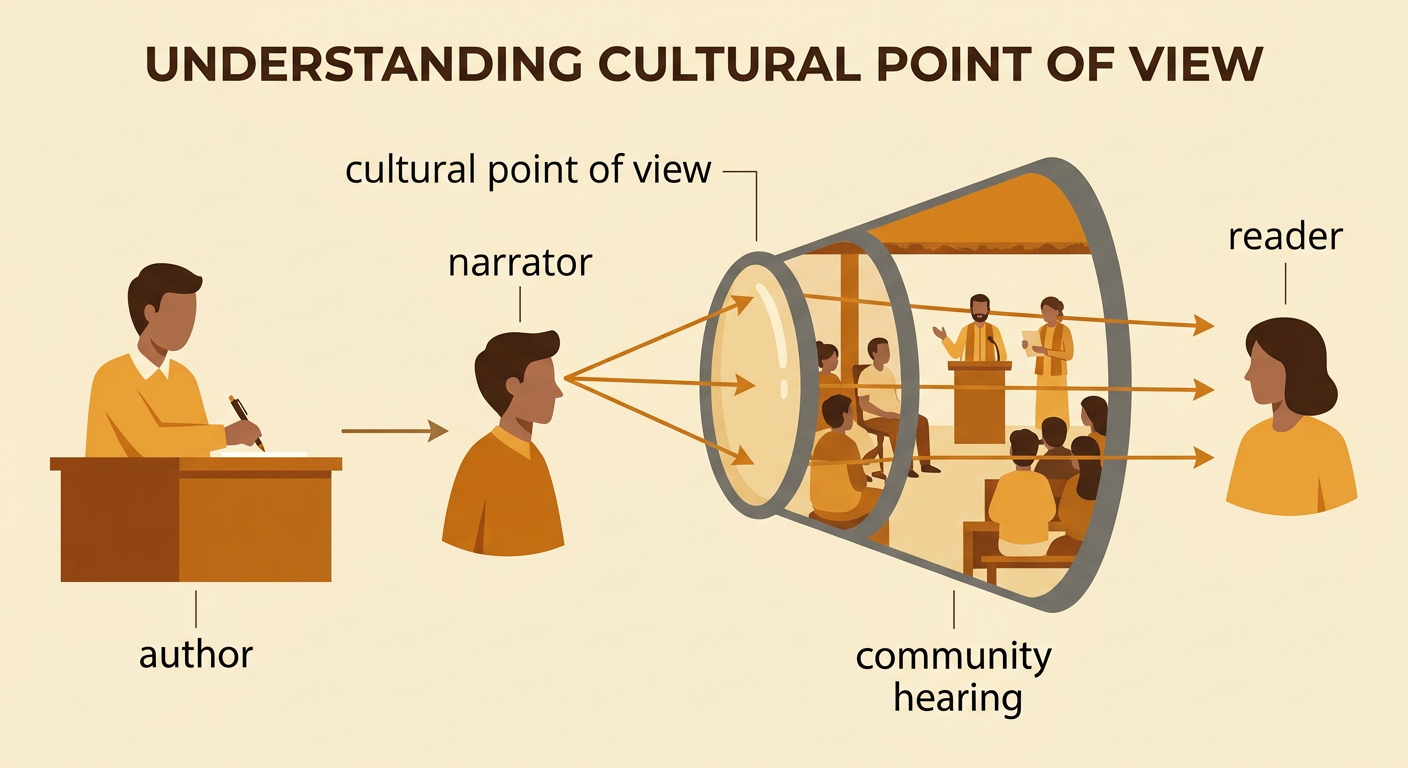
Cultural point of view is the perspective shaped by a community’s beliefs, traditions, social roles, history, and ways of interpreting the world. It affects what a narrator notices, explains, praises, questions, or leaves unstated. Cultural point of view is not the same as nationality, and members of one culture may hold different opinions. Also distinguish the narrator from the author: a narrator is the voice presenting the story, while the author created that voice. In Chinua Achebe’s Nigerian novel Things Fall Apart, the third-person narrator describes Igbo customs with familiarity and explains their meaning to readers. For example, a community hearing led by masked ancestral figures is portrayed as an important public process rather than merely an unusual spectacle. This presentation helps readers understand how the community connects law, spirituality, and collective authority.
Read and Annotate the Passage
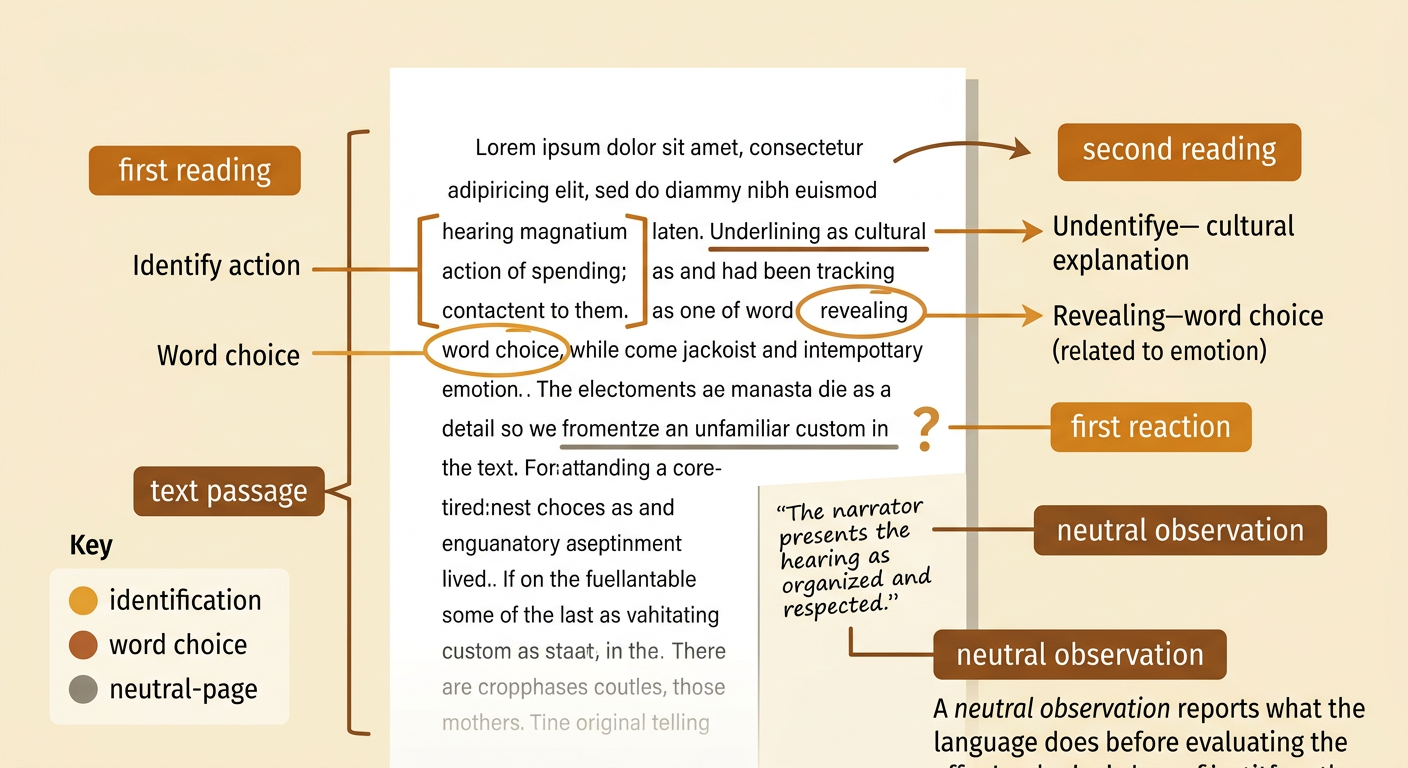
Read the passage once to understand what happens, then reread it to study how the event is presented. During the second reading, mark words that reveal judgment, emotion, explanation, or cultural knowledge. Note who speaks, whose thoughts are available, and which details receive the most attention. In a passage from Things Fall Apart about a public dispute, you might underline the respectful silence when the masked figures appear, circle the narrator’s explanation of their authority, and place a question mark beside a custom that is unfamiliar to you. In the margin, write a neutral observation such as, “The narrator presents the hearing as organized and respected.” Avoid immediately labeling a practice as strange or wrong. Annotation should separate what the passage actually states from your first reaction to it.
Identify Cultural Details
Cultural details are specific references to beliefs, customs, language, relationships, institutions, objects, or settings that carry meaning within a community. Sort details into categories before deciding what they reveal. In Things Fall Apart, the masked ancestral figures, formal speeches, gathered villagers, and involvement of elders are more than background decorations. Together, they show that the dispute is treated as both a spiritual and civic matter. A detail may have several meanings, so use context rather than assumptions. For example, public participation could suggest community responsibility, social pressure, or both. Ask, “What does this detail mean to the characters?” and “How does the narrator present it?” Do not treat one character or one scene as proof of an entire culture. The strongest analysis recognizes complexity, disagreement, and change within cultural groups.

Analyze Perspective and Conflict
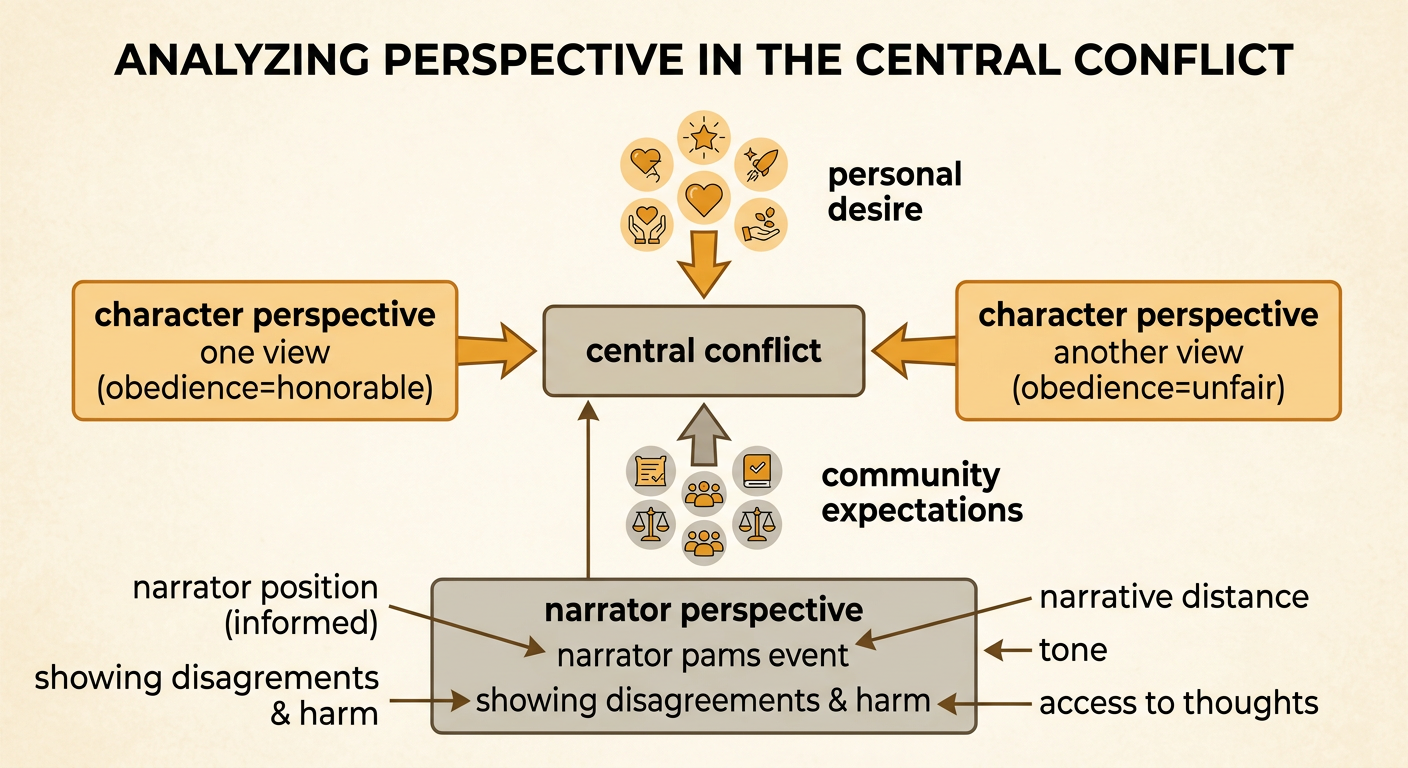
After identifying details, analyze how the narrator’s perspective shapes the central conflict. Consider which values are in tension and whether the narration encourages respect, criticism, sympathy, or uncertainty. In Things Fall Apart, the narrator explains Igbo traditions from a culturally informed position while also showing conflicts within the community and the harm caused by some characters’ choices. A dispute may therefore involve more than two individuals; it can reveal tensions between personal desire and communal expectations, or between established authority and changing conditions. Compare how different characters understand the same event. One character may see obedience as honorable, while another experiences it as unfair. Then examine narrative distance, tone, and access to thoughts. A calm explanation of a ceremony produces a different effect from a fearful outsider’s description of that ceremony.
Support an Interpretation with Evidence
Build an interpretation with a claim, relevant evidence, and reasoning. The claim should explain how cultural point of view shapes the portrayal of an event, value, or conflict. Evidence may include brief quotations, specific actions, narrative explanations, or patterns of description. Reasoning must connect each detail to the claim instead of simply summarizing the plot. For example: “The narrator portrays the village hearing as a legitimate communal institution by emphasizing formal procedures, respectful participation, and the authority granted to elders and ancestral figures.” Support this claim with exact details from the passage, then explain how those details create a tone of order and seriousness. A strong response may also acknowledge complexity: the institution can hold cultural authority while still being questioned by individuals. End by explaining why the narrator’s perspective matters to the reader’s understanding.
