Analyzing Diction, Figurative Language, and Tone
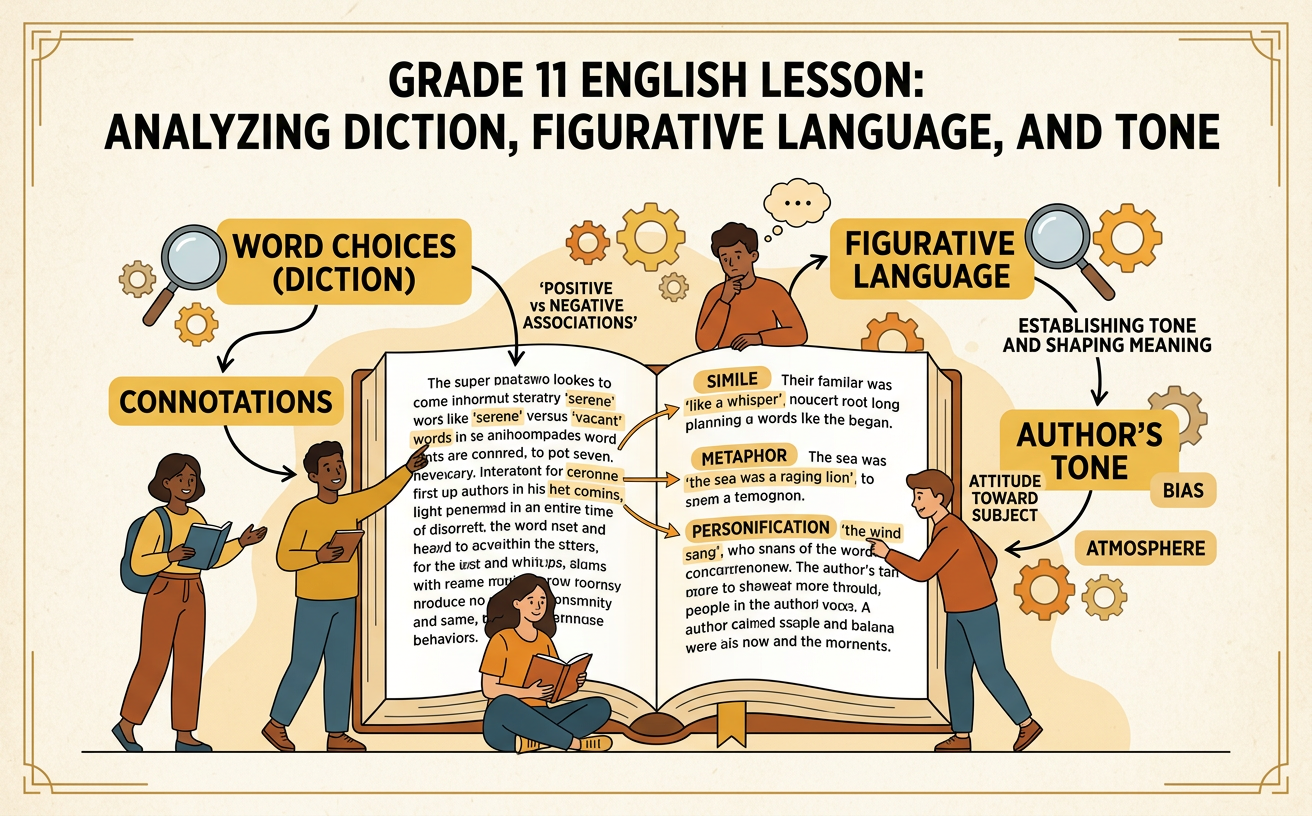
Students analyze how an author’s word choices, figurative language, and connotations establish tone and shape meaning in a literary passage.
Illustrations are auto-generated and may be placeholders. They can be refreshed to match the narration.
Distinguishing Diction and Tone
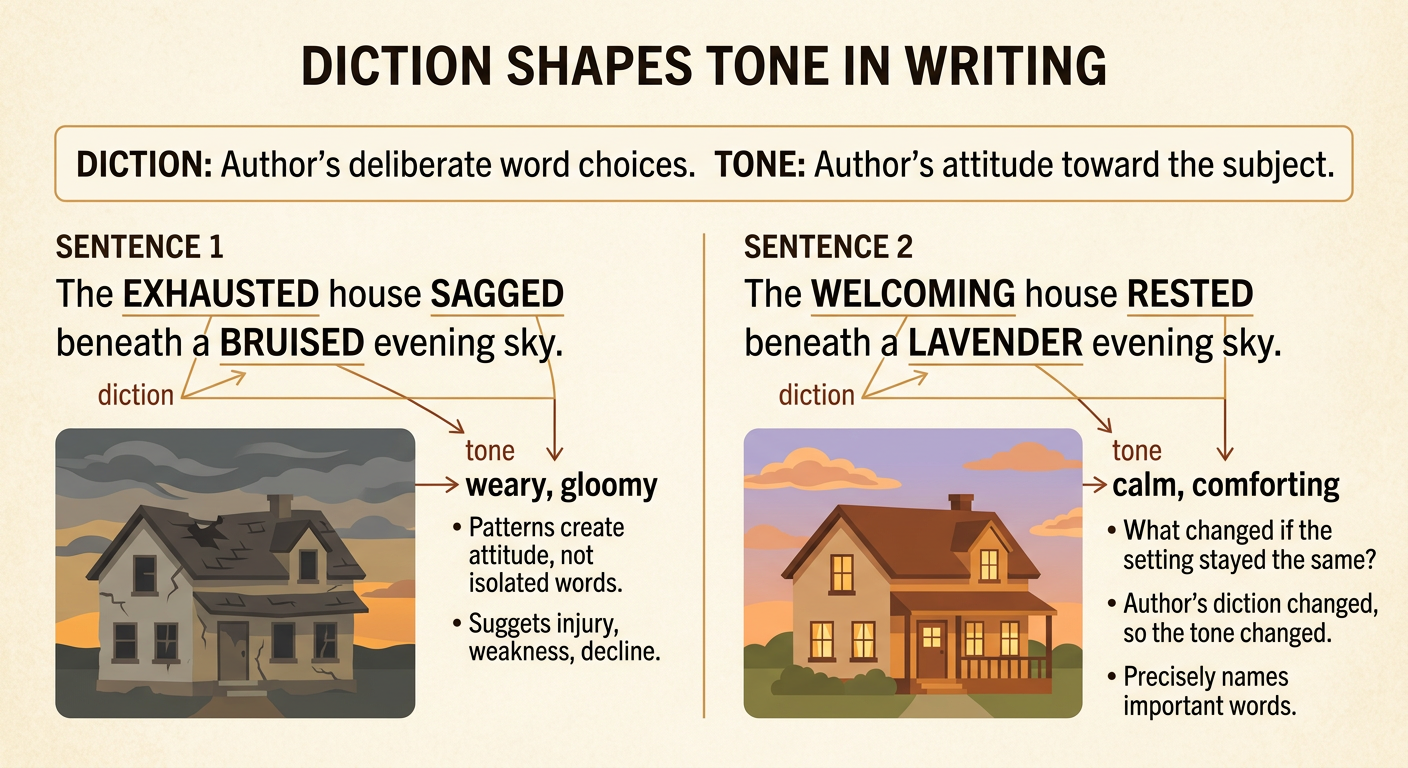
Diction is an author’s deliberate choice of words and phrases. Tone is the author’s attitude toward a subject, character, or audience. Readers infer tone by examining patterns in diction rather than relying on a single word. Consider this sentence: “The exhausted house sagged beneath a bruised evening sky.” The words “exhausted,” “sagged,” and “bruised” create associations with injury, weakness, and decline. Together, they establish a weary, gloomy tone. If the author instead wrote, “The welcoming house rested beneath a lavender evening sky,” the basic scene would remain similar, but the diction would create a calm, comforting tone. When analyzing a passage, name the diction precisely, identify the attitude it suggests, and explain how the words work together to create that tone.
Identifying Figurative and Connotative Language
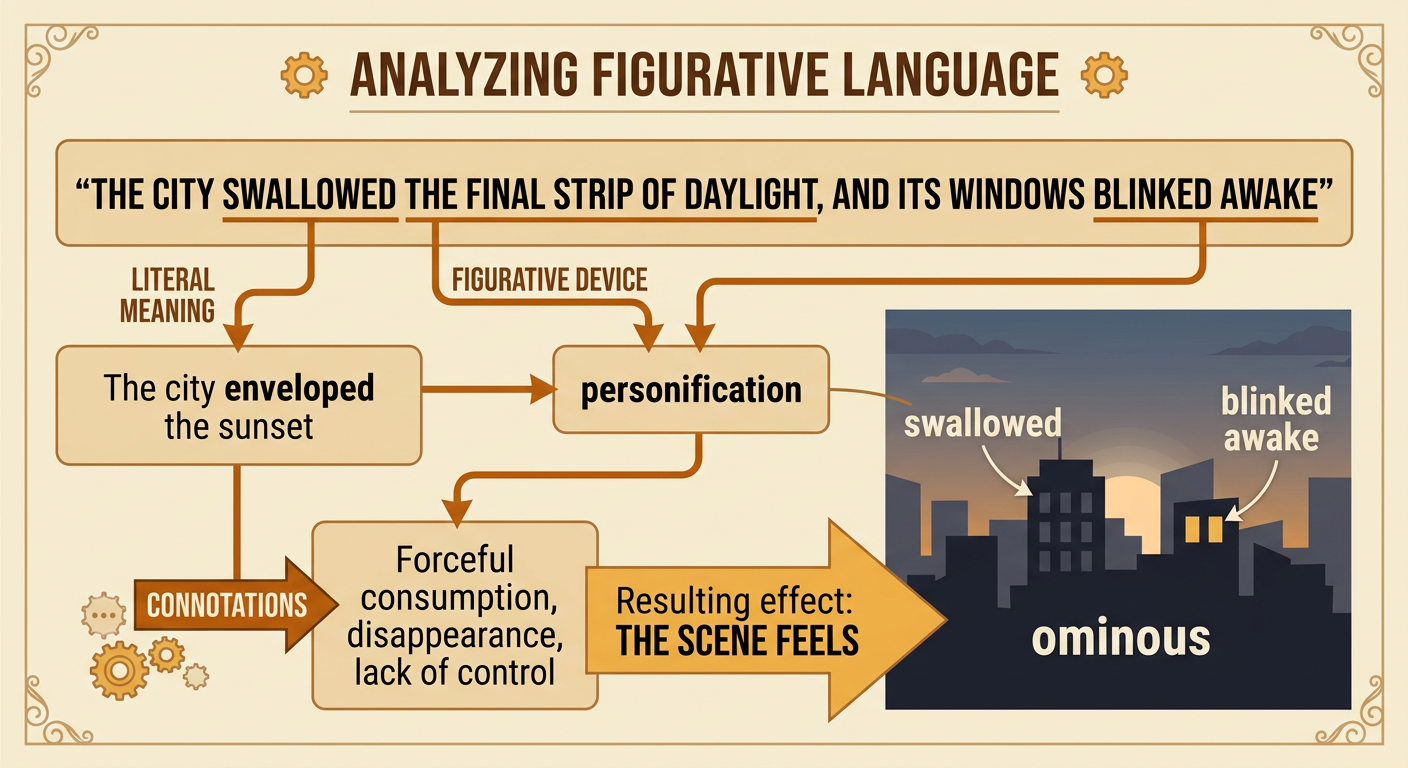
Figurative language communicates meaning beyond a phrase’s literal definition. Common forms include metaphor, simile, personification, and symbolism. Connotation is the emotional or cultural association attached to a word, while denotation is its direct dictionary meaning. In the sentence “The city swallowed the final strip of daylight, and its windows blinked awake,” the city does not literally swallow, and windows cannot truly blink. These examples of personification make the city seem like a living creature. “Swallowed” also carries threatening connotations of consumption and disappearance, while “blinked awake” suggests growing activity. The language therefore transforms an ordinary sunset into a scene that feels powerful and slightly ominous. Readers should identify the device, interpret its suggested meaning, and connect that meaning to the passage’s larger effect.
Examining Key Word Choices
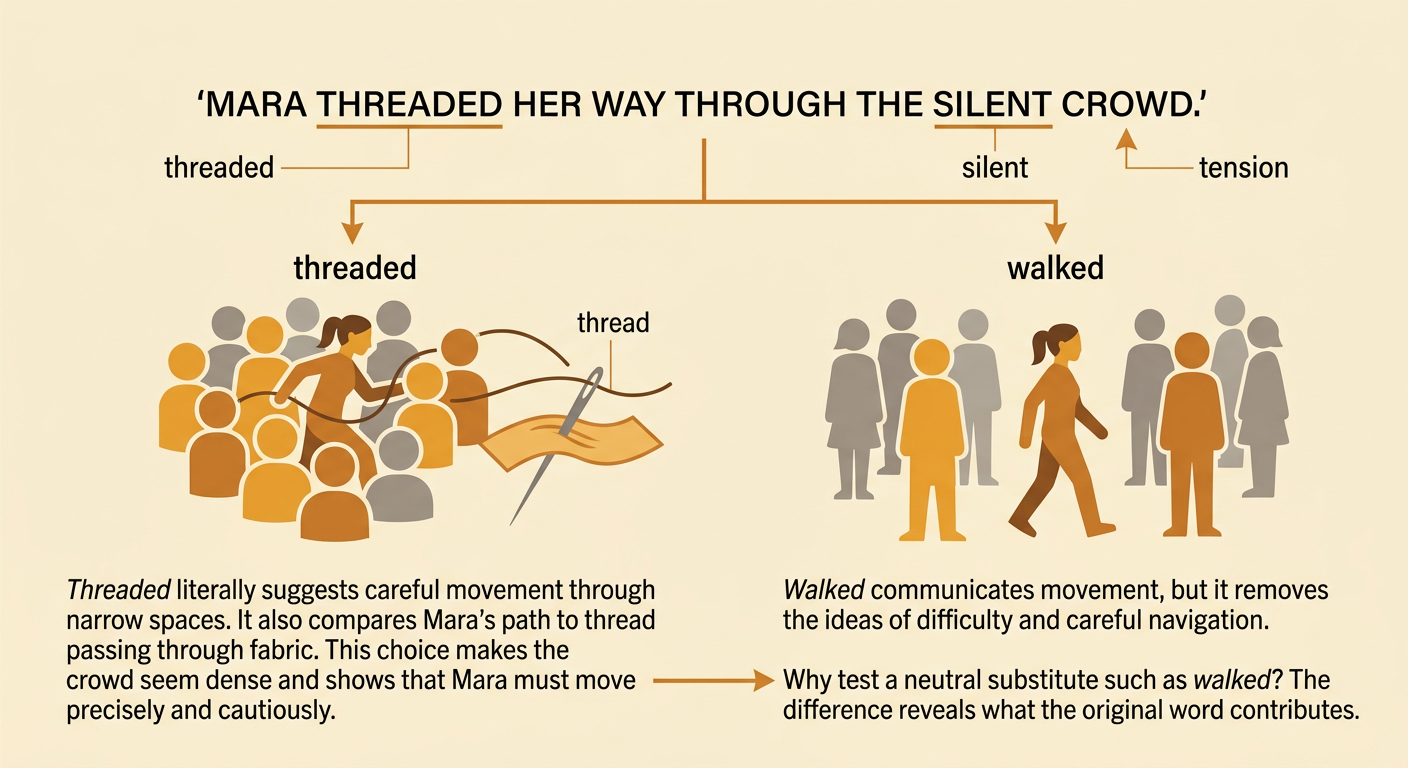
A key word choice is one that strongly influences a passage’s meaning, imagery, characterization, or tone. To examine it, consider its denotation, connotations, context, and possible alternatives. In the sentence “Mara threaded her way through the silent crowd,” the verb “threaded” literally suggests passing carefully through narrow spaces. It also compares Mara’s movement to thread moving through fabric, emphasizing precision and difficulty. Replacing it with “walked” would communicate movement but remove the sense that the crowd is dense and that Mara must navigate cautiously. The adjective “silent” is also important because a crowd is usually noisy; this contrast may suggest tension, grief, or anticipation. Testing reasonable substitutions helps reveal why an author’s exact language matters. The strongest analysis explains what would change if the author had chosen a more neutral word.
Connecting Language to Tone
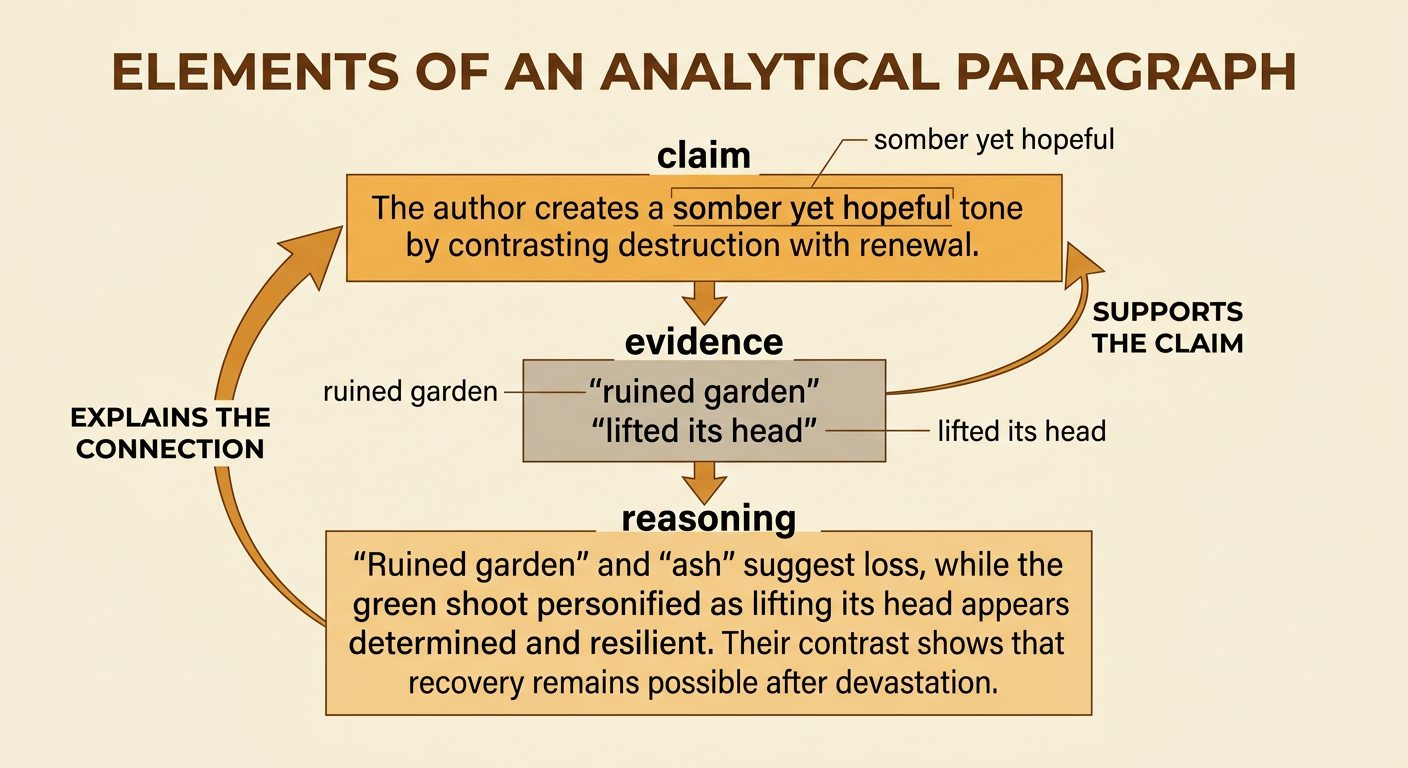
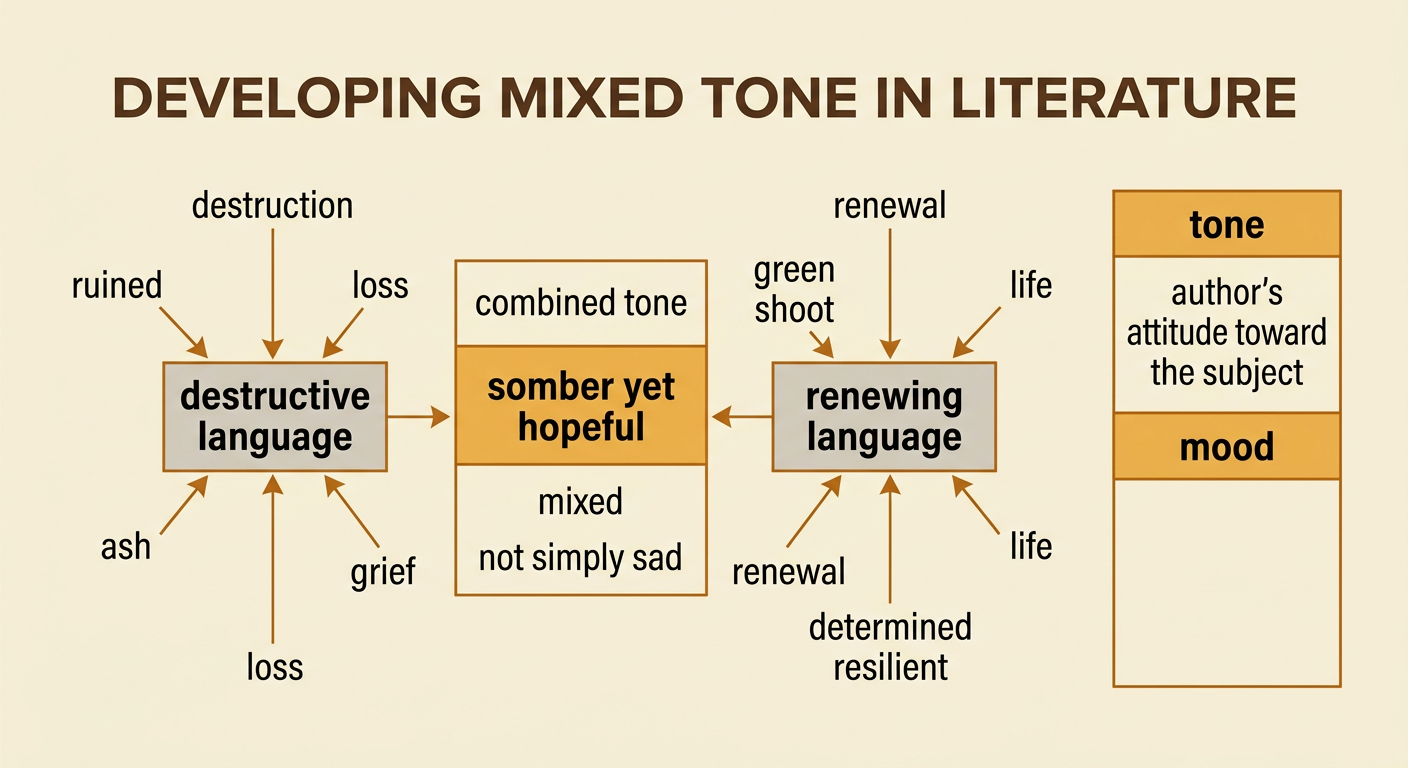
Tone develops through the combined effect of diction, imagery, figurative language, details, and sometimes sentence structure. Begin by noticing repeated patterns, then choose a precise tone word such as reverent, bitter, anxious, playful, or resigned. Consider this passage: “At dawn, Eli returned to the ruined garden. One green shoot lifted its head through the ash.” The words “ruined” and “ash” suggest destruction and grief, creating a somber quality. However, the green shoot and the personification “lifted its head” suggest persistence and renewal. Because these contrasting details work together, the tone is not simply sad; it is somber yet hopeful. A strong interpretation recognizes such complexity. It also distinguishes tone from mood: tone is the author’s attitude, while mood is the feeling the text creates in the reader.
Writing a Text-Based Analysis
A text-based analysis should make a clear claim, provide relevant evidence, and explain how specific language supports the interpretation. Avoid merely listing devices or stating that a quotation “creates imagery.” Instead, identify exact words and explain their associations and effects. For example: “The author creates a somber yet hopeful tone by contrasting destruction with renewal. The phrase ‘ruined garden’ and the image of ‘ash’ suggest loss, but the green shoot that ‘lifted its head’ personifies new growth as determined and resilient. This contrast shows that recovery remains possible after devastation.” This analysis connects diction and figurative language to tone and meaning. After drafting, check that the claim answers the question, the evidence is brief and accurate, and the reasoning explains why the quoted language matters within the passage.