Analyzing Diction, Tone, and Ambiguity in Literature
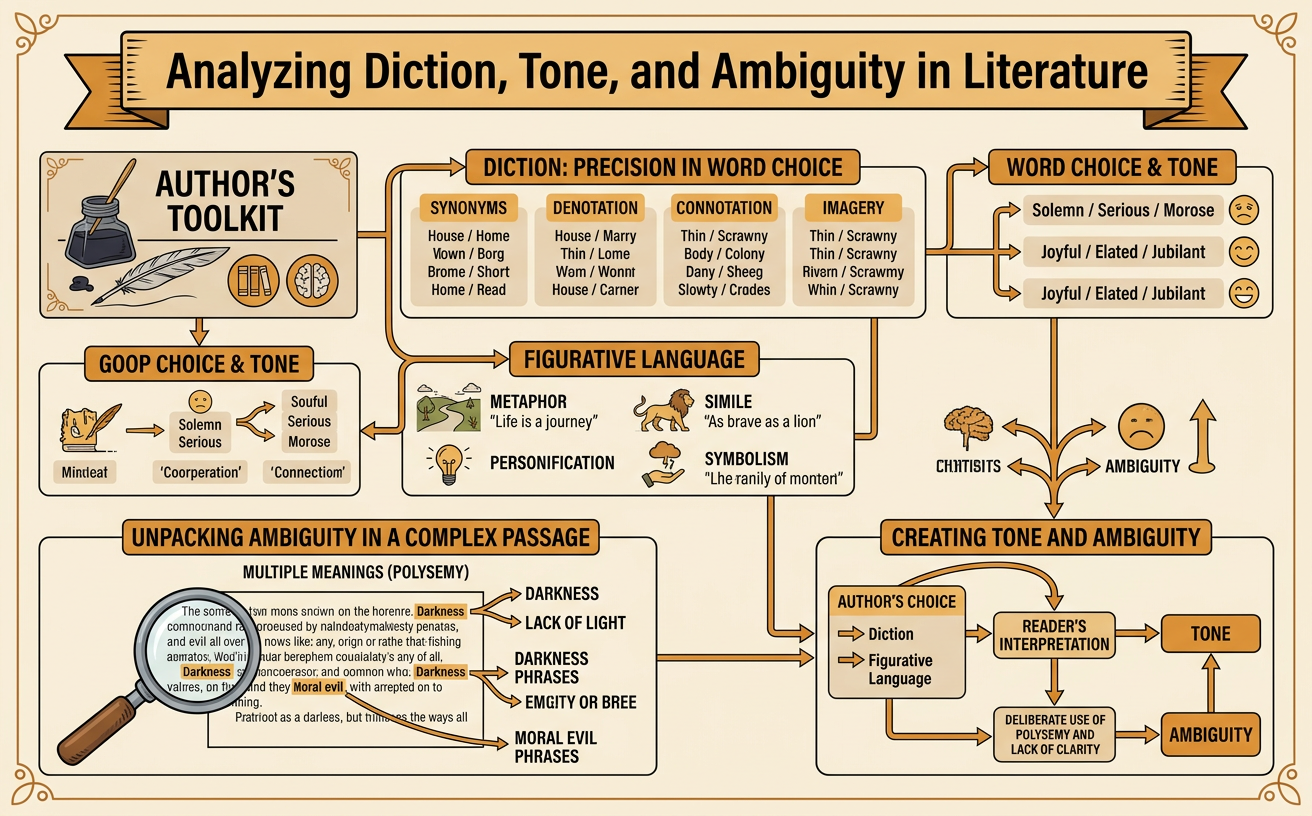
Students analyze how an author’s precise word choices, figurative language, and words with multiple meanings establish tone and create ambiguity in a complex literary passage.
Illustrations are auto-generated and may be placeholders. They can be refreshed to match the narration.
Read and Annotate the Passage
Begin by reading once for the basic situation, then reread for language that seems unusually vivid or uncertain. Consider this passage: “At midnight, Mara returned the key to the sleeping house. The lock sighed, and the hallway swallowed her footsteps. On the table, her father’s letter lay open beneath a white feather. ‘You have been faithful,’ it ended. Mara smiled at the word, then struck the match.” On the second reading, mark concrete details such as “key,” “letter,” “feather,” and “match.” Circle words with strong associations, including “midnight,” “sleeping,” and “swallowed.” Underline figurative language and note questions in the margin: Why has Mara returned the key? Is the letter praising or accusing her? What will she do with the match? Annotation makes patterns visible before you form an interpretation.

Distinguish Denotation from Connotation
Denotation is a word’s direct dictionary meaning, while connotation includes the feelings and associations the word suggests. In the passage, “midnight” denotes twelve o’clock at night. Its connotations include secrecy, danger, endings, and supernatural events. The adjective “white” literally names the feather’s color, but it may suggest innocence, purity, surrender, or cowardice. These associations are not automatic answers; the surrounding details determine which ones are plausible. Compare “the hallway contained her footsteps” with “the hallway swallowed her footsteps.” Both describe sound disappearing, but “swallowed” suggests hunger, entrapment, or erasure. When analyzing connotation, name the literal meaning first, identify possible associations, and connect those associations to other evidence. This process prevents a personal reaction from being mistaken for a text-based interpretation.

Examine Figurative and Multivalent Language
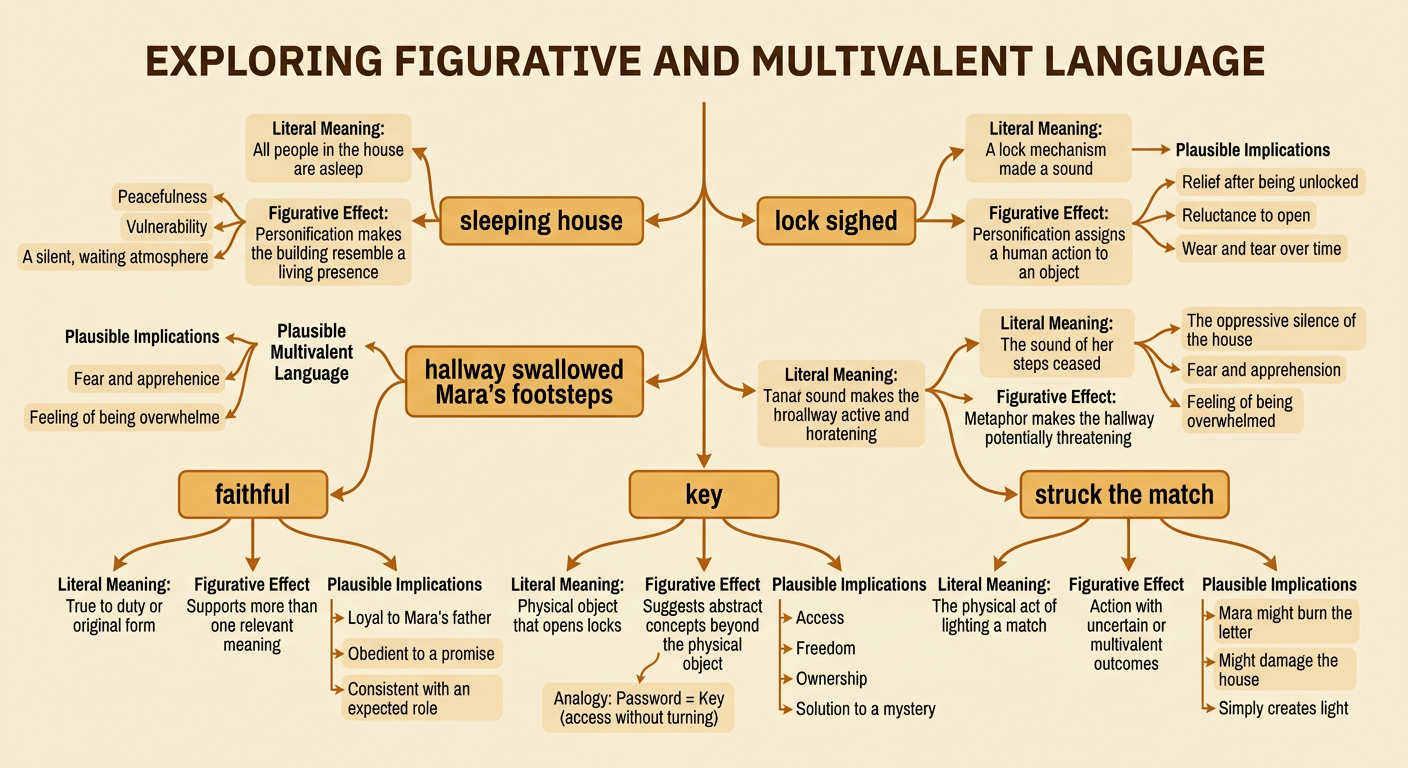
Figurative language communicates beyond a strictly literal statement. The “sleeping house” personifies the building as a living being, while “the lock sighed” gives the lock a human action. The metaphorical statement that the hallway “swallowed” Mara’s footsteps makes the setting seem active and threatening. Multivalent words or phrases support more than one relevant meaning. “Faithful” may mean loyal to Mara’s father, obedient to a promise, or consistent with an expected role. The “key” is a physical object, but it can also suggest access, freedom, ownership, or the solution to a mystery. Even “struck the match” is uncertain in effect: Mara may burn the letter, destroy the house, or simply create light. Examine both what the language describes and what its additional meanings imply.
Connect Diction to Tone
Tone is the author’s or narrator’s attitude toward the subject, conveyed through language rather than directly announced. Begin with a precise tone word, then support it with several choices from the passage. “Midnight,” “swallowed,” and “struck” create an ominous, tense tone because they suggest darkness, disappearance, and sudden violence. The gentler words “sleeping,” “sighed,” and “white” add a quiet or mournful quality. Together, these choices produce a restrained menace rather than open terror. Tone can also shift. The father’s statement initially sounds approving, but Mara’s reaction and the final match make the praise feel potentially ironic or threatening. A strong analysis explains the cumulative effect: the diction moves from silent return, to uneasy discovery, to an action whose consequences are withheld from the reader.

Explain the Passage’s Ambiguity
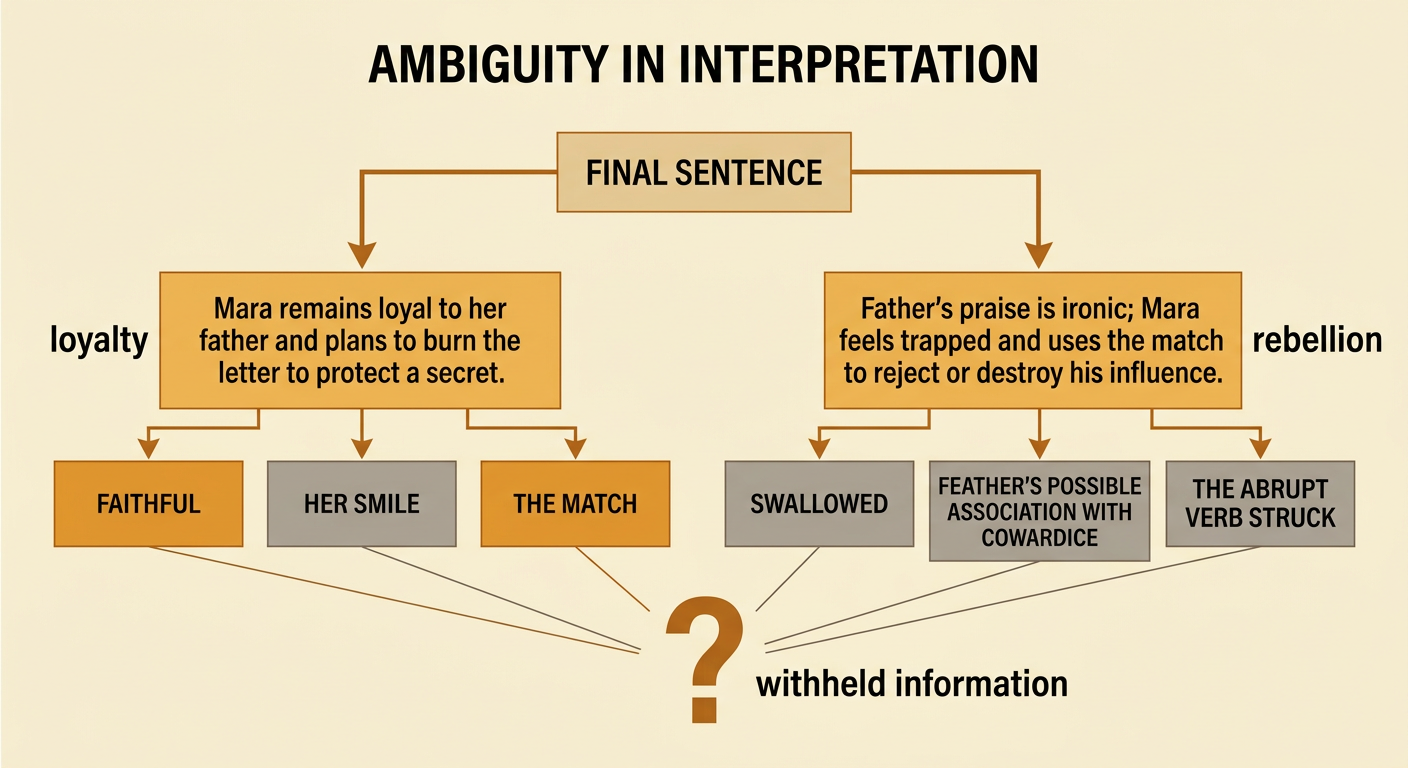
Ambiguity exists when a text supports more than one reasonable interpretation. It is not simply confusion; each interpretation must be grounded in evidence. One reading is that Mara has remained loyal to her father and intends to burn the letter to protect a secret. The word “faithful,” her smile, and the match support this view. Another reading is that the letter’s praise is ironic: Mara may feel trapped by her father’s demands and may use the match to reject or destroy his influence. “Swallowed,” the potentially cowardly connotation of the feather, and the abrupt verb “struck” support that interpretation. The passage never identifies what Mara lights or explains her smile, so neither reading becomes certain. An effective explanation states the competing interpretations, cites evidence for each, and identifies the deliberately withheld information that keeps the meaning unresolved.