
Analyzing Figurative Language and Word Choice
Students determine the meanings of figurative and connotative language and explain how an author's word choices shape tone and meaning in a literary passage.

Illustrations are auto-generated and may be placeholders. They can be refreshed to match the narration.
Literal, Figurative, and Connotative Meanings
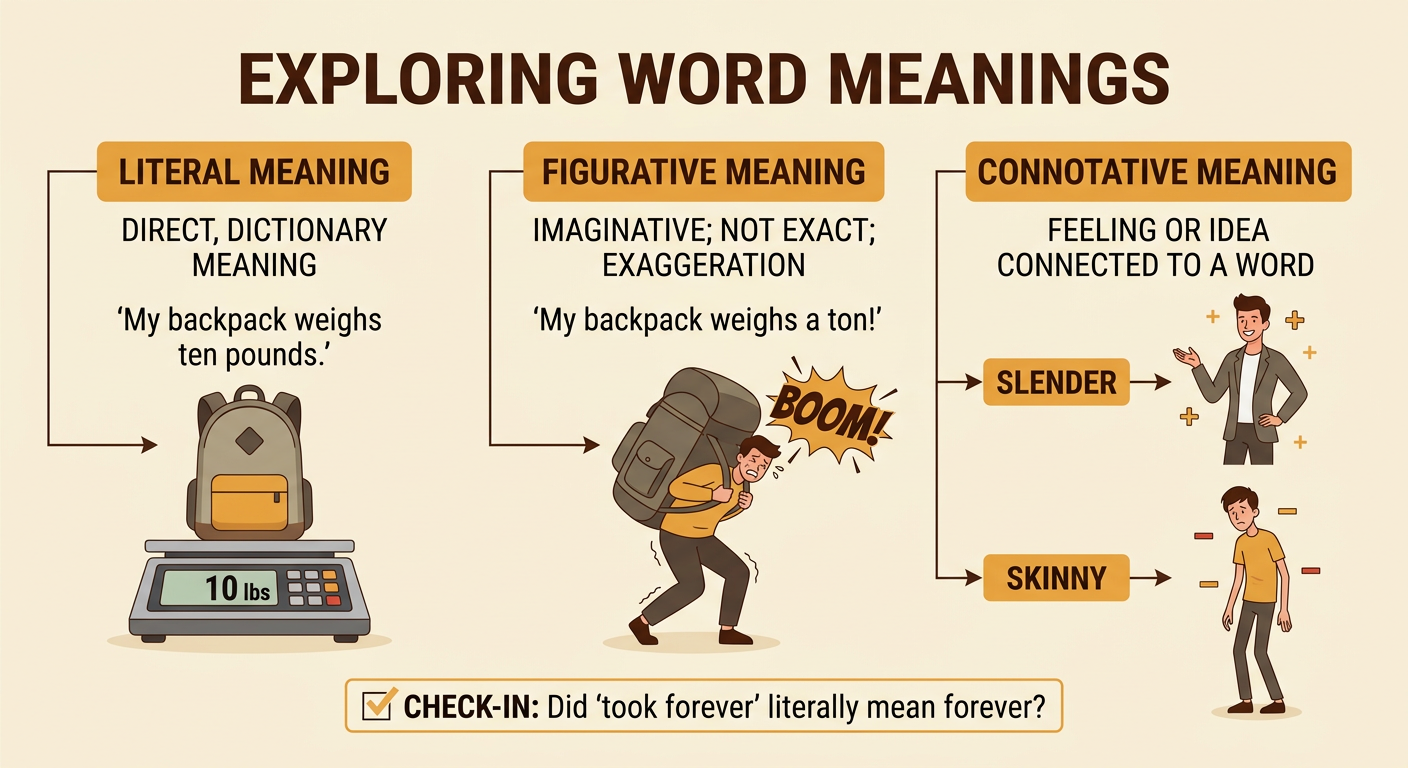
A word or phrase can communicate meaning in several ways. Literal meaning is the direct, dictionary meaning. In “The backpack weighs ten pounds,” the weight is literal. Figurative meaning is imaginative rather than exact. In “My backpack weighs a ton,” the speaker exaggerates to show that the backpack feels extremely heavy. Connotative meaning comes from the feelings or ideas associated with a word. For example, “slender” and “skinny” both describe someone who is thin, but “slender” often sounds positive, while “skinny” may sound critical. When reading literature, ask whether the words describe something exactly, create an imaginative comparison, or suggest an emotion. Recognizing these differences helps you understand what the author means beyond the words’ basic definitions.
Identify Figurative Language
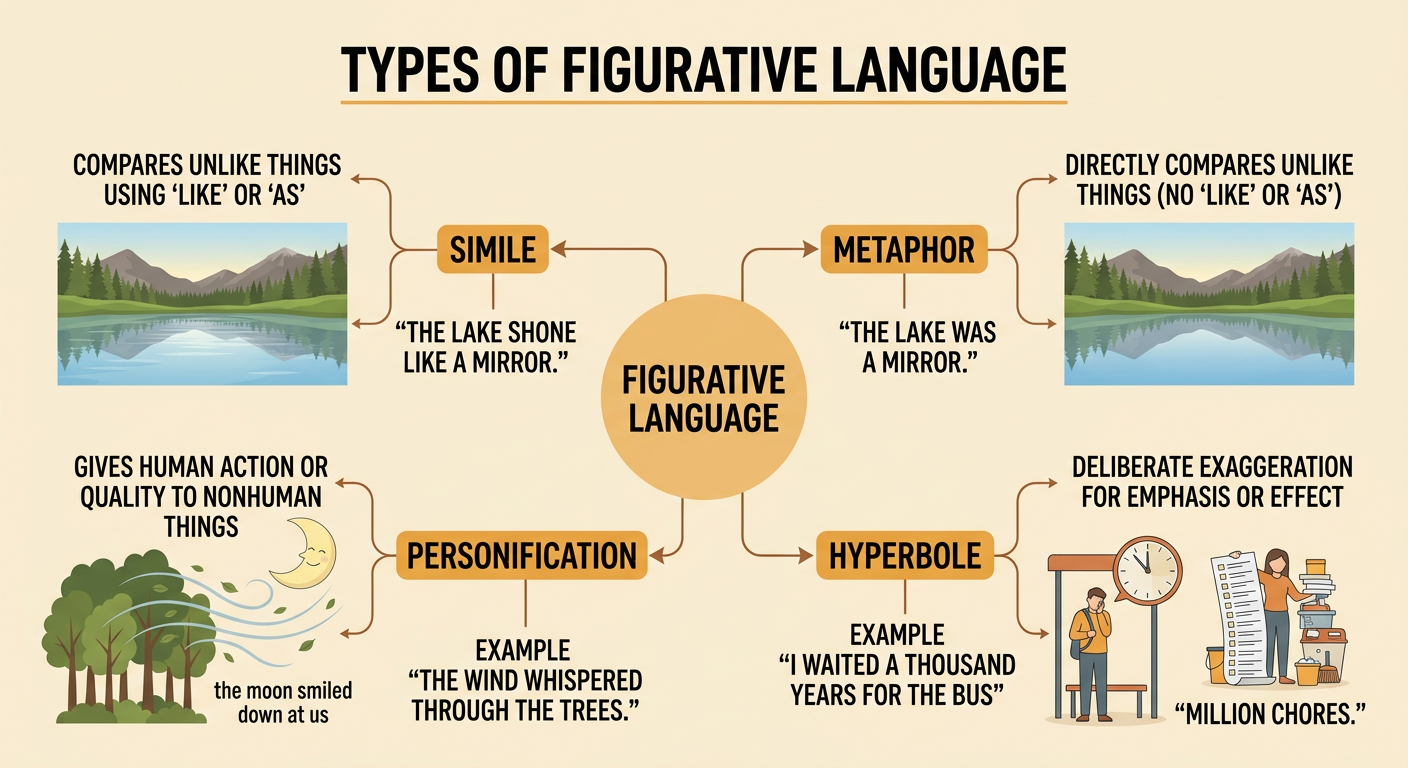
Figurative language creates pictures and ideas that go beyond literal meaning. A simile compares two unlike things using “like” or “as,” as in “The lake shone like a mirror.” A metaphor makes a direct comparison, as in “The lake was a mirror.” Personification gives human actions or qualities to something nonhuman: “The wind whispered through the trees.” Hyperbole is deliberate exaggeration: “I waited a thousand years for the bus.” To identify figurative language, first notice words that seem impossible or not literally true. Then determine what type of figure of speech is being used and what comparison or idea it creates. In the wind example, wind cannot truly whisper, but the personification helps readers imagine a soft, quiet sound.
Use Context to Determine Meaning
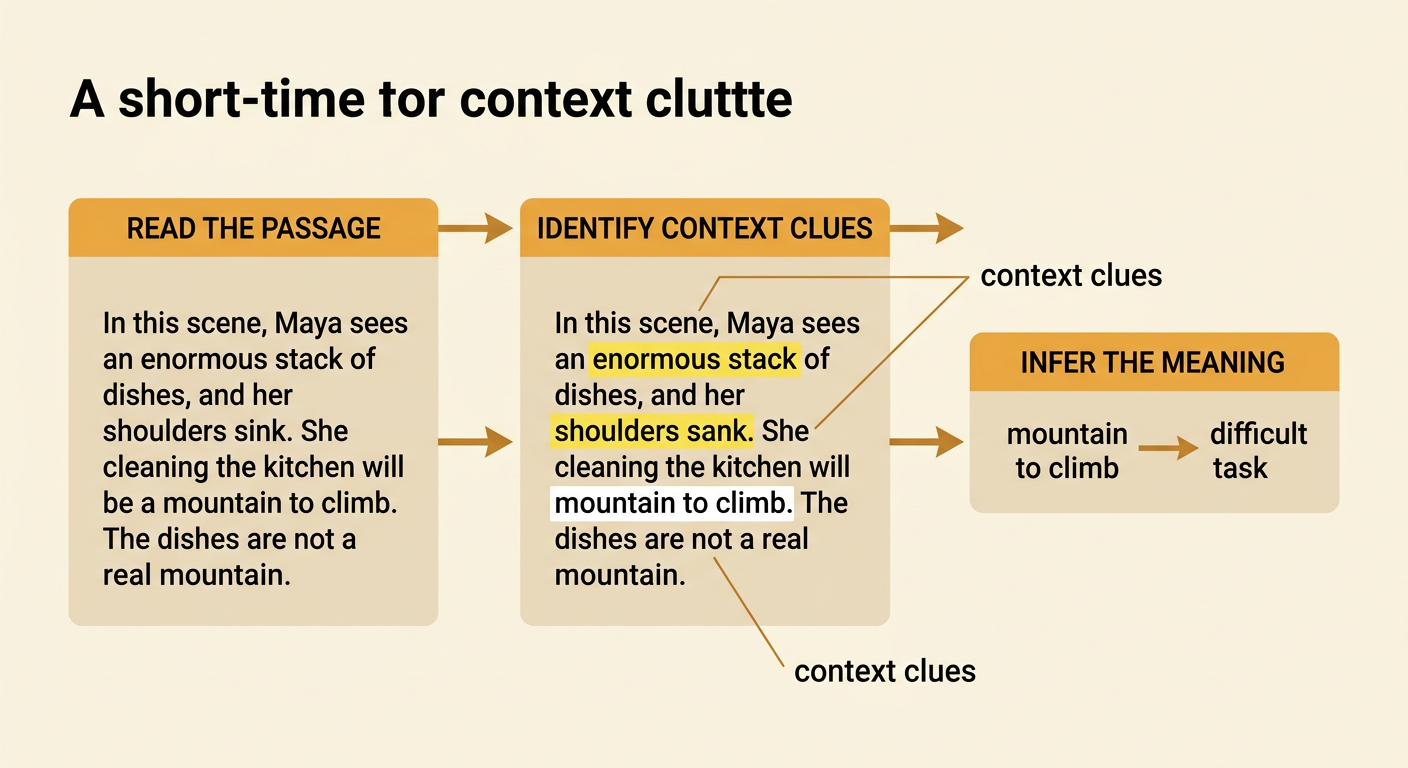
Context is the information surrounding an unfamiliar word or phrase. It can help you determine both literal and figurative meanings. Read the sentence before, the sentence containing the phrase, and the sentence after it. Look for descriptions, examples, contrasts, causes, and results. Consider this passage: “Maya stared at the enormous stack of dishes. Her shoulders sank. Cleaning the kitchen would be a mountain to climb.” A kitchen task is not literally a mountain. The stack of dishes and Maya’s reaction show that “a mountain to climb” means a difficult task. After forming a possible meaning, replace the phrase with your interpretation. If the passage still makes sense, your interpretation is likely reasonable. Always support your conclusion with specific context clues from the text rather than relying only on a guess.
Analyze Word Choice and Tone
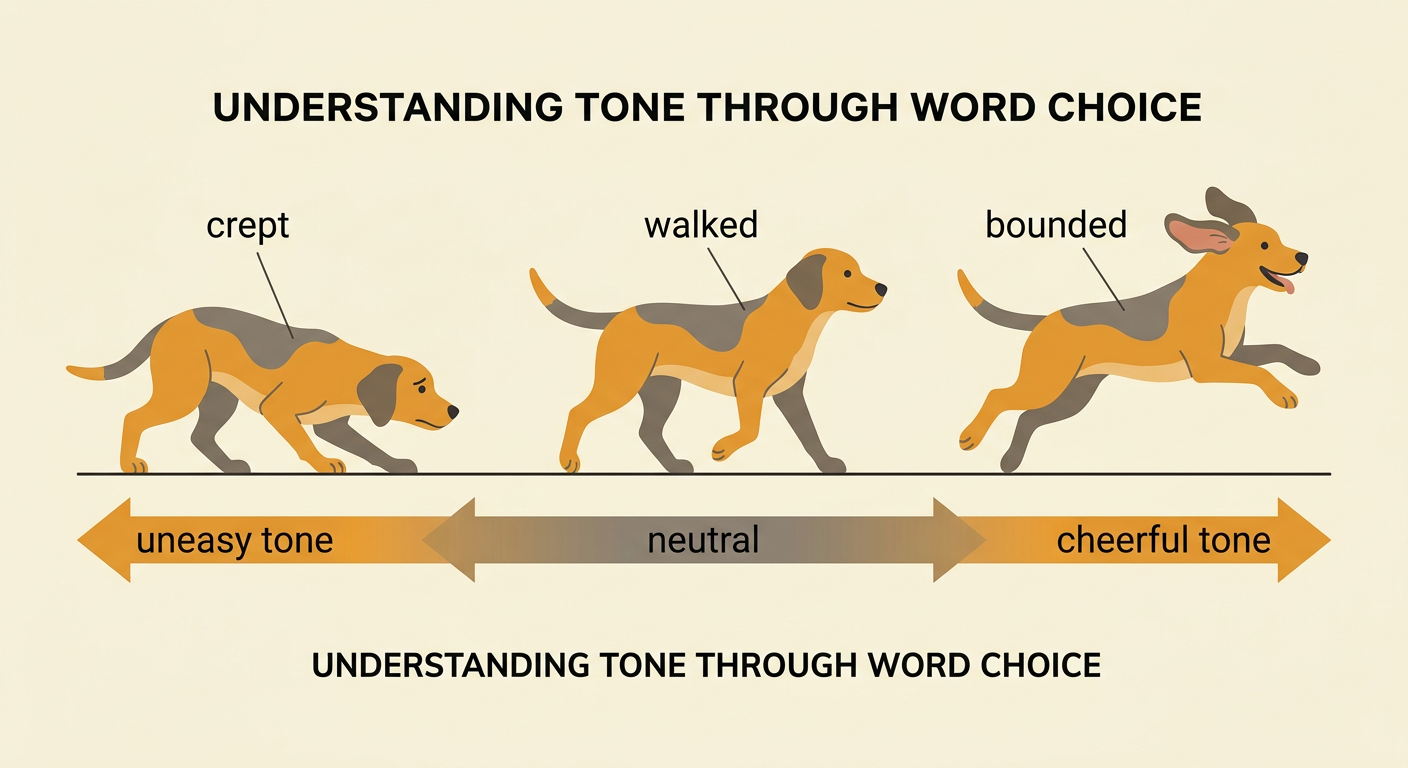
Word choice helps create tone, which is the author’s attitude toward a subject or situation. Words with similar dictionary meanings may have different connotations. Compare “The dog walked toward me” with “The dog crept toward me.” “Walked” is neutral, but “crept” suggests slow, secretive movement and may create an uneasy tone. Strong verbs, precise adjectives, and sensory details can make a scene feel joyful, tense, gloomy, peaceful, or humorous. To analyze tone, identify an important word, consider its meaning and connotations, and connect it to the feeling of the passage. Then test a replacement word. If “crept” were replaced with “bounded,” the dog would seem energetic and friendly, changing the tone from uneasy to cheerful. This comparison shows why the author’s exact choice matters.
Explain the Author's Impact
A strong analysis explains how a specific word or phrase affects meaning, tone, and the reader’s experience. Begin by naming the word choice. State its meaning in context, describe the tone it helps create, and explain why that effect matters. Include evidence from the passage. For example, consider “The abandoned house crouched beneath the storm clouds.” The verb “crouched” literally describes a low, bent position, but here it personifies the house. It makes the house seem like a creature hiding or preparing to spring. This choice creates a threatening, suspenseful tone and may make readers expect danger. A complete explanation could say, “The author’s use of ‘crouched’ personifies the house, making it seem alive and menacing. This creates suspense and prepares the reader for a frightening event.”
