Analyzing How a Story’s Structure Creates Effects
Students analyze how an author’s ordering of events, use of flashbacks, and manipulation of pacing create suspense, surprise, or emphasis in a literary text.

Illustrations are auto-generated and may be placeholders. They can be refreshed to match the narration.
Identify the Narrative Structure
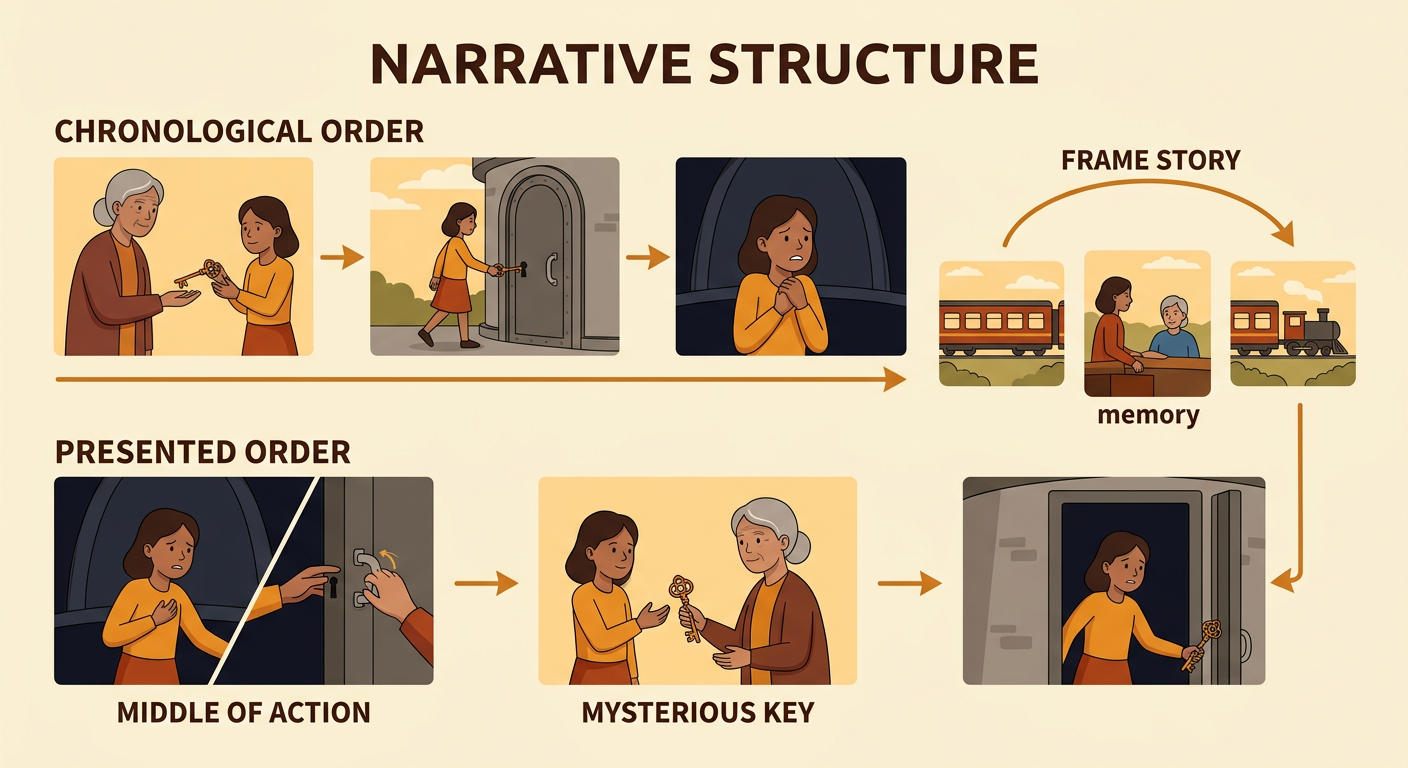
Narrative structure is the way an author organizes a story. A story may follow chronological order, moving from the earliest event to the latest, or it may begin in the middle of the action and reveal earlier events later. It may also use a frame story, in which one situation surrounds another story. To identify structure, notice where the story begins, how it moves between scenes, and where important information appears. For example, a story opens with Maya trapped in a dark observatory while someone turns the locked door. The next chapter returns to the morning, when Maya received a mysterious key. Because the author presents the dangerous moment before explaining how Maya arrived there, the structure is not strictly chronological. Beginning with danger immediately creates a question: How did Maya become trapped?
Map the Order of Events
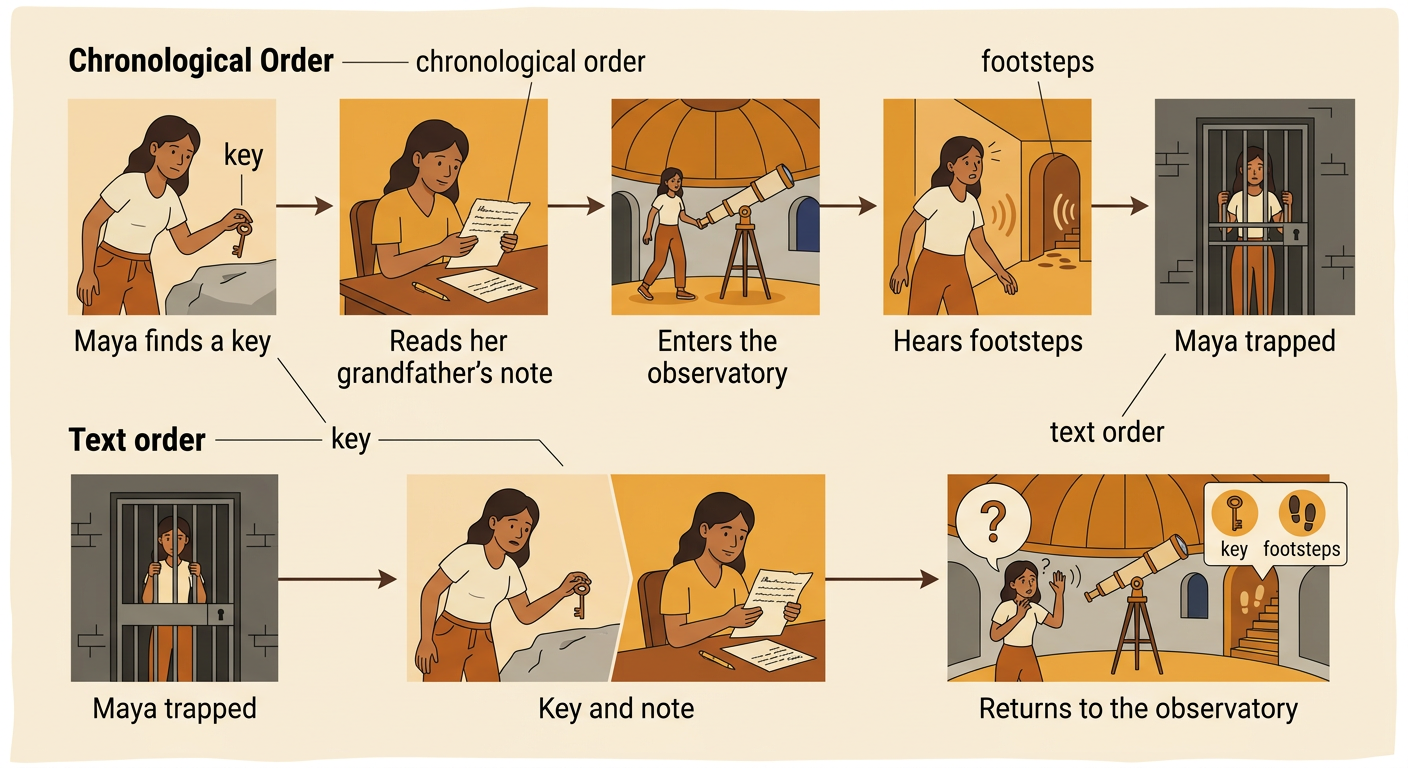
To analyze event order, separate what happened from when the author tells it. First, list the events in chronological order. Then make a second list showing their order in the text. Comparing the lists helps you see what information the author delays or reveals early. In the observatory story, the chronological events are that Maya finds a key, reads her grandfather's note, enters the building, hears footsteps, and becomes trapped. However, the text begins with Maya trapped, moves back to the key and note, and then returns to the observatory. The author delays the meaning of the key and the identity of the footsteps. This arrangement produces mystery because readers initially lack the causes of Maya's situation. When mapping a longer story, mark chapter or paragraph numbers so that every claim about structure can be supported with precise evidence.
Examine Flashbacks and Pacing
A flashback interrupts the present action to show an earlier event. Authors use flashbacks to provide background, explain motivation, or reveal a clue at a strategic moment. Pacing is the speed at which a story seems to move. Short sentences, quick actions, and limited description often accelerate the pace, while reflection, detailed description, and flashbacks can slow it. Suppose Maya hears the observatory door creak. The story pauses for a flashback to her grandfather warning, “Never turn the silver dial after midnight.” This interruption delays the door's opening while emphasizing the warning. When the present action resumes, brief sentences increase the pace: “The latch lifted. Maya stepped back. The door swung inward.” The contrast between the slow flashback and the rapid action heightens tension. Analyze both what happens during a time shift and why the author places it at that exact point.

Connect Structure to Reader Impact
Structural choices matter because they control what readers know, expect, and feel. Mystery develops when essential information is withheld. Tension grows when readers anticipate danger but must wait for the outcome. Surprise occurs when a later revelation changes the meaning of earlier events. Emphasis results when the author slows down, repeats an image, or places an event at a key point. In the observatory story, readers may assume the approaching person is dangerous because the opening provides no identity. A later flashback reveals that Maya's grandfather once used the same footsteps as a signal during emergencies. When the door opens and he appears to rescue her, the revelation changes the footsteps from a threat into a sign of help. A strong analysis names the structural choice, identifies the information it controls, and explains the resulting reader response rather than merely stating that the scene is “interesting” or “suspenseful.”

Write a Structure-and-Effect Analysis
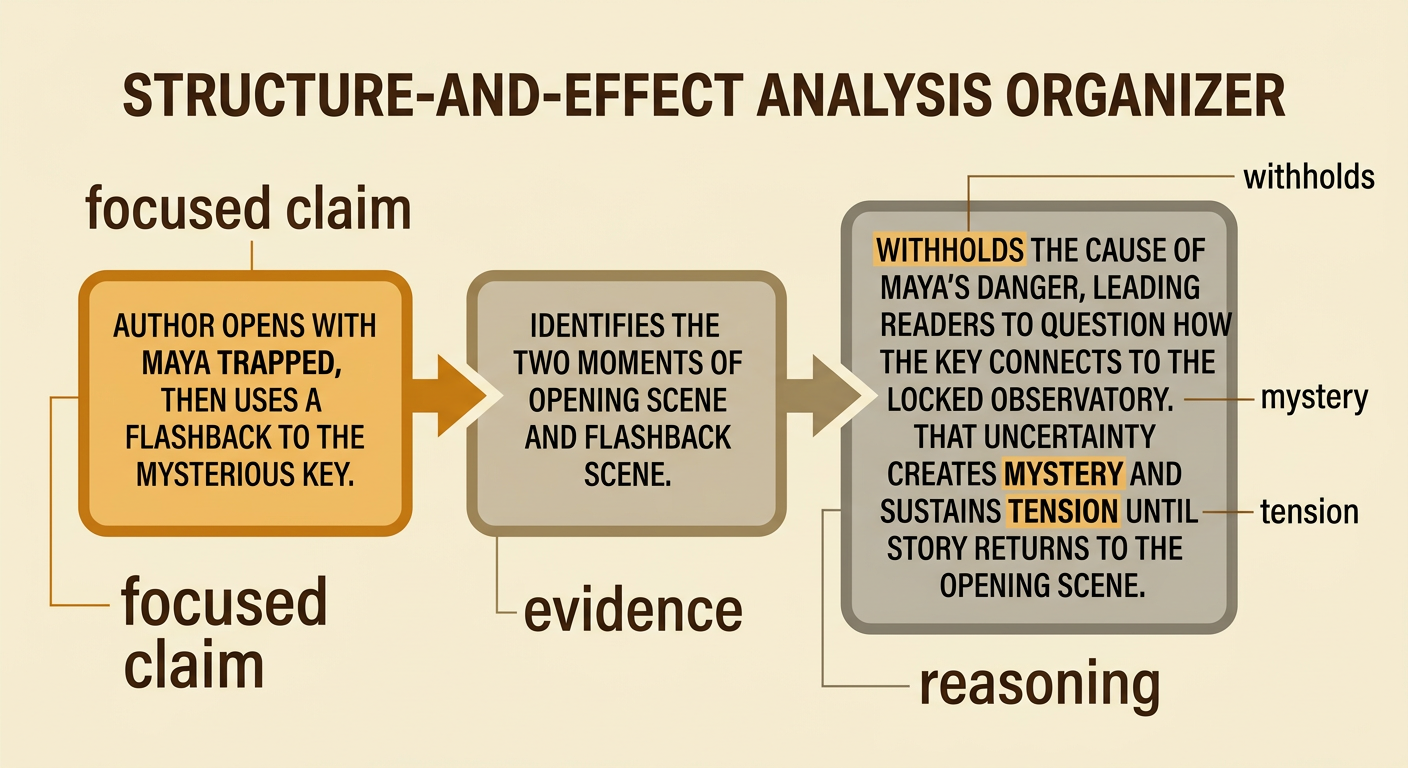
A structure-and-effect analysis should make a focused claim, provide evidence, and explain the connection between the author's choice and the reader's experience. Begin by naming the technique and its location. Then describe how it changes the order, timing, or pace of information. Finally, explain the specific effect. For example: “By opening with Maya trapped and then flashing back to the mysterious key, the author withholds the cause of her danger. This reordered sequence makes readers question how the key led to the locked observatory, creating mystery and sustaining tension until the story returns to the opening scene.” This analysis does more than summarize events; it explains why their arrangement matters. Use precise verbs such as delays, interrupts, accelerates, withholds, reveals, or emphasizes. Check that your evidence supports your claim and that you explain how a different order or pace would produce a different experience.