Analyzing How Authors Transform Source Material
Students compare a literary work with an earlier myth, story, or historical source to analyze how the author reshapes key elements to create new meaning.
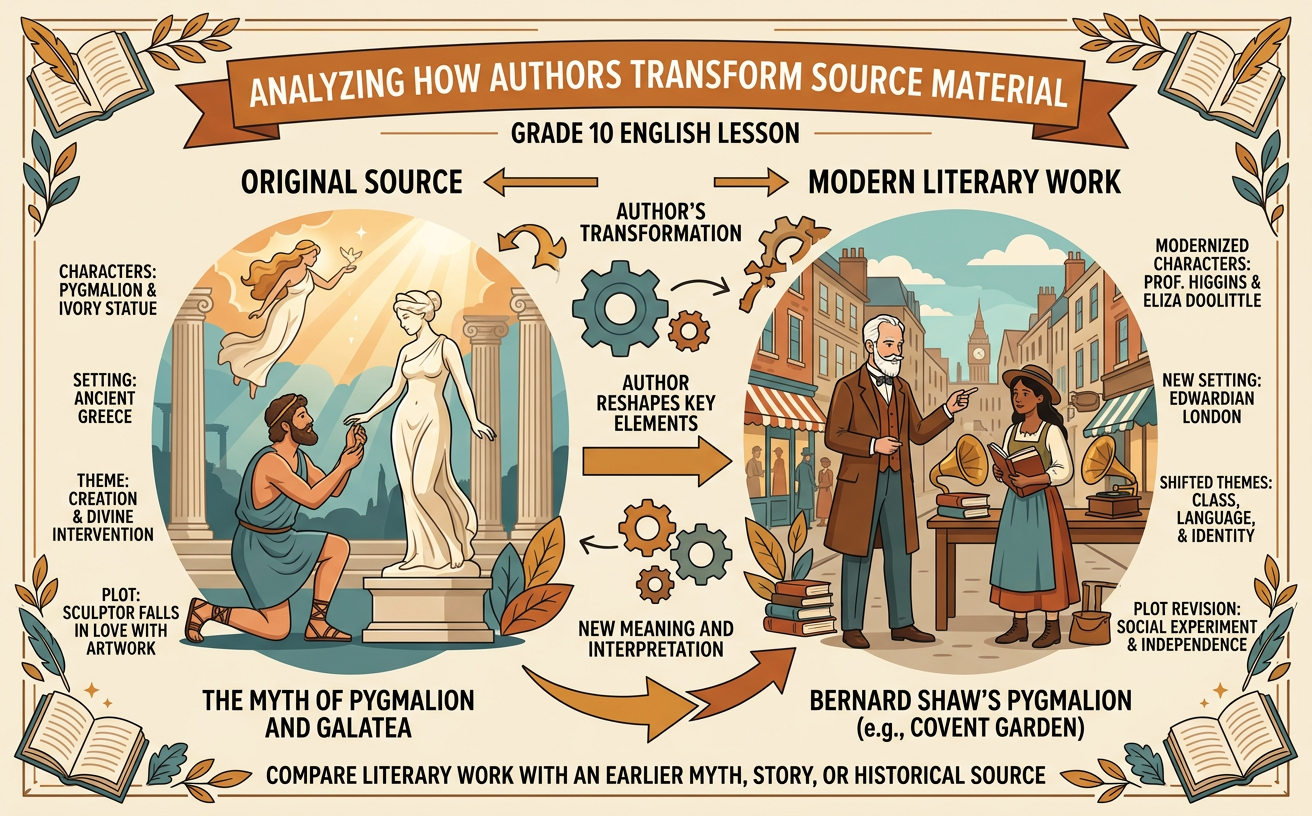
Illustrations are auto-generated and may be placeholders. They can be refreshed to match the narration.
Identify the Source and Adaptation
Begin by clearly identifying the earlier source and the later work. Record each title, author, date, genre, and basic subject. A source does not have to be the first version ever written; it is the earlier text that the later author appears to use. For example, Arthur Brooke published the narrative poem The Tragical History of Romeus and Juliet in 1562. William Shakespeare wrote the play Romeo and Juliet around 1595, drawing heavily on Brooke’s poem. Both works follow young lovers from feuding families, but Shakespeare adapted the story for the stage and for his own dramatic purposes. Identifying this relationship is not the same as accusing an author of copying. Authors often transform existing material by changing its structure, characters, language, emphasis, or message.

Review Shared Story Elements
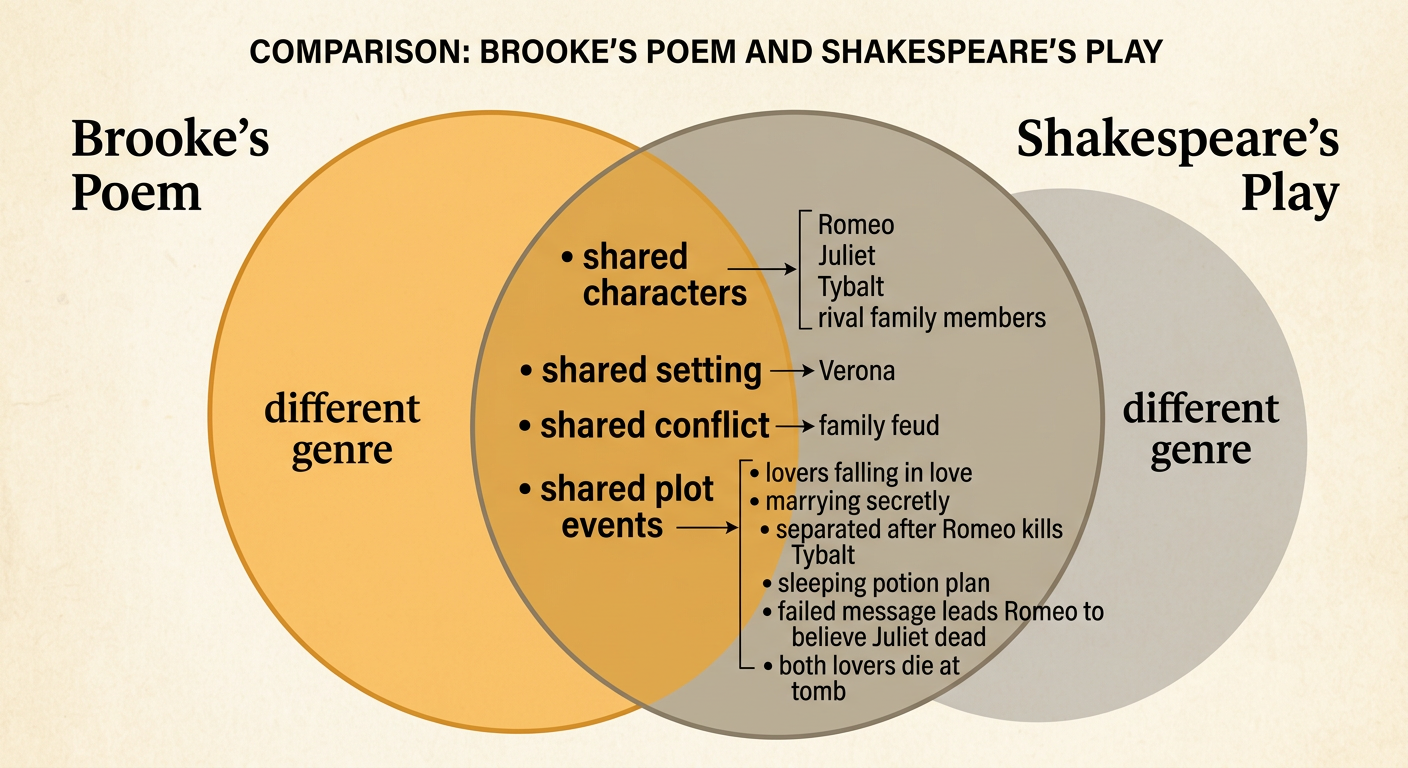
Next, list the important elements that the source and adaptation share. Compare characters, setting, conflict, plot events, themes, and symbols. Focus on meaningful similarities rather than small details. Brooke’s poem and Shakespeare’s play both feature Romeo and Juliet, two young people from rival families in Verona. In both versions, they fall in love, marry secretly, become separated after Romeo kills Tybalt, and rely on a sleeping potion plan. A failed message causes Romeo to believe Juliet is dead, and both lovers die at the tomb. These shared elements establish that Shakespeare is using Brooke’s basic story pattern. A comparison chart can help separate what is inherited from what is newly created. This step provides the foundation for analyzing transformation because a change is significant only when readers understand the original element.
Trace Significant Transformations
After identifying similarities, trace the changes the later author makes. Look for additions, omissions, reordered events, altered characterization, compressed time, and shifts in point of view or tone. Shakespeare greatly compresses Brooke’s story, which unfolds over many months, into events lasting only several days. He also expands Mercutio from a minor figure into a vivid, witty character whose death changes the direction and mood of the play. Shakespeare gives dramatic space to scenes such as the balcony conversation and places the audience inside conflicts through dialogue, soliloquies, and stage action. Create a transformation chain for each major change: identify the source element, describe the adapted version, and note the difference precisely. Avoid vague statements such as “Shakespeare changed a lot.” Instead, explain exactly what was shortened, expanded, removed, or reimagined.

Analyze the Effects of Changes
A transformation matters because it affects meaning, tone, pacing, characterization, or the audience’s response. Ask why the author might have made each change and what the new version emphasizes. Shakespeare’s compressed timeline makes Romeo and Juliet’s choices feel sudden and urgent. Their rapid love, marriage, separation, and deaths highlight the danger of impulsive action. Expanding Mercutio also deepens the tragedy. His playful language initially adds humor and energy, but his death after the street fight turns the play sharply toward catastrophe. Because the audience has come to know him, his loss feels personal rather than merely necessary to the plot. These changes help Shakespeare emphasize how youthful haste, public violence, and the family feud combine to destroy several lives. Strong analysis connects a specific change to a specific effect instead of simply judging one version as better.

Support a Claim with Evidence
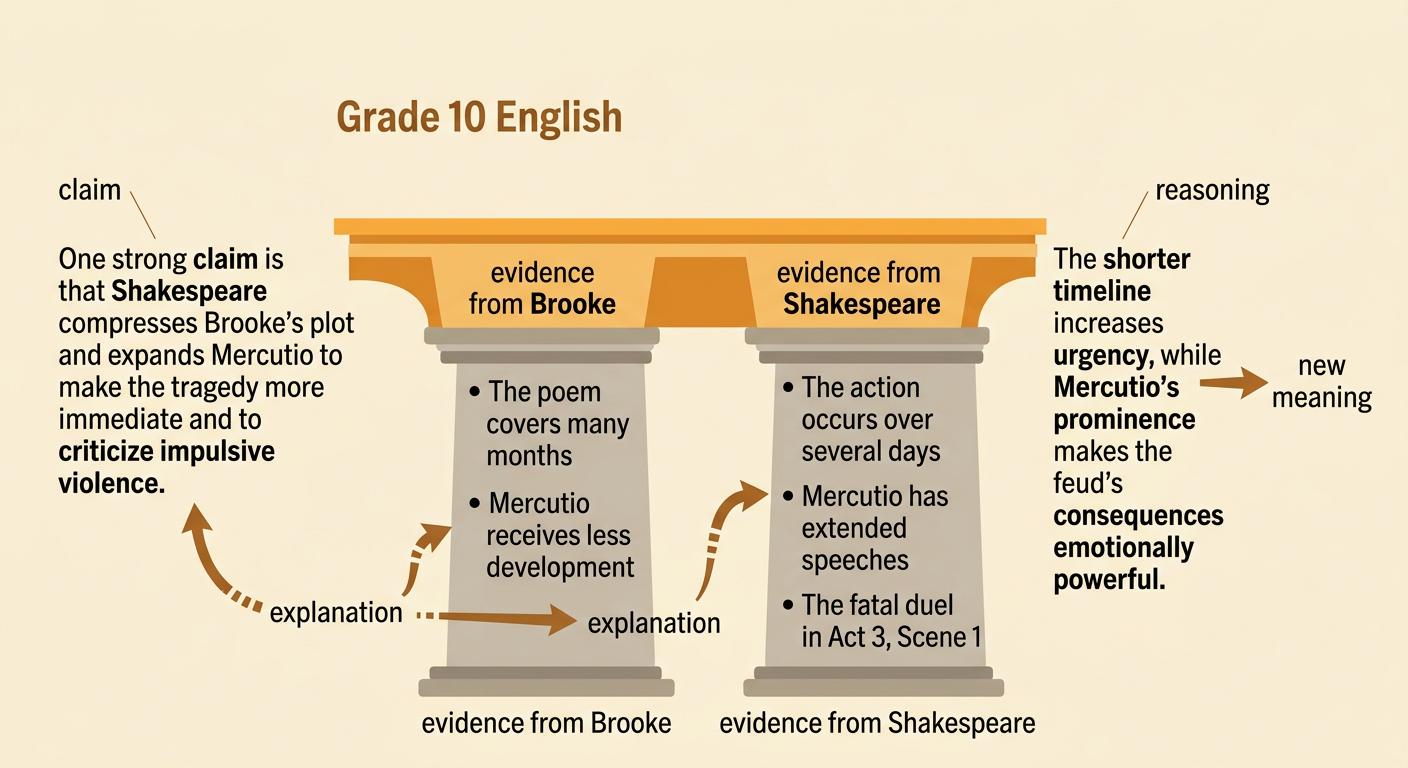
Finish by making a focused claim about how the adaptation transforms the source and why the transformation matters. Then support the claim with evidence from both works. A strong claim might state that Shakespeare compresses Brooke’s plot and expands Mercutio to make the tragedy feel more immediate and to criticize impulsive violence. Evidence from Brooke includes the poem’s longer timeline and its less developed treatment of Mercutio. Evidence from Shakespeare includes the action occurring over several days, Mercutio’s extended speeches, and the fatal duel in Act 3, Scene 1. Explain how each detail proves the claim: the shorter timeline increases urgency, while Mercutio’s prominence makes the feud’s consequences emotionally powerful. Do not stop after summarizing or quoting. Analysis is the reasoning that connects evidence to the claim and shows how the author creates new meaning from inherited material.