
Analyzing How Literary Structure Shapes Meaning
Students analyze how an author’s sequencing, pacing, and manipulation of time create effects such as tension, surprise, or ambiguity in a literary text.

Illustrations are auto-generated and may be placeholders. They can be refreshed to match the narration.
Identify the Text’s Structural Pattern
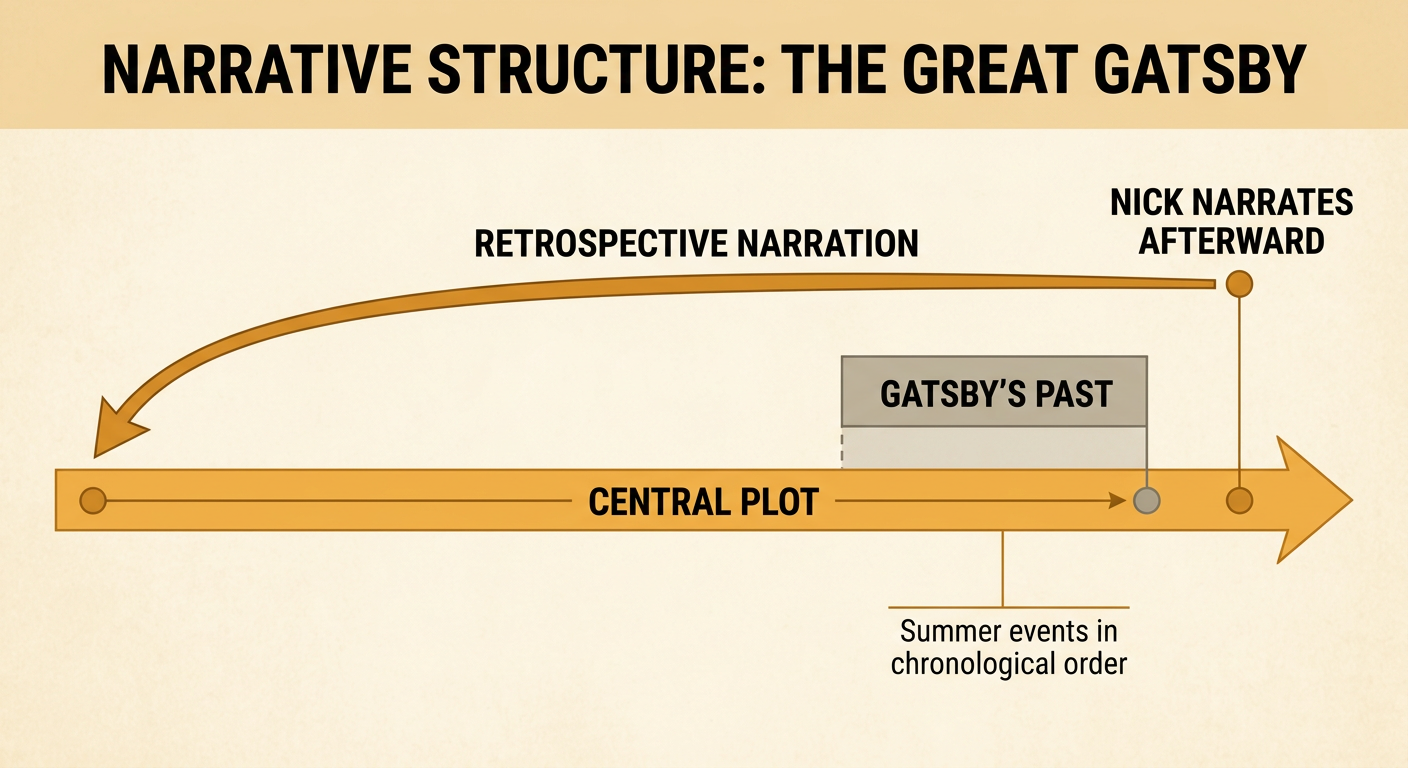
Before interpreting individual scenes, identify the pattern that organizes the whole text. A narrative may be chronological, nonlinear, circular, episodic, framed, or divided into parallel plotlines. Look for where the story begins, how major sections relate, and whether the ending returns to an earlier image or event. For example, in The Great Gatsby, Nick Carraway narrates after the main events have occurred, reconstructing one summer while delaying important information about Gatsby’s past. The novel therefore combines retrospective narration with a mostly chronological central plot. This pattern makes Gatsby mysterious because readers first encounter his reputation, parties, and behavior before learning how he created his identity. Recognizing the pattern helps explain why information arrives when it does and how the design shapes the reader’s judgment.
Examine Sequencing and Pacing
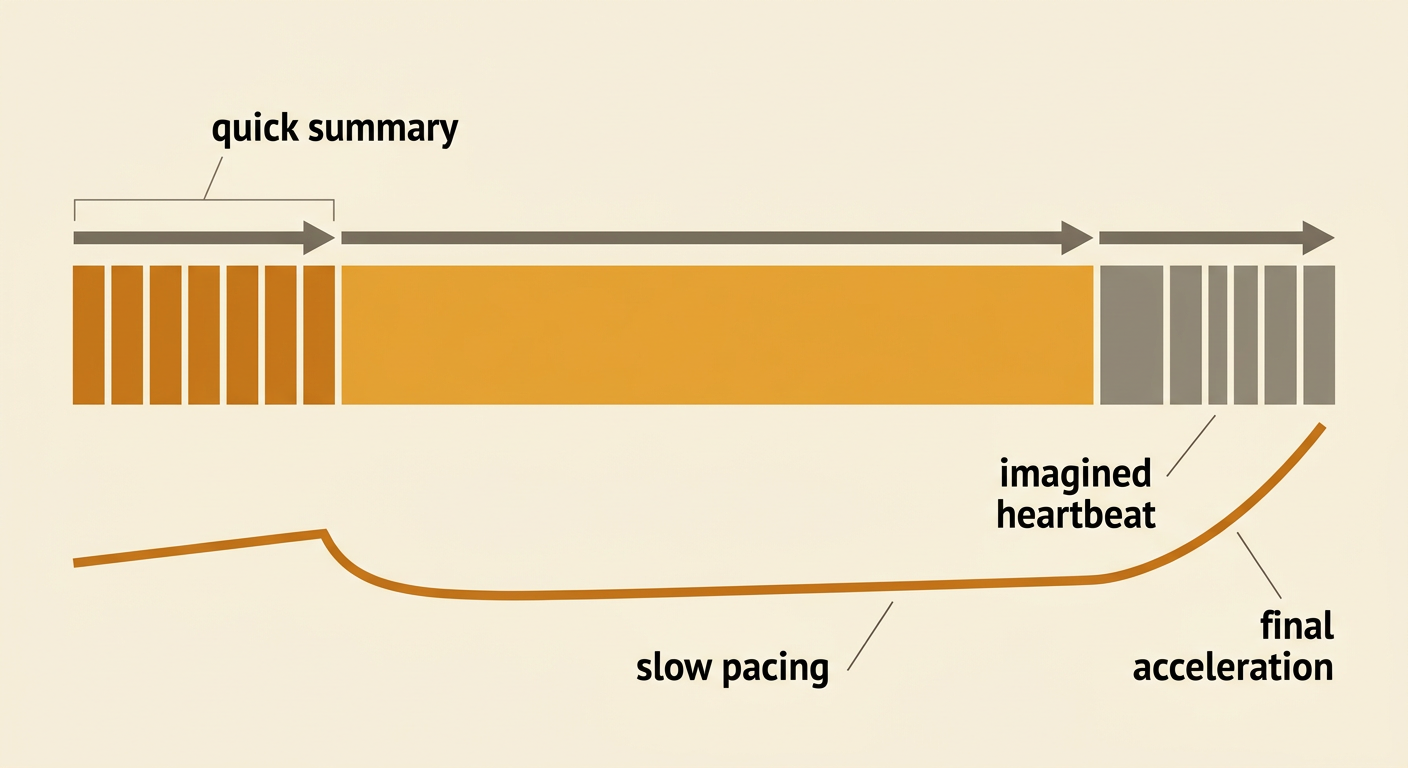
Sequencing is the order in which events or details are presented, while pacing is the amount of textual space and attention given to them. Authors may summarize months in one sentence, then devote several pages to a few tense minutes. Examine scene length, sentence length, dialogue, repetition, and pauses in the action. In Edgar Allan Poe’s The Tell-Tale Heart, the narrator quickly summarizes days of watching the old man but slows the murder scene dramatically. Repeated descriptions, small sounds, and the gradual opening of the lantern make each moment feel prolonged. After the police arrive, the sequence moves toward the narrator’s confession as the imagined heartbeat becomes increasingly prominent. The slow pacing creates suspense, while the final acceleration conveys panic and loss of control.
Analyze Shifts in Time
Authors manipulate time through flashbacks, flash-forwards, memories, dreams, and changes in narrative speed. To analyze a shift, determine when it occurs in the story’s chronology, what signals it, and what information it postpones or reveals. In Ambrose Bierce’s An Occurrence at Owl Creek Bridge, the narrative begins at a hanging, shifts backward to explain how Peyton Farquhar reached the bridge, and then presents an extended imagined escape. Only at the end does the story return to the instant of execution and reveal that the escape did not occur in objective time. This manipulation stretches a moment into a lengthy experience. It creates surprise, places readers inside Farquhar’s desperate perception, and blurs the boundary between physical events and subjective experience.

Connect Structure to Meaning
Structural choices matter because they guide interpretation, not merely because they arrange events. Ask how the organization develops a theme, creates ambiguity, controls sympathy, or emphasizes a contrast. Mary Shelley’s Frankenstein uses a frame structure: Robert Walton’s letters contain Victor Frankenstein’s account, and Victor’s account contains the creature’s story. Readers therefore receive the creature’s experiences through several layers of narration rather than from a neutral observer. This structure connects to the novel’s concerns with isolation, judgment, and responsibility. It also creates ambiguity because each speaker has motives and limitations. Walton admires Victor, Victor condemns the creature, and the creature explains his suffering. By placing these voices inside one another, Shelley encourages readers to compare perspectives instead of accepting one version as complete truth.

Support a Structural Analysis with Evidence
A strong structural analysis makes a claim, cites evidence about placement or pacing, and explains the resulting effect. Do more than identify a flashback or short sentence; show how that choice contributes to the whole text. Imagine a story that opens with the line, “The watch had stopped at 2:17,” then moves backward through three earlier scenes before returning to the broken watch in the final paragraph. A useful claim would state that the circular structure turns the watch into a symbol of unresolved guilt. Evidence should include the repeated image, the order of the flashbacks, and the return to 2:17. The reasoning should explain how delayed context changes the opening from a puzzling detail into a meaningful reminder. Precise analysis links structural evidence directly to meaning and aesthetic impact.
