Analyzing How Narrative Structure Shapes Meaning
Students analyze how an author’s decisions about chronology, pacing, beginnings, endings, and resolution influence a literary work’s meaning and aesthetic impact.
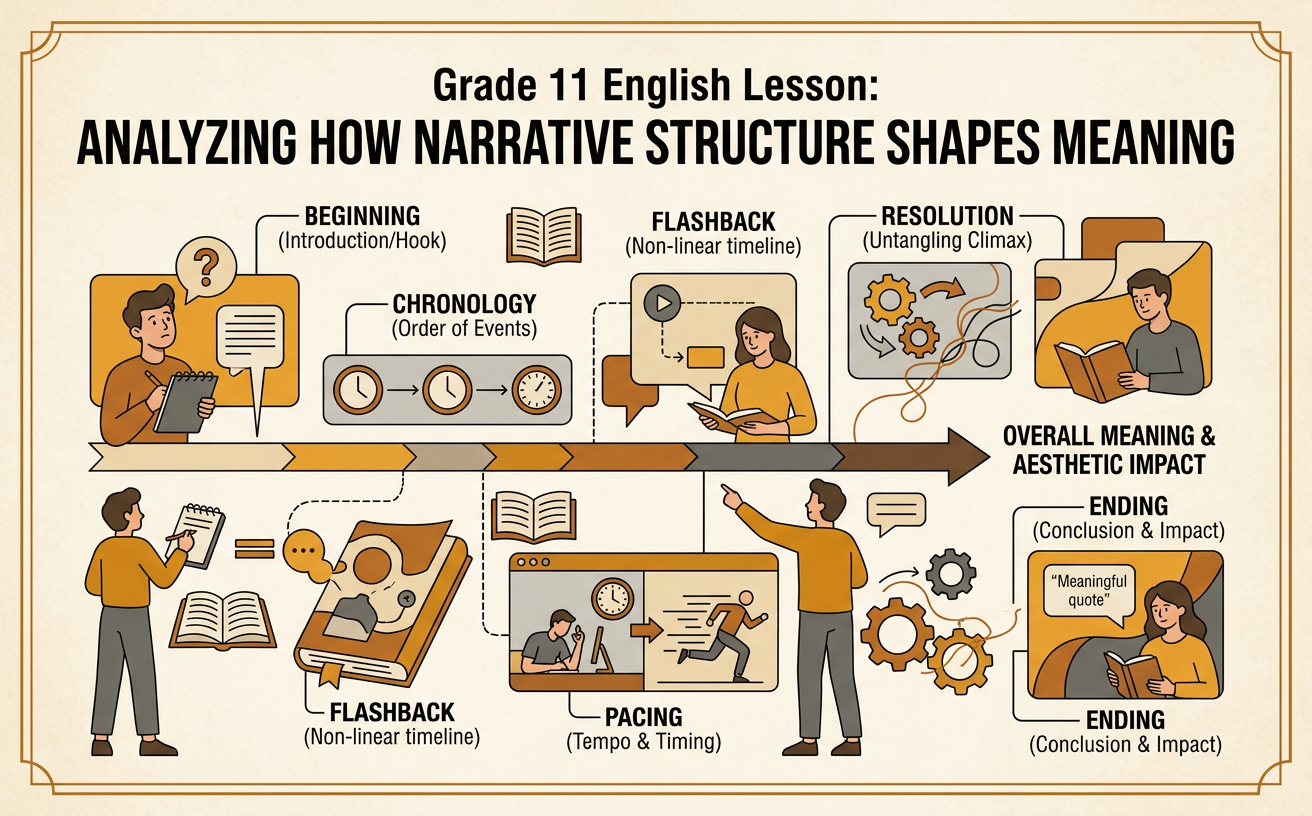
Illustrations are auto-generated and may be placeholders. They can be refreshed to match the narration.
Identify the Text’s Structural Choices
Narrative structure is the arrangement of a story’s parts, not simply the events themselves. Begin by identifying where the author starts, how information is divided, which point of view frames events, and whether the ending resolves the central conflict. A story may begin in the middle of a crisis, delay important background, alternate between narrators, or end without complete resolution. For example, a novel might open with a teenager standing outside a burned house and then return to the previous summer. This choice creates immediate curiosity because readers see the result before learning its cause. When identifying structure, describe the author’s decision precisely: “The author begins with the aftermath and then uses a flashback,” rather than “The beginning is interesting.” Precise identification provides the evidence needed to explain how structure shapes meaning and emotional effect.

Map Chronology and Shifts in Time
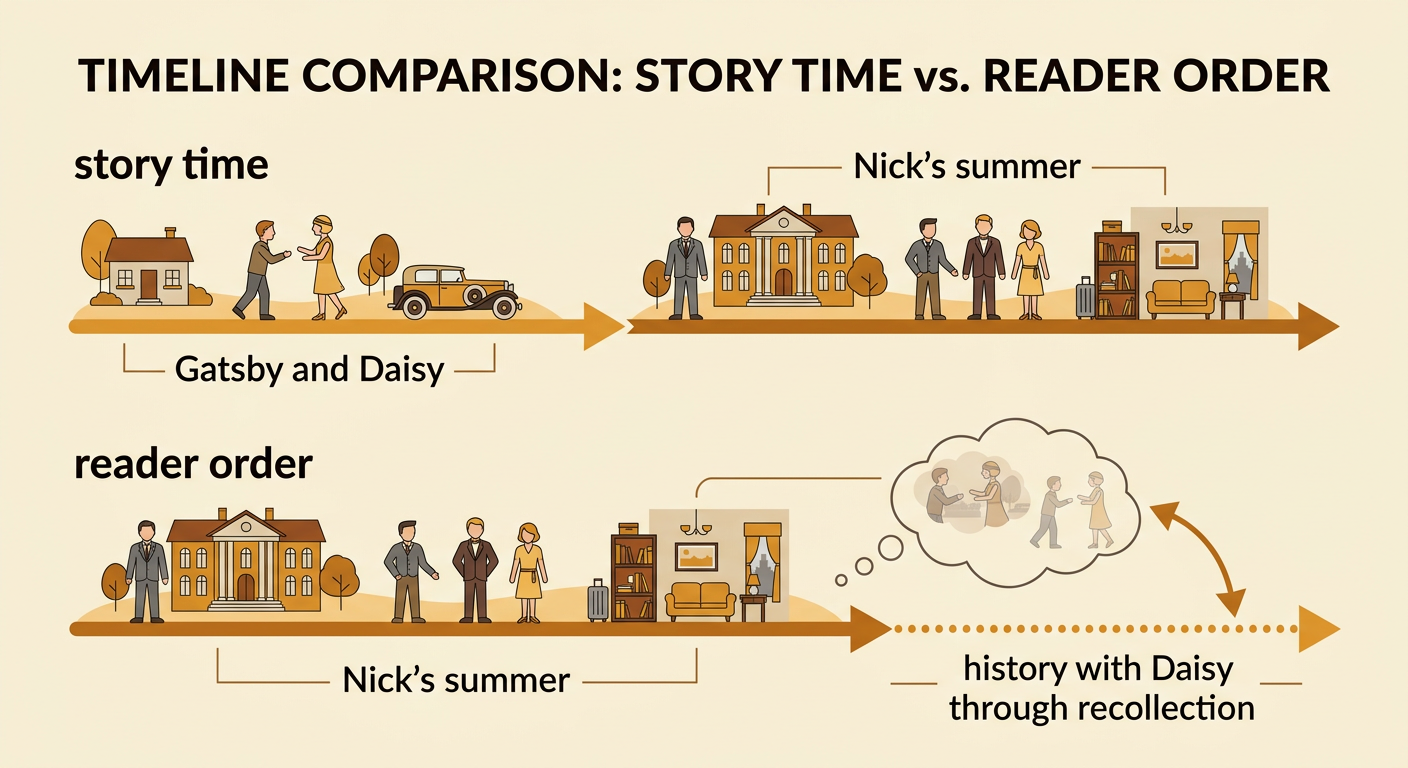
Chronology is the sequence in which events occur in story time. Authors may interrupt that sequence with flashbacks, flash-forwards, memories, dreams, or parallel timelines. To analyze these shifts, create two timelines: one for when events actually happen and another for when readers learn about them. In The Great Gatsby, Jay Gatsby’s earlier relationship with Daisy occurs before Nick Carraway’s summer in New York, but readers receive much of that history later through conversations and recollections. The delayed background changes Gatsby from a mysterious figure into a person driven by an idealized past. Mark clues such as dates, ages, changes in setting, and verb tense. Then ask what the reader knows before and after each shift. A time shift matters because it can revise an earlier judgment, build suspense, or emphasize how strongly the past controls the present.
Examine Pacing and Placement
Pacing is the speed at which a narrative presents events. Authors slow the pace with detailed description, dialogue, reflection, or scene-by-scene action. They quicken it through summary, omission, short sentences, or rapid transitions. Placement also matters: a scene can gain importance because it appears at the opening, climax, or ending. Imagine a story that summarizes ten years of family conflict in one paragraph but devotes five pages to a silent dinner. The contrast signals that the dinner is emotionally significant even if little physical action occurs. Its slow pace may make every gesture feel tense. To analyze pacing, compare the amount of text devoted to an event with the amount of story time it covers. Then consider why the author expands one moment and compresses another. These choices direct attention, control suspense, and shape the reader’s emotional experience.

Connect Structure to Meaning
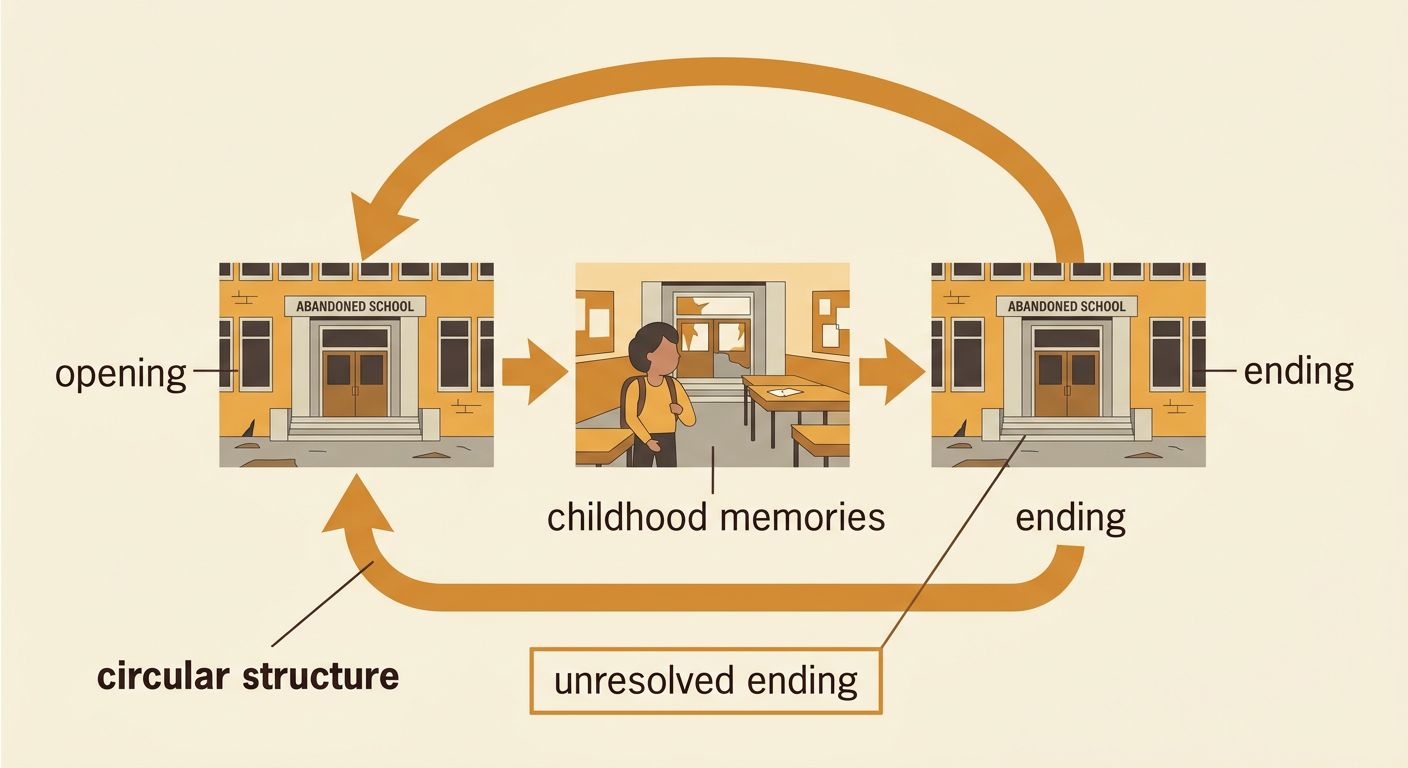
Structural analysis moves beyond identifying a technique to explaining its effect on the whole work. Use a chain of reasoning: structural choice, reader experience, and larger meaning. Suppose a story begins with an adult narrator returning to an abandoned school, shifts to childhood memories, and ends in the same empty hallway. The circular structure brings the reader back to the opening image, but its meaning has changed because the memories reveal what was lost there. The return can emphasize that people cannot literally recover the past, even when they revisit its setting. An unresolved ending might deepen this idea by withholding reconciliation. Avoid claiming that a flashback “makes the story better.” Instead, name a specific effect, such as delayed understanding, irony, grief, or uncertainty. Then connect that effect to a theme, character conflict, or recurring image supported by textual evidence.
Write a Structure-Based Analysis
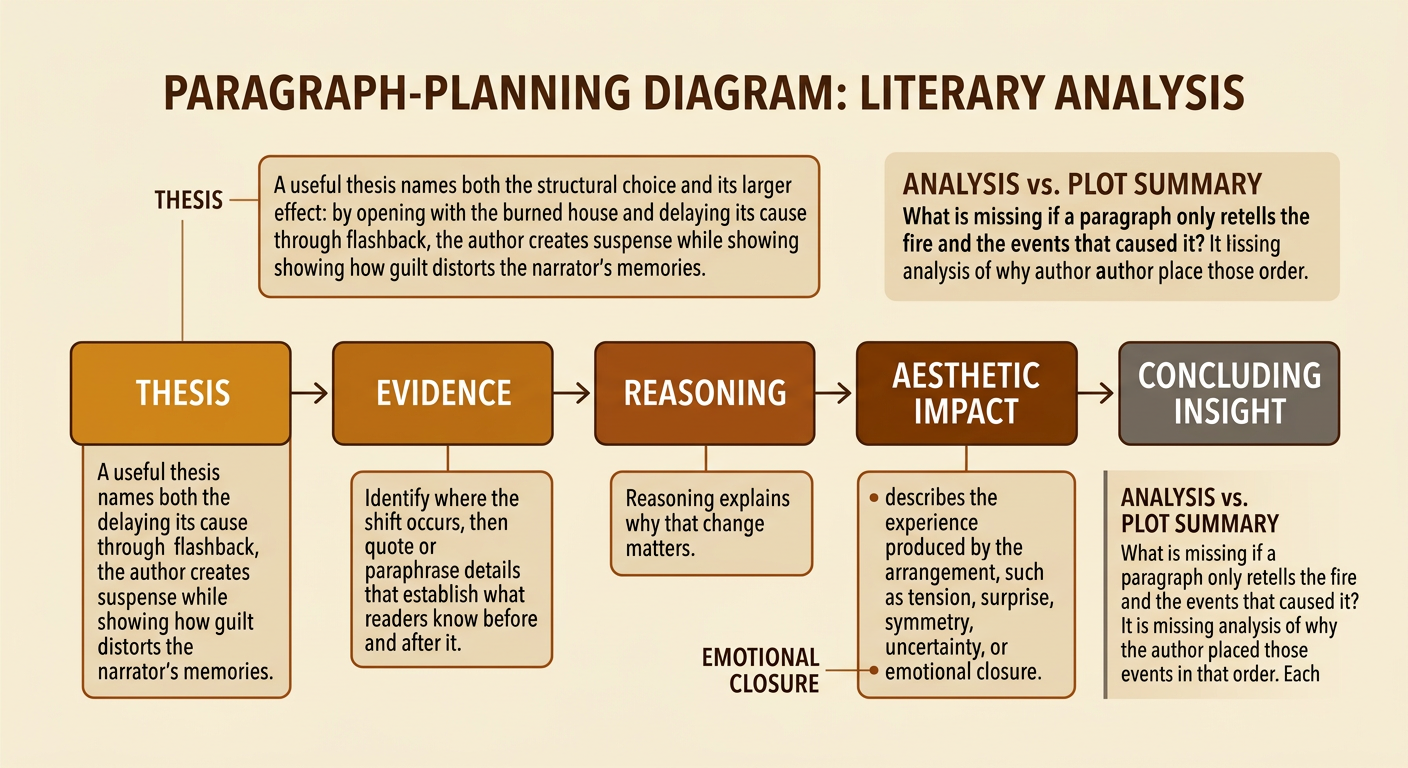
A strong structure-based analysis makes an arguable claim, uses specific evidence, and explains how the evidence supports meaning and aesthetic impact. Begin with a thesis that names the structural choice and its larger effect. For example: “By opening with the burned house and delaying the cause through flashback, the author creates suspense while showing how guilt distorts the narrator’s memories.” In the body paragraph, identify where the shift occurs, quote or paraphrase relevant details, and compare what the reader knows before and after it. Explain aesthetic impact by discussing the experience created for the reader, such as surprise, tension, symmetry, or emotional closure. Conclude by connecting the specific passage to the work’s overall design. Avoid retelling the plot. Each sentence should help answer two questions: Why did the author place this part here, and how does that placement shape the work’s meaning?