Analyzing How Text Structure Creates Meaning
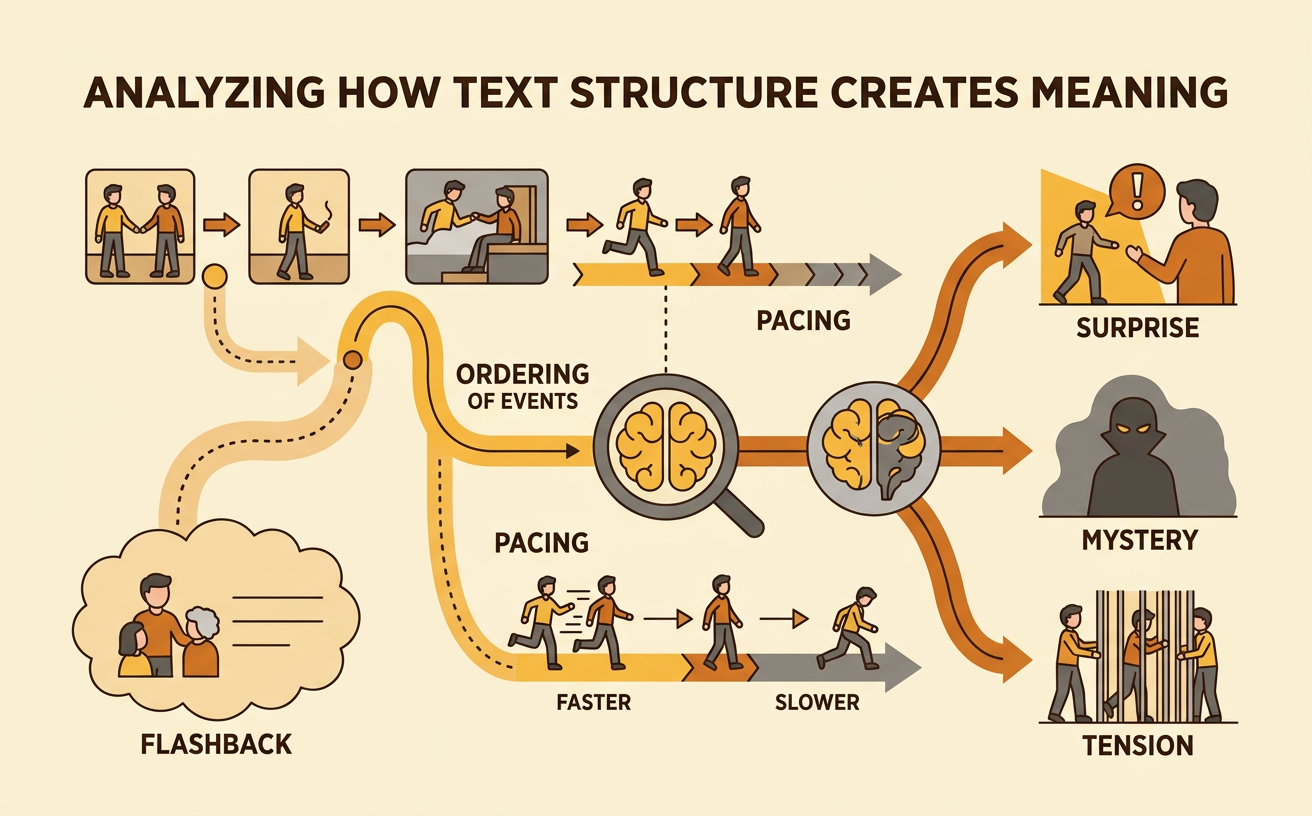
Students analyze how an author’s ordering of events, pacing, and use of flashbacks create effects such as tension, surprise, or mystery in a literary text.
Illustrations are auto-generated and may be placeholders. They can be refreshed to match the narration.
Identify the Narrative Structure
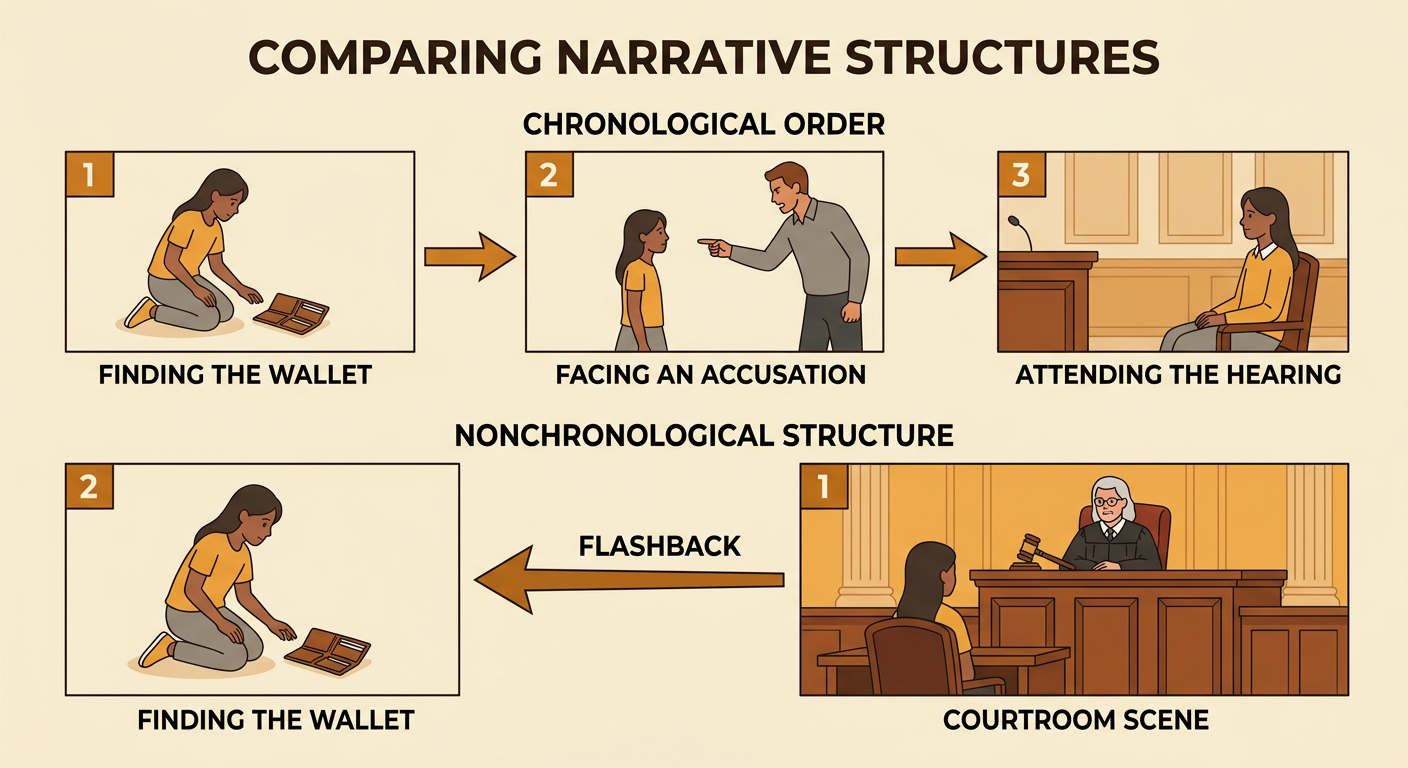
Narrative structure is the way an author organizes a story’s events and reveals information. A story may follow chronological order, beginning with the earliest event and moving forward in time. It may also begin in the middle of the action, move backward through a flashback, or delay important information. To identify the structure, notice where the story begins, when major events occur, and whether the narration shifts in time. For example, an invented story opens with Maya standing in a courtroom as a judge prepares to announce a decision. The next chapter returns to the day Maya found a missing wallet at school. Because the story presents the courtroom scene before explaining the events that caused it, the structure is nonchronological. Recognizing this structure helps readers understand that the author wants the consequences to appear before their cause is fully known.
Map the Order of Events
To analyze structure, separate the order in which events actually happen from the order in which the author presents them. First, list each major event. Then place the events on a chronological timeline. Finally, number them according to where they appear in the text. In Maya’s story, the actual sequence is that Maya finds a wallet, turns it in, is accused of taking money, and attends a disciplinary hearing. The author’s sequence is different: the hearing appears first, the discovery of the wallet appears second, and the accusation appears last. Mapping both sequences makes the author’s choice visible. It also prevents confusion between story time and plot presentation. The delayed accusation becomes especially important because readers initially know that Maya is in trouble but do not know why. This gap in knowledge establishes a mystery that encourages them to keep reading.

Examine Pacing and Time Shifts
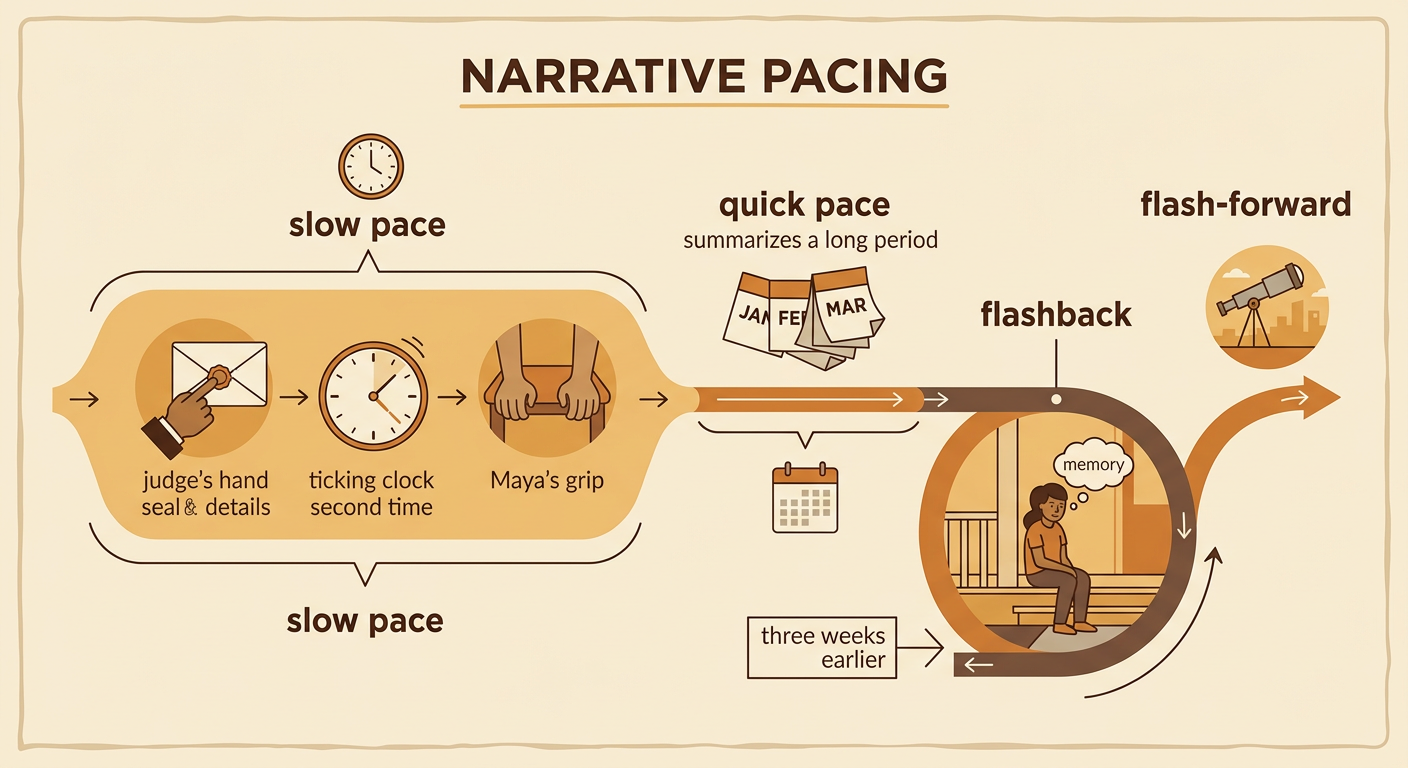
Pacing is the speed at which a narrative moves. Authors slow the pace by adding dialogue, sensory details, brief actions, or a character’s thoughts. They quicken the pace by summarizing hours, days, or years in a few sentences. Time shifts, including flashbacks and flash-forwards, interrupt the present action to show another period. In the courtroom scene, the author might spend a full page describing the judge opening an envelope while Maya hears the clock tick and remembers her father’s warning. This slows a few seconds of story time and increases tension. The author might then summarize the previous month in one sentence before entering a detailed flashback to the wallet’s discovery. Signal phrases such as “three weeks earlier” help readers recognize the shift. Examining where the text expands, compresses, or moves through time reveals which moments the author wants readers to notice most.
Analyze the Effect on the Reader
Structural choices matter because they shape what readers know, expect, and feel. To analyze an effect, connect a specific choice to the reader’s experience. Beginning Maya’s story at the hearing creates tension because the outcome is close, but the reason for the hearing is unknown. Flashing back to the wallet creates mystery by providing part of the explanation while withholding who removed the money. Slowing the moment before the decision makes readers wait, increasing suspense. If the author suddenly reveals that Maya’s best friend took the money, the delayed information may create surprise because earlier details seemed to point elsewhere. Avoid vague statements such as “The structure makes the story interesting.” Instead, name the choice, identify the information revealed or withheld, and explain the resulting effect. A strong analysis shows the cause-and-effect relationship between the author’s arrangement and the reader’s response.

Support the Analysis with Evidence
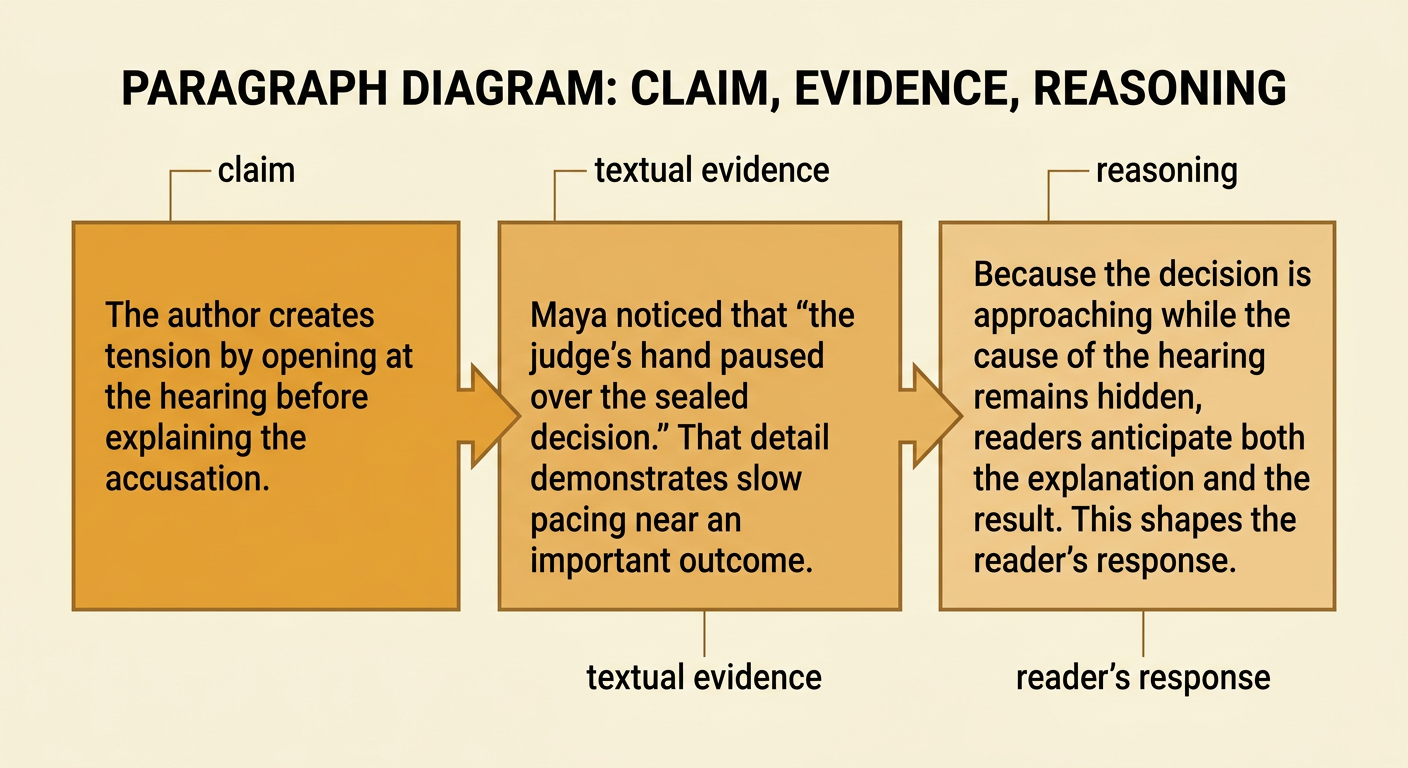
A complete analysis supports its claim with relevant textual evidence and clear reasoning. Begin with a claim about how the structure creates an effect. Next, cite or paraphrase a precise detail that shows the structural choice. Then explain how that detail affects the reader’s knowledge or expectations. For example: “The author creates tension by opening at the hearing before explaining the accusation. Maya notices that ‘the judge’s hand paused over the sealed decision,’ but the text does not yet reveal why she is being judged. This combination of an approaching decision and missing background information makes readers anticipate both the explanation and the outcome.” The quotation alone is not enough; the final sentence connects the evidence to the claim. Choose evidence that demonstrates event order, pacing, or a time shift rather than merely describing the plot. Effective reasoning answers the question, “Why did presenting the event this way produce this effect?”