Analyzing How Text Structure Creates Meaning
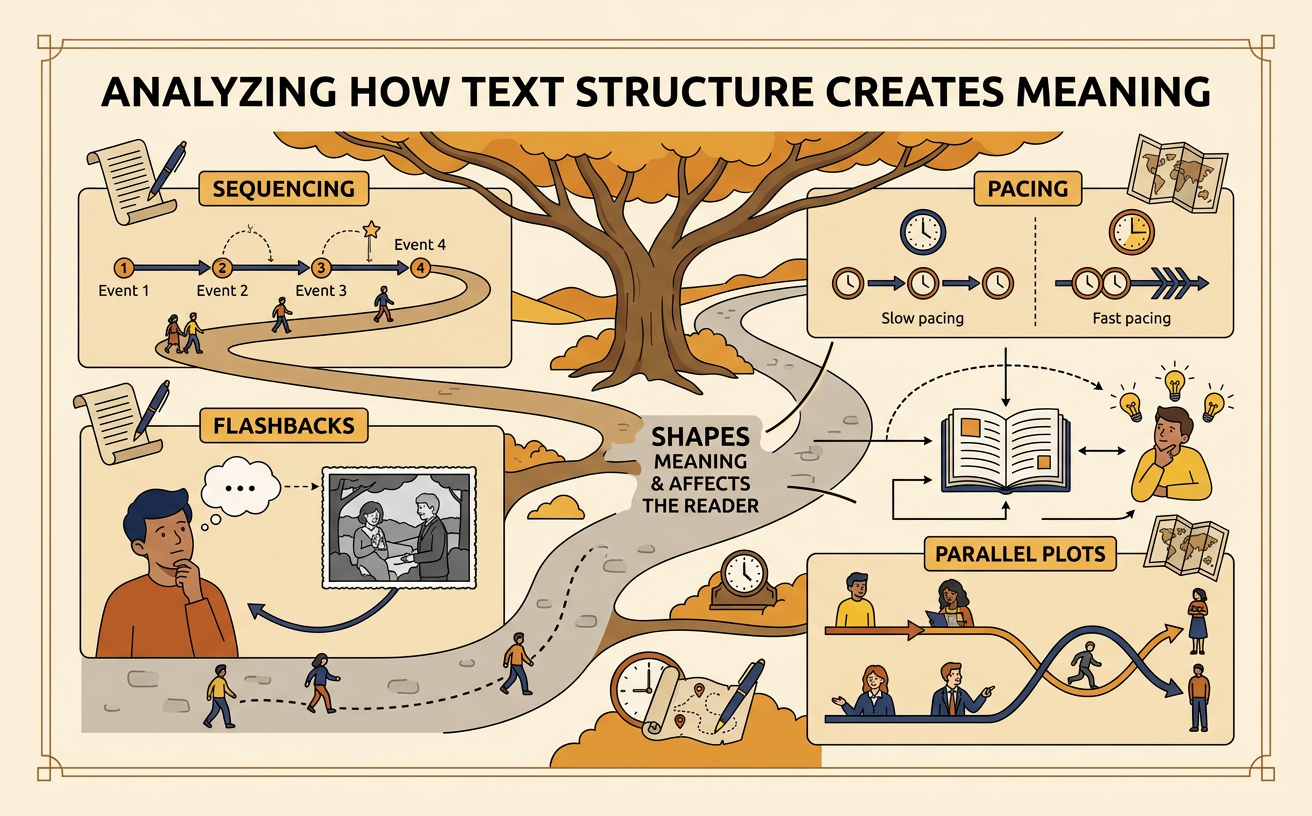
Students analyze how an author’s choices about sequencing, pacing, flashbacks, and parallel plots shape meaning and affect the reader.
Illustrations are auto-generated and may be placeholders. They can be refreshed to match the narration.
Identify Structural Choices
Text structure is the way an author arranges parts of a story. Structural choices include chronological order, flashbacks, shifts in viewpoint, parallel plots, frame stories, and divisions into chapters or scenes. Begin by asking what happens first on the page, which may differ from what happens first in the story’s timeline. For example, a story called “The Last Train” might open with Maya running toward a departing train. The next chapter could return to that morning and explain why she must leave town. Opening with the chase rather than the morning events places readers inside an urgent situation before giving them its cause. To identify structure, summarize each section, note its place in time, and observe changes in character, setting, or viewpoint. These observations reveal the author’s organizational plan.

Examine Sequence and Pacing
Sequence is the order in which events are presented, while pacing is the speed at which the narrative seems to move. Authors slow pacing by adding description, dialogue, reflection, or short moment-by-moment actions. They quicken pacing by summarizing long periods, skipping uneventful time, or presenting actions in rapid succession. Suppose a story summarizes a three-day journey in one sentence but uses two pages to describe a character opening a mysterious letter. The journey feels less important, while the letter feels crucial. The author might describe the character’s shaking hand, the tearing envelope, and each line of the message. This slowed pacing delays the letter’s secret and increases tension. When analyzing pacing, compare how much text is devoted to each event and explain why the author may expand one moment but compress another.

Analyze Time Manipulation
Authors manipulate time by moving away from a straightforward chronological sequence. A flashback returns to an earlier event, while a flash-forward presents or imagines a later event. An author may also withhold information about the past and reveal it gradually. For example, a story might show Marcus refusing to enter a lake, then flash back to the day he nearly drowned as a child. Before the flashback, his refusal may seem strange or unreasonable. After it, readers understand that fear shapes his behavior. The placement of the flashback therefore changes how readers judge Marcus. To analyze time manipulation, identify the shift, locate the event on the full timeline, and ask what readers know before and after it. Then explain why the author reveals that information at that particular moment instead of earlier.

Connect Structure to Reader Effects
Structural choices create effects by controlling what readers know, when they know it, and how long they wait. Withholding a cause can create mystery. Alternating between two characters in danger can build tension. Revealing unexpected information can produce surprise, while repeating similar scenes can emphasize a theme. Imagine parallel plots about Lena searching a dark building and her brother racing there to warn her. The story switches between them at crucial moments: Lena hears footsteps, the scene cuts away, and her brother discovers that his phone has died. Because neither plot resolves immediately, readers must wait through the other plot before learning what happens. This delay creates suspense and also highlights the siblings’ shared determination. A strong analysis names the structural choice, identifies the information it controls, and explains the resulting emotional or intellectual effect on the reader.

Write a Structure Analysis
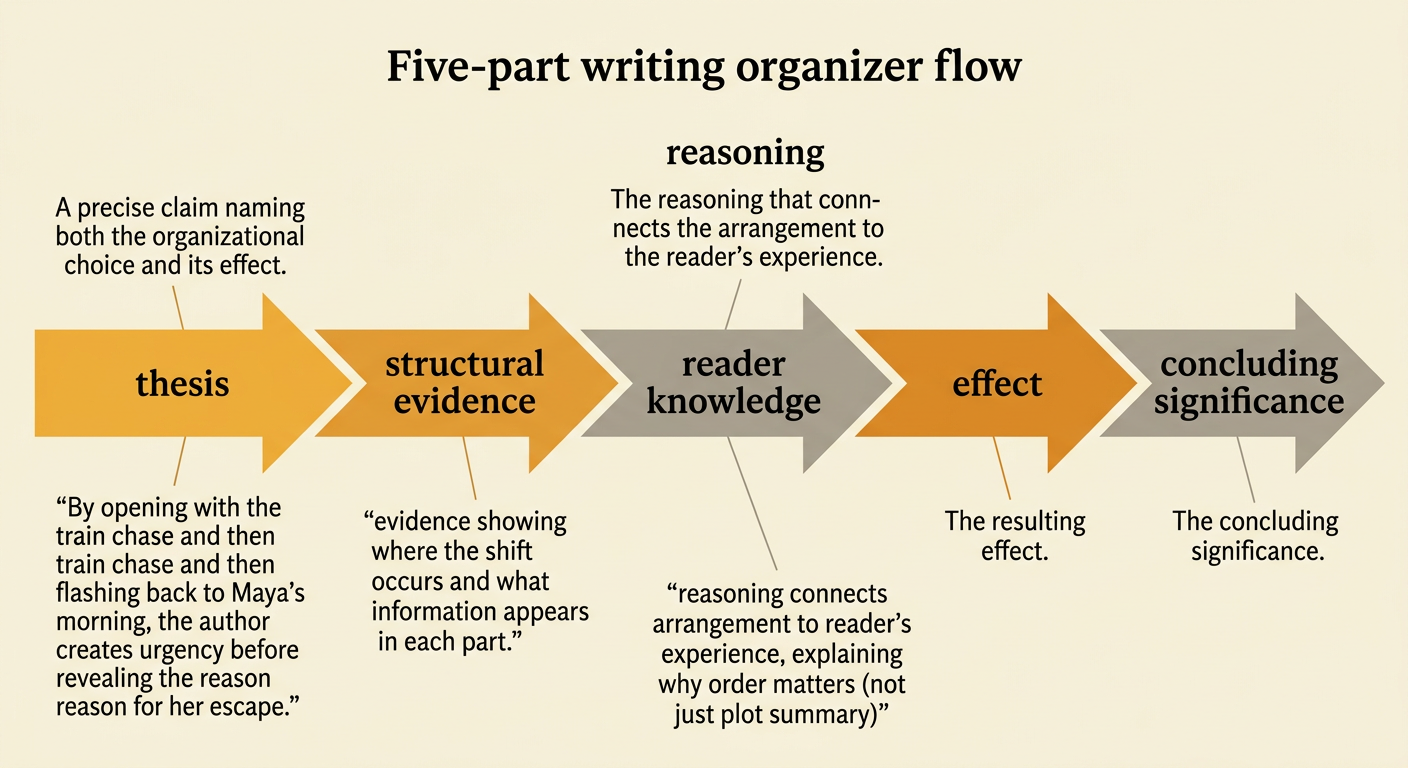
A structure analysis should make a claim about how an author’s organizational choice creates meaning or affects the reader. Start with a precise thesis that names the choice and its effect. For example: “By opening with the train chase and then flashing back to Maya’s morning, the author creates urgency before revealing the reason for her escape.” Next, provide specific evidence about where the shift occurs and what information appears in each part. Then explain the connection: readers first focus on whether Maya will catch the train, but the flashback later changes the chase from a simple action scene into a decision about freedom. Avoid merely retelling events. Instead, use reasoning that links structure to mystery, tension, surprise, characterization, or theme. Conclude by explaining why the chosen arrangement is more effective than a simple chronological version would be.