Analyzing How Text Structure Shapes Meaning
Students compare the structures of two literary texts and explain how each structure contributes to the text’s meaning and style.
Illustrations are auto-generated and may be placeholders. They can be refreshed to match the narration.
Identify Common Literary Structures
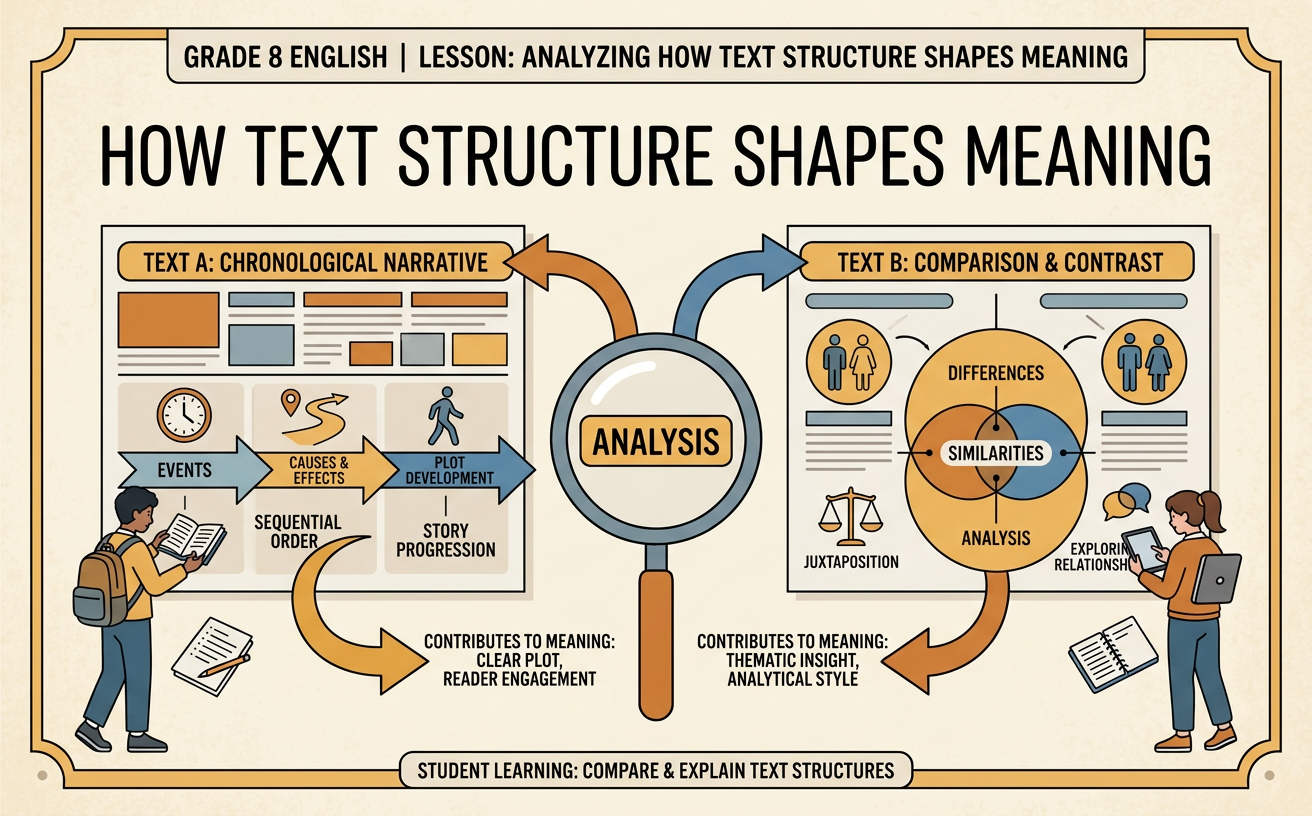
Literary structure is the way an author arranges events, ideas, scenes, or speakers. A chronological structure presents events in time order. A story may also begin in the middle of the action, use flashbacks to reveal earlier events, or frame one story inside another. Parallel plots alternate between two connected storylines, while circular structures end where they began. In the imaginary story “The Storm Lantern,” events move chronologically: Maya sees a storm warning, prepares her boat, rescues a sailor, and returns home. In “The Empty Dock,” the opening shows Maya returning home; a flashback then reveals the rescue. Both stories describe similar events, but their structures create different reading experiences. The first emphasizes steady action, while the second creates curiosity about what happened before Maya’s return.

Map Each Text’s Organization
To analyze structure, map each text before comparing them. Divide the text into major sections or scenes, and briefly state what happens in each one. Then mark time shifts, changes in setting, changes in speaker, or movement between plots. For “The Storm Lantern,” a map might show four boxes in order: Maya hears the warning, prepares the boat, completes the rescue, and returns home. Its straight timeline makes cause and effect easy to follow. A map of “The Empty Dock” begins with Maya’s return, moves backward to the rescue, and then returns to the present. Curved arrows can show these shifts in time. Mapping prevents readers from confusing the order in which the author presents events with the chronological order in which those events actually occurred.

Compare Structural Choices
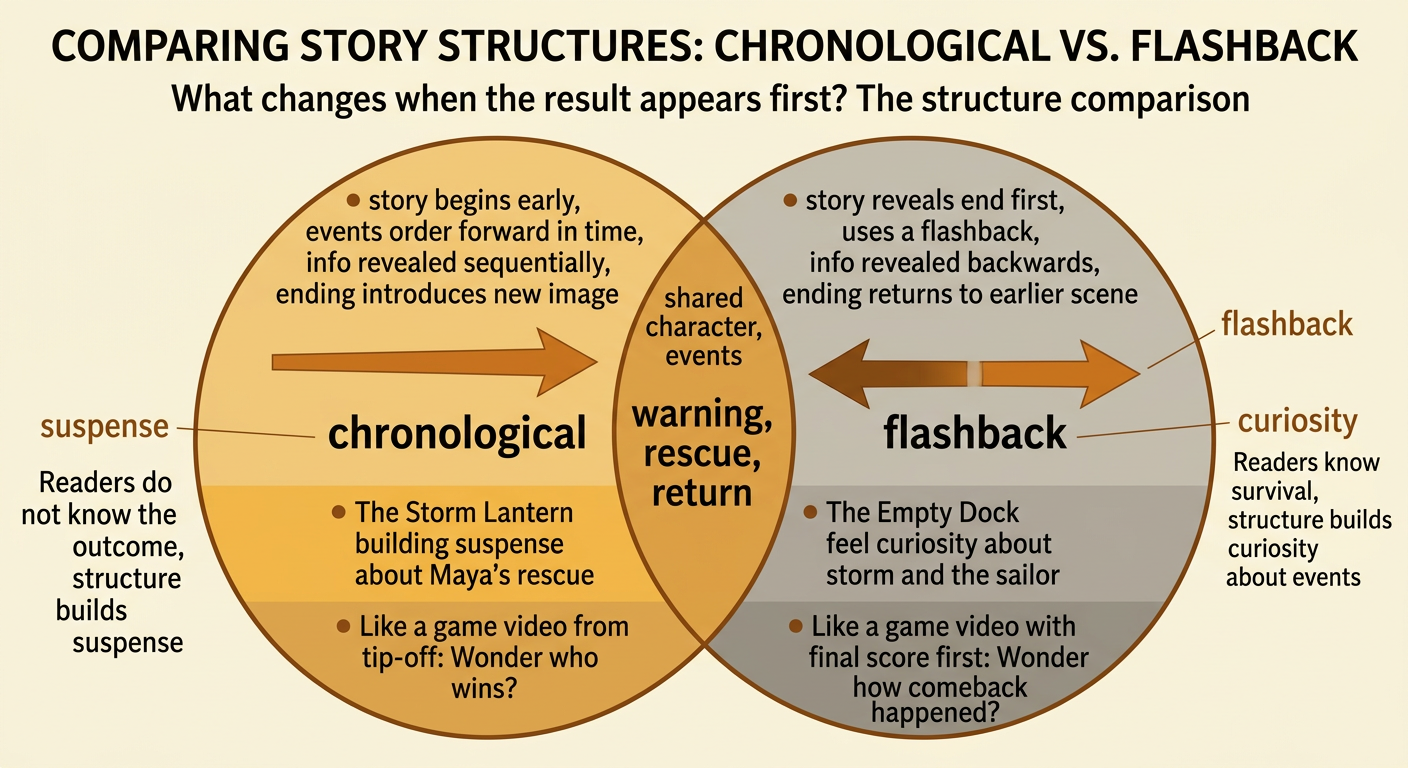
When comparing texts, focus on both similarities and differences. Ask where each text begins, how events are ordered, how quickly information is revealed, and whether the ending returns to an earlier image or idea. Both “The Storm Lantern” and “The Empty Dock” include the warning, rescue, and return, so their central events are similar. However, “The Storm Lantern” presents those events chronologically, while “The Empty Dock” begins with the result and later explains its cause through a flashback. This difference changes what readers wonder about. In the chronological text, readers may ask, “Will Maya succeed?” In the flashback text, they already know she returns, so they may ask, “What happened during the storm?” A strong comparison names the structural choice and explains its effect rather than merely listing plot events.
Connect Structure to Meaning and Style
Structure contributes to meaning by emphasizing certain ideas, and it contributes to style by shaping pace, suspense, tone, and focus. In “The Storm Lantern,” the chronological sequence connects each decision to its consequence. Maya hears the warning, chooses to leave shore, and reaches the sailor. This direct progression supports a meaning about courage expressed through action. Its style feels urgent and fast-paced because each event pushes toward the rescue. In “The Empty Dock,” the flashback interrupts the present moment and reveals why Maya returns silently. This structure emphasizes memory and the emotional cost of courage. Its style feels reflective because the reader pauses with Maya to reconsider the past. To explain an effect clearly, use a cause-and-effect statement: because the author arranges the events in this way, the reader understands or feels something specific.

Write a Text-Based Analysis
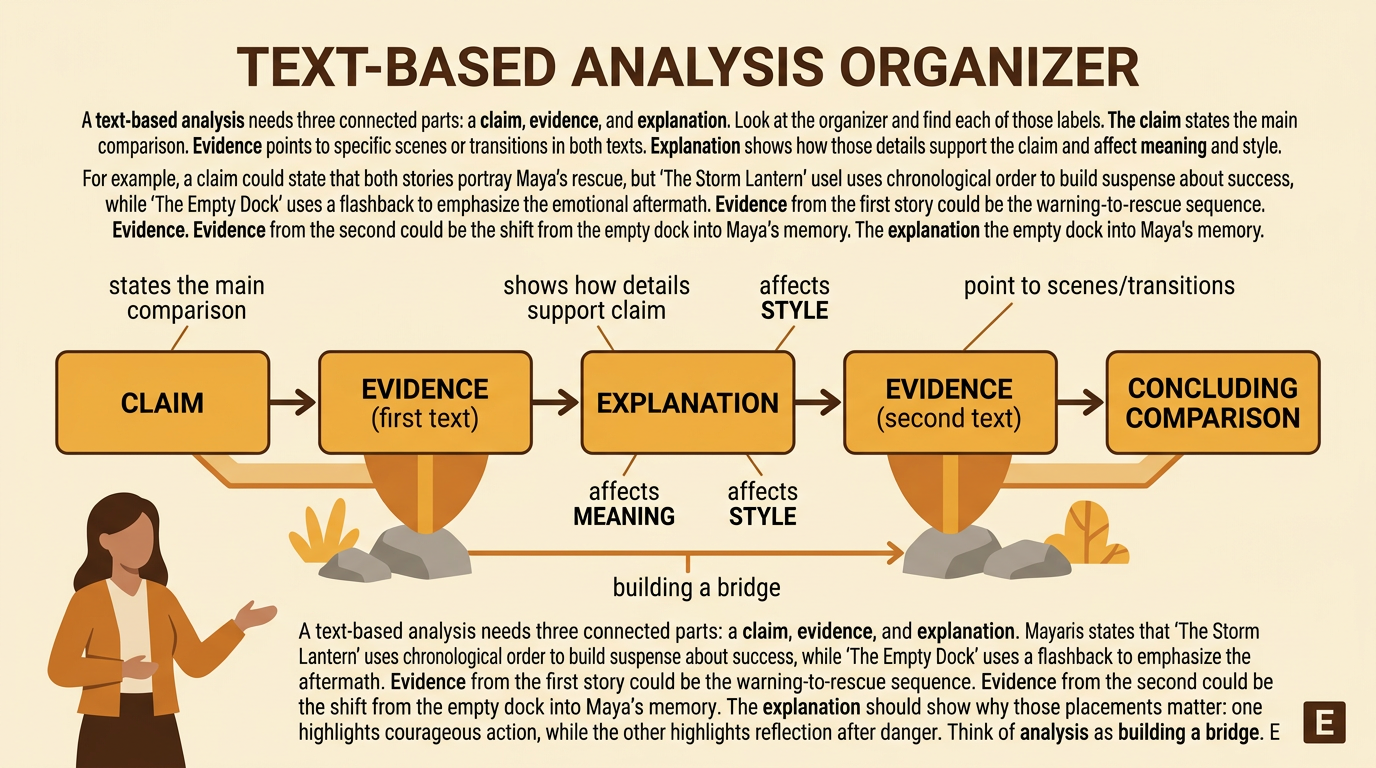
A text-based analysis should make a clear claim, support it with evidence from both texts, and explain how the evidence proves the claim. Begin by naming the two structures. Then cite specific scenes or transitions and analyze their effects on meaning and style. For example: “Although both stories portray Maya’s rescue, ‘The Storm Lantern’ uses chronological order to build suspense about whether she will succeed, while ‘The Empty Dock’ uses a flashback to emphasize the rescue’s emotional aftermath.” Next, mention the warning-to-rescue sequence in the first text and the shift from the empty dock into memory in the second. Explain why each placement matters. End by showing the larger contrast: one structure highlights courageous action, while the other highlights reflection after danger. Avoid plot summary that does not connect evidence to structure and effect.