
Analyzing Informational Text Structure
Students identify common informational text structures and explain how a section contributes to the development of the text’s central ideas.

Illustrations are auto-generated and may be placeholders. They can be refreshed to match the narration.
Review Common Text Structures
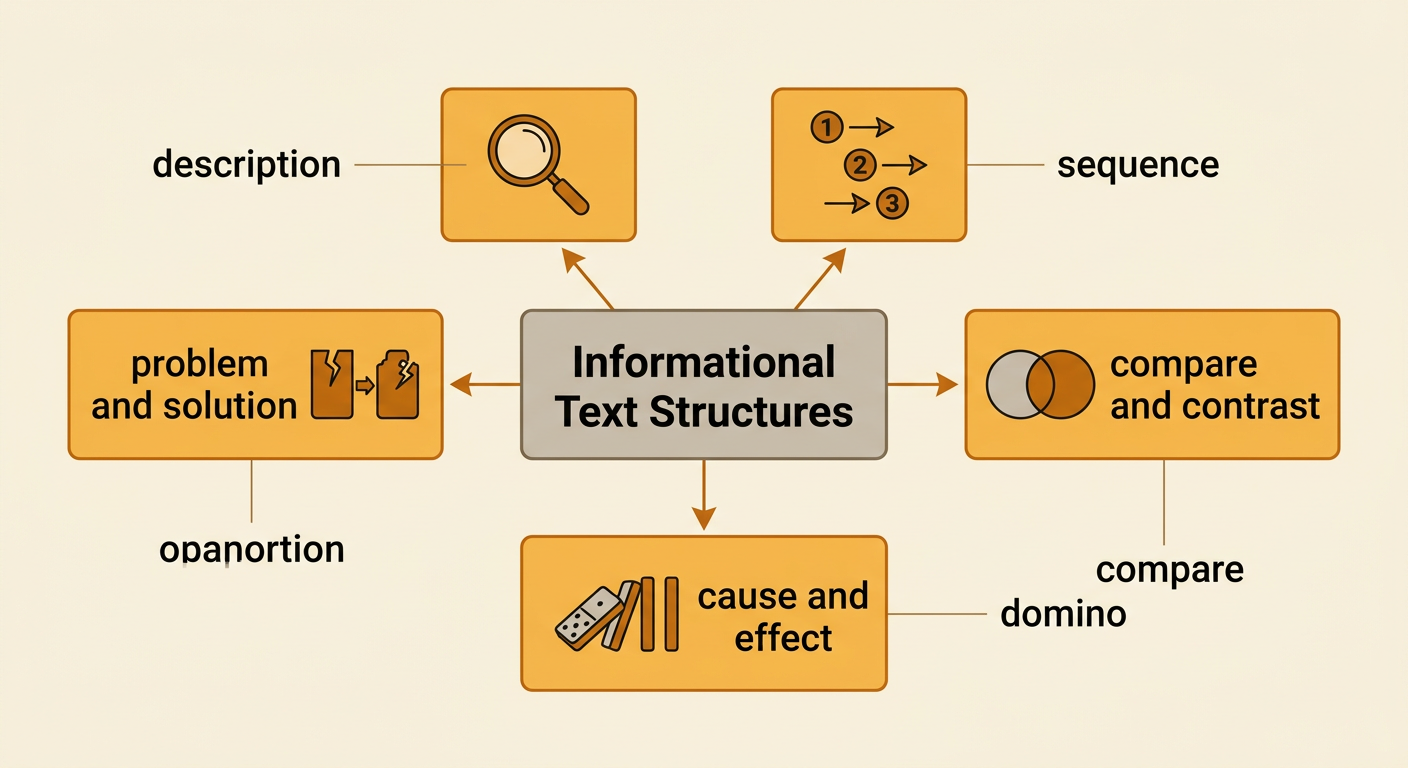
Informational writers organize ideas using structures that help readers understand relationships. Description explains the features of a topic. Sequence presents events or steps in order. Compare and contrast shows similarities and differences. Cause and effect explains why something happens and what happens as a result. Problem and solution introduces a difficulty and explains how it may be addressed. For example, a passage about recycling might describe types of recyclable materials. Another passage might explain that plastic waste harms ocean animals, so communities reduce single-use plastics. That passage uses cause and effect. A writer may use one main structure throughout a text or combine several structures. Identifying the structure helps you predict what information will appear and understand how the writer develops the central ideas.
Notice Signal Words and Organization
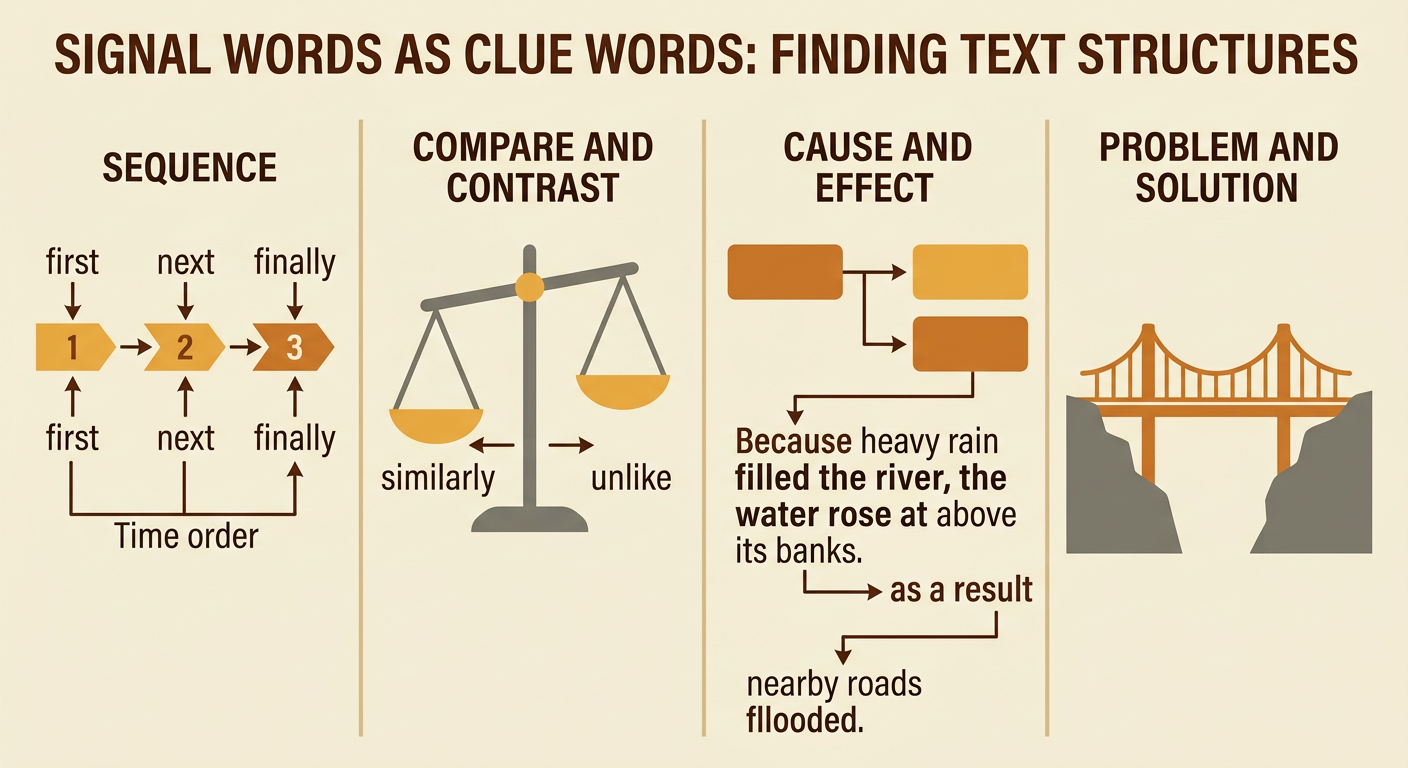
Signal words can provide clues about a text’s structure, but readers must also examine how the ideas are organized. Words such as first, next, and finally often indicate sequence. Similarly and unlike can signal comparison and contrast. Because, therefore, and as a result may show cause and effect. Problem and solution texts may include challenge, answer, or resolve. In a passage stating, “Because heavy rain filled the river, the water rose above its banks. As a result, nearby roads flooded,” the signal phrases connect a cause to its effects. However, a single signal word does not prove the structure. Ask what relationship connects most of the details. If the passage mainly explains steps, it is sequence even if it briefly mentions a problem.
Identify the Structure of a Passage
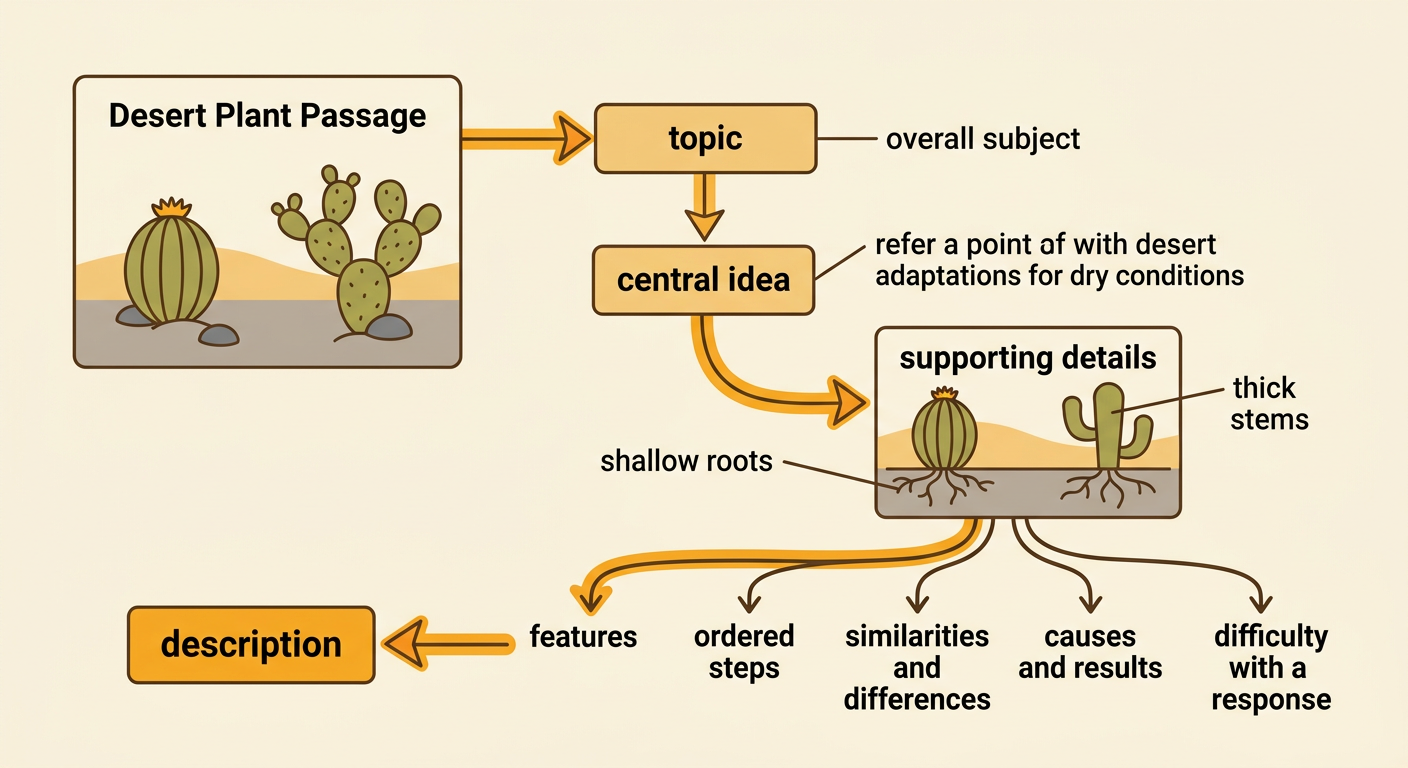
To identify a passage’s structure, first determine its topic and central idea. Next, notice how the supporting details relate to one another. Ask whether they describe features, follow an order, compare subjects, connect causes with effects, or present a problem and response. Consider this example: “Desert plants receive little rainfall. Many have shallow roots that quickly absorb water, while others store water in thick stems. These adaptations help the plants survive dry conditions.” The passage mainly describes characteristics and adaptations of desert plants, so its structure is description. Dry conditions also cause certain adaptations, but the passage does not trace a full chain of causes and effects. Choose the structure that best explains the organization of most details, and support your choice with evidence from the passage.
Analyze a Section’s Role
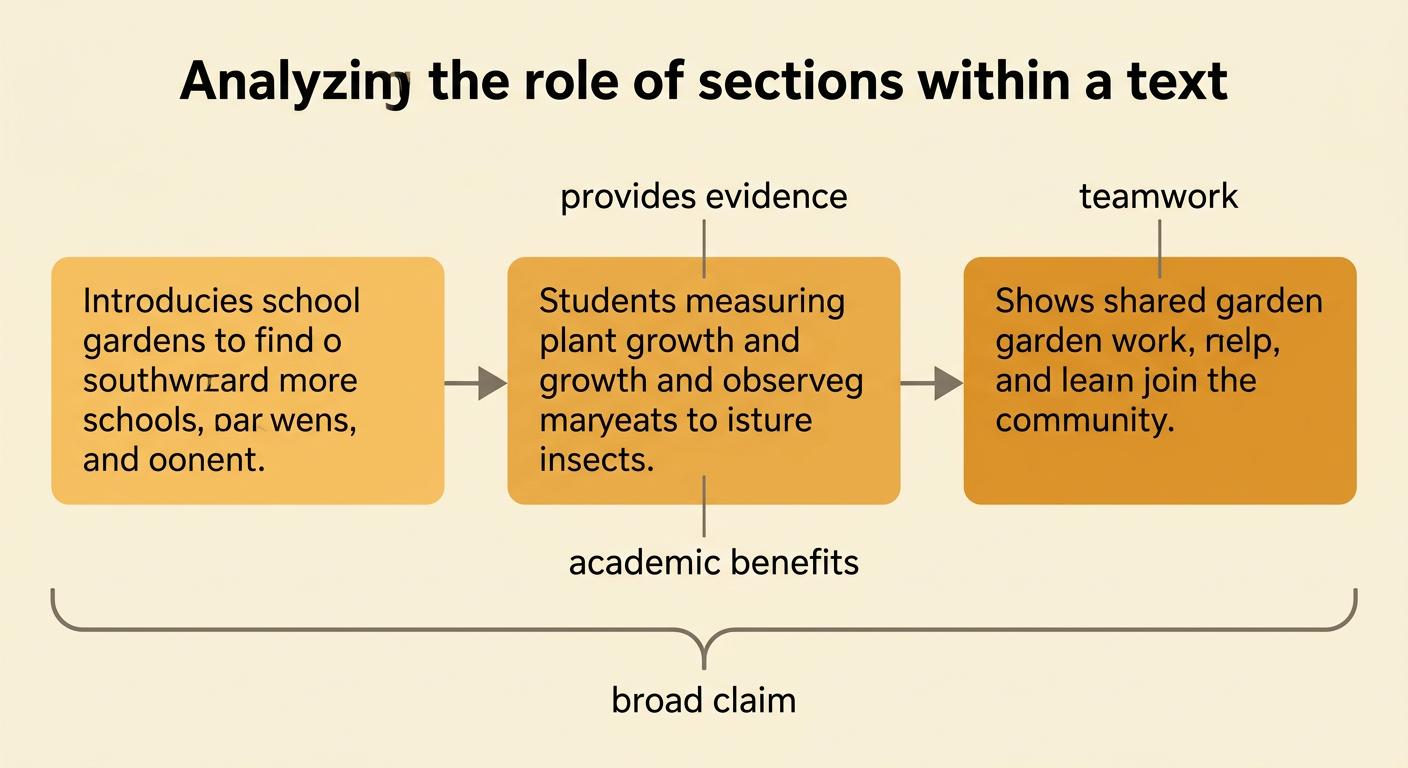
A section has a role, or job, within the whole text. It may introduce the topic, define an important term, provide evidence, give an example, explain a cause, compare viewpoints, describe a solution, or conclude the discussion. To analyze its role, summarize the section and connect it to what comes before and after it. Imagine a text arguing that school gardens benefit students. The opening section introduces school gardens. A middle section reports that students learn plant science by measuring growth and observing insects. This section’s role is to provide evidence and examples of academic benefits. A later section explains how gardens build teamwork. Understanding each section’s job reveals how the writer deliberately moves from the broad claim to specific types of support.
Explain Its Contribution to Ideas
After identifying a section’s role, explain how it develops a central idea. A strong explanation names the section, describes what it adds, and connects that information to the larger idea. For example, suppose a text’s central idea is that wetlands are valuable ecosystems. One section explains that wetland plants slow moving water and trap some pollutants before they reach rivers. You might write, “The section about water filtration develops the central idea by explaining one important way wetlands protect the environment. Its cause-and-effect details show how wetland plants can improve water quality.” This explanation does more than summarize the section. It shows why the section matters to the text as a whole. Use precise verbs such as introduces, illustrates, supports, explains, contrasts, or extends when describing a section’s contribution.
