Analyzing Narrator Point of View
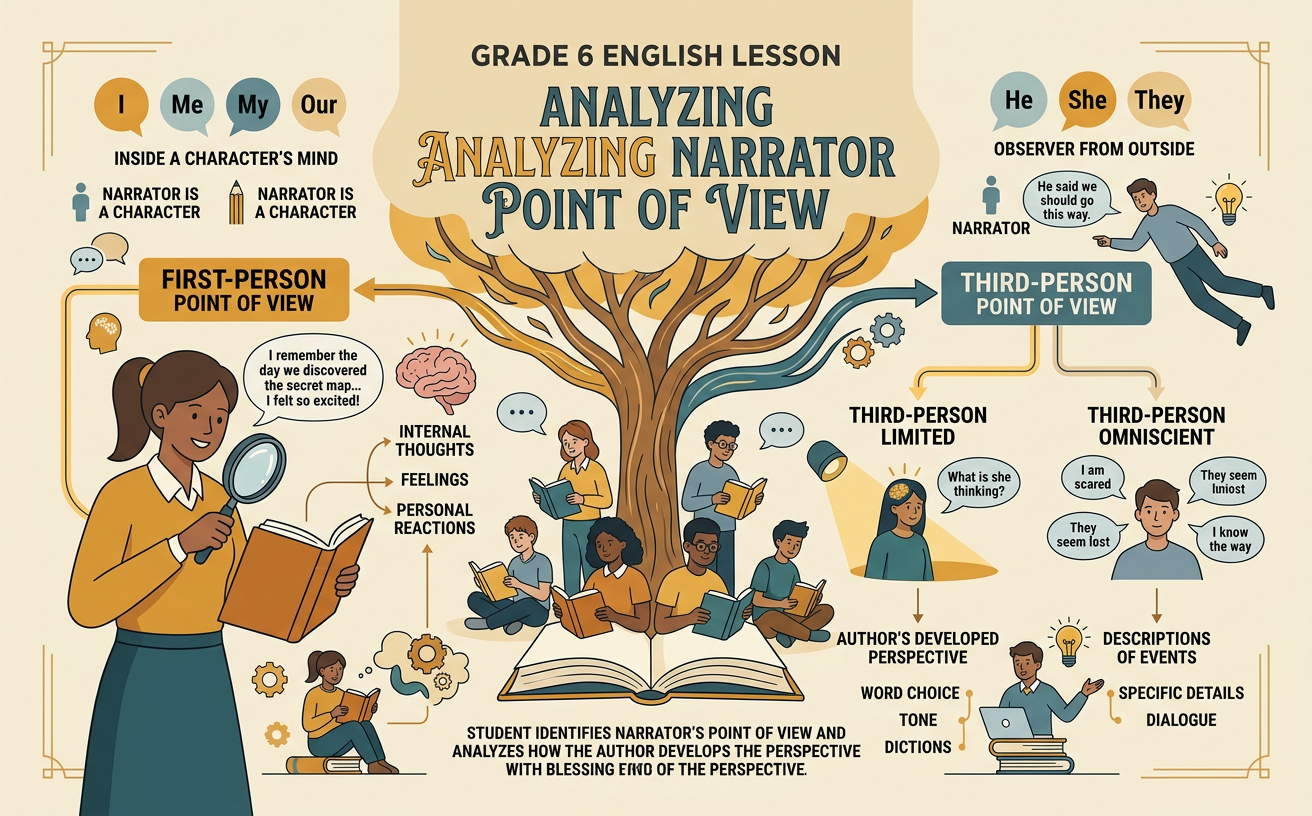
Students identify a narrator’s point of view and analyze how the author develops that perspective through word choice, thoughts, and descriptions of events.
Illustrations are auto-generated and may be placeholders. They can be refreshed to match the narration.
Review Narrator and Point of View
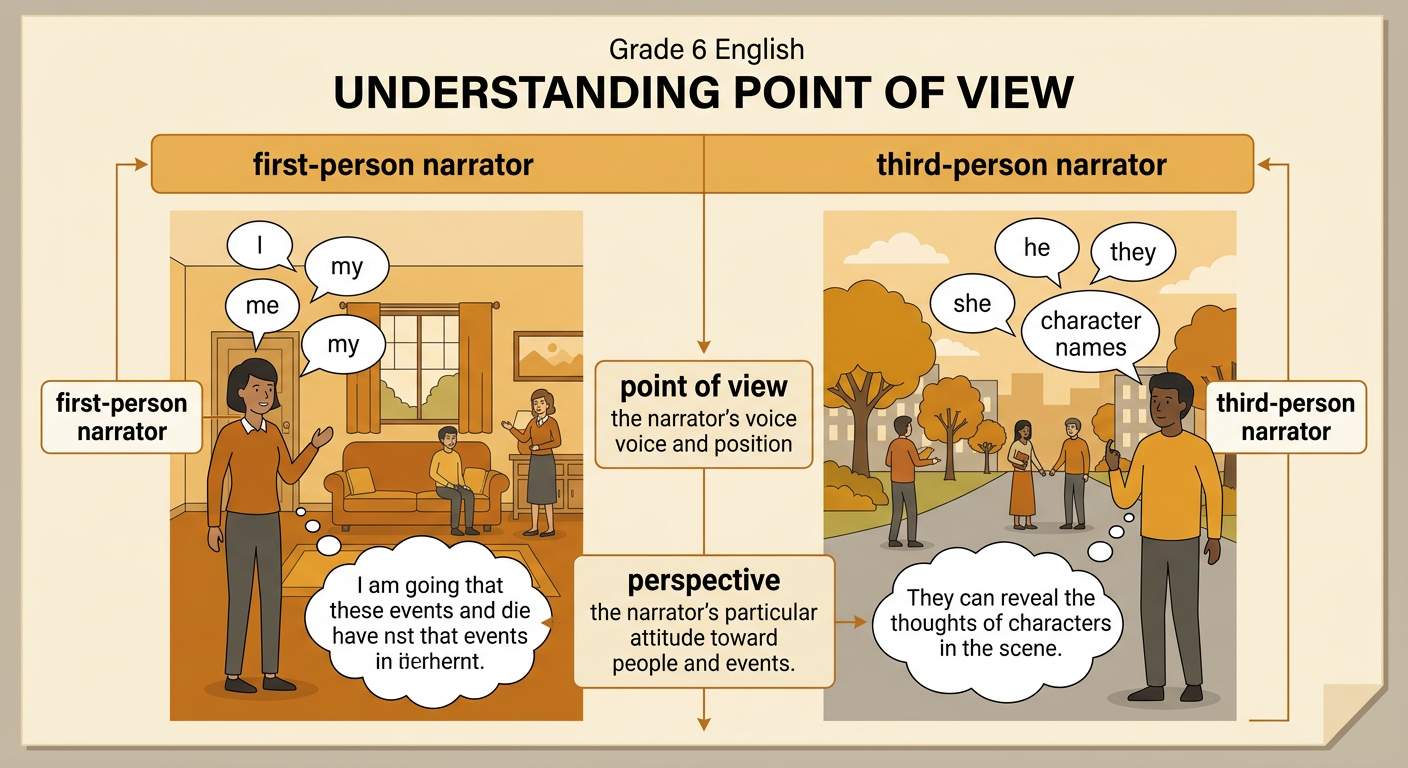
The narrator is the voice that tells a story. Point of view describes the narrator’s position in relation to the events. A first-person narrator participates in the story and uses words such as I, me, and my. A third-person narrator stands outside the story and usually uses he, she, they, or character names. Third-person narration may reveal the thoughts of one character or several characters. Point of view also includes the narrator’s perspective, or particular attitude toward people and events. For example, a first-person narrator might say, “I stared at the enormous roller coaster and wished I could disappear.” The pronoun I identifies first person. The description “enormous” and the wish to disappear reveal that the narrator feels frightened. Identifying both who tells the story and how that narrator views events helps readers understand the author’s choices.
Read a Short Literary Passage
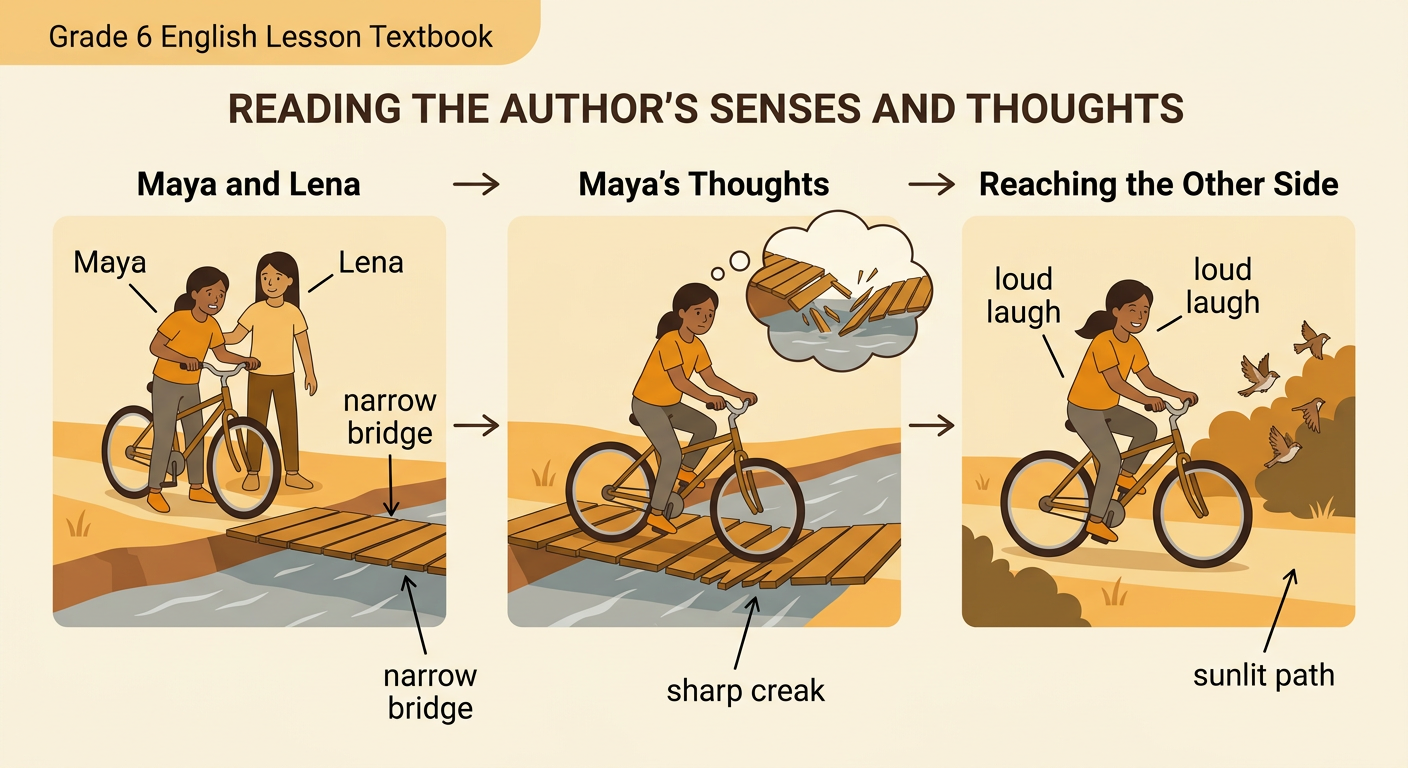
Read this passage and notice who tells the story and how the experience is described. “I tightened both hands around the bicycle handles. The narrow bridge stretched over the creek like a shaky ribbon. Behind me, Lena called, ‘You can do it, Maya!’ My front tire rolled onto the first wooden board, and it gave a sharp creak. For one wild second, I imagined the bridge folding beneath me. Then I fixed my eyes on the sunlit path on the other side. I pushed one pedal, then the other. When my tire finally touched solid ground, I laughed so loudly that a flock of sparrows burst from a nearby bush.” The basic event is simple: Maya rides across a bridge. However, the author includes Maya’s thoughts, physical actions, and descriptions so readers experience the crossing as she does.
Identify the Narrator’s Perspective
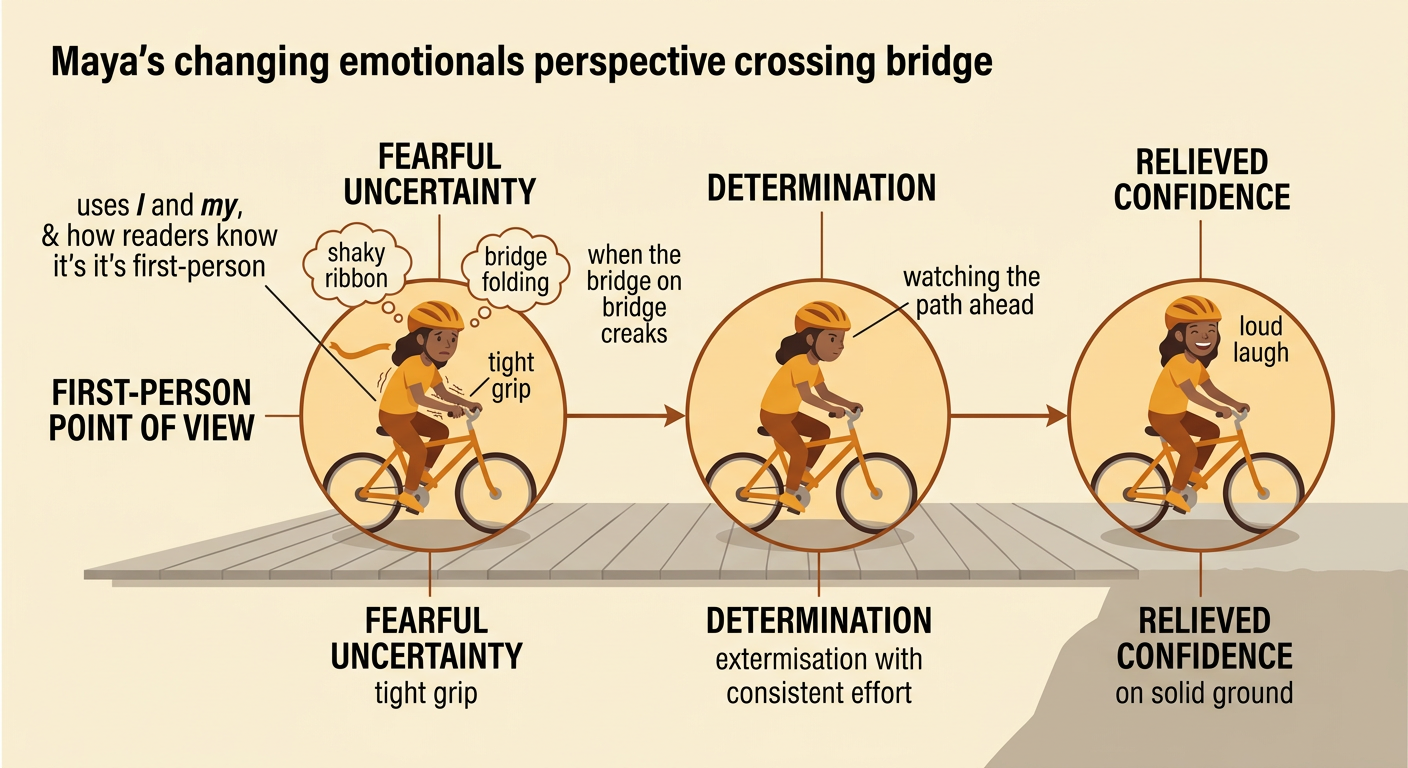
First, identify the narrator by looking for pronouns and access to thoughts. Maya tells the passage using I and my, so the story has a first-person point of view. Readers know exactly what Maya imagines when the bridge creaks, but they do not know Lena’s private thoughts. Next, describe Maya’s perspective more precisely than simply saying it is “good” or “bad.” At first, Maya views the bridge as dangerous and intimidating. She grips the handles, compares the bridge to a “shaky ribbon,” and imagines it folding. Still, she does not turn back. By focusing on the path ahead and continuing to pedal, she shows determination. At the end, her loud laugh suggests relief and pride. Maya’s perspective therefore changes from fearful uncertainty to relieved confidence. This change shapes how readers understand the crossing.
Examine Words and Details
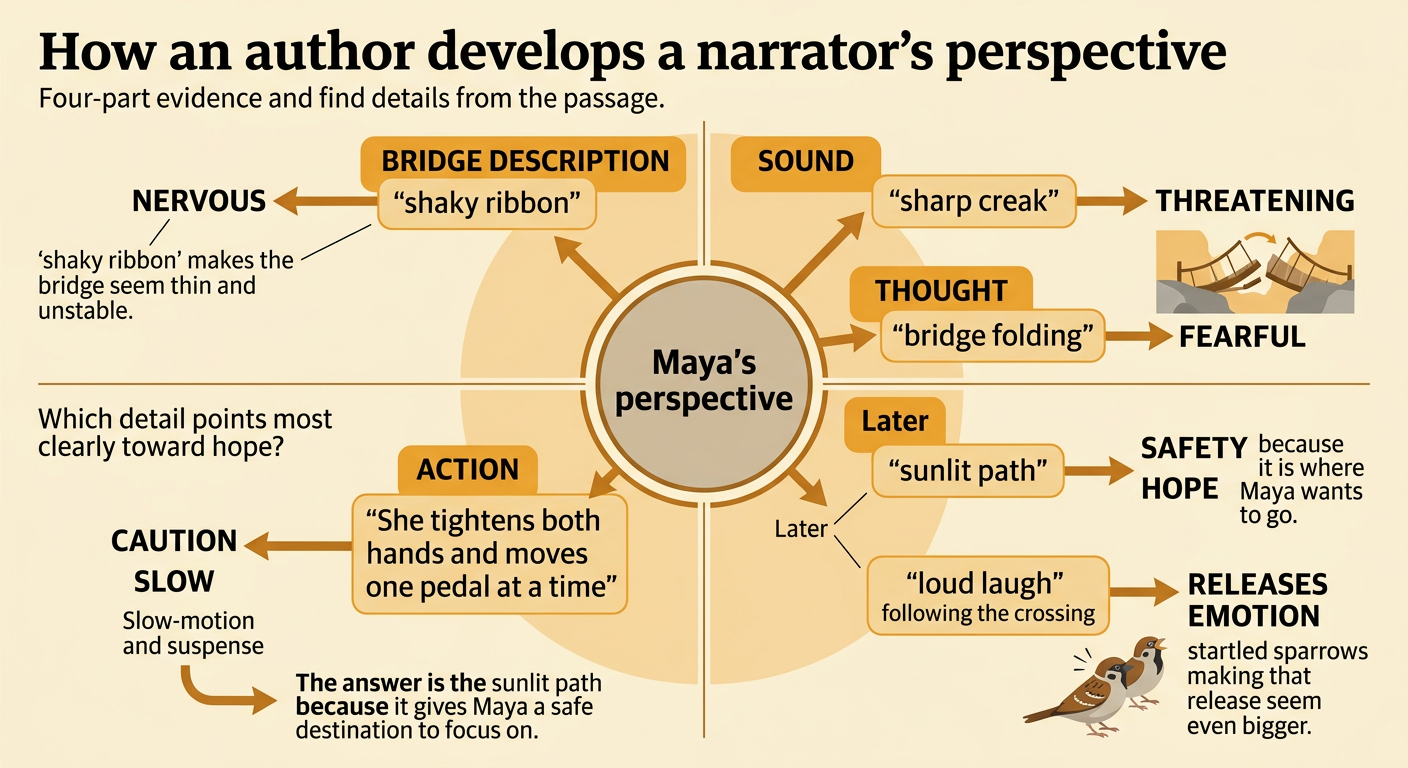
Authors develop point of view by selecting words and details that reflect what the narrator notices, thinks, and feels. In the passage, Maya calls the bridge a “shaky ribbon.” That comparison makes the bridge seem unstable because Maya is nervous. The “sharp creak” adds a threatening sound, while her imagined picture of the bridge folding reveals her fearful thoughts. The author also describes Maya tightening her hands and moving one pedal at a time. These physical details slow the moment and show caution. Later, the “sunlit path” suggests safety and hope because it is the place Maya wants to reach. Finally, Maya’s loud laugh and the startled sparrows emphasize her release of emotion. If the author had described only the bicycle’s movement, readers would know what happened but would not understand Maya’s personal perspective as clearly.
Explain How the Author Develops Point of View
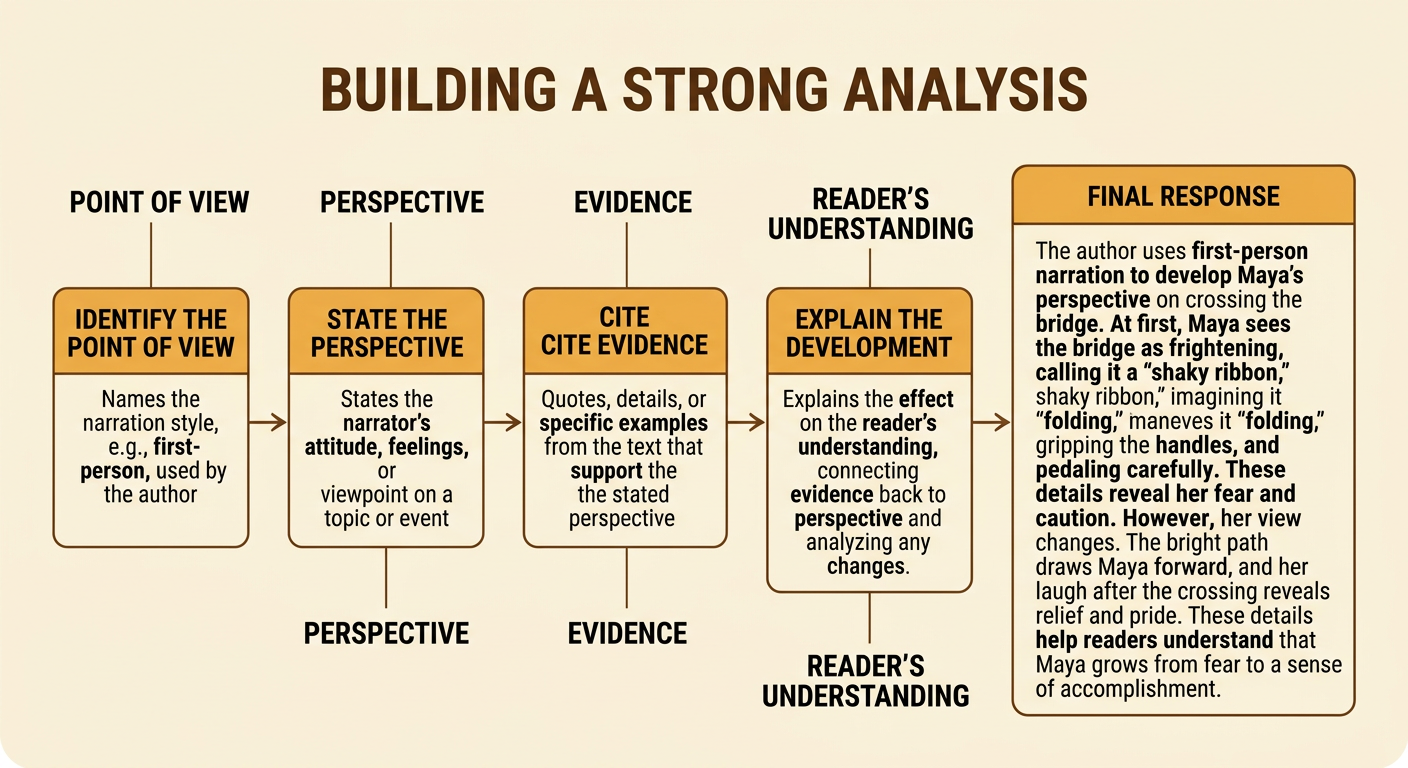
A strong explanation names the point of view, states the narrator’s perspective, and supports the idea with specific evidence. It should also explain how the evidence affects the reader’s understanding. For example: The author uses first-person narration to develop Maya’s changing perspective on crossing the bridge. At first, Maya sees the bridge as frightening because she describes it as a “shaky ribbon” and imagines it folding beneath her. Her tight grip and careful pedaling also show her fear. However, the “sunlit path” draws her forward, and her loud laugh after the crossing reveals relief and pride. Through Maya’s word choice, thoughts, and actions, the author changes her perspective from fearful to confident. Notice that this response does more than list details. It connects every detail to Maya’s attitude and explains how her perspective develops from the beginning to the end.