Analyzing Rhetoric in a Seminal U.S. Speech
Students analyze how an author’s word choice, rhetorical appeals, and stylistic techniques advance purpose in a seminal U.S. speech.

Illustrations are auto-generated and may be placeholders. They can be refreshed to match the narration.
Establish the Speech’s Context
A speech’s historical setting helps explain why its rhetoric mattered to its first listeners. Martin Luther King Jr. delivered “I Have a Dream” on August 28, 1963, during the March on Washington for Jobs and Freedom. Although the Emancipation Proclamation had taken effect a century earlier, Black Americans still faced segregation, voter suppression, economic inequality, and racial violence. Congress was also considering major civil rights legislation. King spoke from the Lincoln Memorial, a location that connected his argument to Abraham Lincoln and emancipation. For example, his opening reference to “five score years ago” echoes the Gettysburg Address. This allusion reminds listeners of an unfulfilled national promise: legal freedom had not produced full equality. Context therefore reveals why King combined urgency about present injustice with faith in American democratic ideals.

Identify Audience and Purpose
To analyze purpose, ask what the speaker wants the audience to think, feel, or do. King addressed several audiences at once: civil rights supporters gathered in Washington, federal leaders with power to change laws, Americans watching on television, and people who resisted integration. His immediate purpose was to demand racial justice and support action, but he also sought to build unity rather than encourage hatred. He presents equality as the fulfillment of American principles, allowing him to challenge the nation while appealing to its shared identity. For example, when he refers to the Declaration of Independence and its promise of equal rights, he invites listeners to judge current conditions by the nation’s own stated values. This choice broadens his message: racial equality is not presented as a concern for one group but as a test of American democracy.

Recognize Rhetorical Appeals
Rhetorical appeals are different ways of persuading an audience. Ethos establishes credibility or moral authority. King builds ethos by connecting his argument to the Constitution, the Declaration of Independence, religious teachings, and the disciplined civil rights movement. Pathos appeals to emotion. His vision of children living without racial judgment creates hope while reminding listeners of the personal harm caused by prejudice. Logos uses reasoning and evidence. King’s extended metaphor of a bad check argues logically that the nation promised equal rights but failed to deliver them to Black citizens. These appeals often work together rather than separately. The bad-check comparison uses logos because it follows a claim-and-obligation structure, ethos because it relies on founding documents, and pathos because the broken promise creates moral outrage. Identifying the appeal is only the first step; analysis explains how it advances the purpose.

Analyze Style and Word Choice
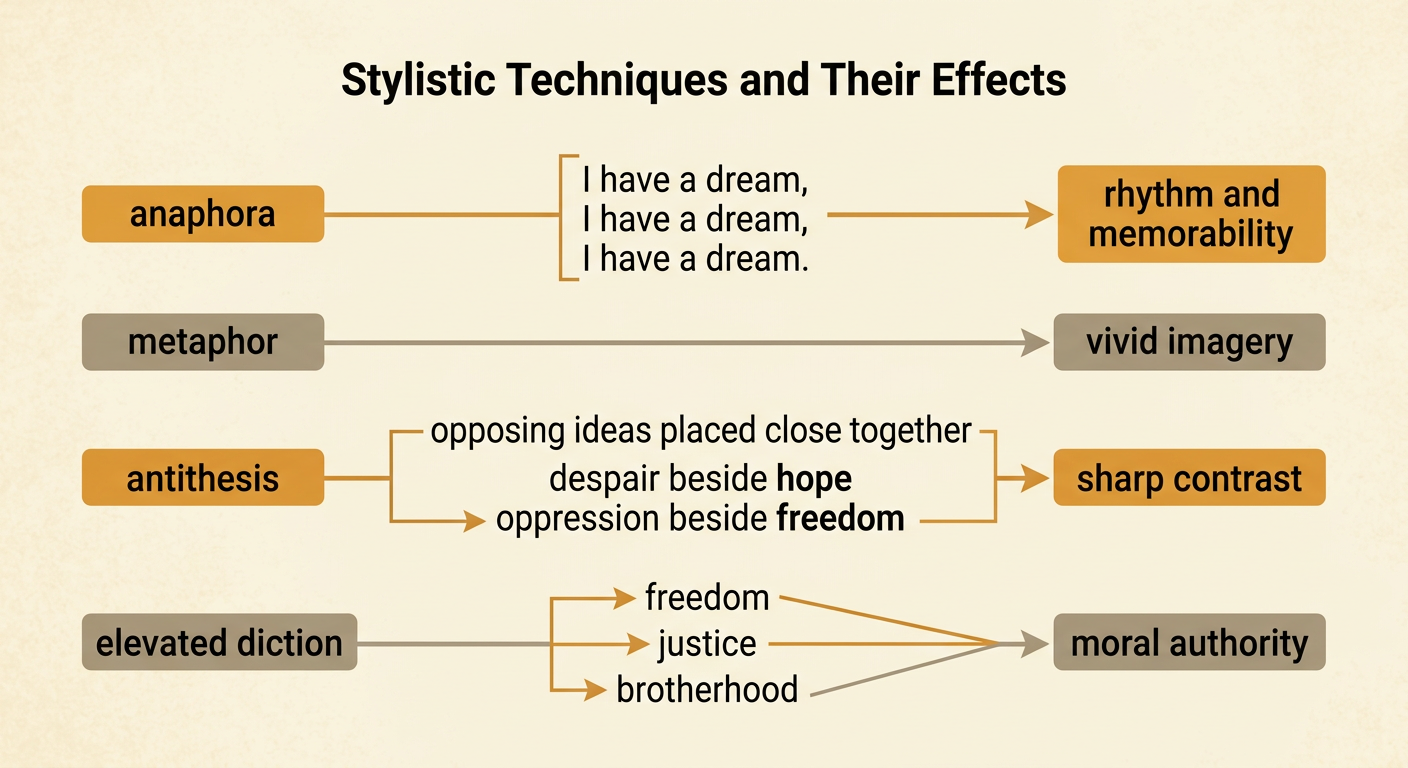
Style includes sentence patterns, figurative language, sound, and word choice. King frequently uses anaphora, the repetition of words at the beginnings of successive clauses. Repeating “I have a dream” gives the speech rhythm, makes its central vision memorable, and shifts attention from present injustice toward a hopeful future. His metaphors also turn abstract ideas into concrete images. Describing injustice as darkness and justice as light helps listeners picture moral change. In addition, words such as “freedom,” “justice,” and “brotherhood” carry positive emotional and civic associations. King balances contrasts, placing despair beside hope and oppression beside freedom. This antithesis sharpens the difference between the nation’s reality and its ideals. His elevated diction and biblical cadence make the speech sound both ceremonial and urgent, strengthening his authority while inspiring listeners to imagine transformation.
Explain the Rhetoric’s Overall Effect
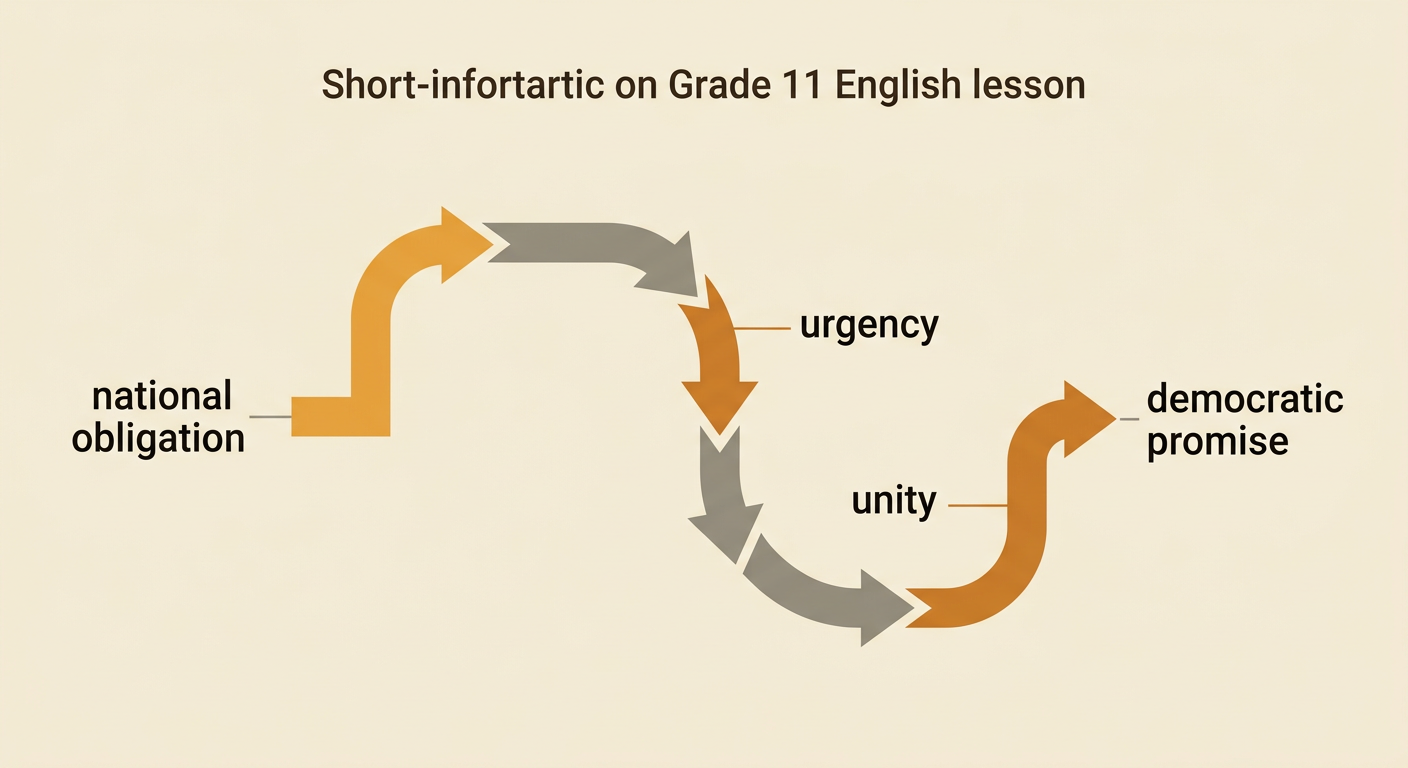
A strong analysis connects individual rhetorical choices to the speech’s overall purpose and effect. In “I Have a Dream,” King first exposes the gap between American ideals and racial reality, then moves toward a hopeful vision of equality. References to founding documents give the argument national authority, the bad-check metaphor clarifies the nation’s failure, and repeated dream statements help listeners imagine a better future. The structure transforms anger about injustice into determination and hope. As a result, the speech can challenge the audience without rejecting the nation itself. An effective analytical claim might state: King combines patriotic allusions, economic metaphor, and rhythmic repetition to portray civil rights as both an unpaid national obligation and an achievable democratic promise. This explanation goes beyond naming devices because it shows how style and content work together to produce urgency, unity, and lasting persuasive power.