Analyzing Rhetorical Choices and Author’s Purpose
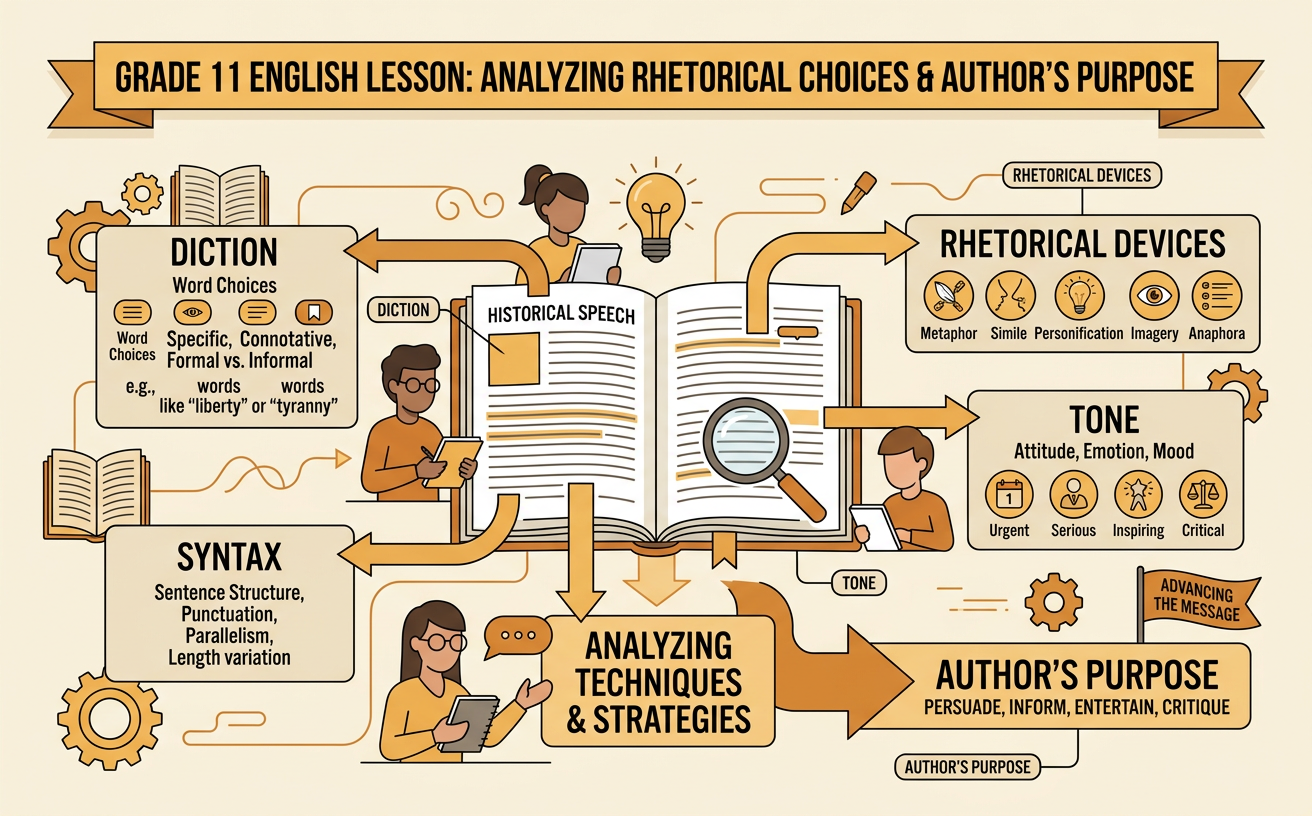
Students analyze how an author’s diction, syntax, tone, and rhetorical devices advance a specific purpose in a nonfiction text.
Illustrations are auto-generated and may be placeholders. They can be refreshed to match the narration.
Define Purpose and Rhetorical Situation
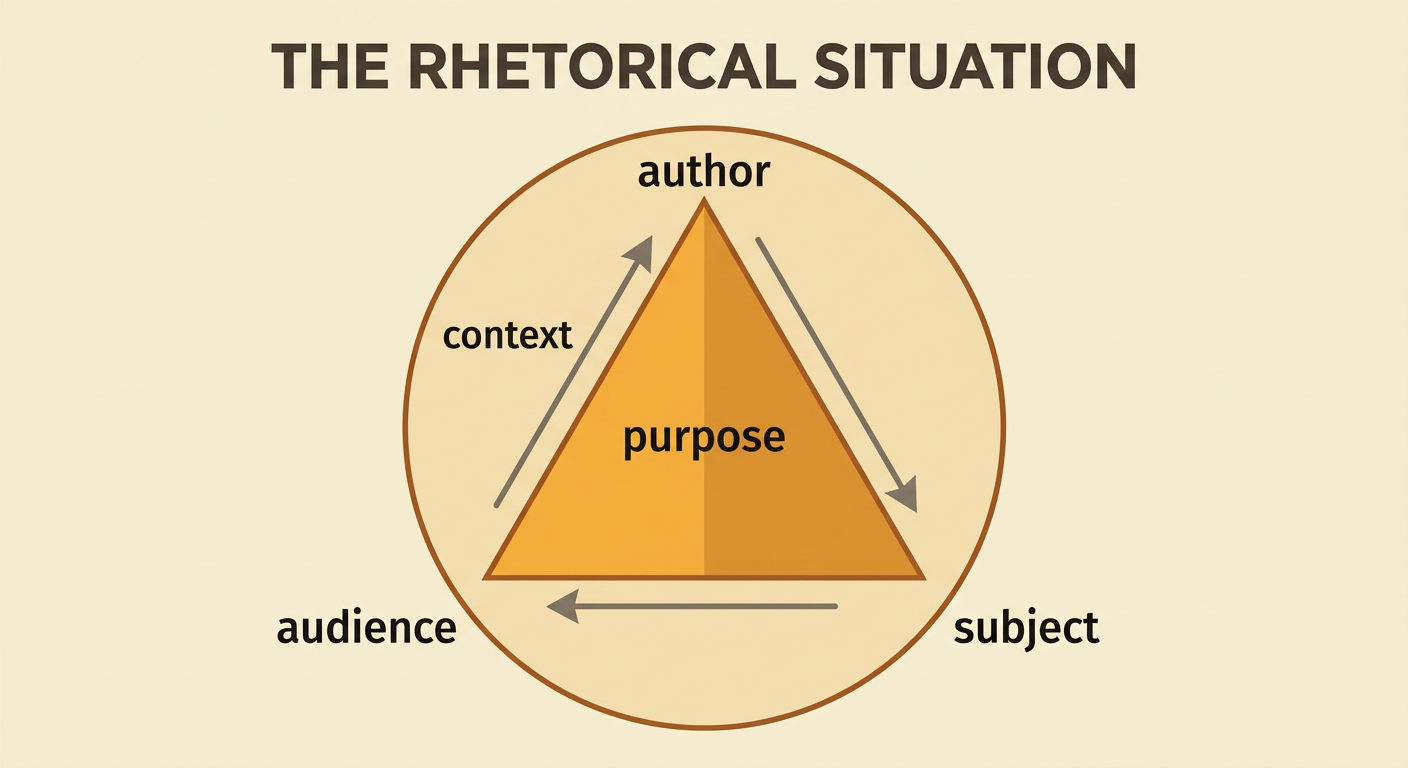
Before analyzing rhetoric, identify the rhetorical situation: the author, audience, subject, context, and reason for writing. The author’s purpose is the intended effect on the audience, such as informing, persuading, criticizing, inspiring, or calling readers to action. Purpose is more specific than topic. For example, an editorial about later school start times may discuss sleep, but its purpose could be to persuade a school board to change the schedule. The intended audience and context shape the author’s choices. Addressing school officials, the writer might cite research and acknowledge scheduling concerns. Addressing students, the same writer might use personal stories and an urgent tone. Ask: Who is communicating? To whom? Under what circumstances? What response does the author want? These questions establish a foundation for analyzing how the text works.
Identify Diction, Syntax, and Tone
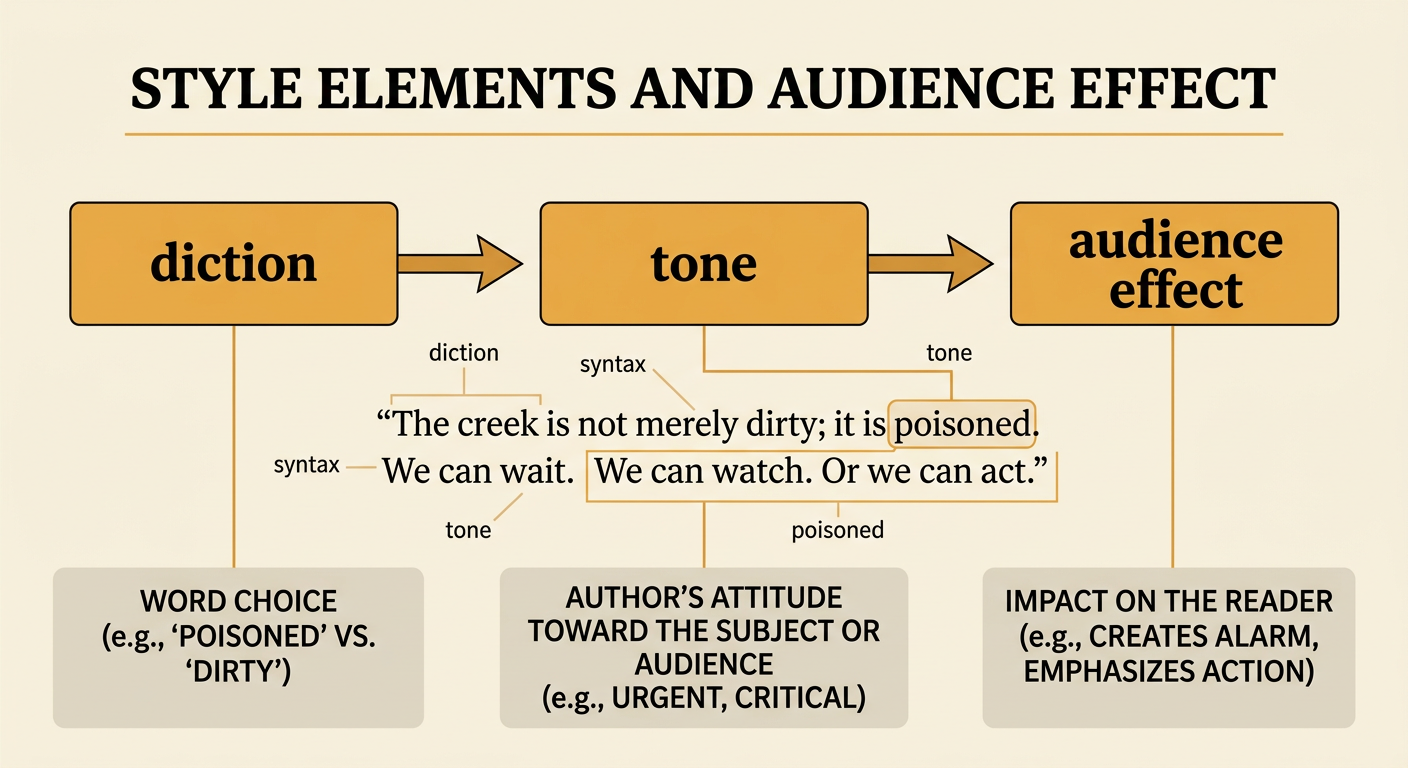
Diction is an author’s choice of words, syntax is the arrangement and length of sentences, and tone is the author’s attitude toward the subject or audience. These elements work together. Consider this statement from an imaginary conservation essay: “The creek is not merely dirty; it is poisoned. We can wait. We can watch. Or we can act.” The charged word “poisoned” creates greater alarm than “dirty.” The three short sentences slow the reader and emphasize the available choices. Together, the diction and syntax produce an urgent, critical tone. When analyzing style, describe words precisely rather than calling them simply “strong.” Diction may be formal, technical, emotional, concrete, or conversational. Syntax may be lengthy, balanced, fragmented, or repetitive. Tone words such as hopeful, indignant, respectful, or skeptical should be supported with textual evidence.
Examine Key Rhetorical Devices
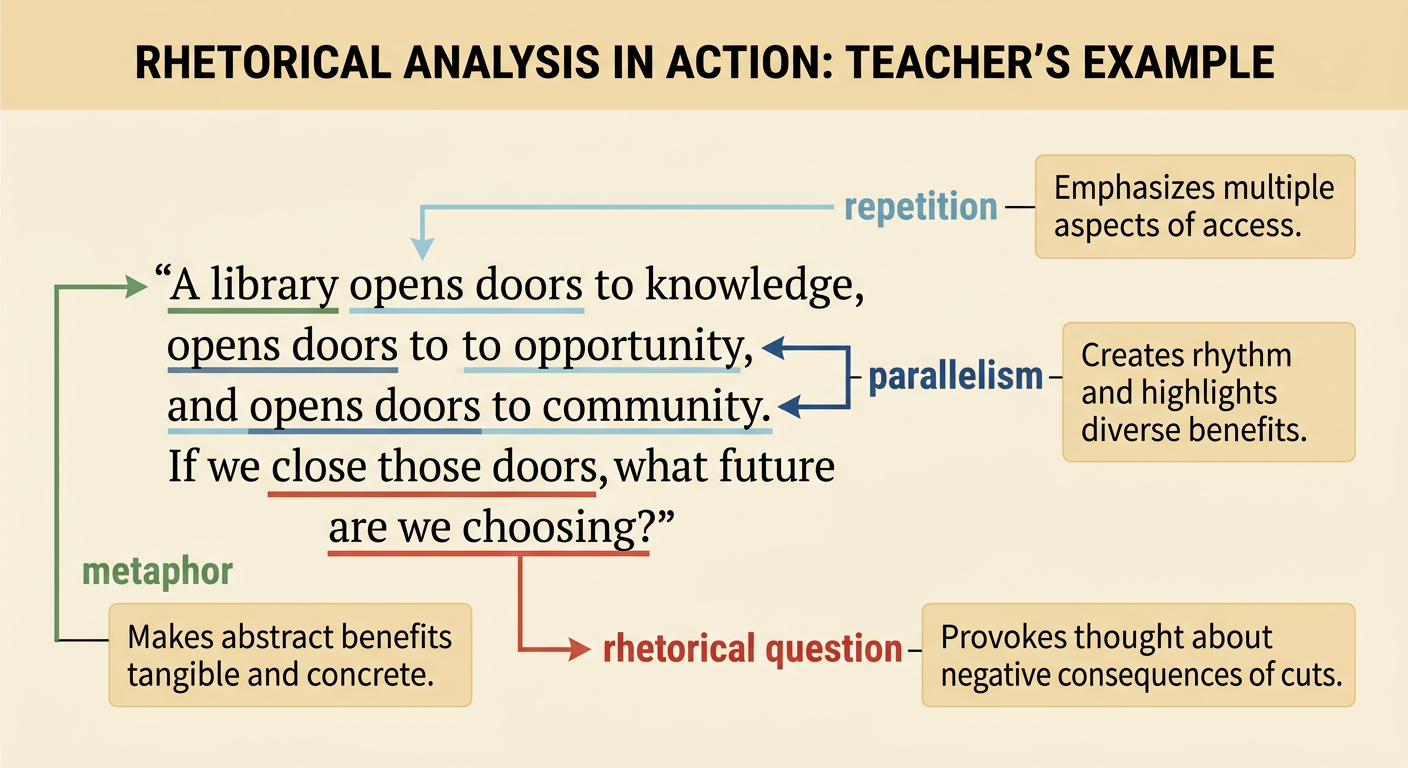
Rhetorical devices are deliberate language patterns that strengthen emphasis, logic, emotion, or credibility. Common devices include repetition, parallelism, rhetorical questions, analogy, antithesis, concession, and allusion. Consider an imaginary speech supporting public libraries: “A library opens doors to knowledge, opens doors to opportunity, and opens doors to community. If we close those doors, what future are we choosing?” Repetition of “opens doors” emphasizes access, while parallel structure gives the sentence rhythm and momentum. The door metaphor makes an abstract benefit concrete. The rhetorical question urges listeners to consider the consequences of budget cuts without requiring an immediate spoken answer. Do not stop after naming a device. Explain what the device emphasizes, what response it may produce, and why that response helps the author. A device becomes significant through its effect within a particular rhetorical situation.
Connect Style to Author’s Purpose
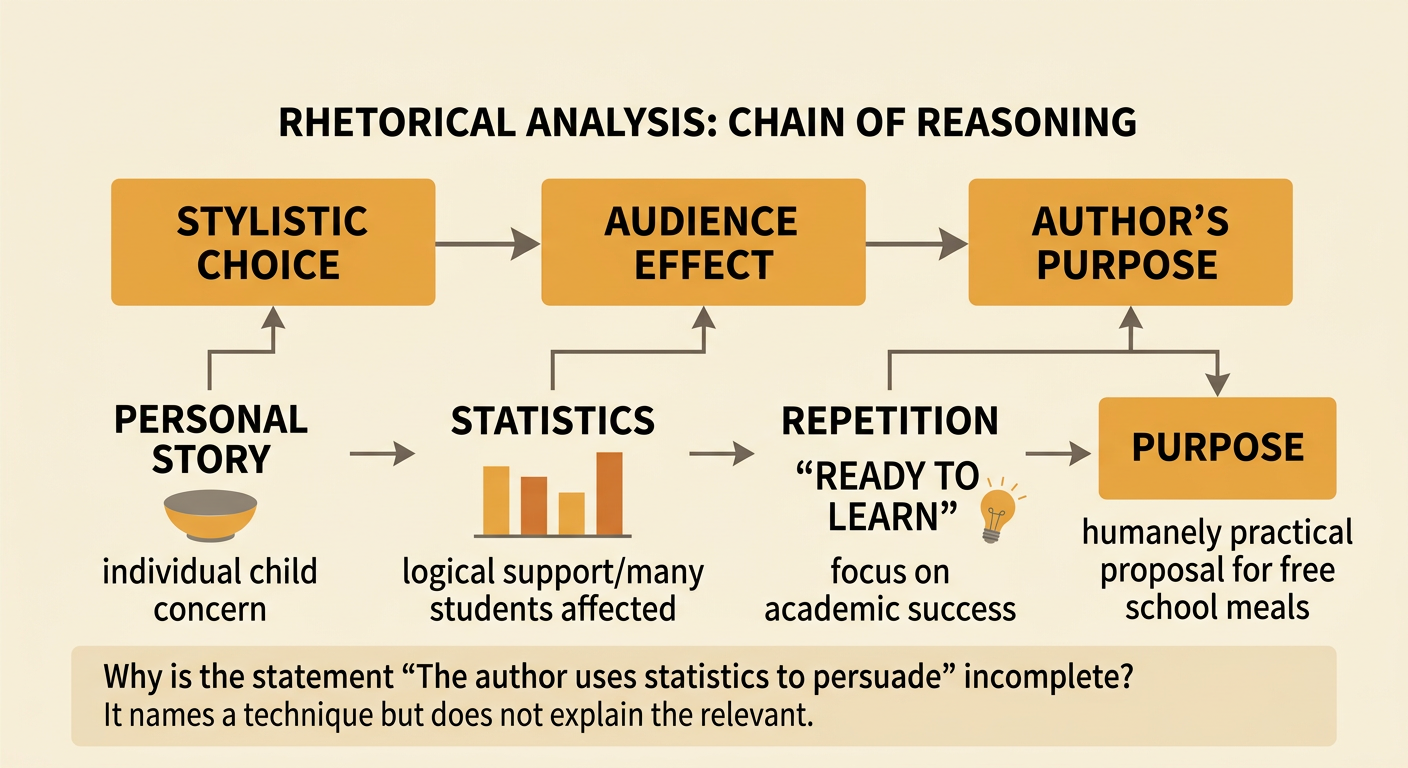
Effective rhetorical analysis explains a chain of reasoning: the author makes a stylistic choice, that choice affects the audience, and the effect advances the purpose. Suppose a public health writer wants parents to support free school meals. The writer begins with one student’s morning routine, then presents nutrition statistics, and finally repeats the phrase “ready to learn.” The story creates personal concern, the statistics add logical support, and the repeated phrase focuses attention on academic success. Together, these choices make the proposal seem both humane and practical. Avoid unsupported claims such as “The author uses statistics to persuade readers.” Instead, identify the relevant detail and explain its likely effect: the statistics show the scale of hunger and may convince skeptical parents that the problem is widespread. Always connect style and content to the author’s specific intended outcome.
Write a Brief Rhetorical Analysis
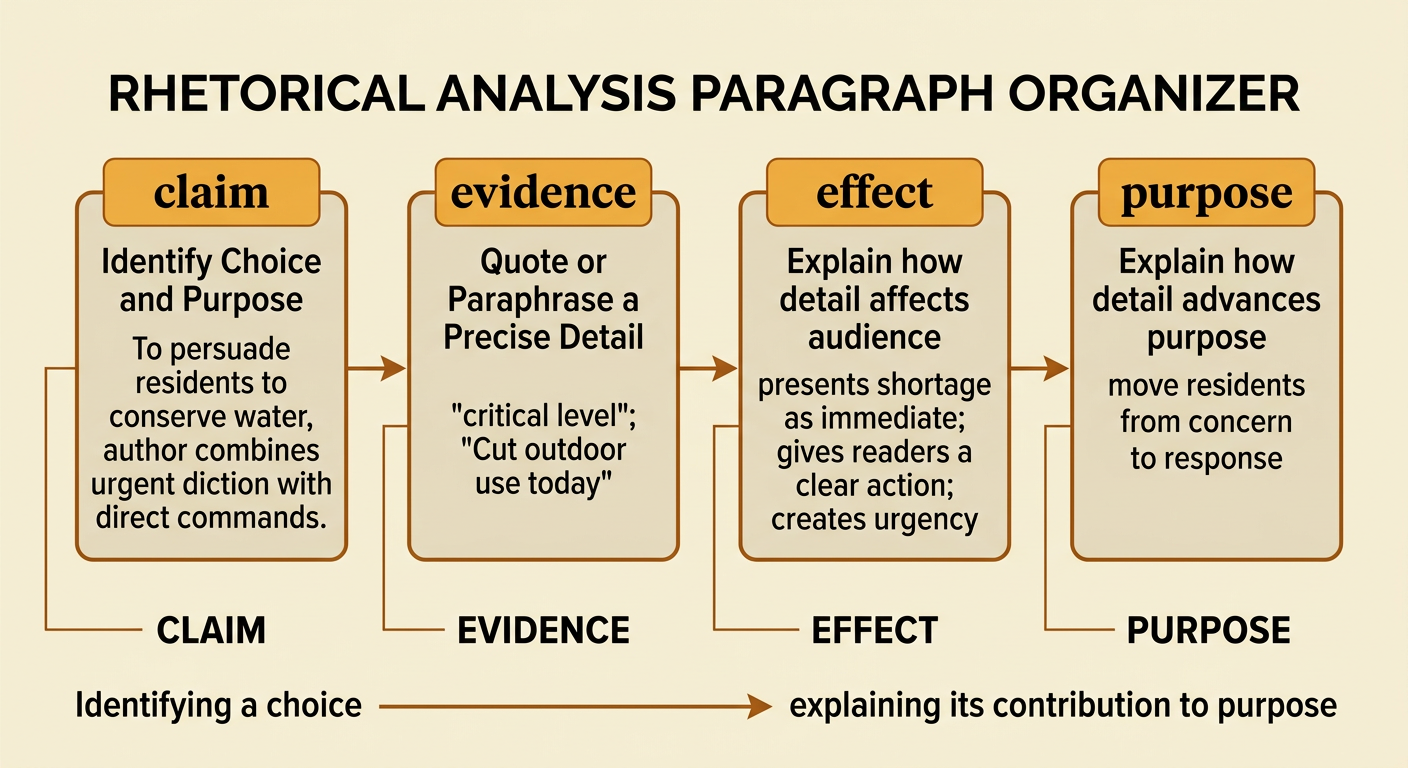
A brief rhetorical analysis should make a defensible claim, present specific evidence, and explain how the evidence advances the author’s purpose. Begin by naming the author’s purpose and an important rhetorical choice. Then quote or paraphrase a precise detail and analyze its effect on the intended audience. For example: “To persuade residents to conserve water, the author combines urgent diction with direct commands. The warning that the reservoir is at a ‘critical level’ presents the shortage as immediate, while the command ‘Cut outdoor use today’ gives readers a clear action. These choices create urgency and move residents from concern to response.” This paragraph does more than identify techniques; it explains their function. Use present tense when discussing a text, integrate quotations smoothly, and avoid summarizing the entire passage. End by reinforcing how style and content contribute to the text’s persuasiveness, power, or beauty.