Analyzing Satire, Irony, and Authorial Purpose
Students analyze how a literary author uses satire, irony, or sarcasm to criticize social beliefs and communicate an unstated perspective.
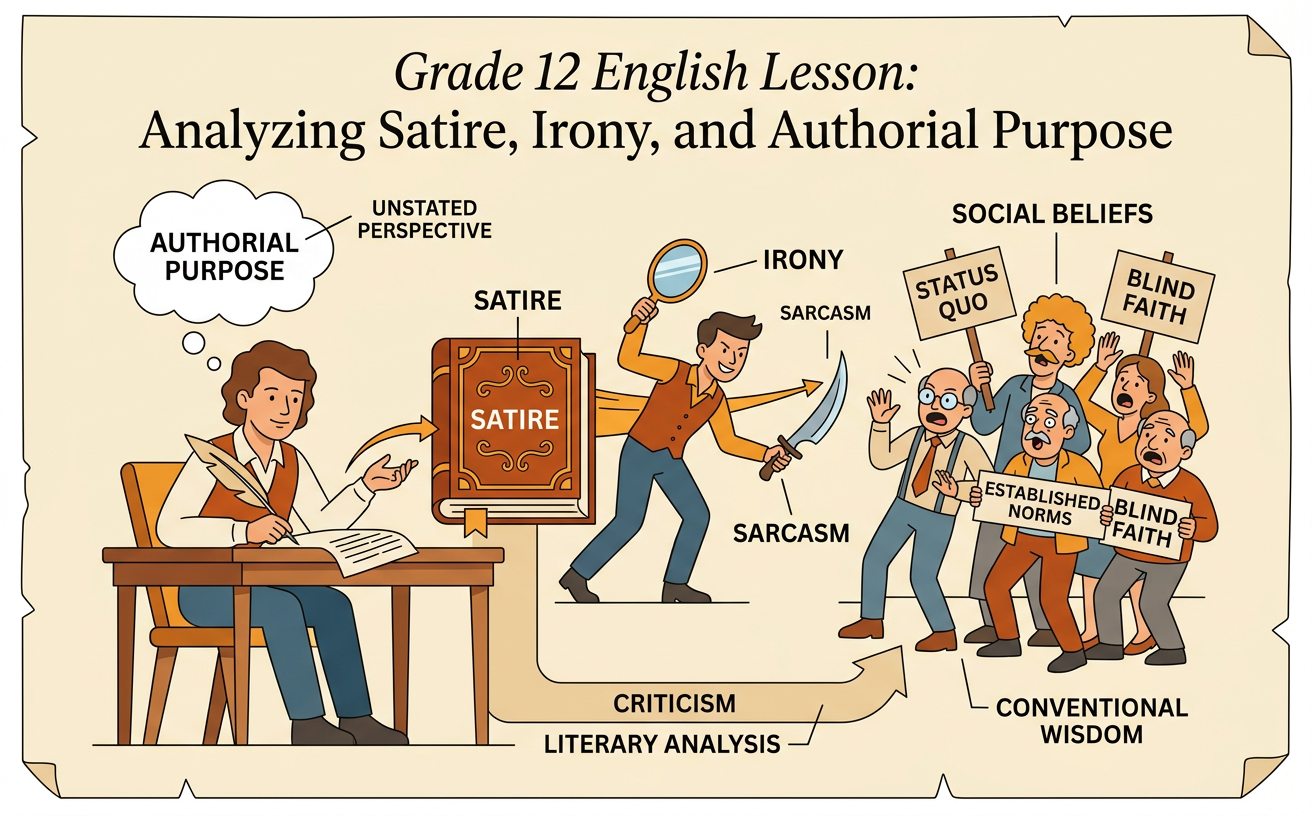
Illustrations are auto-generated and may be placeholders. They can be refreshed to match the narration.
Identify the Literal Meaning
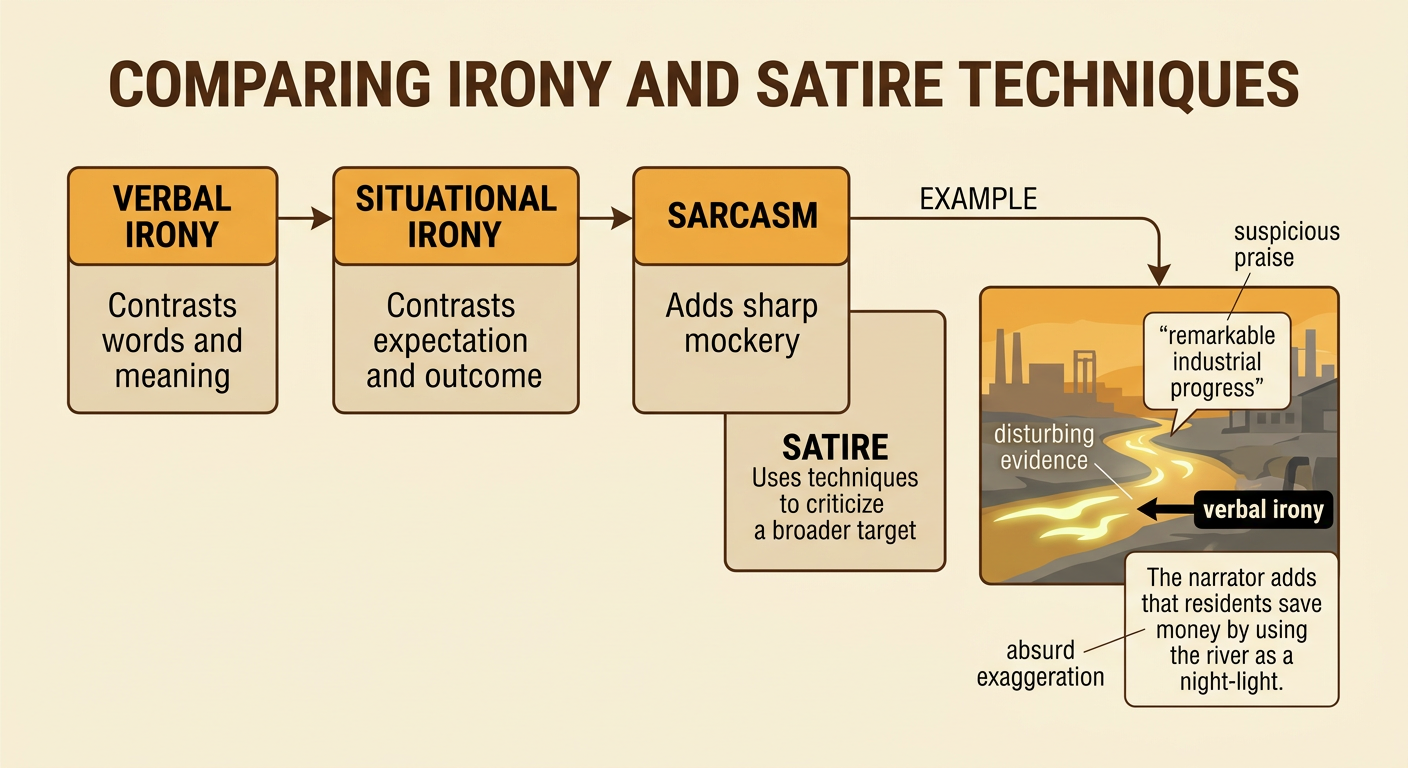
Begin by stating what the narrator or speaker directly says before deciding what the passage really means. Identify the speaker, audience, situation, and exact claim. Avoid assuming that the speaker and author share the same viewpoint. For example, imagine a narrator describing a town’s polluted river: “The water’s unusual green glow is proof of our remarkable industrial progress.” Literally, the narrator claims that the glowing water demonstrates progress. The sentence does not directly call the pollution dangerous or irresponsible. Recording this surface meaning creates a baseline for analysis. Next, notice details that make the statement questionable, such as the unnatural color of the river. A clear understanding of the literal statement allows you to explain later why readers should doubt it and infer an unstated criticism.

Recognize Irony and Satirical Techniques
Irony occurs when a gap exists between words and meaning, expectations and results, or a character’s knowledge and the reader’s knowledge. Satire uses humor, exaggeration, irony, parody, or ridicule to expose human faults or social problems. Sarcasm is a sharply mocking form of verbal irony. In the polluted-river example, calling an unnatural green glow “remarkable industrial progress” is verbal irony because the praise conflicts with evidence of environmental harm. The positive wording and disturbing image create incongruity. If the narrator added that residents now save money by using the river as a night-light, the absurd exaggeration would strengthen the satire. Look for suspicious praise, understatement, contradictions, reversals, exaggerated logic, and mismatches in tone. No single clue proves satire, so consider how several details work together to make the literal message unreasonable or comic.
Infer the Author’s Actual Perspective
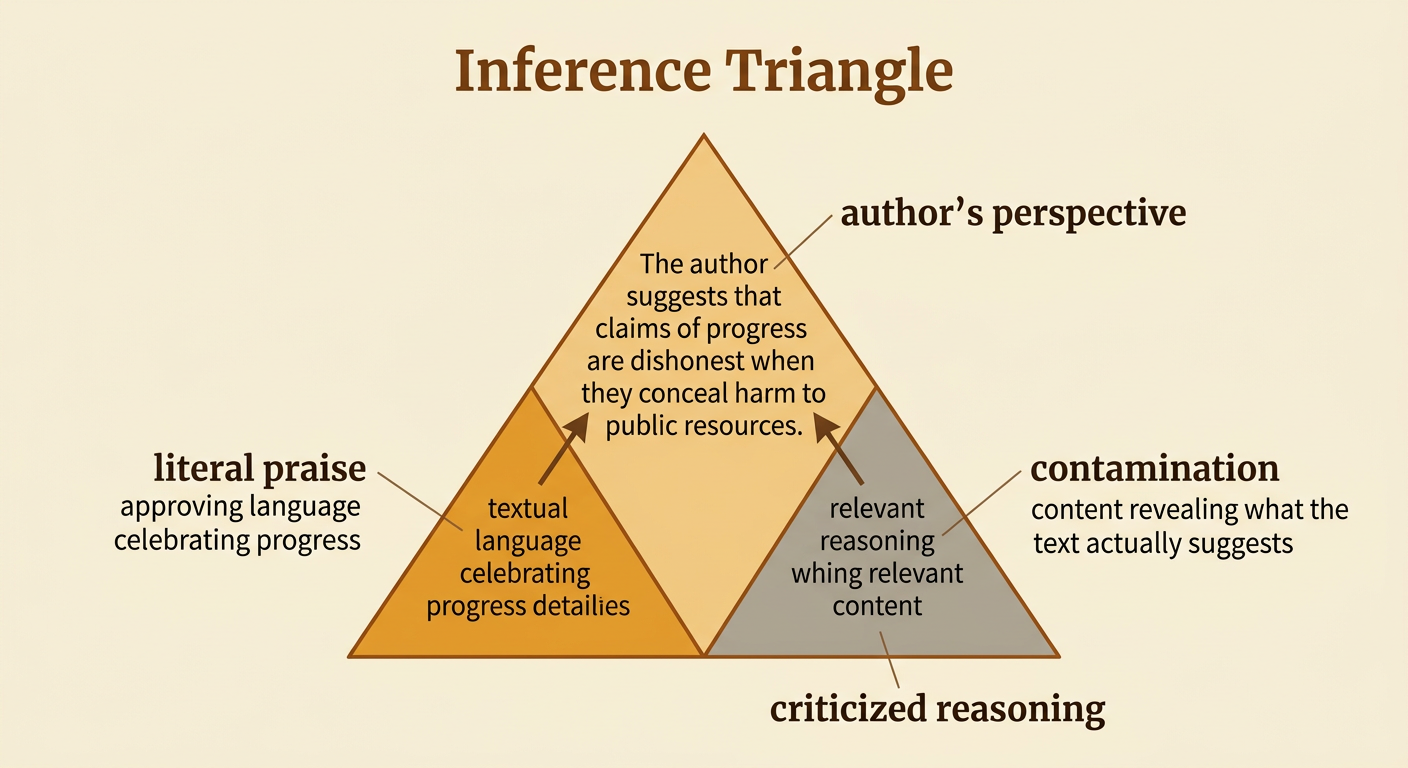
To infer the author’s perspective, ask what belief the passage invites readers to question and what opposing belief the author appears to support. Study tone, word choice, contradictions, consequences, and patterns across the text. Return to the claim that a glowing green river represents progress. Because the description combines celebratory language with obvious evidence of contamination, the author likely does not admire the pollution. Instead, the author may be criticizing leaders who value industrial growth while ignoring environmental damage. State the inference carefully: “The author suggests that claims of progress are dishonest when they conceal harm to public resources.” This is stronger than merely saying, “The author dislikes pollution,” because it identifies the criticized reasoning. An interpretation should explain how the literal praise becomes an unstated judgment through irony.
Connect the Critique to Social Context
Satire usually targets more than one foolish person; it often criticizes a social belief, institution, custom, or power structure. Identify the historical or cultural conditions that make the joke meaningful, but do not replace textual analysis with background information. In the river example, the target might be a society that treats economic expansion as automatically beneficial, even when public health and the environment suffer. Knowledge of industrial pollution, weak regulation, or political public-relations campaigns could clarify the satire. Then connect context to a specific feature of the passage: the phrase “industrial progress” echoes language officials might use to justify harmful policies. Distinguish the target from the technique. Irony is the method, while careless industrial policy and misleading civic pride are possible targets. Verify contextual claims with reliable sources rather than making broad assumptions about an era or community.

Support the Interpretation with Evidence
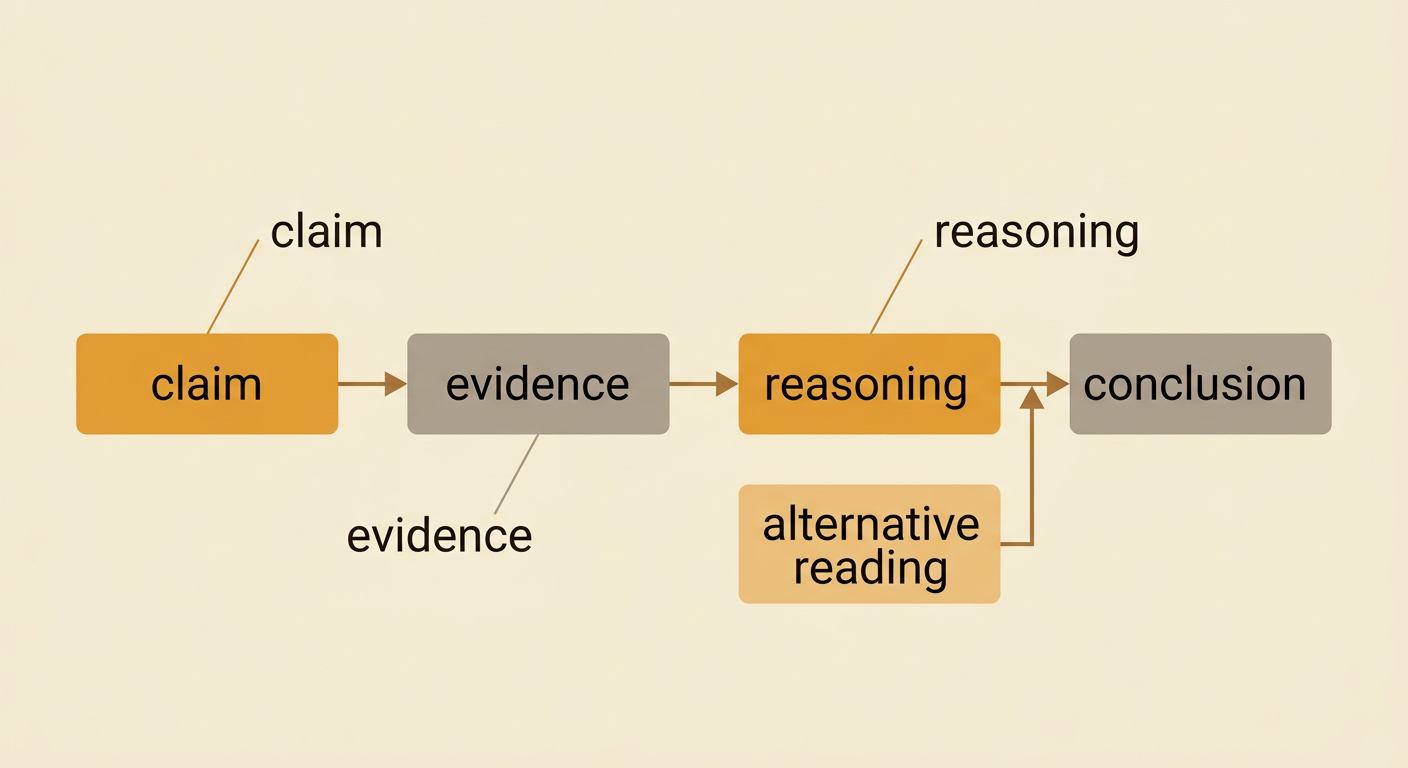
A strong analysis presents a claim, selects precise evidence, and explains how the evidence reveals meaning beyond the literal words. Do not let a quotation stand alone. For example, claim that the author satirizes officials who disguise environmental damage as progress. Quote the description of the river’s “unusual green glow” and the phrase “remarkable industrial progress.” Then explain that the unnatural glow signals contamination, while the approving word “remarkable” imitates public praise. This conflict makes the praise unreliable and exposes the officials’ distorted priorities. Add a second detail, such as residents using the river as a night-light, to show a pattern of absurd exaggeration. Address alternatives when necessary: although “remarkable” could literally mean unusual, the surrounding praise and harmful imagery support an ironic reading. The best evidence is specific, relevant, and connected to the inferred perspective through clear reasoning.