
Analyzing Visual and Multimedia Elements in Literature
Students analyze how illustrations, audio, video, and other multimedia elements contribute to a literary text’s meaning, tone, and beauty.
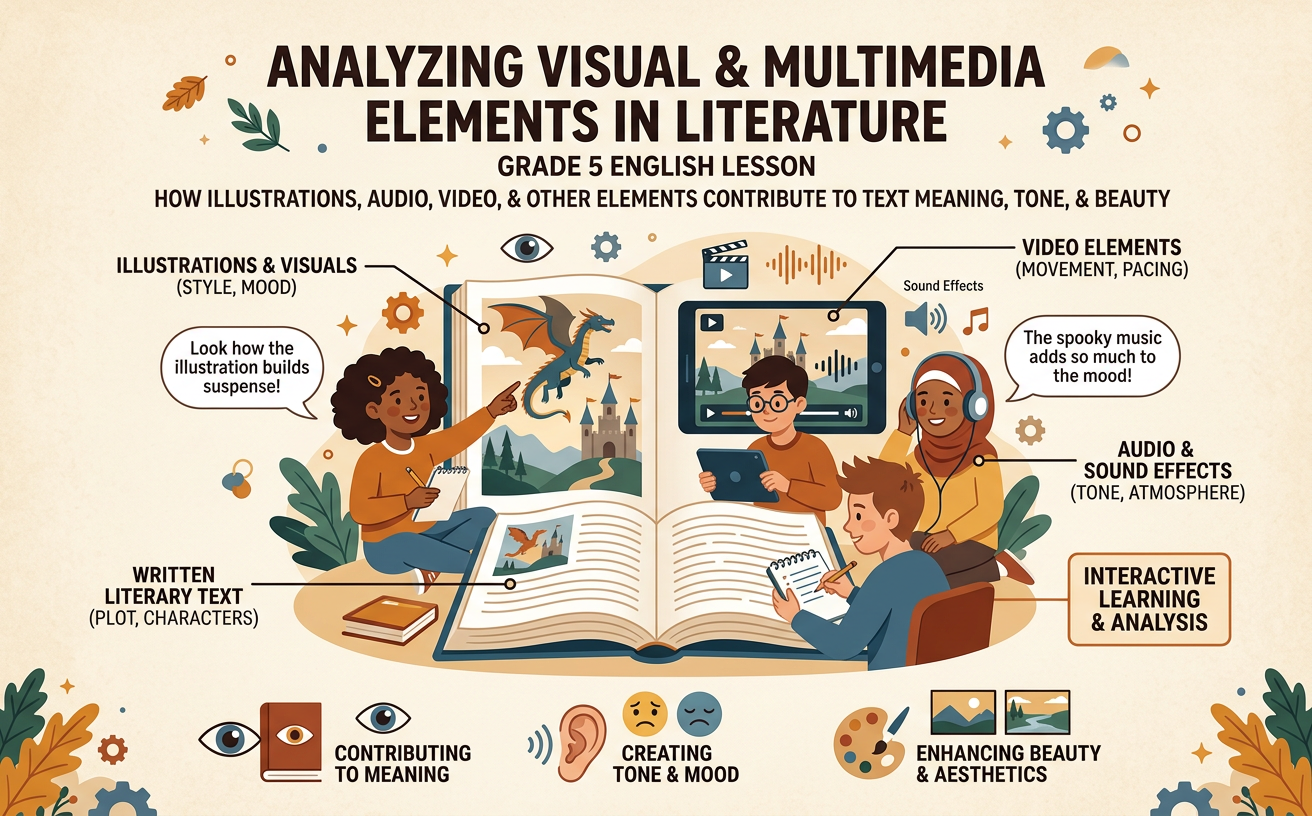
Illustrations are auto-generated and may be placeholders. They can be refreshed to match the narration.
Identify Visual and Multimedia Elements
Literary works can include elements that readers see or hear in addition to written words. Visual elements include illustrations, photographs, colors, maps, panels, symbols, and different styles of lettering. Multimedia elements include music, narration, sound effects, animation, and video. Begin by naming each element and describing it objectively. For example, imagine a digital folktale about a girl crossing a forest at night. One page shows dark blue trees and a small yellow lantern. The narrated version includes slow music and the sound of an owl. The trees, colors, lantern, narration, music, and owl call are all elements to analyze. First identify what is present without explaining its effect. This careful inventory prepares you to study how the elements shape your experience of the story.

Review Meaning, Tone, and Beauty
Visual and multimedia elements can affect meaning, tone, and beauty. Meaning is the idea or message a reader understands. Tone is the attitude or feeling created by the author’s and creator’s choices, such as joyful, mysterious, serious, or peaceful. Beauty is the pleasing or powerful quality of the way the work looks, sounds, or is arranged. In the forest folktale, the girl’s glowing lantern may suggest hope, adding to the story’s meaning. Dark blue colors and a distant owl call may create a mysterious tone. A pattern of curling branches, gentle music, and carefully repeated colors may add beauty. One element can contribute in more than one way. The lantern’s warm color, for instance, can look beautiful while also showing that courage shines during a difficult journey.

Examine Details in Words and Images
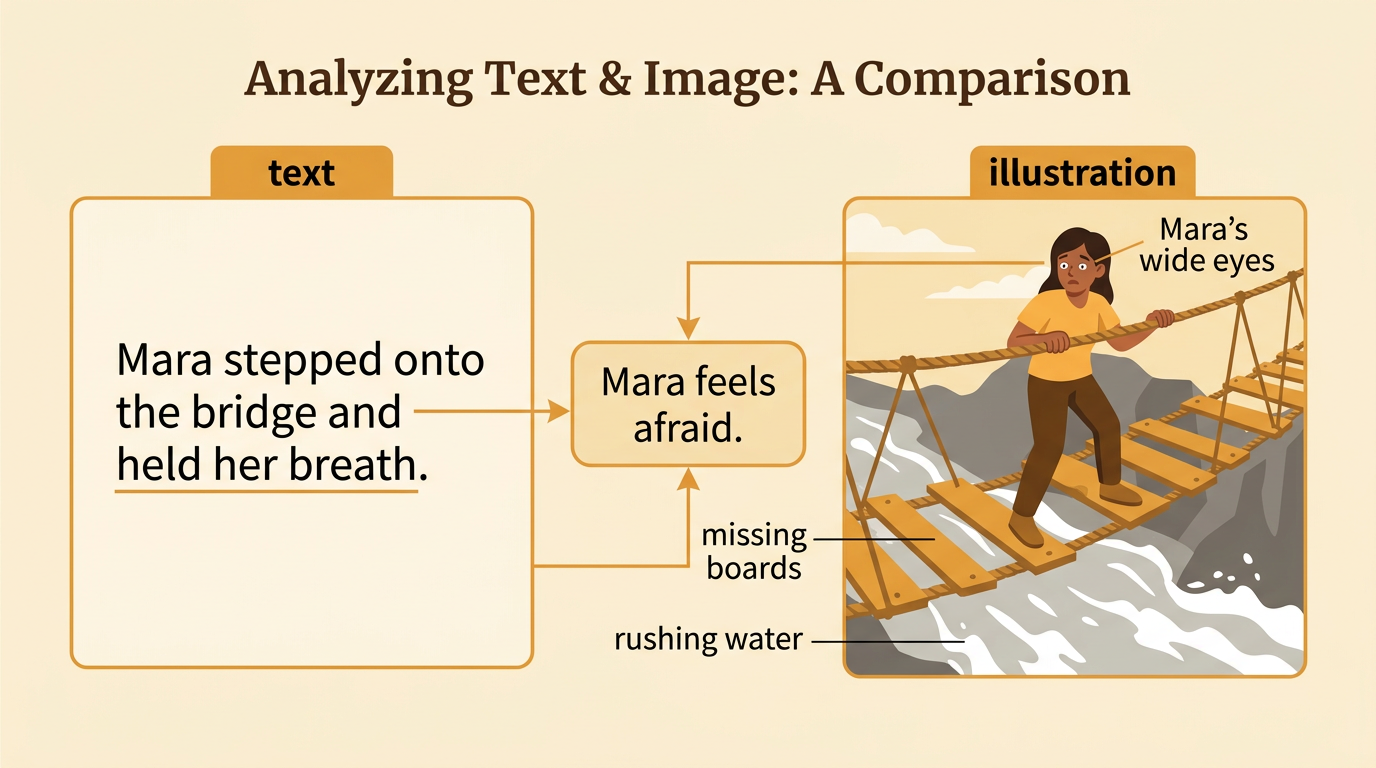
To analyze a literary work, look closely at details in both the words and the images. Ask what information appears in each form and what becomes clearer when they work together. Suppose the text says, “Mara stepped onto the bridge and held her breath.” These words reveal her action and physical reaction. The illustration shows missing boards, rushing water below, and Mara gripping the rope with wide eyes. Those visual details explain why she is nervous, even though the sentence never uses the word afraid. Notice similarities and differences: both the sentence and picture show Mara on the bridge, but the picture adds information about the danger. Do not assume that an image merely repeats the words. It may extend the scene, reveal a character’s feelings, emphasize a symbol, or show a setting that the text only briefly describes.
Analyze Each Element’s Contribution
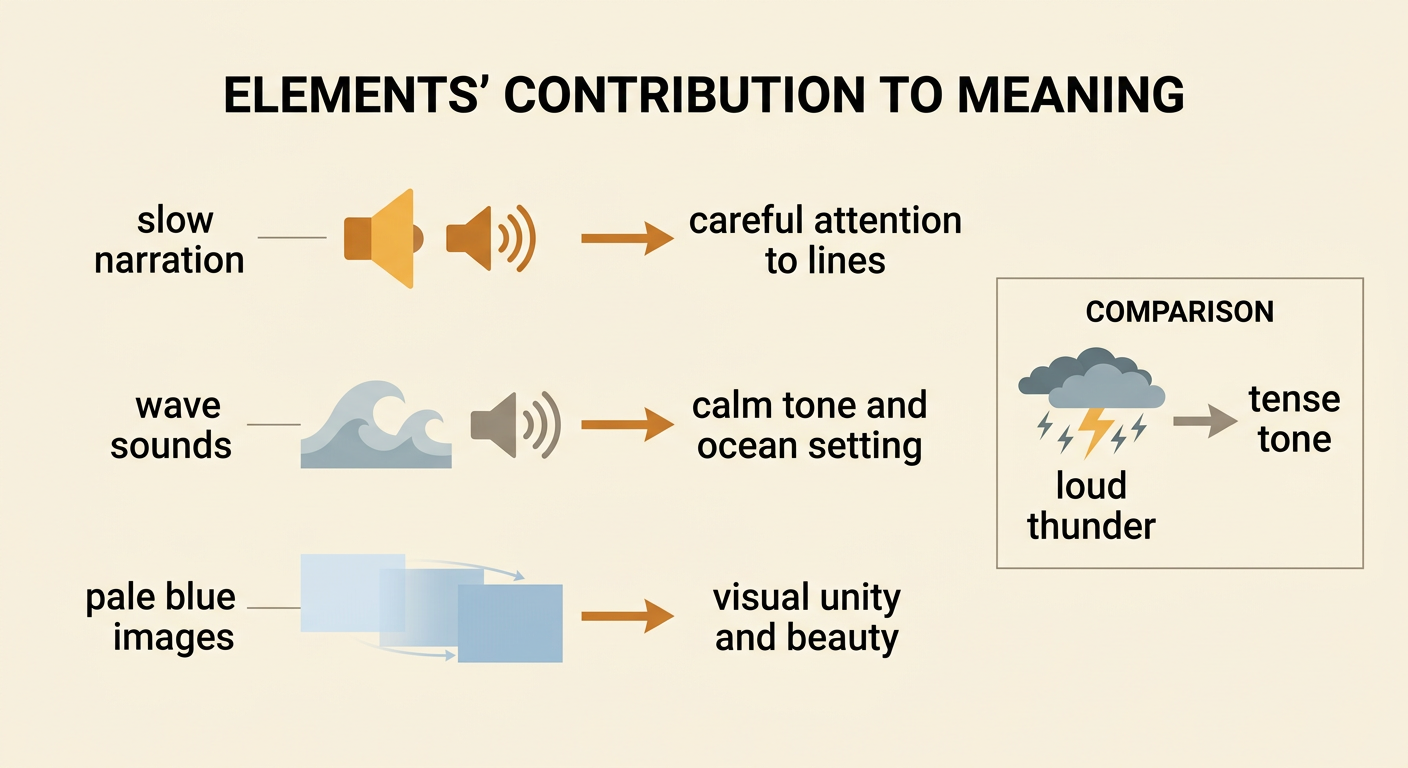
After identifying an element, explain what it contributes to the work. A contribution is the specific difference the element makes in a reader’s understanding or experience. Use a cause-and-effect question: Because this element is present, what does the reader understand, feel, notice, or appreciate? Imagine a video version of a poem about the ocean. The speaker reads slowly, soft wave sounds repeat in the background, and the screen fades between pale blue images. The slow narration helps readers pause over each line. The waves make the setting feel present and create a calm tone. The fading blue images add beauty and connect separate parts of the poem. Test your analysis by imagining the work without an element. If the waves were replaced by loud thunder, the tone would become tense rather than calm. This comparison reveals the waves’ contribution.
Support an Analysis with Evidence
A strong analysis includes a claim, evidence, and reasoning. The claim states how an element contributes to meaning, tone, or beauty. Evidence points to an exact detail in the text, image, audio, or video. Reasoning explains how the evidence supports the claim. For example, claim: “The illustration creates a hopeful tone.” Evidence: “A bright sunrise appears behind the damaged village as neighbors begin rebuilding.” Reasoning: “The rising light and the people working together suggest that a new beginning is possible after hardship.” Avoid unsupported statements such as “The picture is nice.” Instead, name visible or audible details and connect them to a clear effect. You may also quote a short phrase from the text and compare it with the multimedia element. The best analysis shows not only what the element contains, but why that creative choice matters.
