
Analyzing Visual and Multimedia Elements in Literature
Students analyze how illustrations, audio, animation, and other multimedia elements contribute to a literary text’s meaning, tone, and overall effect.
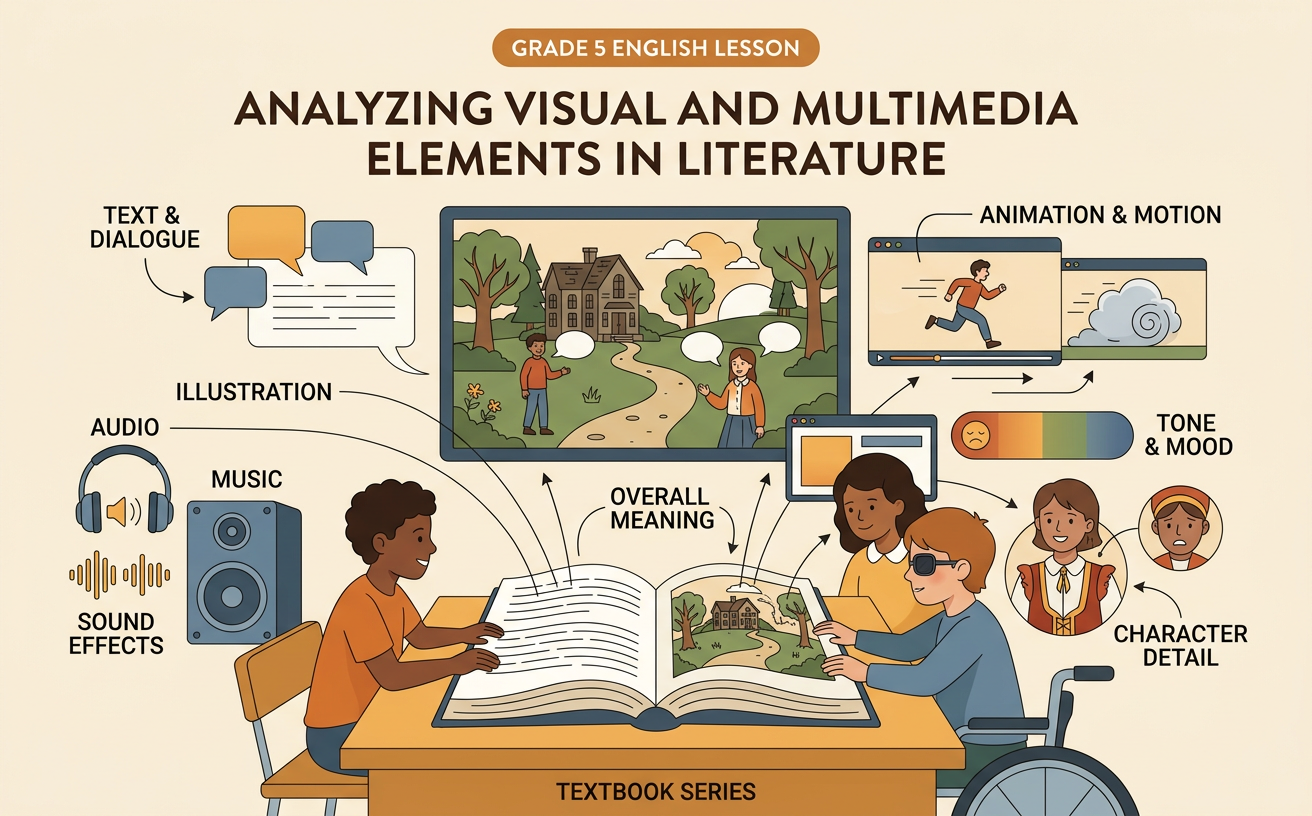
Illustrations are auto-generated and may be placeholders. They can be refreshed to match the narration.
Identify Visual and Multimedia Elements
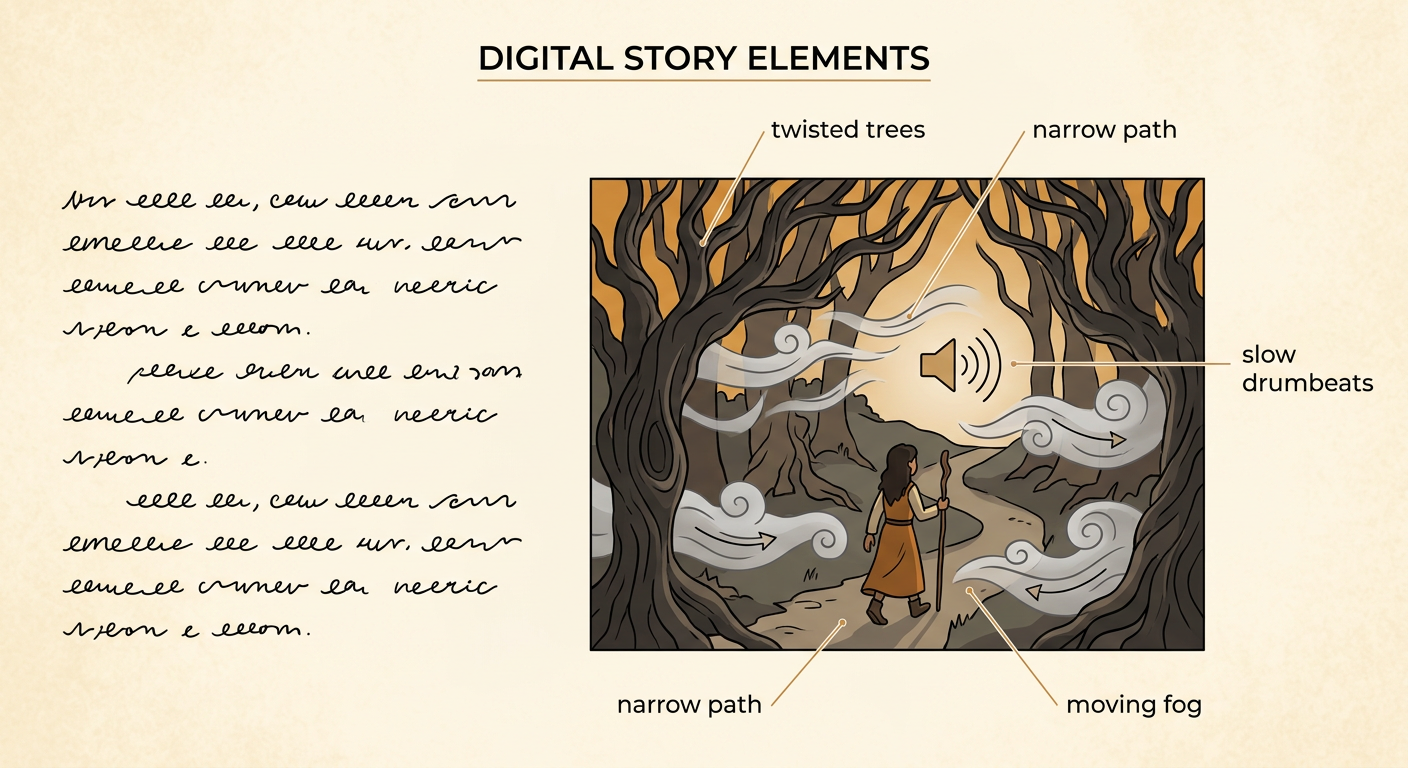
Visual and multimedia elements are parts of a story that communicate through pictures, sound, movement, or design. Visual elements include illustrations, colors, facial expressions, maps, panels, and different sizes or styles of print. Multimedia elements include music, narration, sound effects, video, and animation. Begin by noticing exactly what you see or hear without explaining it yet. For example, imagine a digital folktale in which Maya enters a dark forest. The illustration shows twisted trees and a narrow path. Quiet drumbeats play as fog moves across the screen. The trees, path, colors, drumbeats, and animation are all elements that the creator chose. Identifying them clearly is the first step toward analyzing why they matter. Use precise descriptions, such as “slow drumbeats,” rather than general comments like “the sound was interesting.”
Review Meaning and Tone
Meaning is the idea, message, or understanding communicated by a text. Tone is the author’s or storyteller’s attitude toward the subject, such as playful, hopeful, serious, mysterious, or sorrowful. Visual and multimedia elements can help readers understand both. In the forest folktale, the sentence “Maya stepped beneath the branches” tells what happens. Dark blue colors, heavy shadows, and low drumbeats make the moment feel mysterious and tense. If the same scene used bright yellow light, cheerful flute music, and bouncing animation, its tone would feel welcoming or playful instead. The event in the words would stay the same, but the audience’s response would change. When identifying tone, choose a specific tone word and ask which details created that feeling. When explaining meaning, consider what the elements help you understand about a character, setting, conflict, or theme.

Connect Elements to Text Details
To analyze an element, connect it to a specific detail in the written text. First, identify an important word, sentence, character action, or setting detail. Next, find a visual or multimedia element that repeats, emphasizes, explains, or contrasts with that detail. Suppose the folktale says, “Maya tried to appear brave, but her hands trembled.” In the illustration, her shoulders are straight, yet her fingers are drawn tightly around a lantern. The animation makes the lantern shake slightly, and the sound track includes her quick breathing. These elements emphasize the contrast between how Maya wants to look and how she truly feels. They help readers infer that she is frightened but determined. A strong connection names both parts: the exact text detail and the matching image, sound, or movement. Avoid discussing an element as if it were separate from the story.

Analyze the Element’s Contribution
An element’s contribution is the difference it makes to the audience’s understanding or experience. Ask, “What does this element add that the words alone do not show as strongly?” An element may clarify the setting, reveal emotion, emphasize conflict, create tone, show the pace of events, or make language more beautiful and memorable. In the folktale, Maya finally finds a silver bird trapped under a branch. The text says, “A small song rose through the darkness.” Soft flute music begins, the bird glows, and the dark background slowly becomes lighter. Together, these elements shift the tone from tense to hopeful. They also emphasize the story’s idea that a small act of courage can bring hope. To test the contribution, imagine removing or changing the element. Without the growing light and music, the scene would still make sense, but its emotional change would be less powerful.

Support Analysis with Evidence
A strong analysis includes a claim, evidence, and reasoning. The claim states what the element contributes. The evidence identifies exact details from both the text and the visual or multimedia presentation. The reasoning explains how those details support the claim. For example: “The music and animation create a hopeful tone when Maya rescues the bird. The text says, ‘A small song rose through the darkness.’ At the same moment, soft flute music plays, the bird begins to glow, and the background becomes lighter. These choices turn a dark, frightening scene into one that feels safe and promising.” This response does more than list features; it explains their effect. Use accurate verbs such as emphasizes, reveals, contrasts, clarifies, or creates. Include enough evidence for a reader who cannot see or hear the presentation. Then check that every piece of evidence clearly supports your claim.
