Analyzing Word Choice and Tone in Literature
Students analyze how an author’s precise word choices, figurative language, and connotations shape tone and meaning in a literary passage.

Illustrations are auto-generated and may be placeholders. They can be refreshed to match the narration.
Denotation and Connotation
A word’s denotation is its literal dictionary meaning. Its connotation is the feeling or idea associated with it. Words can share a denotation but have different connotations. For example, slender and scrawny both describe someone who is thin. Slender usually has a positive connotation, suggesting grace or fitness. Scrawny has a negative connotation, suggesting weakness. If an author writes, “The scrawny dog crept toward the porch,” the word scrawny may make readers feel concern for the dog. If the author uses slender instead, the dog may seem graceful rather than unhealthy. To analyze connotation, identify the literal meaning, notice the feelings linked to the word, and consider why the author chose that word instead of a neutral alternative.

Recognizing Figurative Language
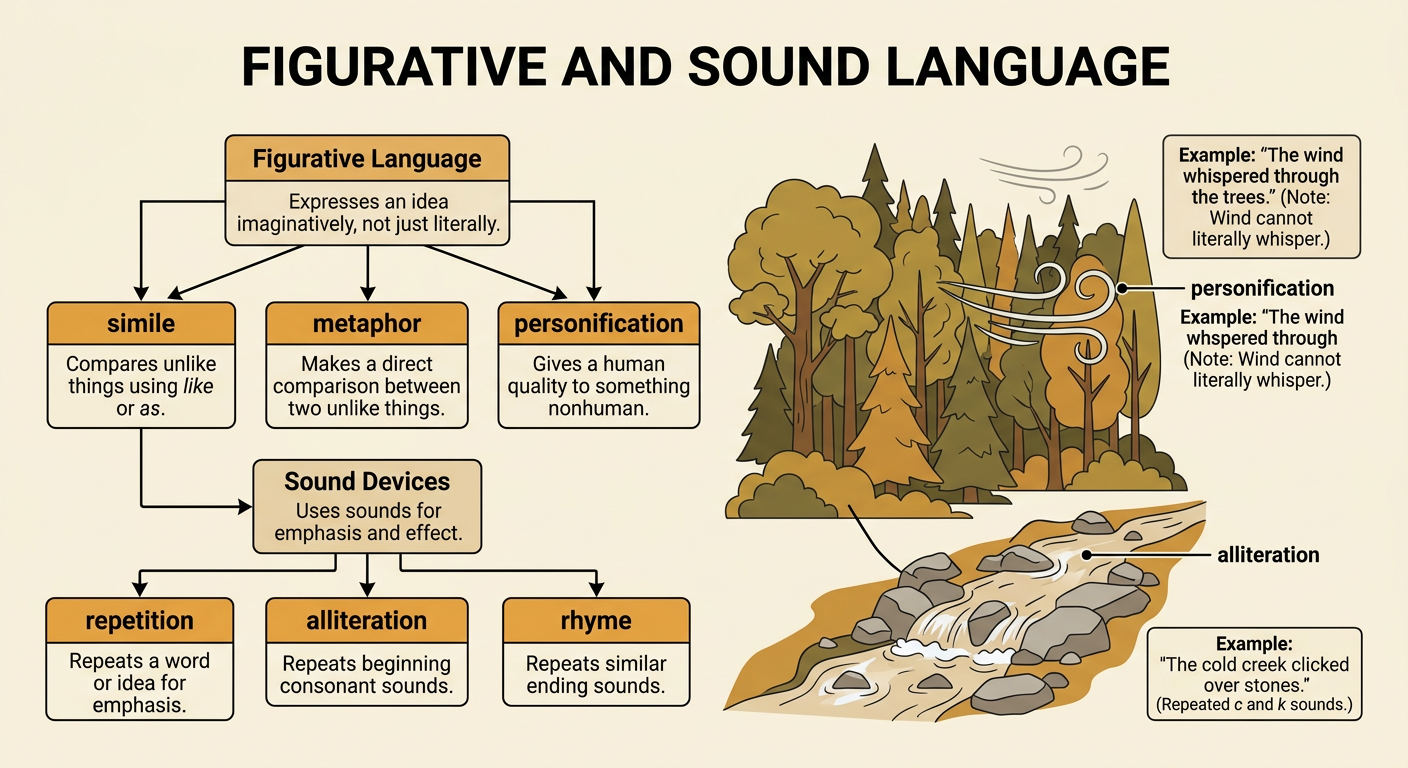
Figurative language expresses an idea in an imaginative way rather than only through literal meaning. A simile compares unlike things using like or as, while a metaphor makes a direct comparison. Personification gives human qualities to something nonhuman. In “The wind whispered through the trees,” the wind cannot literally whisper, so whispered is personification. It makes the wind seem gentle, secretive, or mysterious. Sound devices also shape meaning. Repetition emphasizes words or ideas, alliteration repeats beginning consonant sounds, and rhyme repeats similar ending sounds. In “The cold creek clicked over stones,” the repeated hard c and k sounds imitate quick, sharp movement. When analyzing figurative language or sound, explain what the device suggests and how it affects the passage, not simply what the device is called.
Identifying the Author’s Tone
Tone is the author’s attitude toward a subject, character, or situation. It may be joyful, anxious, respectful, bitter, playful, gloomy, or hopeful. Tone is different from mood: tone belongs to the author or narrator, while mood is the feeling created in the reader. To identify tone, look for patterns in word choice, imagery, sentence structure, and punctuation. Consider the sentence “Maya marched into the silent room, gripping the crumpled note.” Words such as marched, silent, gripping, and crumpled create a tense or determined tone. A single word may not prove the tone, so gather several clues. Then choose a precise tone word and support it with evidence. Instead of saying the tone is “bad,” describe it as uneasy, angry, disappointed, or threatening.

Connecting Word Choice to Tone
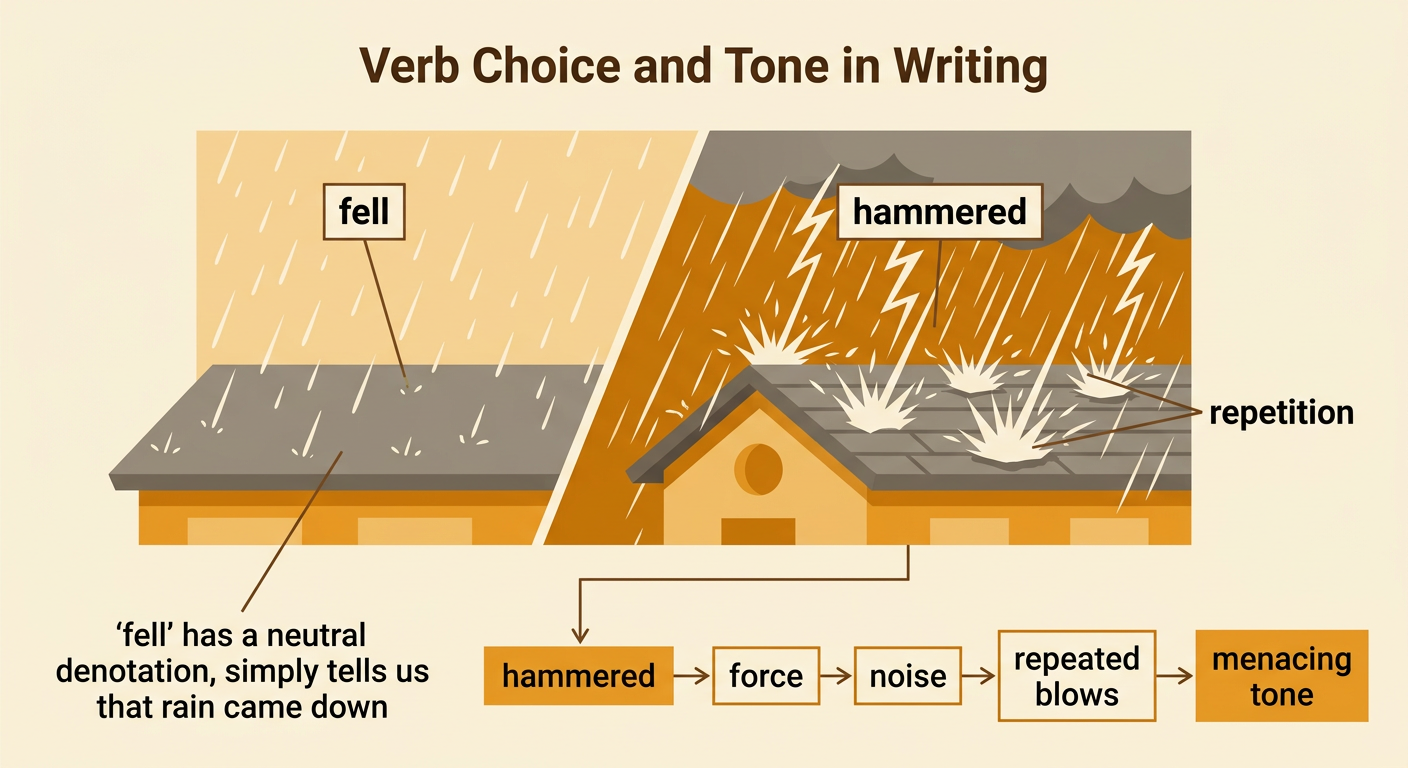
Precise word choices build tone because each verb, adjective, image, and sound carries an effect. Compare “Rain fell on the roof” with “Rain hammered the roof.” Fell is neutral, but hammered suggests force and noise, creating a harsh or threatening tone. An author can strengthen that effect through repetition: “It hammered and hammered, refusing to stop.” Repeating hammered emphasizes the storm’s persistence and may make the scene feel overwhelming. To explain this connection, name the important word or phrase, describe its denotation or connotation, identify the tone, and state how the choice creates that tone. A strong analysis might say, “The verb hammered suggests repeated, forceful blows, so it gives the storm a violent and menacing tone.” This reasoning links specific evidence to the author’s larger purpose.
Text-Based Analysis Practice
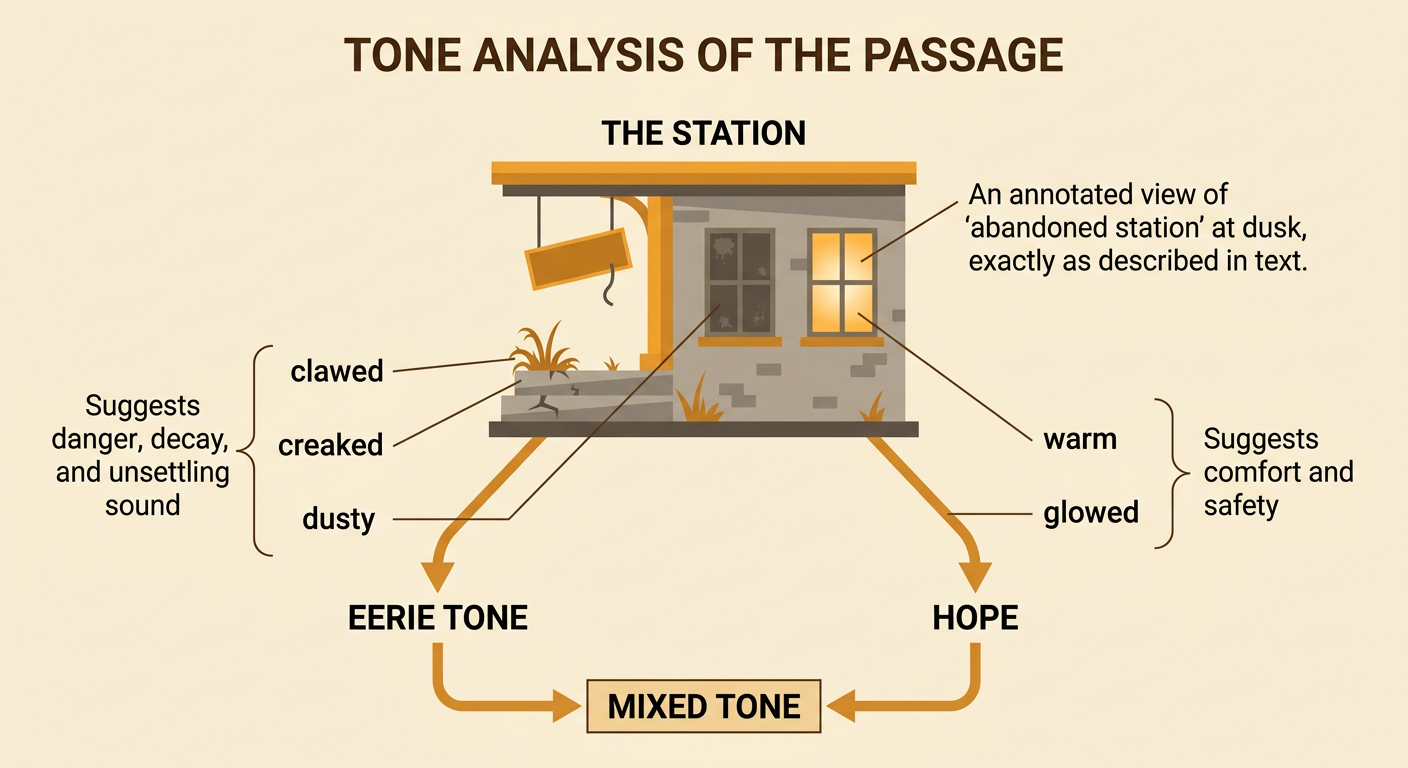
Read this short passage: “At dusk, Lena reached the abandoned station. Weeds clawed at the cracked steps, and one loose sign creaked, creaked above her. Still, a warm square of light glowed behind the dusty window.” First, identify words with strong connotations or figurative meanings. Clawed personifies the weeds and suggests danger. Cracked, creaked, and dusty emphasize decay, while the repetition of creaked draws attention to an unsettling sound. Together, these choices create an eerie, uneasy tone. However, warm and glowed have comforting connotations, introducing a hint of hope. A complete analysis could state that the author develops a mostly ominous tone through personification, descriptions of decay, and sound repetition, then softens it with an image of light. Notice that the strongest response quotes evidence and explains how each choice affects tone and meaning.