
Animal Body Parts Have Jobs
Students observe animal body parts, sort them by function, and design a simple tool inspired by a part that helps an animal move, eat, or stay safe.

Illustrations are auto-generated and may be placeholders. They can be refreshed to match the narration.
Meet the Animal Parts
Animals have body parts on the outside of their bodies. These are called external body parts. We can see a bird’s wings, a fish’s fins, a rabbit’s ears, and a turtle’s shell. Each part has one or more jobs that help the animal live and meet its needs. Wings can help a bird fly. Fins help a fish swim and steer. Large ears can help a rabbit hear nearby sounds. A hard shell can help protect a turtle. Look closely at pictures of animals with a partner. Take turns naming one body part you notice. Listen while your partner speaks. Then respond by adding a new idea or asking a question, such as, “How does that part help the animal?”

What Job Does Each Part Do?
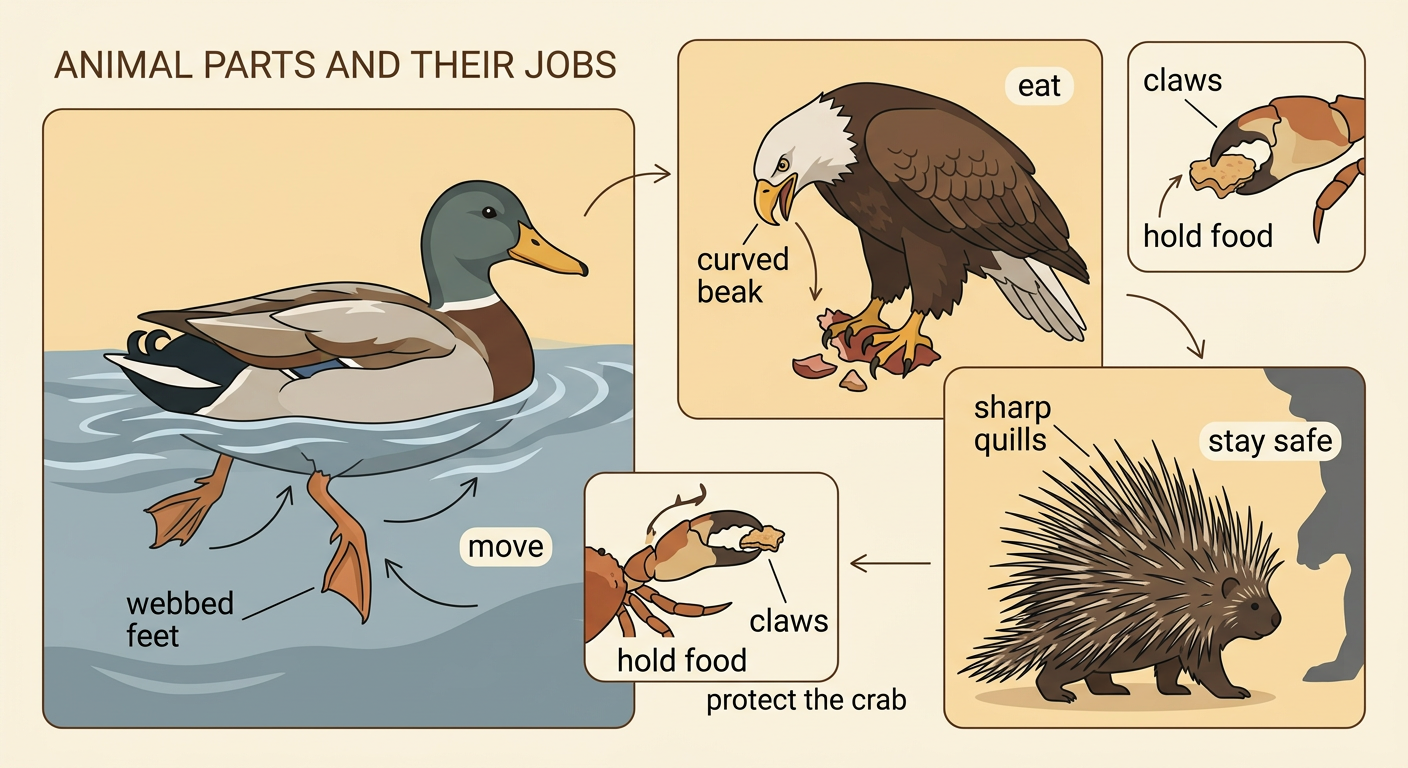
An animal body part can help the animal move, eat, or stay safe. A duck’s webbed feet push against water and help the duck swim. An eagle uses its curved beak to tear food into pieces. A porcupine’s sharp quills can help keep some attackers away. Some parts have more than one job. A crab’s claws can hold food, and they can also help the crab protect itself. We can ask, “What does the animal do with this part?” Look for clues in the part’s shape. A wide, flat foot can push water. A pointed beak can pick or tear food. A hard covering can protect soft body parts. Tell a partner which job you think each part does and why.
Sort Parts by Function
We can classify animal parts by putting them into groups. Make three groups called move, eat, and stay safe. Place a picture of a fish fin and a bird wing in the move group. Place a beak, a tongue, and teeth in the eat group. Place a turtle shell and porcupine quills in the stay safe group. Now count the pictures in each group. The move group has 2 pictures. The eat group has 3 pictures. The stay safe group has 2 pictures. Which group has the most? The eat group has the most. Talk with your group before placing each picture. Take turns, listen carefully, and explain your choice. If a part can do more than one job, agree on the job shown in the picture.

Design an Animal-Inspired Tool
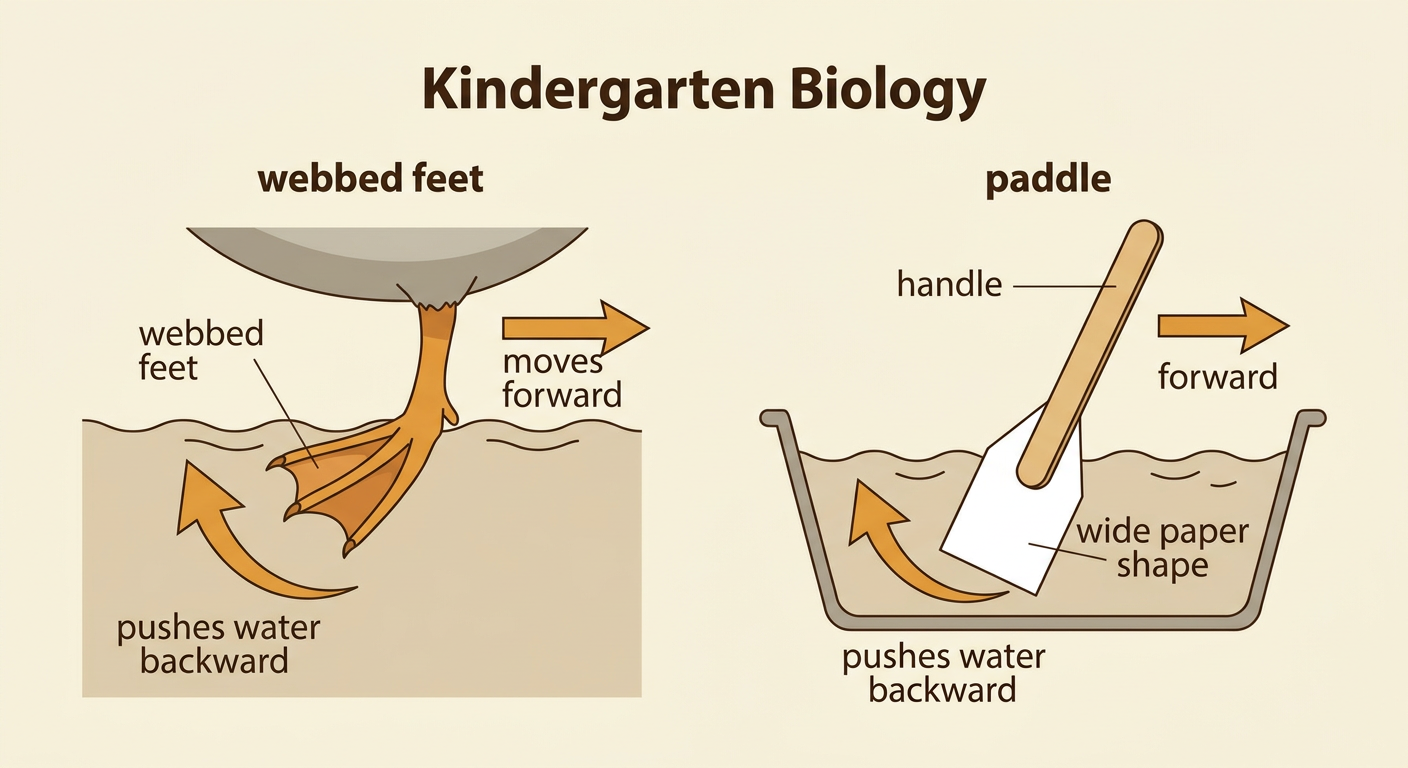
People can design tools by studying how animal parts work. Choose a part that helps an animal move, eat, or stay safe. Then think of a tool that could do a similar job. For example, a duck’s wide, webbed feet push water backward to move the duck forward. You can design a small paddle inspired by that shape. Use a craft stick for the handle and attach a wide paper shape at one end. Test the model by gently moving it through a tub of water with adult help. Notice how the wide end pushes the water. Draw your design before building. Use only safe classroom materials, and do not copy sharp teeth, claws, or quills. Explain which animal part inspired your tool and what job the tool does.
Share and Review
Bring your animal-inspired tool or drawing to the group. Tell the animal, the body part, and the job that inspired your design. You might say, “My paddle was inspired by a duck’s webbed foot. Both have a wide shape that pushes water.” Hold your work where everyone can see it. Classmates should look at the speaker, listen quietly, and wait for their turn. After the speaker finishes, ask a helpful question or share a kind comment. You could ask, “How does your tool help something move?” Review the three job groups: move, eat, and stay safe. Name one animal part in each group. Remember that animals have many external parts, and those parts help them survive, grow, and meet their needs. Good teamwork helps everyone learn from different ideas.
