
Animal Groups: Sorting by Observable Features
Students observe animal images, identify shared features such as feathers, fur, scales, and body coverings, and sort the animals into groups while noting where they live.
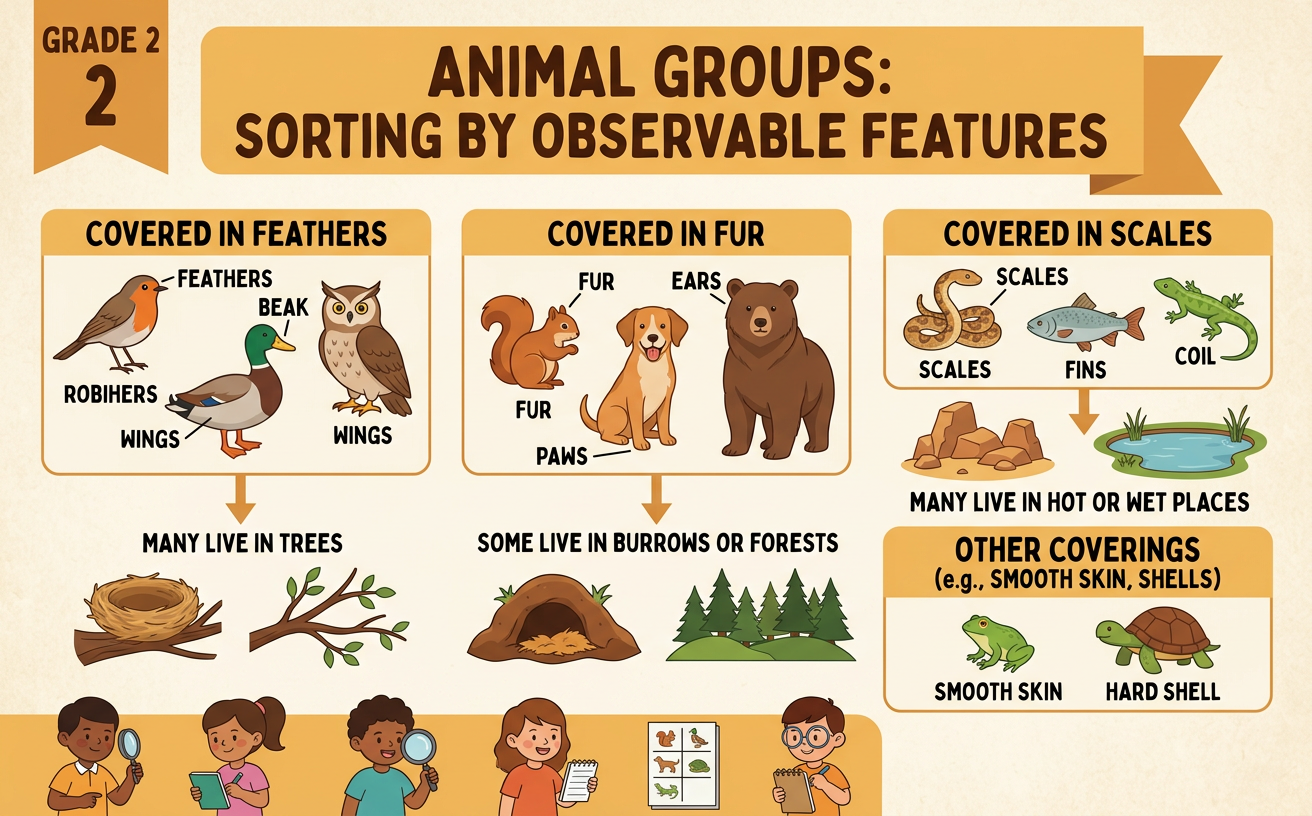
Illustrations are auto-generated and may be placeholders. They can be refreshed to match the narration.
Notice Animal Features
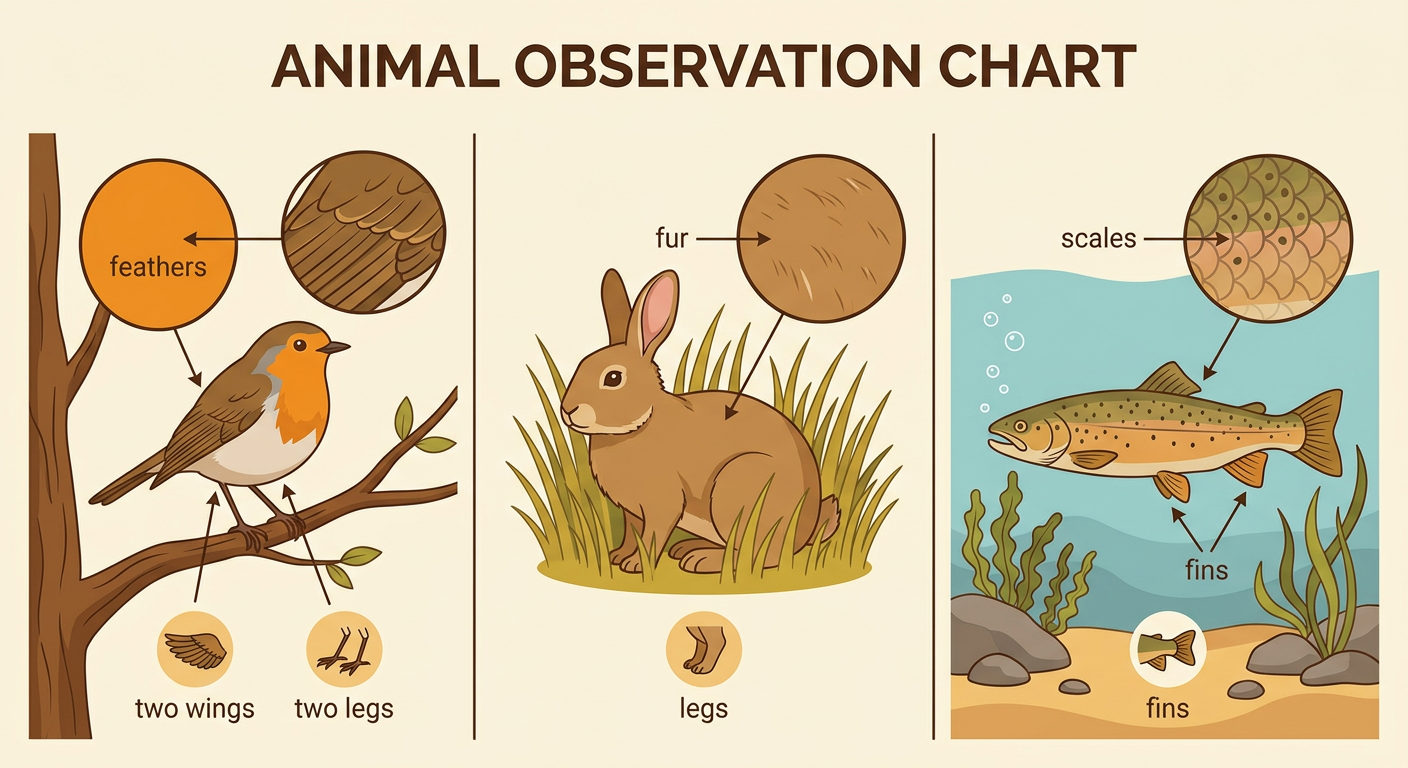
Look closely at animal photographs before naming or sorting the animals. Notice body coverings, body parts, colors, shapes, and sizes. You might see feathers on a robin, fur on a rabbit, or scales on a trout. Count visible legs, wings, or fins. Also look at where each animal is shown. Is it in water, on land, in a tree, or in the air? Ask questions about key details: What covers the animal’s body? How does it move? Where does it live? Record only what you can observe in the image or learn from its caption. For example, you might write, “The robin has feathers, two wings, and two legs. It is sitting in a tree.” Careful observations give you evidence for comparing animals.
Learn the Animal Groups
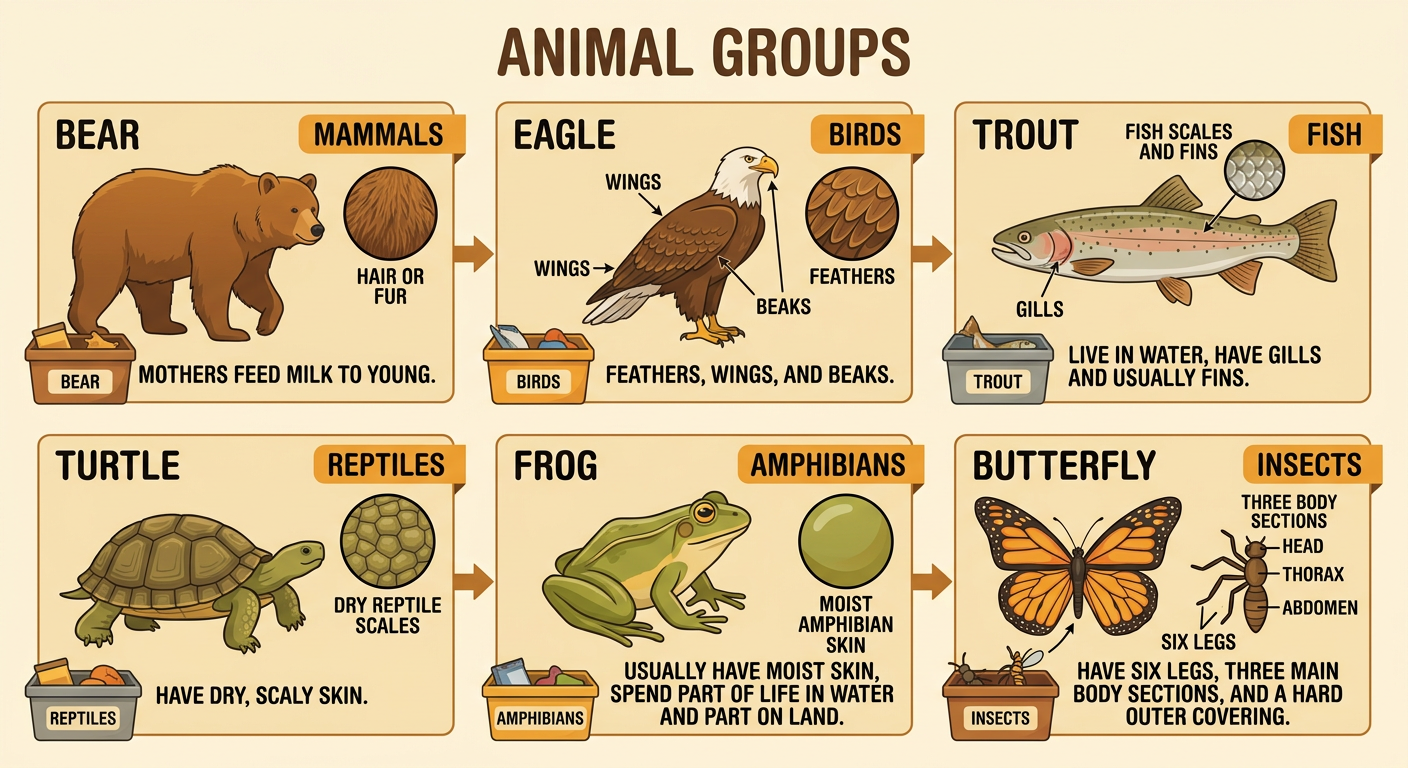
Scientists place animals into groups by using many features. Most mammals have hair or fur, and mothers feed milk to their young. Birds have feathers, wings, and beaks. Fish live in water, have gills, and usually have fins. Reptiles have dry, scaly skin. Amphibians, such as frogs, usually have moist skin and spend part of their life in water and part on land. Insects have six legs, three main body sections, and a hard outer covering. One feature alone may not tell the whole story. A dolphin has smooth-looking skin and lives in water, but it is a mammal because it breathes air and feeds milk to its young. Use several pieces of evidence when identifying an animal group.
Sort Animals by Evidence
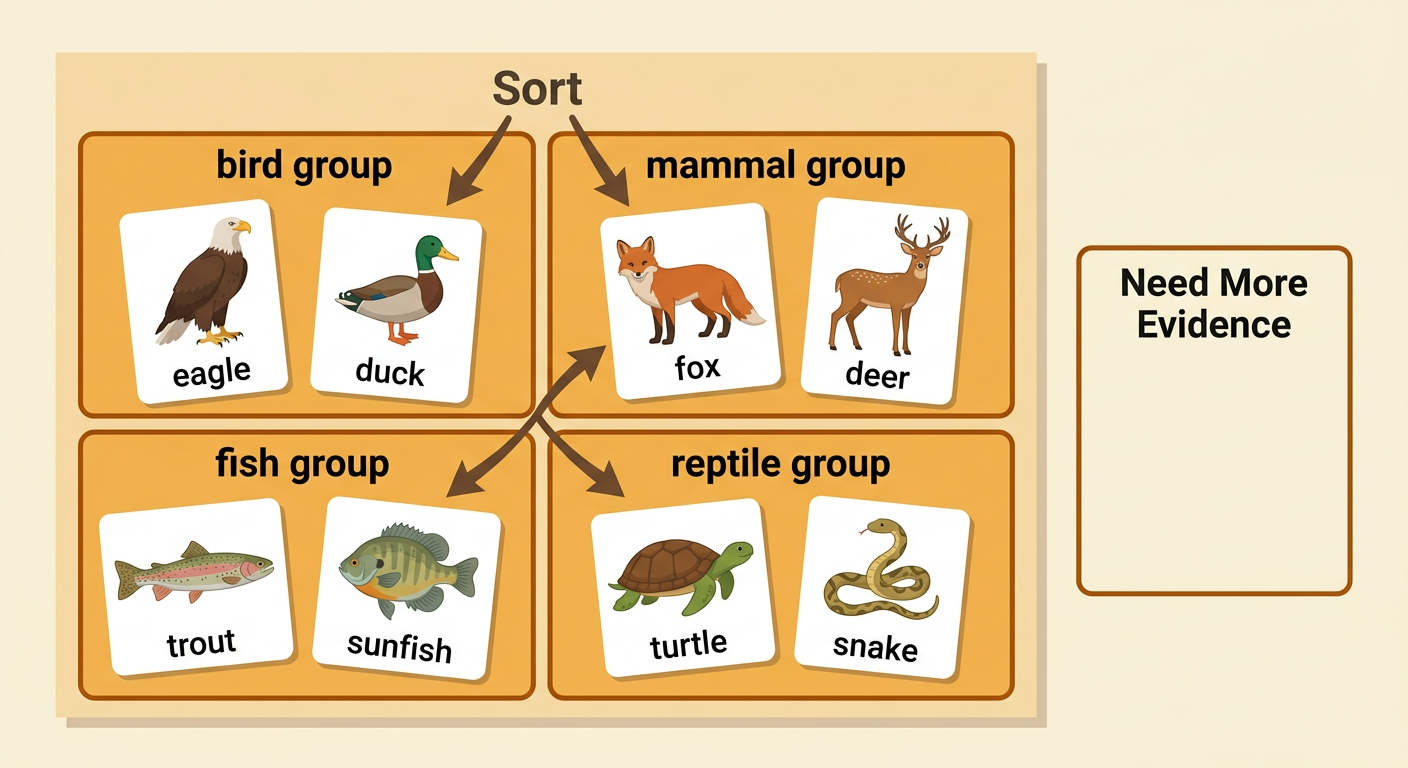
To sort animals, study one animal card at a time. Name the features you observe, then place the card in the group supported by the evidence. An eagle has feathers, a beak, two wings, and two legs, so it belongs in the bird group. A fox has fur and feeds milk to its young, so it belongs in the mammal group. A trout has gills and fins, so it belongs in the fish group. A turtle has dry scales and lungs, so it belongs in the reptile group. If you are unsure, put the card in a “Need More Evidence” space. Read the card’s caption or ask a question before deciding. After sorting, check that every animal in a group shares the group’s important features.
Graph the Groups
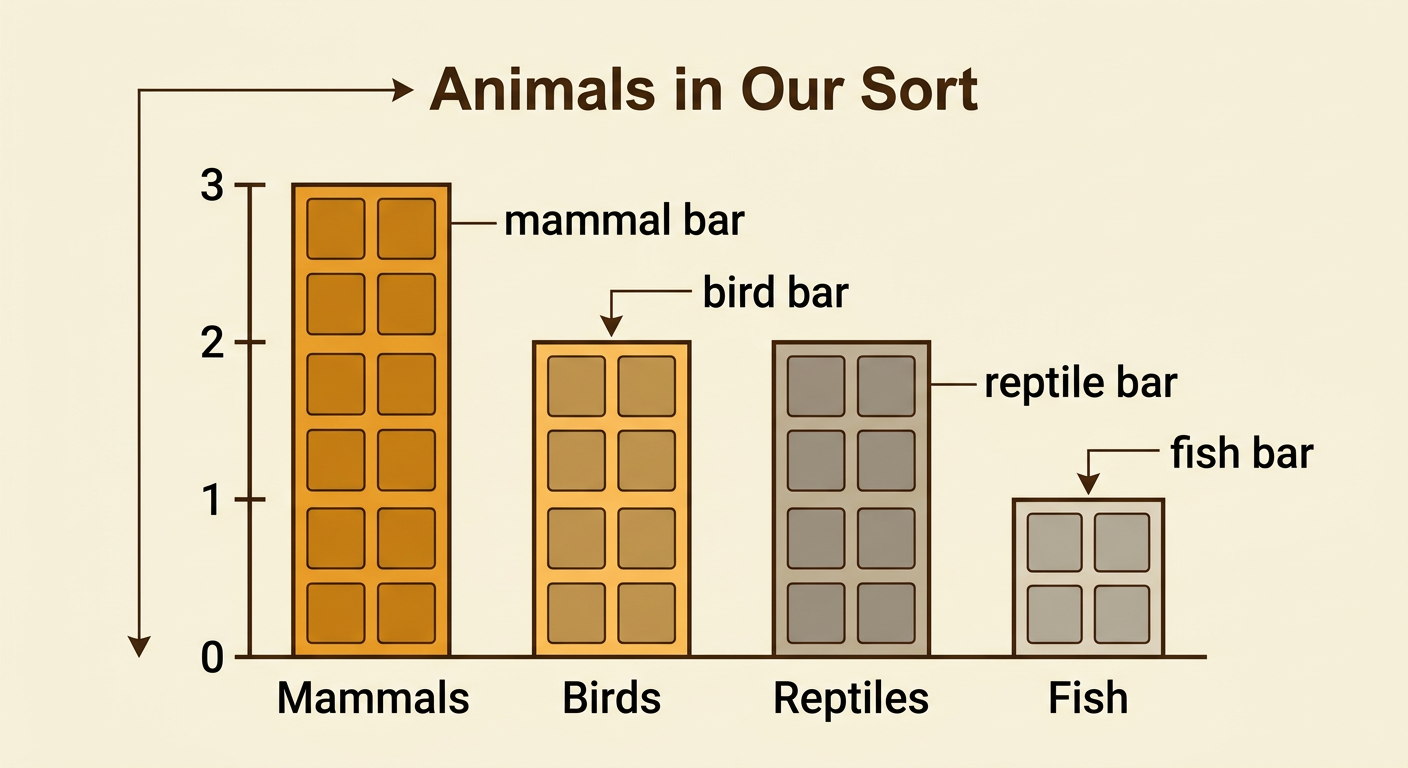
A graph helps you compare how many animals are in each group. Suppose your class sorts eight animal cards into four categories: three mammals, two birds, two reptiles, and one fish. First, count the cards in each category. Then draw a bar for each group. If one square represents one animal, the mammal bar should reach 3, the bird and reptile bars should reach 2, and the fish bar should reach 1. Add a title and label both sides of the graph. Use the graph to answer questions. Which group has the most animals? Mammals have the most. Which has the fewest? Fish have the fewest. How many more mammals than fish are there? There are two more. Check that the graph matches the sorted cards.
Connect Animals to Habitats
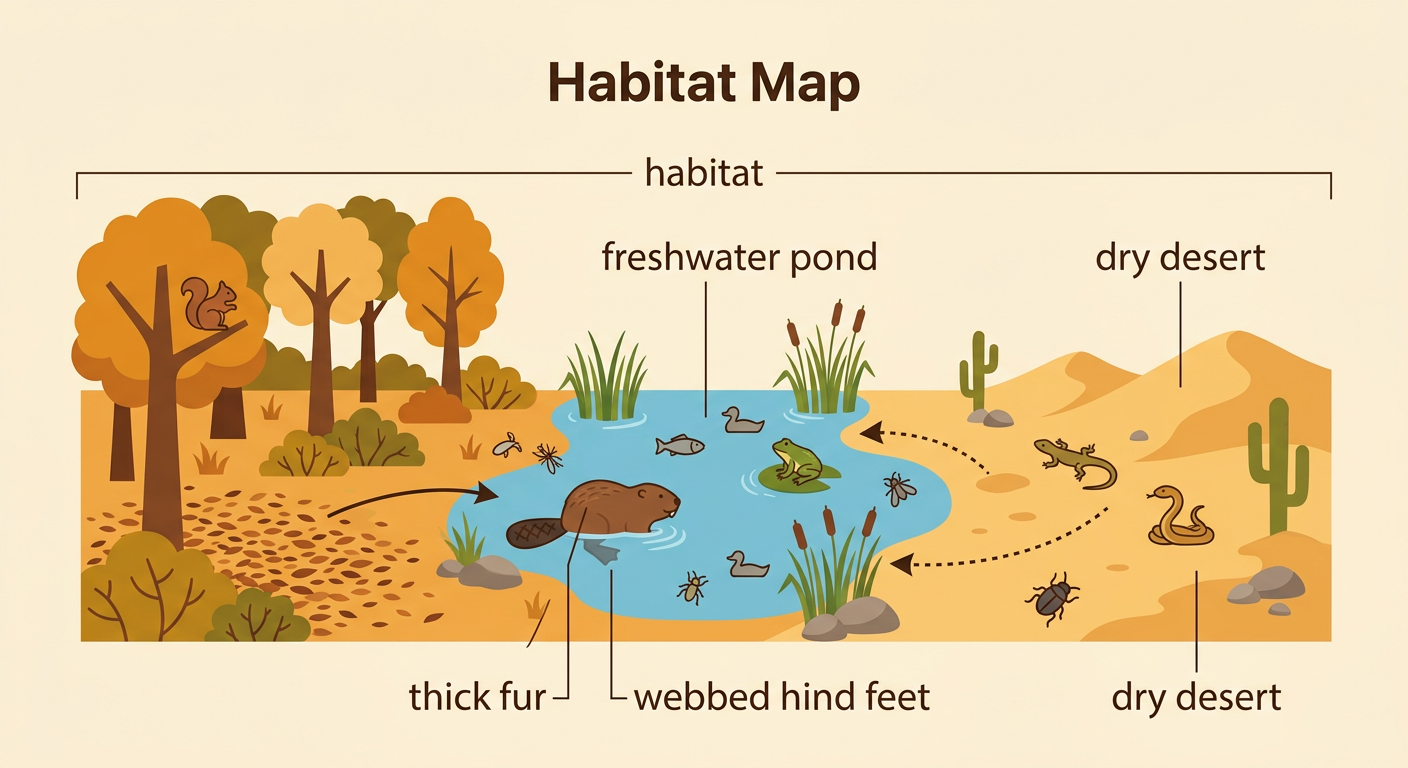
A habitat is a place where an animal finds food, water, shelter, and space. Use maps, photographs, and captions to study environmental characteristics such as trees, soil, temperature, and water. Then connect each animal to a habitat where it can meet its needs. For example, a beaver can live near a freshwater pond or stream. Its thick fur helps keep it warm, and its webbed hind feet help it swim. A pond photograph may also show frogs, fish, ducks, and insects, proving that many kinds of life can share one habitat. Compare that scene with a dry desert image containing a lizard, snake, and beetle. Different habitats support different collections of animals. Remember that some animals use more than one habitat or move between habitats during their lives.
Share and Explain
Share your sorting result by making a clear statement and supporting it with evidence. You might say, “I placed the mallard duck in the bird group because it has feathers, a beak, two wings, and two legs.” Then explain its habitat: “The photograph shows the duck near a pond, where it can find water and food.” Point to the animal card, sorting chart, graph, or habitat map as you speak. Classmates can ask questions such as, “Which detail helped you decide?” or “Could this animal live in another habitat?” Listen carefully and answer with information from the images and text. If new evidence shows that a card is in the wrong place, move it and explain why. Scientists improve their ideas when they gather better evidence.
