Animal Homes: Habitats Meet Their Needs
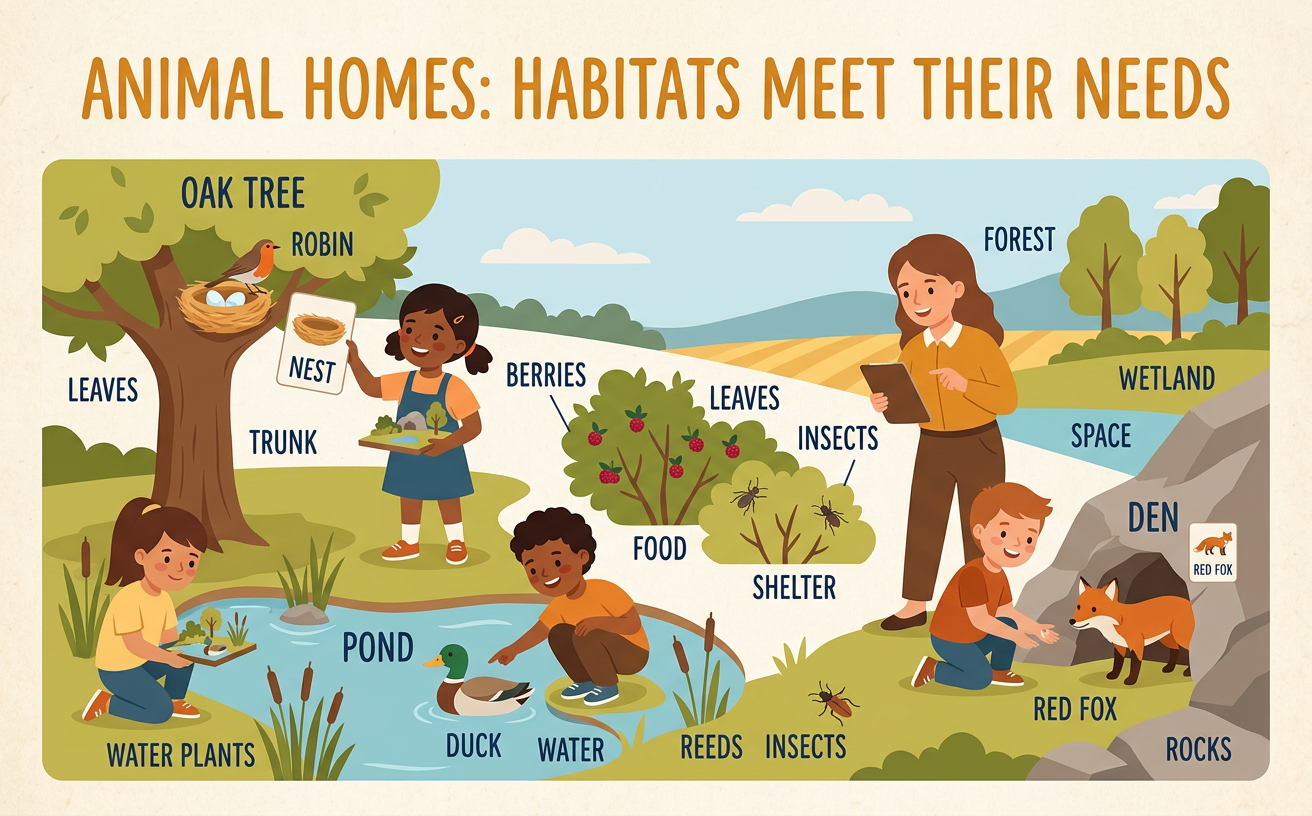
Students explore how habitats provide animals with food, water, shelter, and space by matching familiar animals to simple habitat models.
Illustrations are auto-generated and may be placeholders. They can be refreshed to match the narration.
What Is a Habitat?
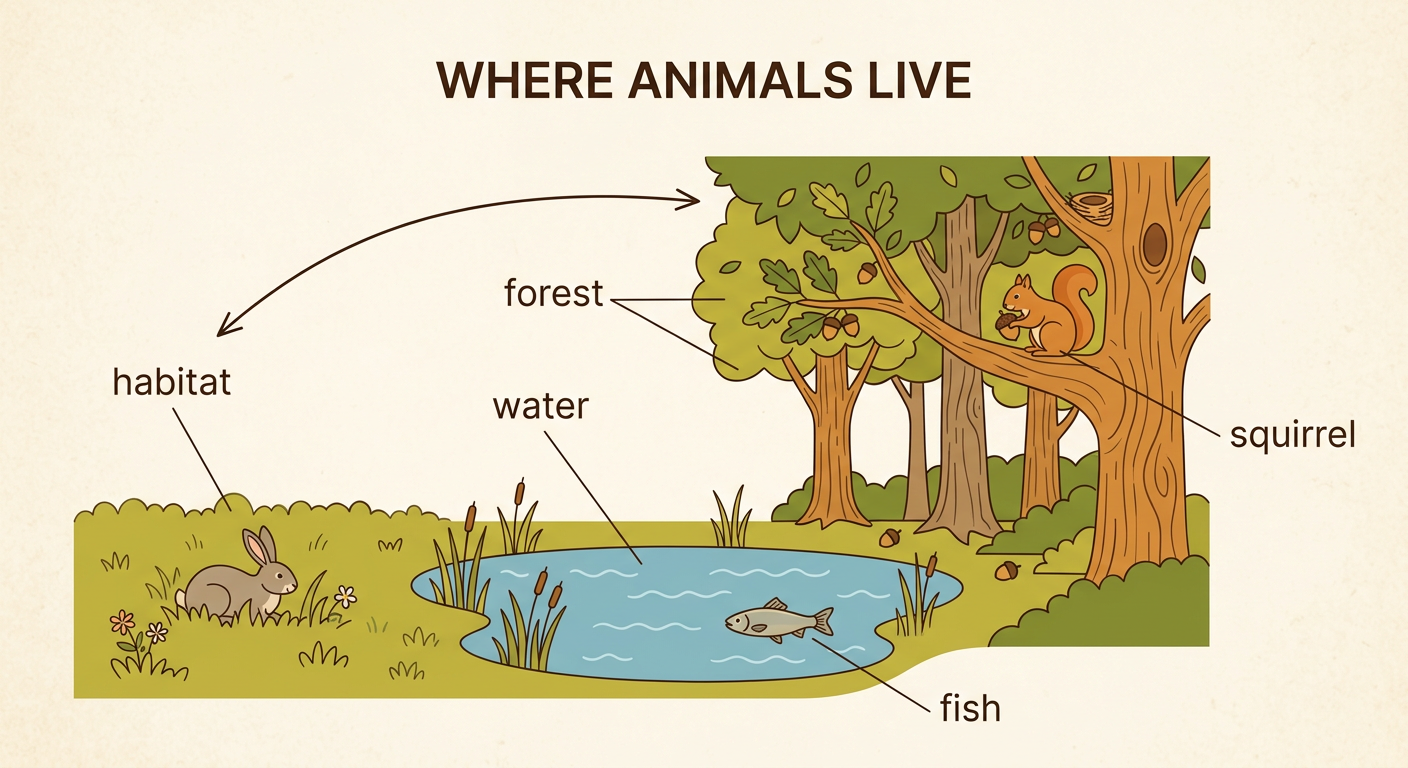
A habitat is the place where a living thing lives. A habitat has the things an animal needs to survive. Habitats can be large, like an ocean, or small, like a garden. Different habitats have different kinds of land, water, plants, and weather. These features help make a habitat right for certain animals. For example, a squirrel can live in a forest. Trees give the squirrel places to climb, find food, and build a nest. A fish cannot live in that tree because its body is made for living in water. As you learn about a habitat, look closely at its features and ask, “Which animals could live here?”
What Do Animals Need?
All animals need food, water, shelter, and enough space to live. Food gives animals energy. Water helps their bodies work. Shelter keeps animals safer from harsh weather and danger. Space gives animals room to move, rest, and find what they need. A rabbit may eat grass and other plants, drink water from a stream, hide in a burrow, and move through a field. Its field habitat helps meet all four needs. Animals do not all eat the same food or use the same shelter. A bird may eat seeds and rest in a nest, while a frog may eat insects and hide among wet plants. Each animal needs a habitat that fits its body and way of life.

Explore Land and Water Habitats
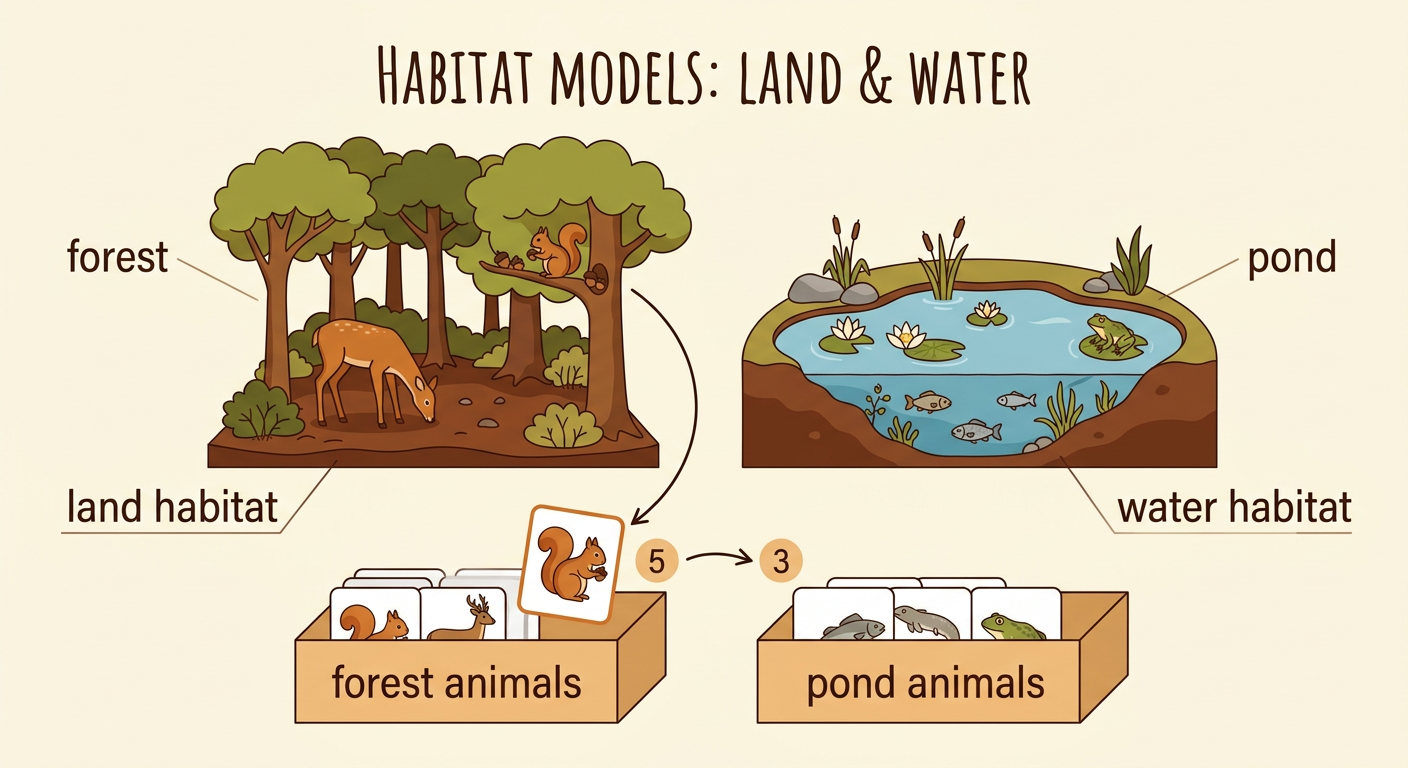
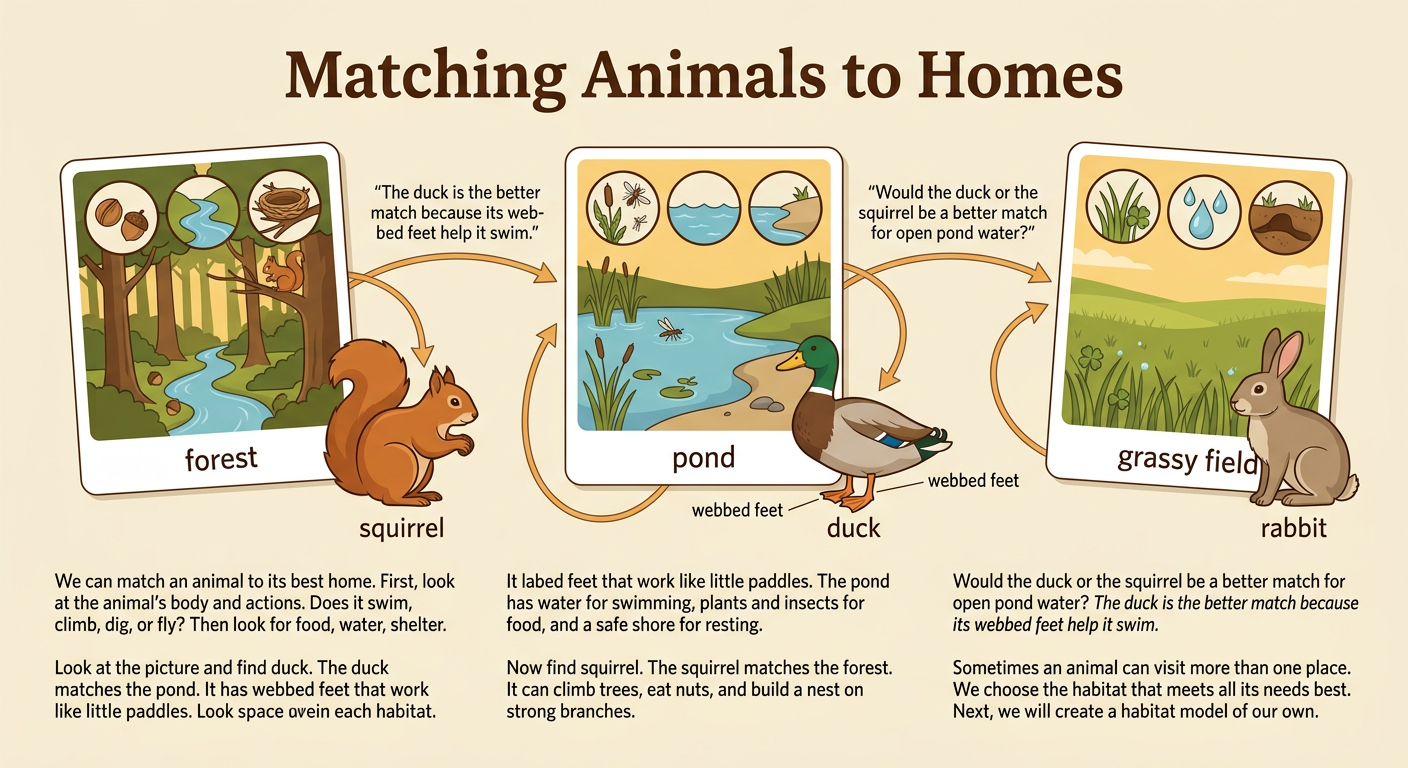
Some habitats are mostly on land, and some are mostly in water. A forest is a land habitat with soil, trees, plants, and shady places. Deer, squirrels, and many birds can find food and shelter there. A pond is a water habitat with freshwater, muddy edges, water plants, and nearby land. Fish live in the water, while frogs use both the pond and its wet edges. Look at simple models of a forest and a pond. Notice where the water is, what plants grow there, and where animals could hide. Then sort animal pictures into two groups: forest animals and pond animals. Count the pictures in each group and compare the totals.
Match Animals to Their Homes
You can match an animal to a habitat by thinking about its needs and body. First, look at the animal. Does it swim, climb, dig, or fly? Next, look at each habitat model. Find the food, water, shelter, and space the animal could use. For example, match a duck to a pond with water, plants, insects, and a safe shore. Its webbed feet help it paddle. Match a squirrel to a forest with trees, nuts, and branches for nests. Place each animal card beside the best habitat model. Then classify the cards by habitat and count them. If an animal could use more than one place, talk with a partner and explain which model best meets all of its needs.
Build a Habitat Model
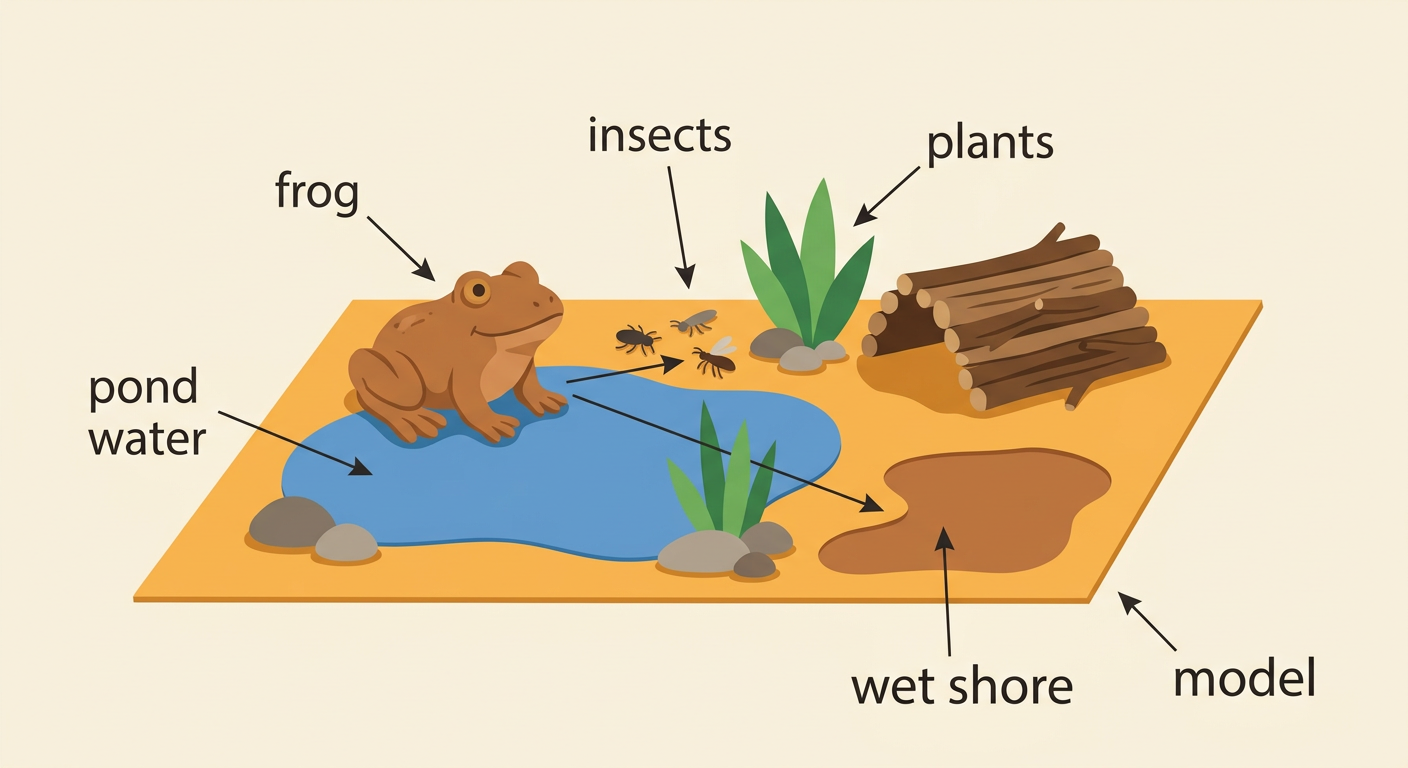
A model is a simple way to show something real. Build a model of one animal’s habitat using paper, blocks, clay, natural objects, or drawings. Begin with the place: forest, pond, field, or another familiar habitat. Add an animal and the important features around it. If you make a frog habitat, include pond water, insects for food, plants for shelter, and a wet shore with space to move. Place each part where it would be found in the real habitat. Do not add something just because it looks fun. Ask whether every part helps show the animal’s home. When the model is finished, point to the food, water, shelter, and space. Check that the model shows how the habitat meets the animal’s needs.
Share and Explain
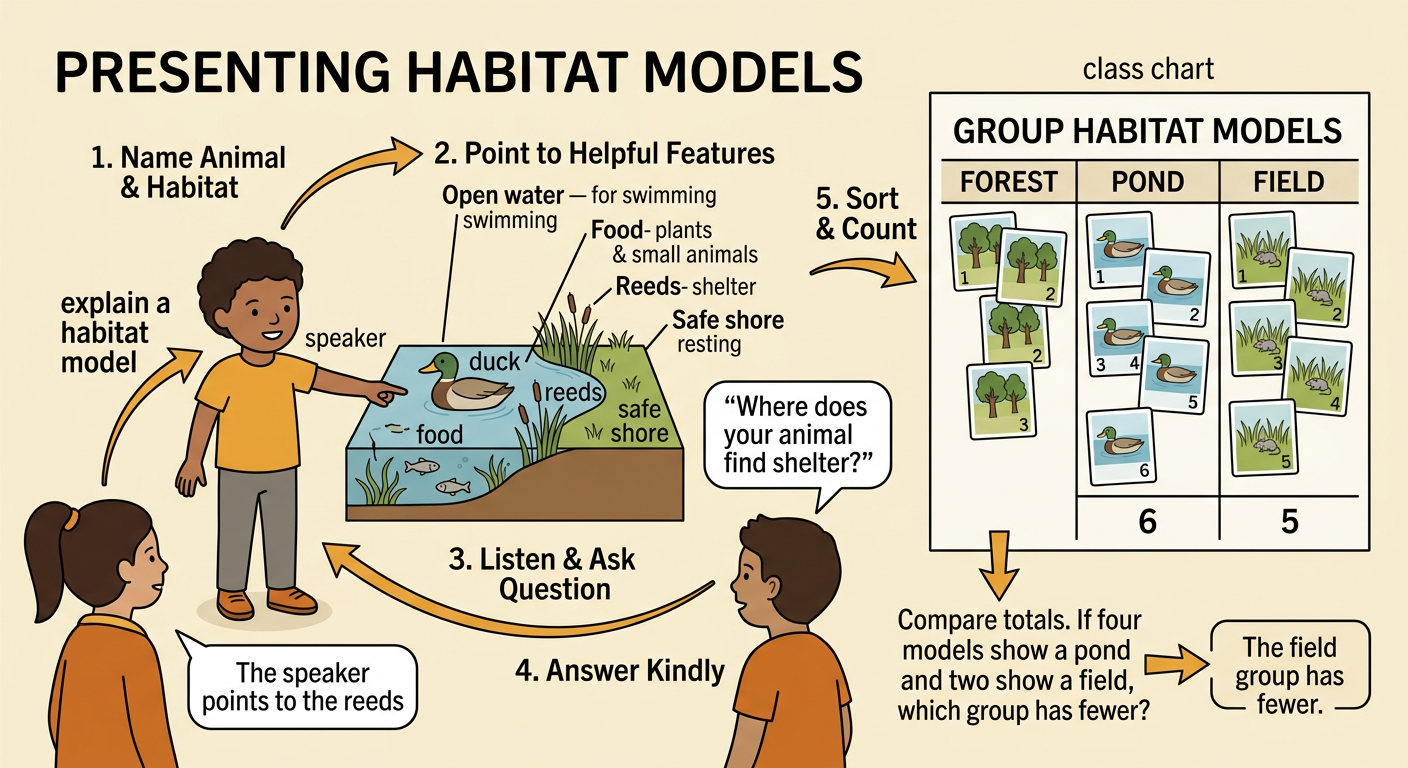
Share your habitat model with a partner or the class. Name the animal and habitat first. Then point to each feature and explain how it helps the animal. You might say, “My model shows a pond habitat. The duck finds water for swimming, plants and small animals for food, reeds for shelter, and open water for space.” Listen while classmates explain their models. Take turns speaking, ask a question, and respond kindly. You can ask, “Where does your animal find shelter?” After everyone shares, classify the models by habitat, such as forest, pond, or field. Count how many models are in each category. Compare the groups by saying which has more, fewer, or the same number.