Antibiotic Resistance as Natural Selection
Students use evidence about bacterial variation, antibiotic exposure, and changing population frequencies to explain antibiotic resistance and evaluate stewardship policies.
Illustrations are auto-generated and may be placeholders. They can be refreshed to match the narration.
Variation in Bacterial Populations
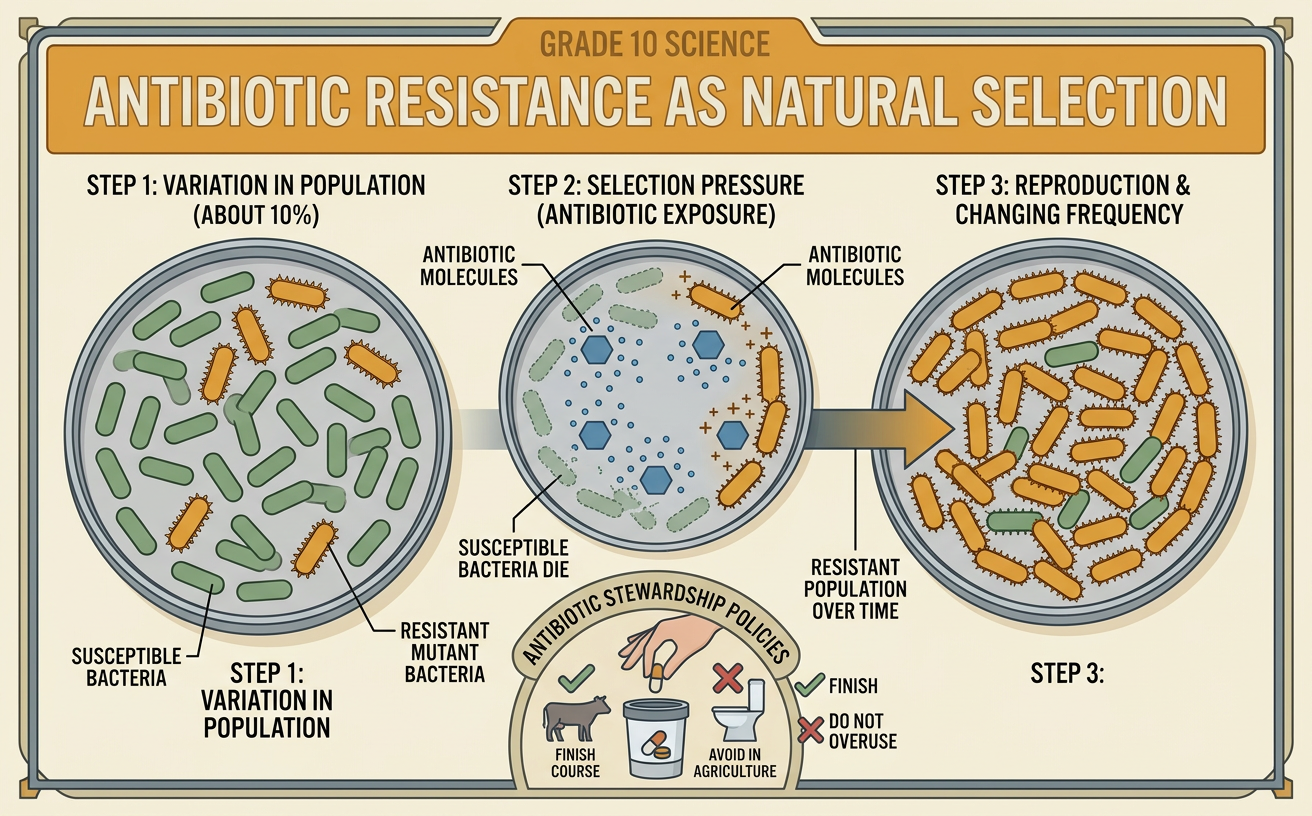
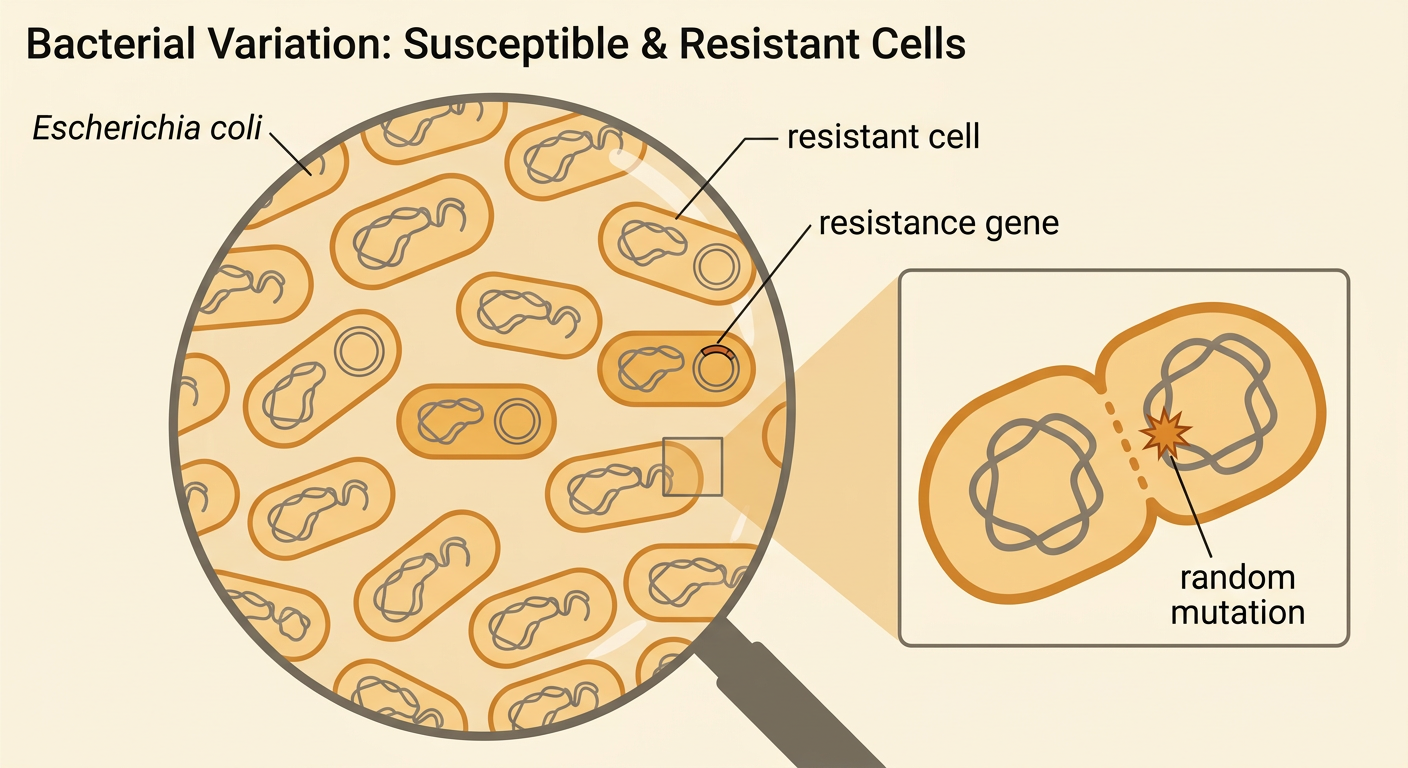
A bacterial population is not genetically identical. Random mutations can create new alleles when DNA is copied, and bacteria can also acquire genes from other bacteria through horizontal gene transfer. Some inherited variations affect whether an antibiotic can kill or slow a bacterium. For example, one cell in a population of Escherichia coli might carry a gene that produces an enzyme capable of breaking down penicillin-like antibiotics. Before antibiotic exposure, this cell may be rare and may not have an advantage. The antibiotic does not cause the cell to develop a useful mutation because it needs one. Instead, variation already exists or arises randomly. When environmental conditions change, certain inherited traits affect which bacteria survive and reproduce. This variation is the starting point on which natural selection acts.
Antibiotics as a Selection Pressure
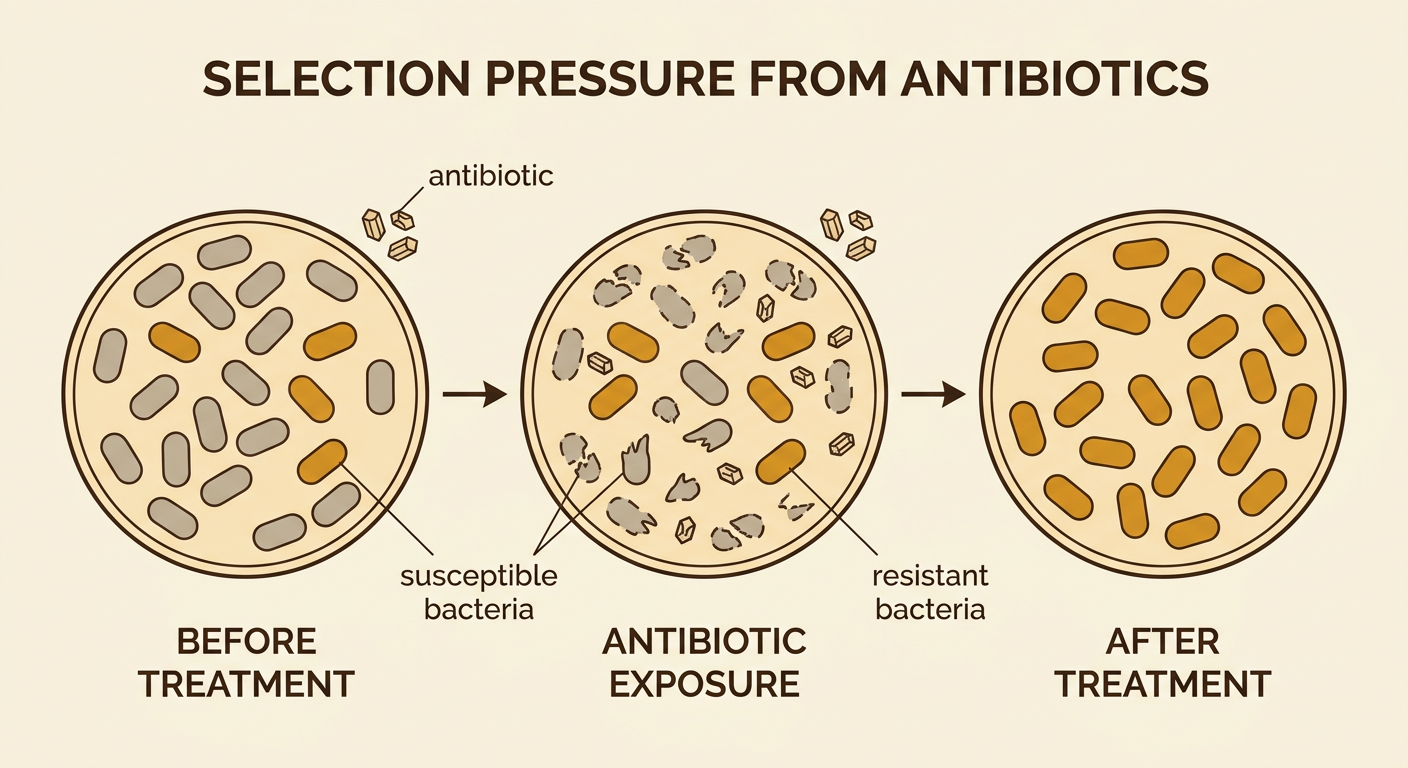
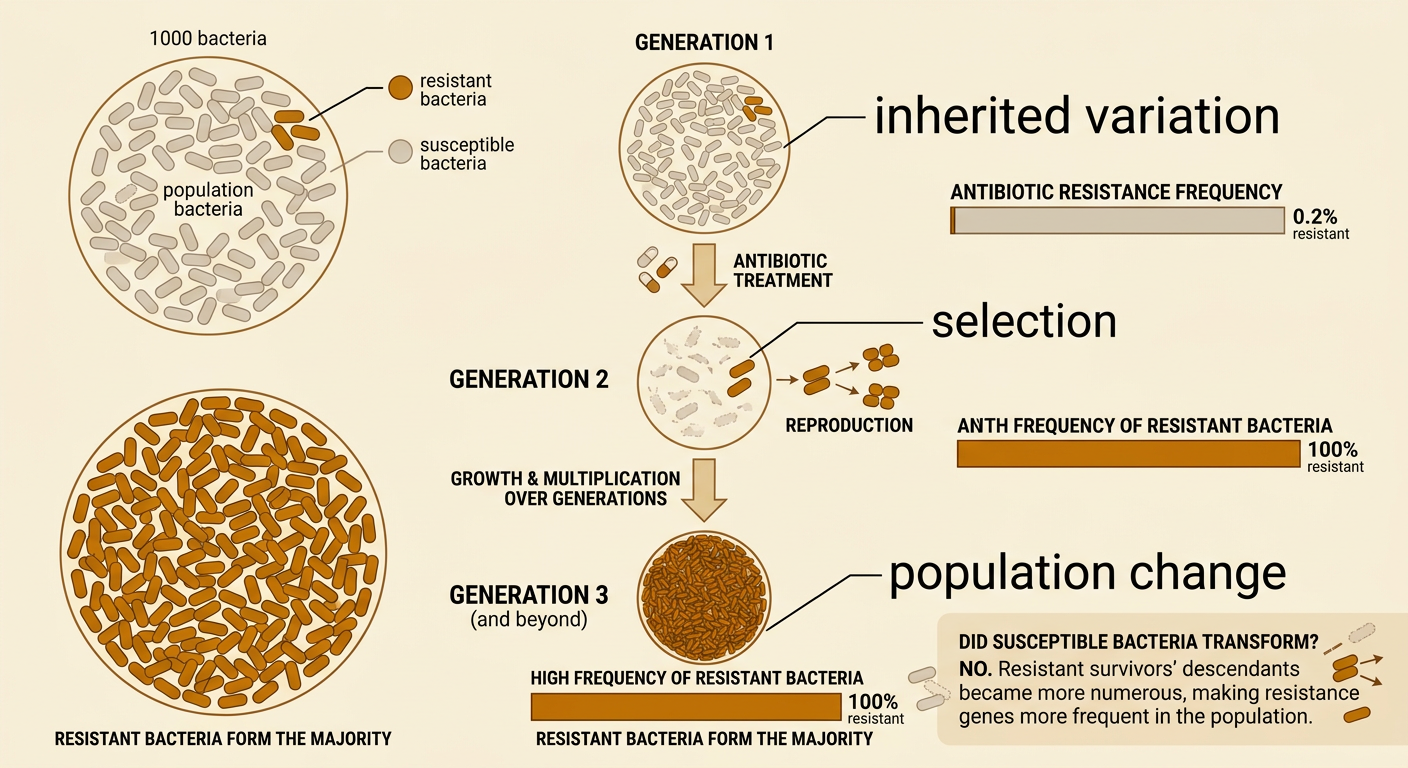
An antibiotic creates a selection pressure by changing which bacteria are most likely to survive and reproduce. Suppose a patient has an infection containing mostly susceptible bacteria and a few resistant bacteria. After the patient takes an effective antibiotic, many susceptible cells die or stop reproducing. Resistant cells are more likely to remain alive. With less competition for space and nutrients, the survivors reproduce rapidly and pass resistance genes to their descendants. The antibiotic did not choose resistance intentionally or make every bacterium resistant. It changed the survival and reproductive success of existing variants. Repeated or unnecessary exposure can strengthen this selection by repeatedly removing susceptible bacteria. However, antibiotics remain essential medicines when used correctly. The evolutionary concern is not exposure alone, but exposure that gives resistant bacteria opportunities to survive, multiply, and spread.
Interpreting Resistance Data
Scientists track antibiotic resistance by comparing the number or percentage of resistant samples across time, locations, or treatment conditions. Imagine that a hospital tested 200 bacterial samples each year. In 2020, 20 samples were resistant, so the resistance frequency was 10 percent. In 2025, 70 of 200 samples were resistant, giving a frequency of 35 percent. This pattern supports the claim that resistance became more common, but it does not by itself identify the cause. Scientists should examine antibiotic use, infection-control practices, sample size, testing methods, and patient differences. They should also distinguish correlation from causation. If antibiotic use and resistance both increased, that relationship is relevant evidence, but alternative explanations must be considered. Strong reasoning connects reliable data to a claim and explains why the evidence is consistent with natural selection rather than merely repeating the numbers.

Explaining Population-Level Adaptation
Antibiotic resistance is an adaptation of a population, not a purposeful change made by an individual bacterium. A strong explanation begins with inherited variation: some bacteria carry resistance genes, while others do not. It then identifies selection: during antibiotic treatment, resistant bacteria tend to survive and reproduce more successfully than susceptible bacteria. Finally, it describes the population change: after multiple generations, resistance genes make up a larger proportion of the population. For example, if 2 resistant bacteria survive from an original population of 1,000 and each divides repeatedly, their descendants can become numerous even though the original bacteria did not change their traits. The population has adapted because the frequency of an inherited trait has increased. The environment selects among variants, while mutation and gene transfer supply variation; neither process occurs because bacteria recognize what they need.
Evaluating Antibiotic Stewardship Policies
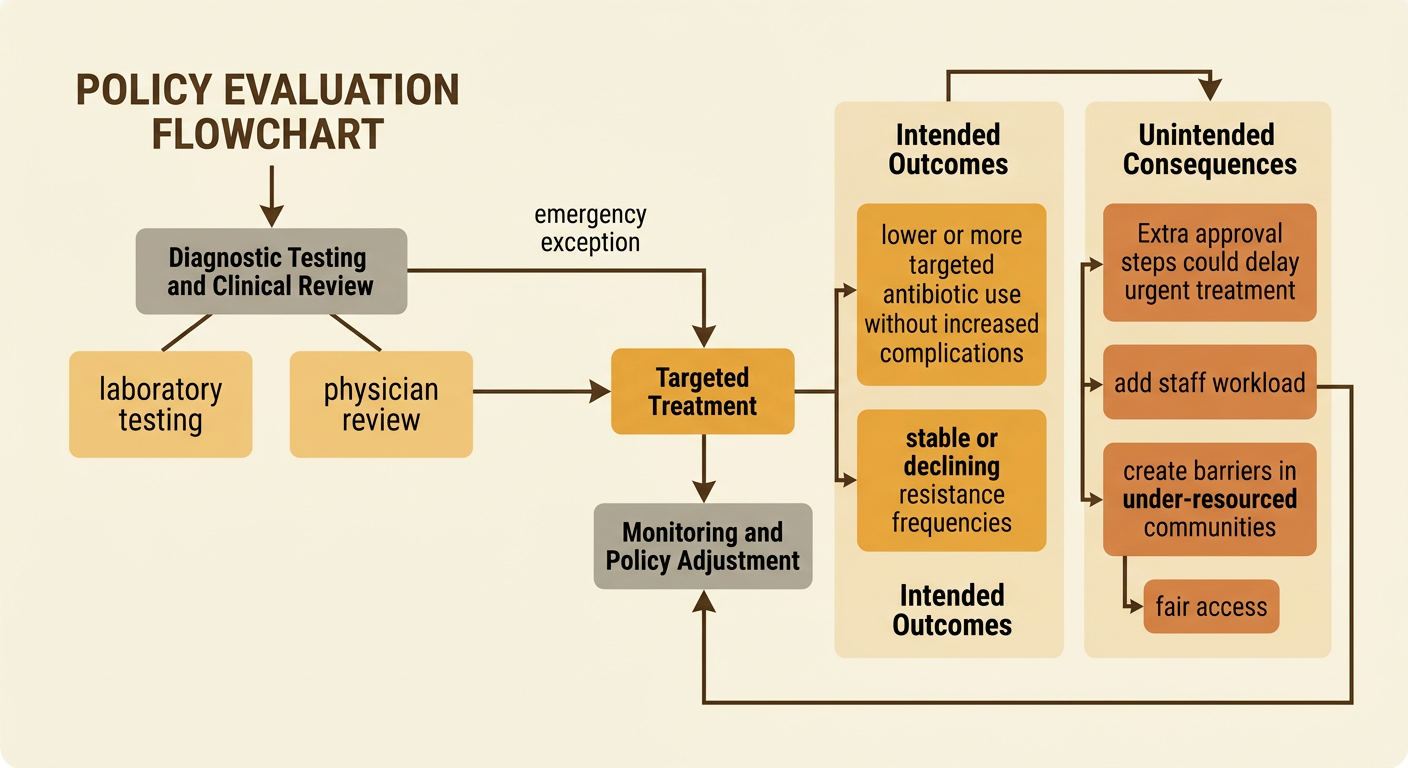
Antibiotic stewardship policies aim to preserve effective treatments while reducing unnecessary selection for resistance. A hospital policy might require laboratory testing and physician review before certain broad-spectrum antibiotics are prescribed. Intended outcomes include choosing a drug that targets the infection, shortening unnecessary treatment, reducing side effects, and slowing the spread of resistance. Evidence of success could include lower antibiotic use without higher rates of complications, along with stable or declining resistance frequencies. Possible unintended outcomes must also be evaluated. Extra approval steps could delay urgent treatment, increase staff workload, or limit access in under-resourced communities. A strong policy includes exceptions for emergencies, rapid diagnostic tools, regular data review, patient education, and fair access. Evaluators should compare benefits, harms, costs, and equity consequences rather than assuming that using fewer antibiotics is always better. The goal is appropriate use, not the elimination of antibiotic treatment.