Antibiotic Resistance: Natural Selection and Public Health
Students use bacterial population evidence to explain how antibiotic use drives natural selection and evaluate strategies for slowing antibiotic resistance.
Illustrations are auto-generated and may be placeholders. They can be refreshed to match the narration.
Variation in Bacterial Populations
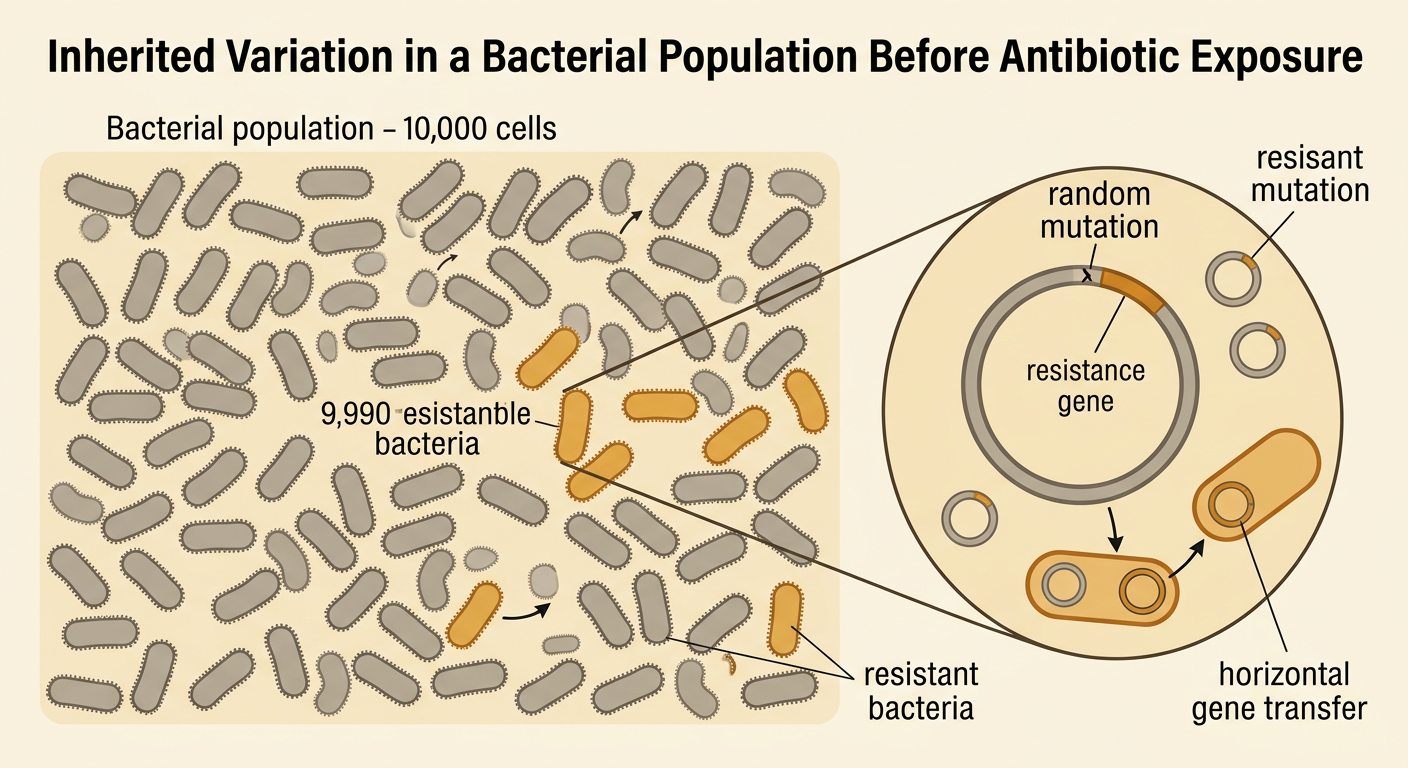
A bacterial population is not genetically identical in every trait. Random mutations can produce new variants when DNA is copied, and bacteria can also gain genes from other bacteria through horizontal gene transfer. Some variants may already carry a gene that reduces an antibiotic’s effect. For example, before treatment, a population of 10,000 bacteria might contain 9,990 antibiotic-susceptible cells and 10 resistant cells. The antibiotic does not cause those 10 cells to become resistant because they need resistance. Instead, resistance existed as variation before exposure. A resistance trait may change a drug’s target, pump the drug out of the cell, or produce an enzyme that breaks down the drug. This inherited variation provides the raw material on which natural selection acts.
How Antibiotics Create Selection Pressure
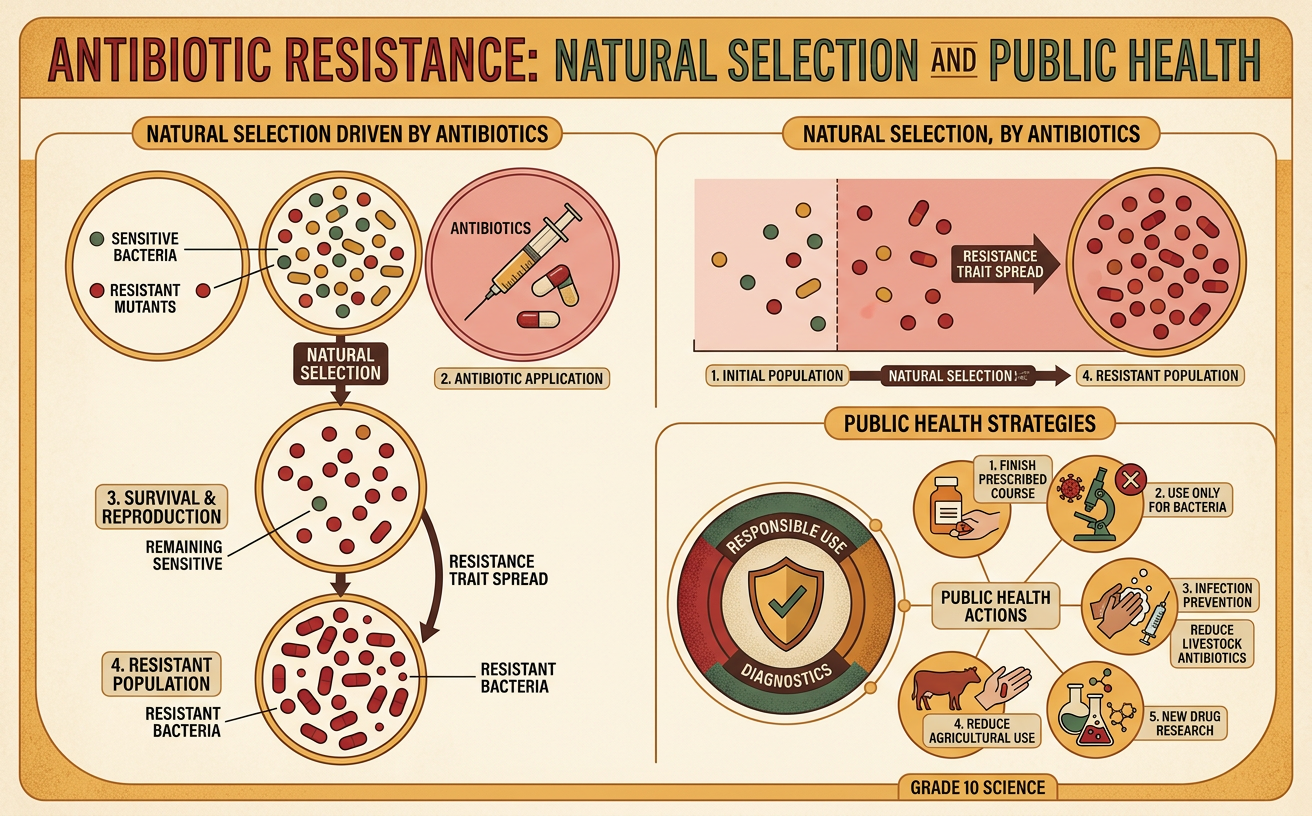
An antibiotic creates selection pressure by changing which bacteria are most likely to survive and reproduce. When a person takes an effective antibiotic, susceptible bacteria are killed or prevented from growing. Resistant bacteria are more likely to survive. They reproduce, pass resistance genes to their offspring, and may transfer resistance genes to other bacteria. For example, suppose treatment kills 99 percent of susceptible bacteria but only 10 percent of resistant bacteria. After the survivors reproduce, resistant bacteria make up a much larger fraction of the population. Stopping treatment early or using an antibiotic when it is not needed can increase opportunities for surviving bacteria to multiply and spread. The antibiotic selects among existing variants; it does not intentionally direct bacteria to develop useful mutations.

Interpreting Resistance Evidence
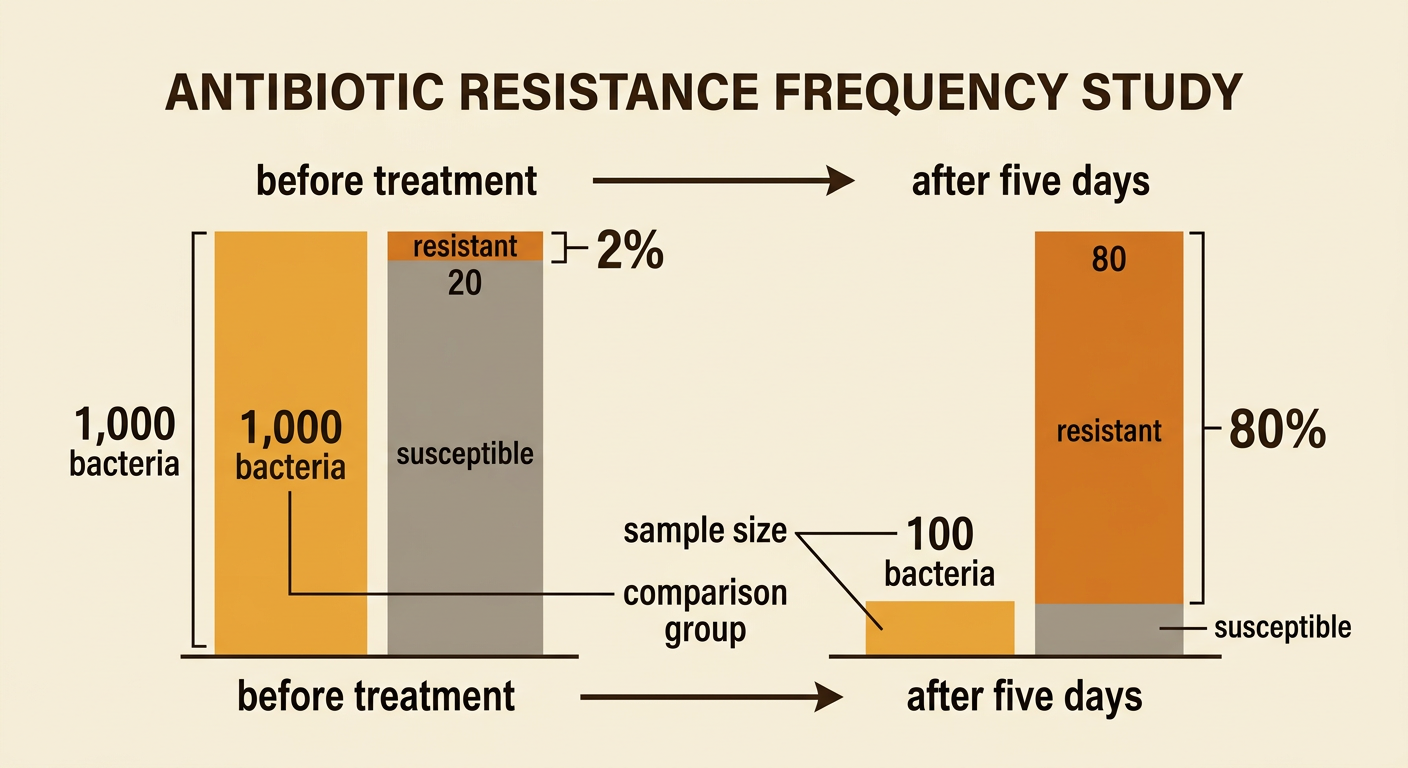
Scientists look for changes in both bacterial abundance and the frequency of resistance. Imagine a study that samples a population before treatment and again five days later. Before treatment, 20 of 1,000 bacteria are resistant, so resistance frequency is 2 percent. After treatment, only 100 bacteria remain, but 80 are resistant, so resistance frequency is 80 percent. The total population decreased, while the proportion of resistant bacteria increased sharply. This pattern supports the claim that treatment selected for resistance. Strong analysis cites exact evidence, such as: “Resistance increased from 2 percent before treatment to 80 percent after five days.” Students should also check sample size, comparison groups, repeated trials, and whether the same antibiotic concentration was used. A graph shows a pattern, but study design helps determine how confidently the pattern can be interpreted.
Explaining Resistance as Natural Selection
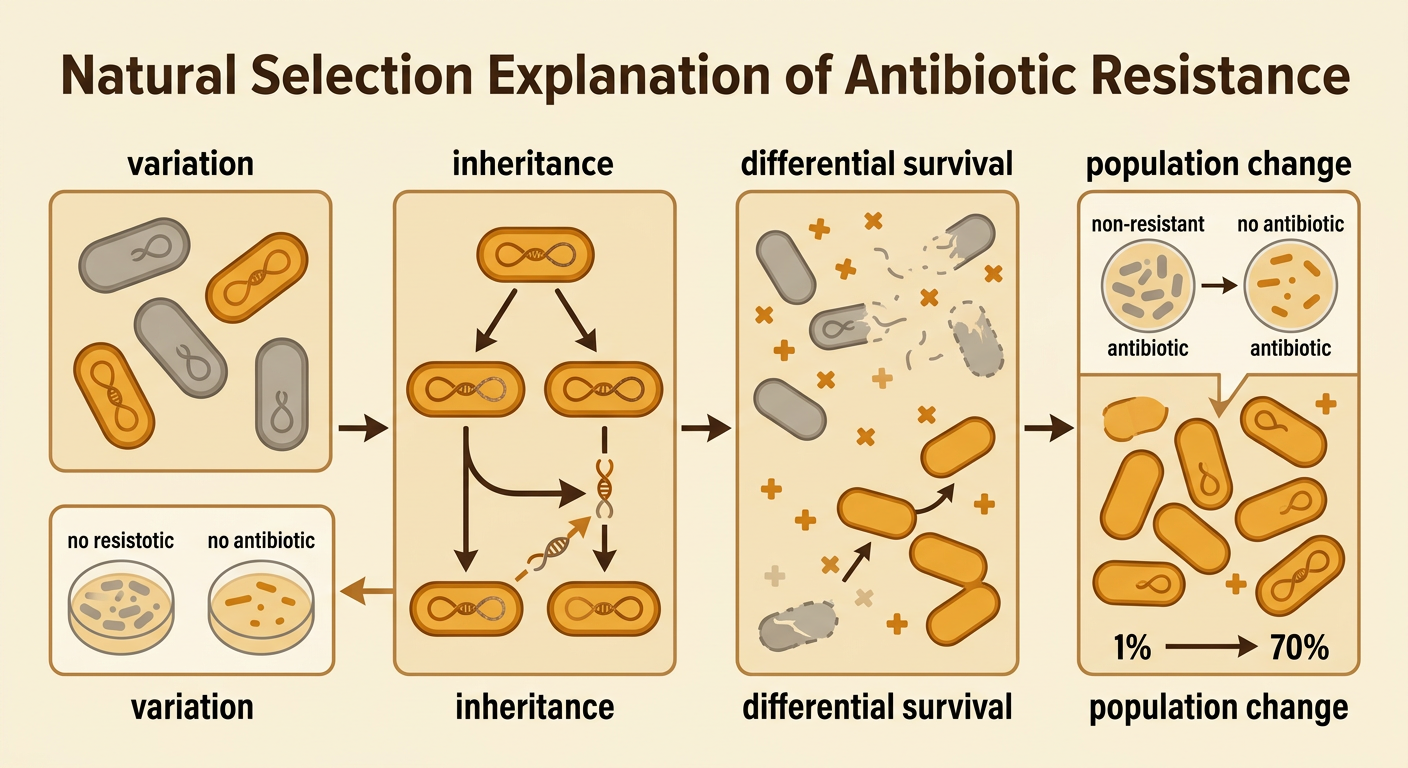
A complete natural selection explanation connects variation, inheritance, differential survival, and population change. First, bacteria vary in their susceptibility to an antibiotic. Second, resistance can be inherited through cell division or transferred through genes. Third, during antibiotic exposure, resistant bacteria survive and reproduce at higher rates than susceptible bacteria. Over multiple generations, resistance genes become more common, so the population becomes adapted to the antibiotic environment. For example, if resistant bacteria rise from 1 percent to 70 percent after repeated treatments, individual bacteria have not evolved during their lifetimes. Instead, the genetic composition of the population has changed across generations. Resistance is an adaptation only when the inherited trait increases reproductive success in that environment. Without the antibiotic, some resistance traits may carry a cost, such as slower growth.
Evaluating Antibiotic-Use Policies
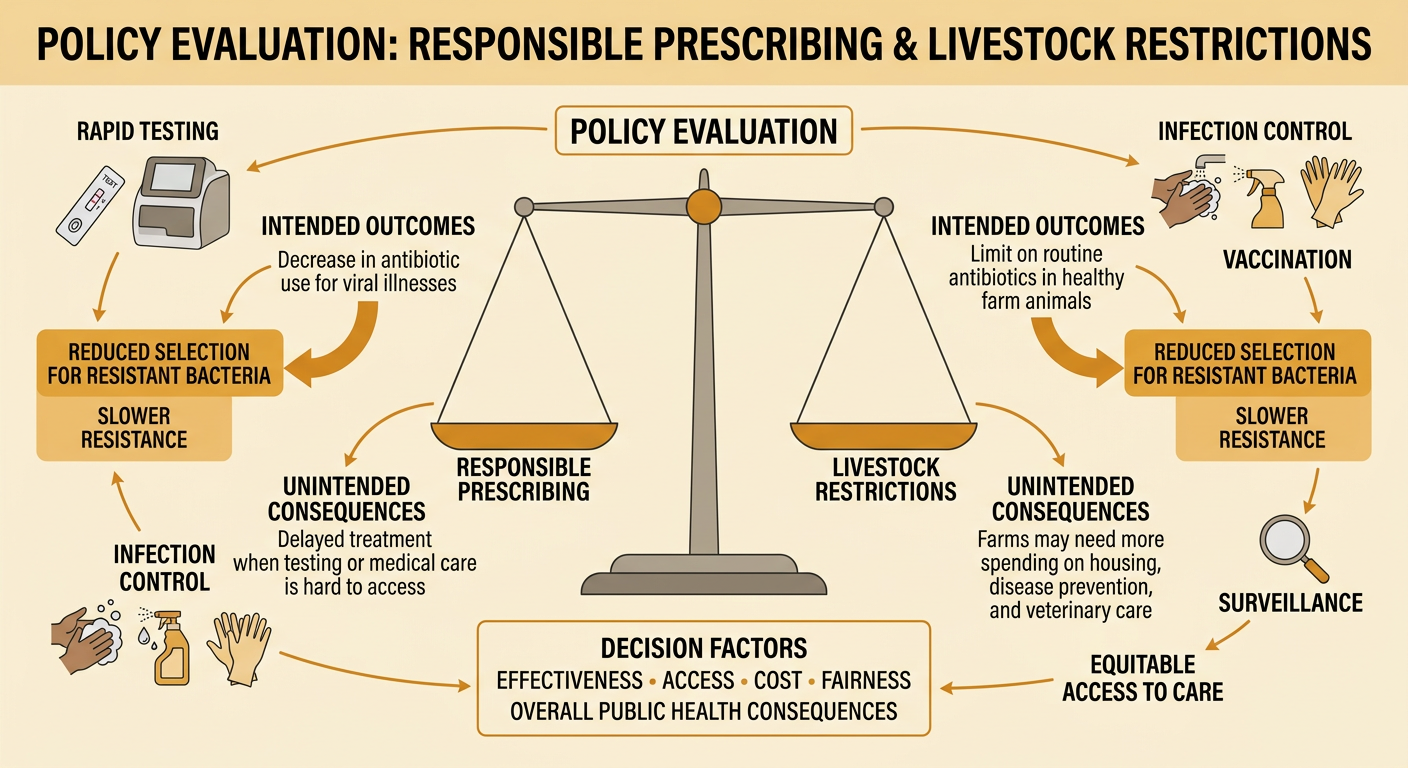
Public policies can slow resistance by reducing unnecessary antibiotic exposure and limiting the spread of resistant bacteria. One policy might require a prescription and diagnostic review before antibiotics are used. Its intended outcome is fewer unnecessary prescriptions, especially for viral illnesses that antibiotics cannot treat. A possible unintended outcome is delayed treatment if testing or medical care is difficult to access. Another policy could restrict routine antibiotic use in healthy livestock. This may reduce selection for resistant bacteria, but farmers may face higher costs for disease prevention, housing, and veterinary care. Students should evaluate each policy using evidence about effectiveness, access, cost, fairness, and public health consequences. A balanced strategy can combine responsible prescribing, patient education, vaccination, infection control, surveillance, rapid testing, and support for agriculture. Policies should preserve effective treatment for sick people and animals while reducing avoidable selection pressure.