Antibiotic Resistance: Natural Selection in Action
Students analyze bacterial survival data to explain how antibiotic use can drive natural selection and evaluate strategies for limiting antibiotic resistance.
Illustrations are auto-generated and may be placeholders. They can be refreshed to match the narration.
Antibiotics and Bacterial Variation
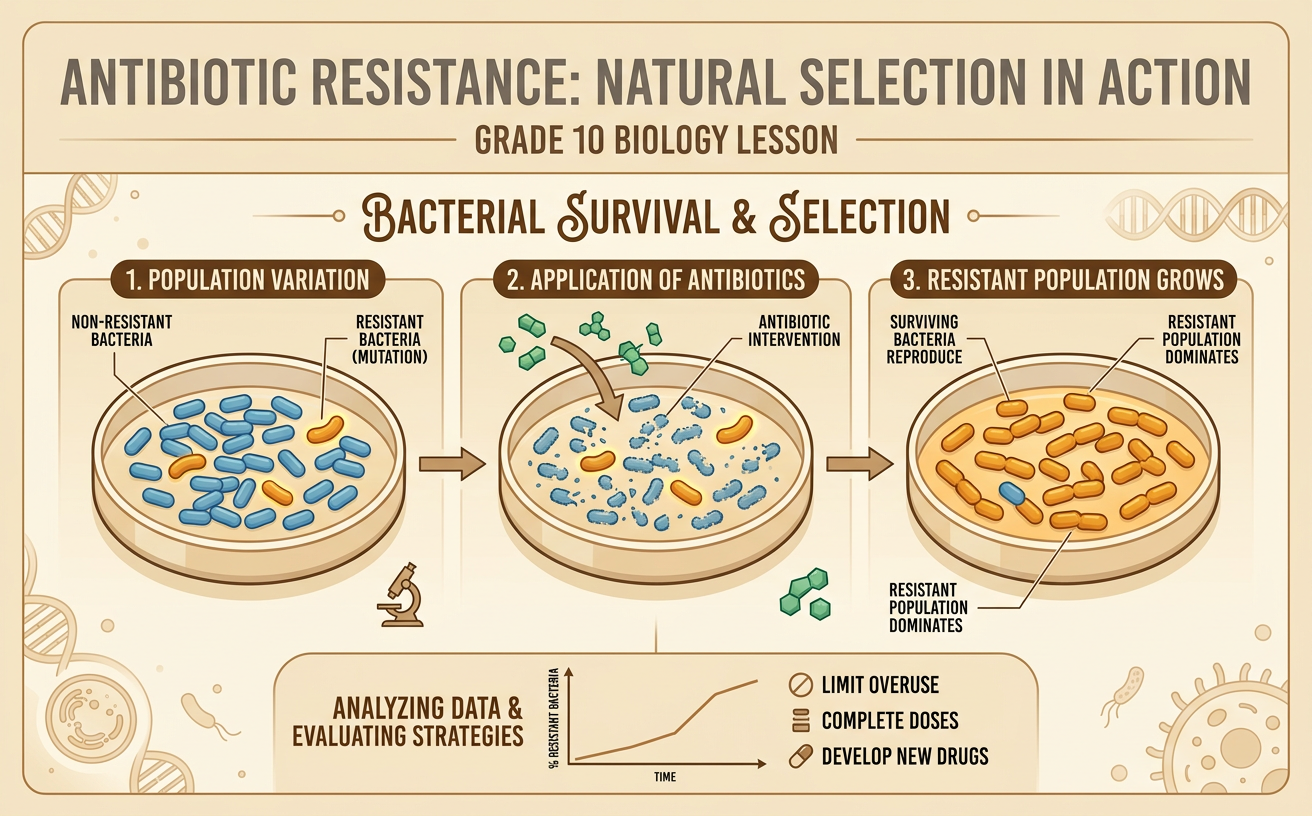
Antibiotics are medicines that kill bacteria or slow their growth; they do not treat viral infections such as colds or influenza. Before exposure to an antibiotic, a bacterial population may already contain genetic variation. Random mutations or the transfer of genes between bacteria can give some cells resistance. For example, a few bacteria may carry a gene for an enzyme that breaks down penicillin, while most cells lack that gene. Penicillin does not cause bacteria to develop useful traits because they need them. Instead, it changes which existing variants are most likely to survive. Susceptible bacteria die more often, while resistant bacteria survive and reproduce. Because bacteria reproduce quickly and pass resistance genes to descendants, the population can become better adapted to an antibiotic-treated environment over many generations.

Interpreting Survival Data
Survival data can reveal whether an antibiotic creates a selective advantage. Consider a population of 10,000 bacteria before treatment: 9,900 are susceptible and 100 are resistant, so resistance occurs in only 1 percent of the population. After antibiotic exposure, suppose 10 susceptible bacteria and 90 resistant bacteria survive. Only 100 total cells remain, but resistant cells now make up 90 percent of the survivors. The antibiotic greatly reduced the population, yet resistance became much more common among the surviving cells. If those cells reproduce, many descendants will inherit resistance. When interpreting the data, compare both numbers and percentages. The number of resistant bacteria decreased from 100 to 90, but their proportion increased from 1 percent to 90 percent. This proportional change is strong evidence of natural selection.

Natural Selection Step by Step
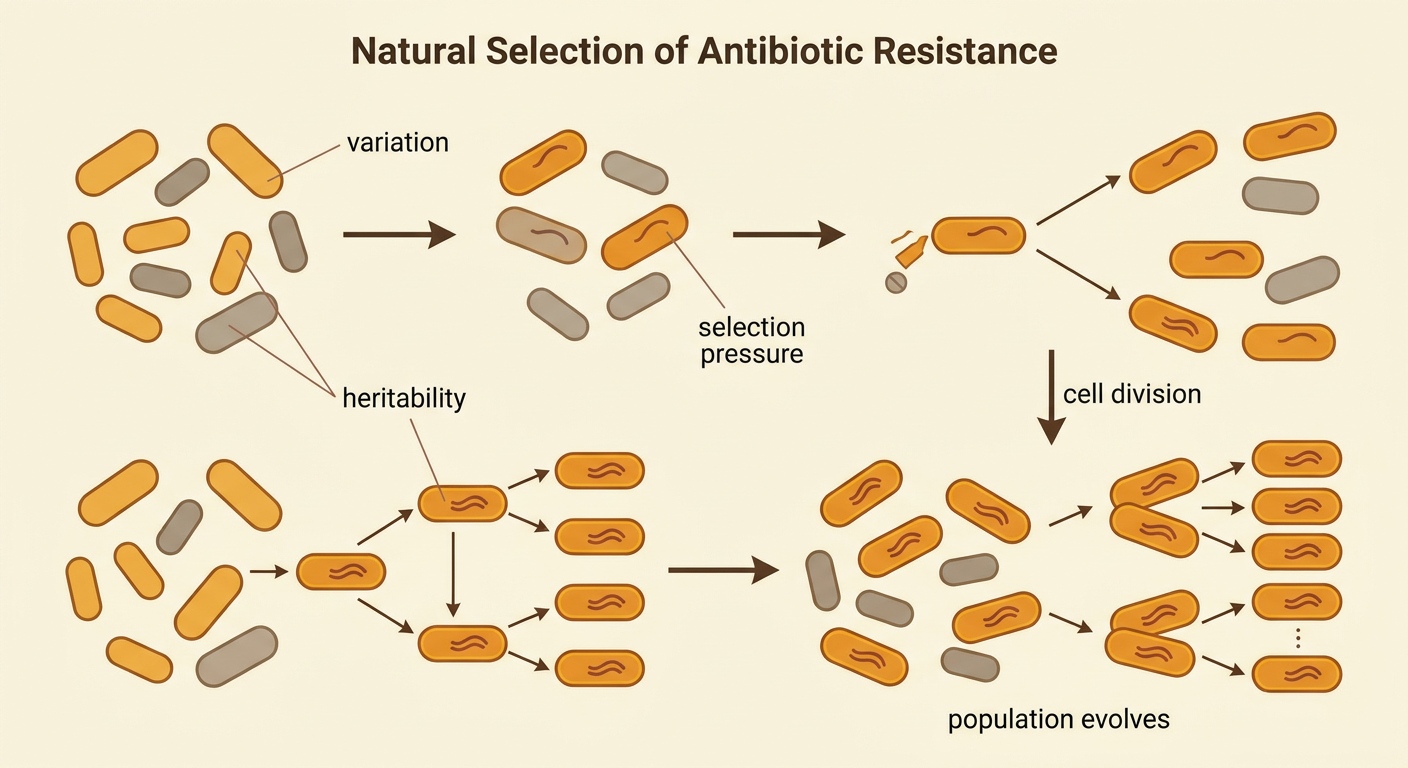
Natural selection requires variation, heritability, and differences in survival or reproduction. First, a bacterial population contains variants, including some with resistance genes. Second, antibiotic treatment creates a selection pressure. Susceptible cells are less likely to survive, while resistant cells are more likely to remain alive. Third, the survivors reproduce by cell division and pass resistance genes to their descendants. After repeated generations, resistant bacteria represent a larger share of the population. For example, if resistant survivors divide every 30 minutes, one cell can produce many genetically similar descendants within hours under favorable conditions. Resistance is therefore an adaptation of the population, not a purposeful change made by an individual bacterium. An individual either has a resistance trait or it does not; the population evolves as the frequency of that heritable trait changes over generations.
Evidence-Based Explanation
A strong scientific explanation includes a claim, specific evidence, and reasoning that connects the evidence to the claim. A suitable claim is that antibiotic exposure caused the bacterial population to become more resistant through natural selection. Cite the data precisely: resistant bacteria were 1 percent of the population before treatment but 90 percent of the survivors after treatment. Then explain why this matters. Resistant cells had a survival advantage in the antibiotic environment, so they were more likely than susceptible cells to reproduce and pass on resistance. The evidence does not show that individual bacteria changed because they were exposed. It shows that treatment changed the proportions of existing variants. When using a scientific text, quote or paraphrase the relevant statement and identify the table, graph, or passage that supports the analysis. Avoid unsupported claims such as “all bacteria became immune.”

Public Health Choices and Resistance
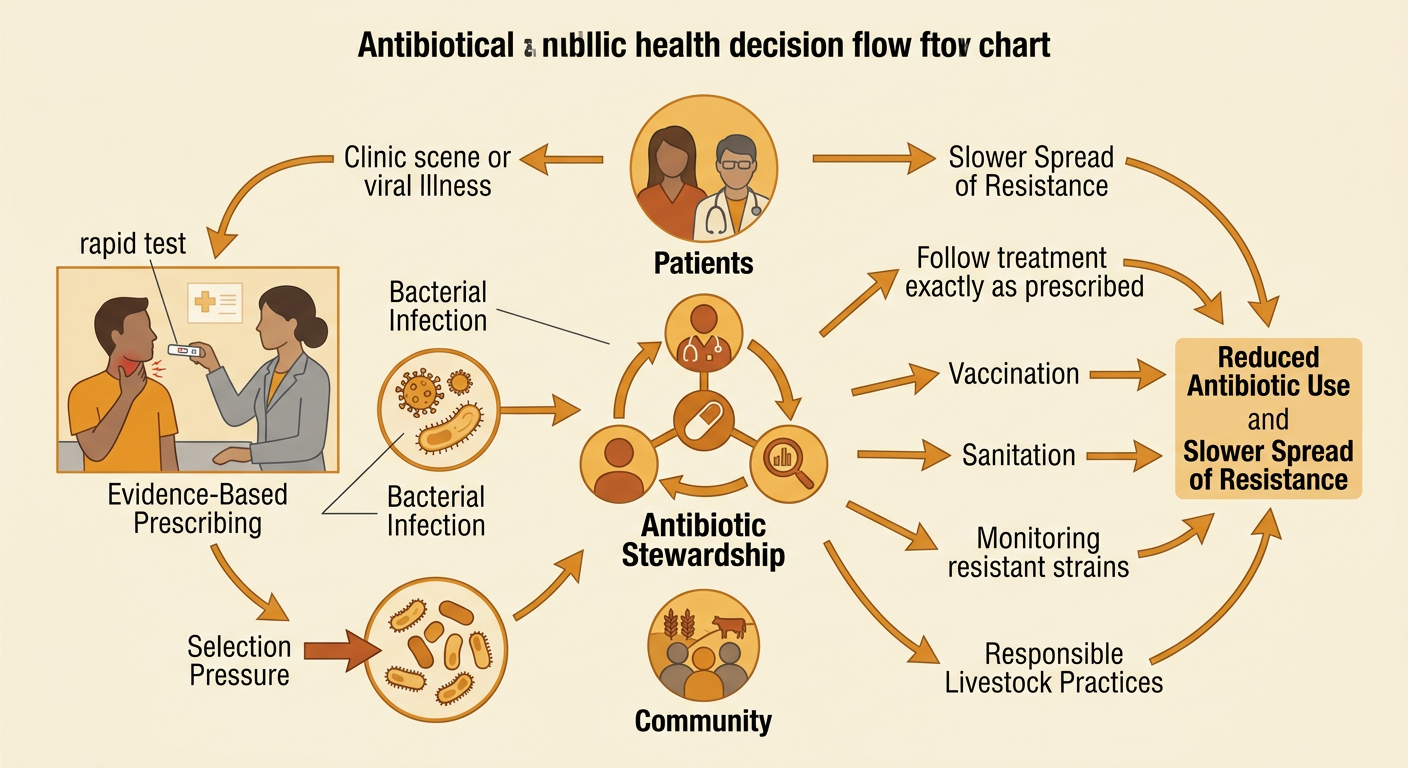
Antibiotic resistance is both a biological problem and a public policy challenge. Individuals may want antibiotics for quick relief, clinicians must protect patients, farmers may want to prevent animal disease, and communities need effective medicines to remain available. These interests can conflict. Using antibiotics only for confirmed or strongly suspected bacterial infections reduces unnecessary selection pressure. Completing treatment exactly as prescribed, preventing infections through vaccination and sanitation, monitoring resistant strains, and limiting routine antibiotic use in healthy livestock can also slow resistance. For example, a clinic may use a rapid test before prescribing antibiotics for a sore throat, protecting patients who need treatment while avoiding antibiotics for viral illness. Fair policies should also preserve access for people with serious infections. Citizens and leaders must weigh personal choice, economic interests, medical evidence, and responsibility to protect the wider community.