Antibiotic Resistance: Natural Selection in Real Time
Students analyze changes in bacterial populations to explain how antibiotic use creates selection pressure and evaluate antibiotic stewardship as a response to resistance.

Illustrations are auto-generated and may be placeholders. They can be refreshed to match the narration.
Variation in Bacterial Populations
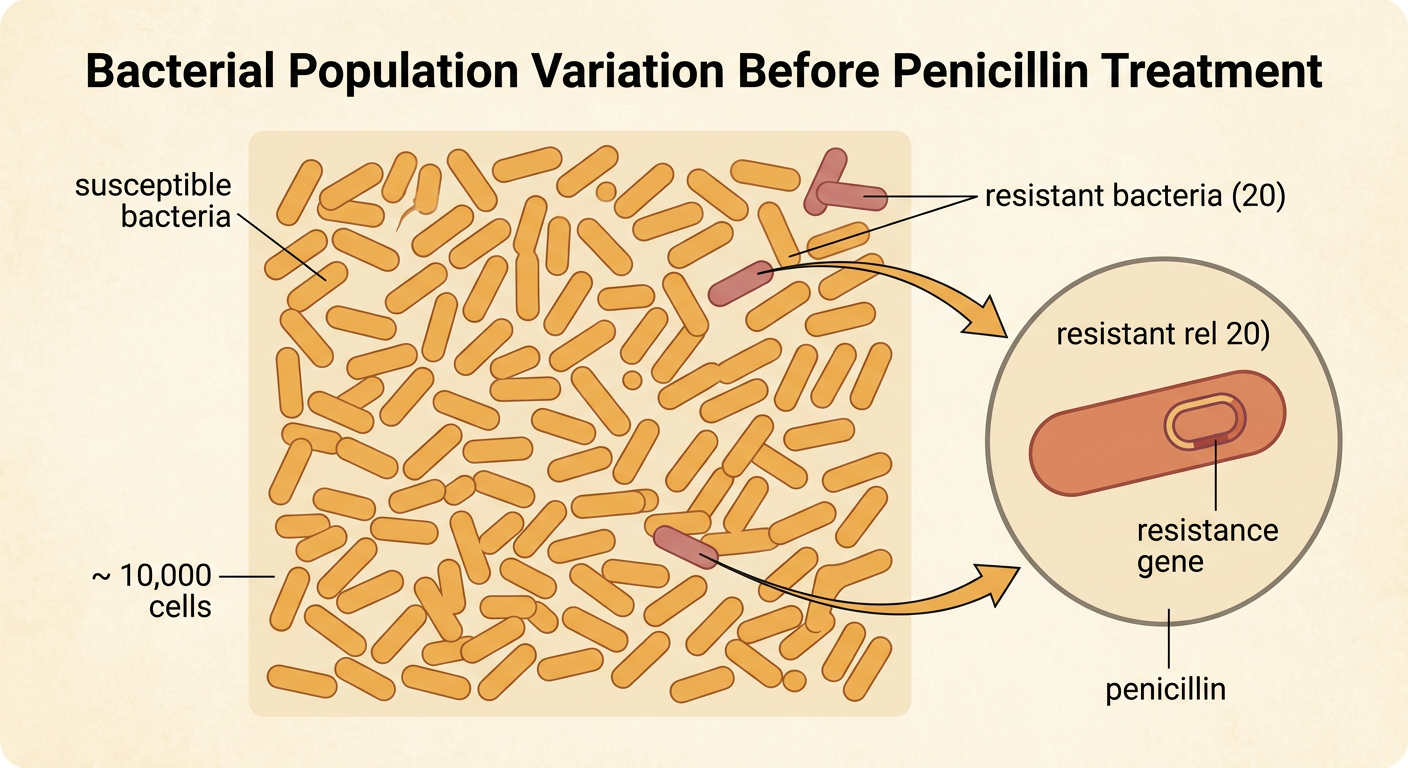
A bacterial population is not genetically identical in every trait. Random mutations and the exchange of DNA can create heritable variation, including differences in susceptibility to an antibiotic. Before treatment, resistant bacteria may be rare because resistance traits can require extra energy or provide no advantage without the drug. For example, imagine a population of 10,000 bacteria in which 20 carry a gene that reduces the effect of penicillin. The antibiotic does not cause those bacteria to become resistant. Instead, the resistant variation already exists or arises independently of the need for it. When conditions change, bacteria with helpful inherited traits are more likely to survive and reproduce. Natural selection therefore acts on individual differences, but adaptation is measured as a change in trait frequency across the population over generations.
Antibiotics as a Selection Pressure
An antibiotic creates selection pressure by changing which bacteria are most likely to survive and reproduce. During treatment, susceptible bacteria are killed or prevented from multiplying, while bacteria with effective resistance traits are more likely to remain. These survivors reproduce rapidly and pass resistance genes to descendants; some bacteria can also transfer resistance genes to other cells. For example, if an antibiotic eliminates 99 percent of a throat infection but resistant cells survive, those cells may rebuild the population. The antibiotic did not make each surviving cell adapt during treatment. It changed reproductive success among existing variants. Incorrect dosing, unnecessary antibiotic use, or exposure that does not fully control the infection can increase opportunities for resistant survivors to multiply. Selection occurs whenever the environment consistently favors one heritable variant over others.

Reading Resistance Data
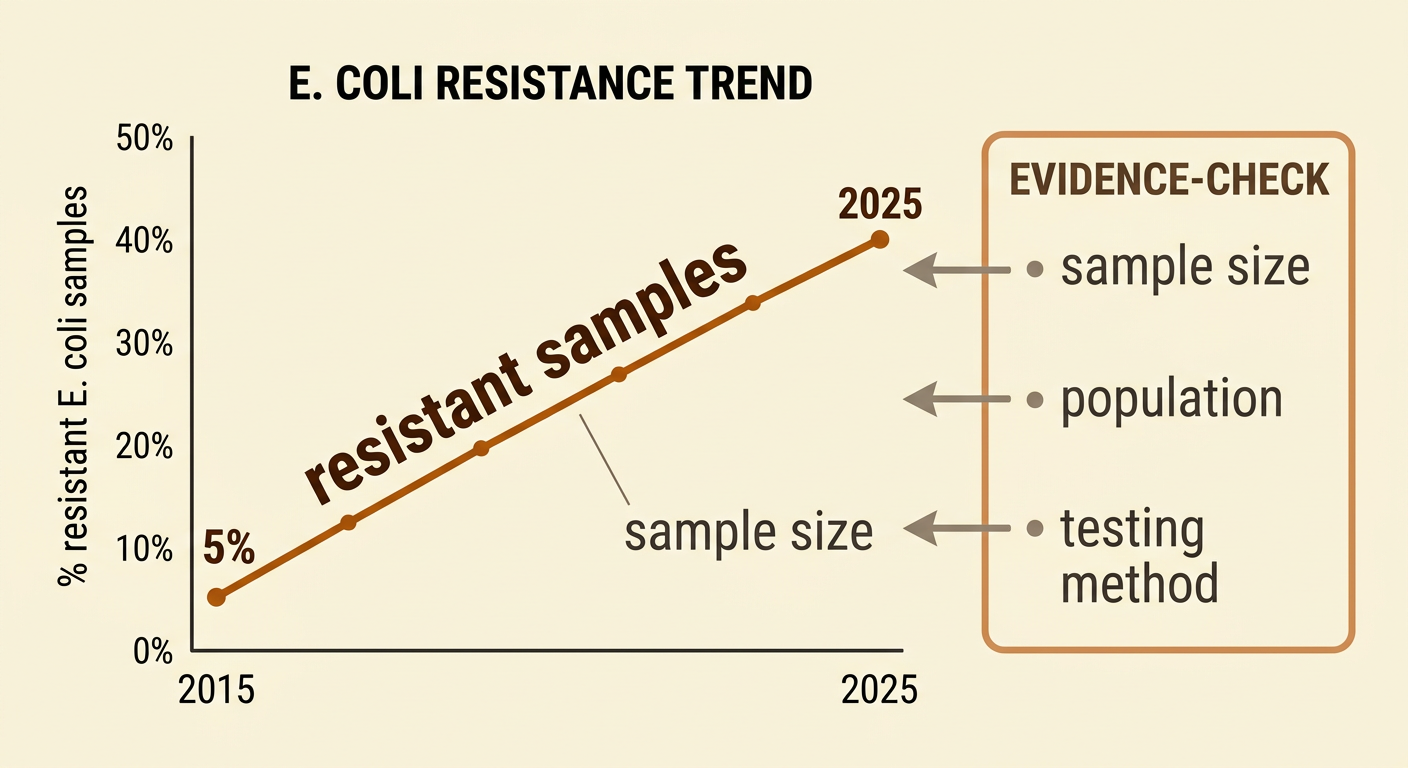
Resistance data can reveal population change, but the methods and evidence must be examined carefully. Suppose a hospital reports that 5 percent of tested E. coli samples were resistant to a drug in 2015, compared with 40 percent in 2025. This pattern supports the claim that resistance became more common, but it does not by itself identify the cause. Students should check the number of samples, patient population, testing method, antibiotic concentration, and whether the same definitions were used in both years. Raw counts and percentages should agree: 40 resistant samples out of 100 equal 40 percent, while 40 out of 1,000 equal only 4 percent. Conclusions should also be compared with data from other hospitals or public health agencies. Corroborating sources reduce the chance that sampling bias, a local outbreak, or a changed laboratory method explains the trend.
Explaining Population Change
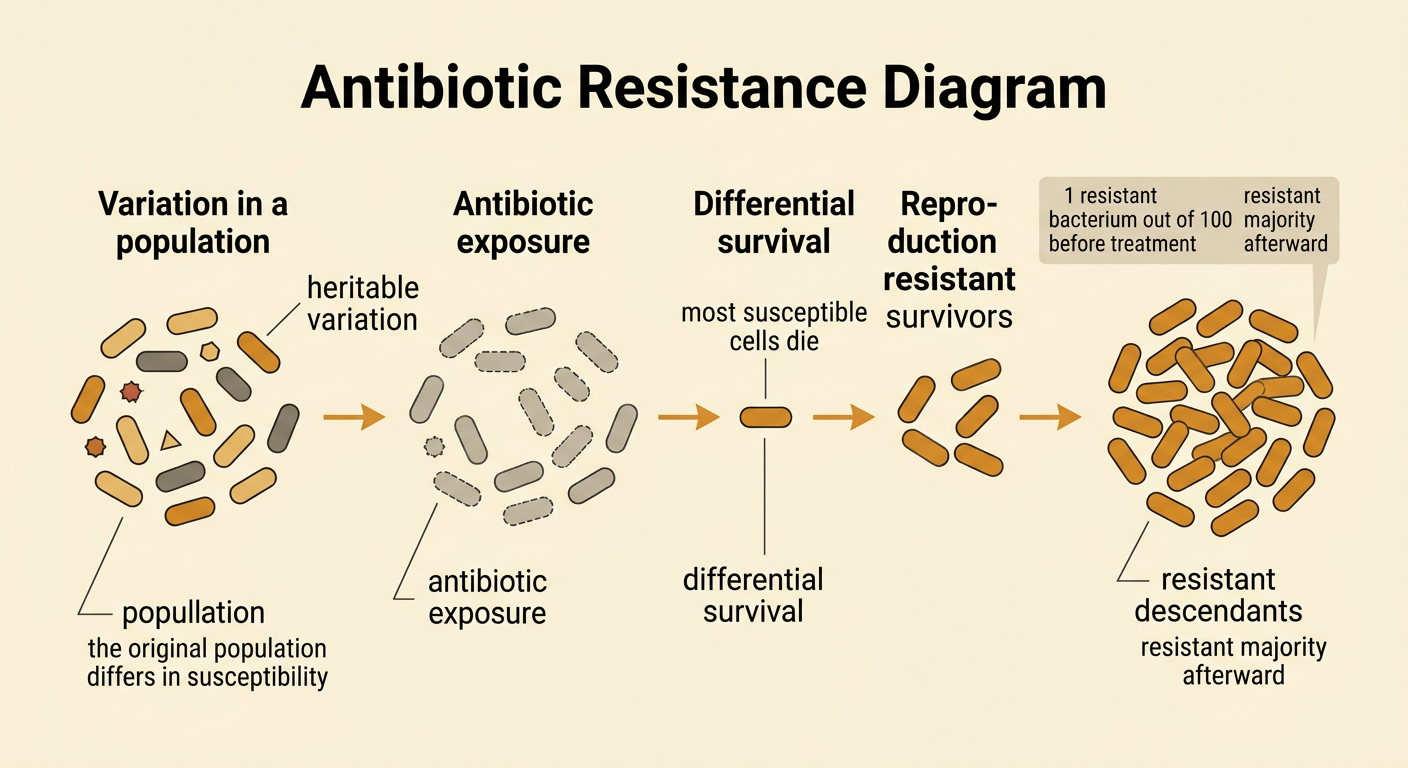
A strong explanation of antibiotic resistance connects evidence to natural selection. First, the population contains heritable variation in susceptibility. Second, antibiotic exposure creates a condition in which resistant bacteria survive and reproduce more successfully than susceptible bacteria. Third, descendants inherit resistance, so the proportion of resistant bacteria increases over generations. Consider a culture that begins with 1 resistant bacterium among 100. After antibiotic exposure, most susceptible bacteria die, but the resistant cell survives and divides. If its descendants produce a population of 100 resistant bacteria, the population has adapted because resistance is now common. The original bacterium did not develop resistance because it tried to survive, and the antibiotic did not choose consciously. Differential survival and reproduction changed the population. Evidence for this explanation could include resistance measurements before and after treatment, genetic tests, and repeated results from controlled cultures.
Evaluating Antibiotic Stewardship
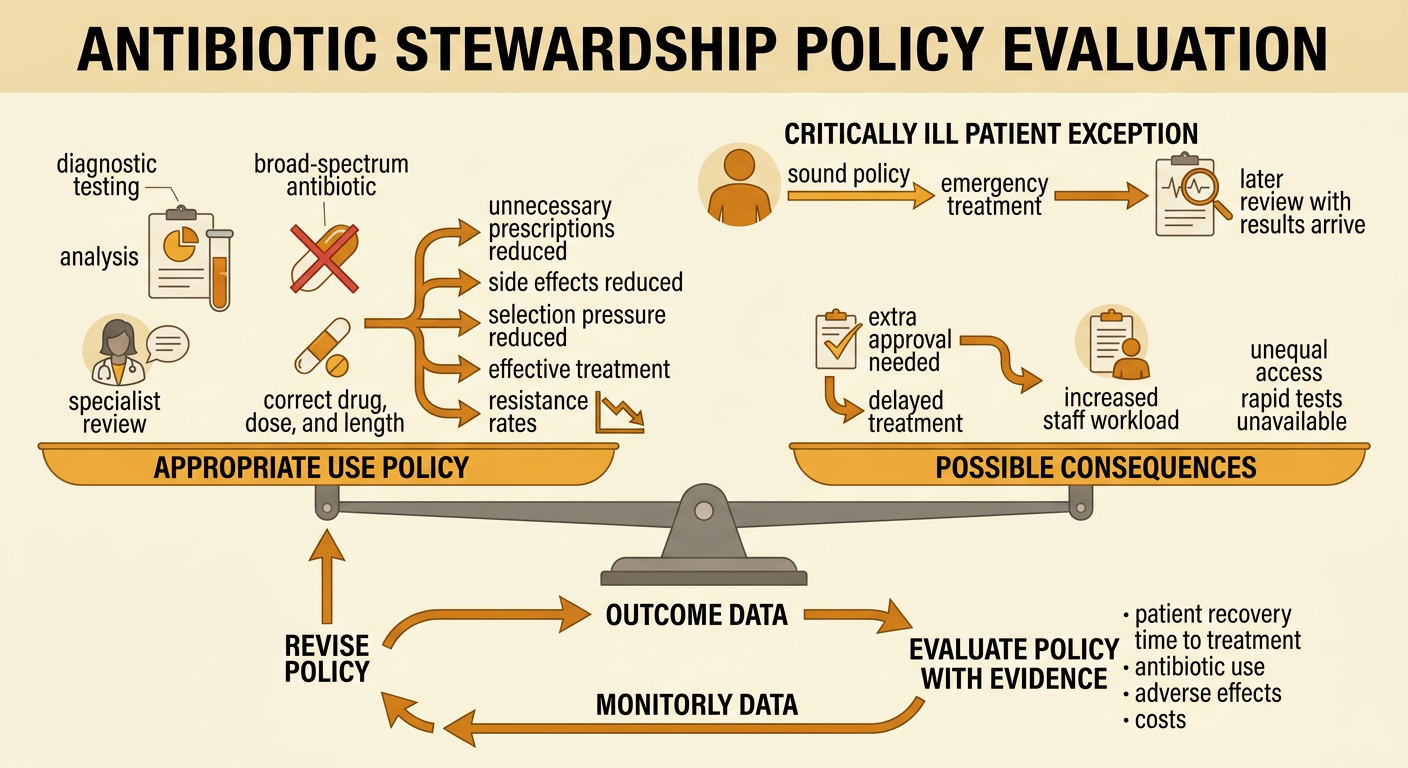
Antibiotic stewardship includes policies and practices designed to use antibiotics only when they are likely to help and to select the correct drug, dose, and treatment length. A hospital might require diagnostic testing and specialist review before certain broad-spectrum antibiotics are prescribed. Intended outcomes include effective patient care, fewer unnecessary prescriptions, reduced side effects, and slower spread of resistance. Possible unintended outcomes must also be evaluated. Extra approval steps could delay urgent treatment, increase staff workload, or create unequal access if smaller clinics lack rapid tests. A sound policy therefore allows immediate treatment for medical emergencies while requiring later review when test results arrive. Its success should be measured with evidence such as patient recovery, time to treatment, antibiotic use, adverse effects, costs, and resistance rates. Stewardship does not eliminate natural selection, but it can reduce unnecessary selection pressure while preserving antibiotics as useful shared resources.