
Antibiotic Resistance: Natural Selection in Real Time
Students analyze bacterial population data to explain how antibiotic use drives natural selection and evaluate antibiotic stewardship as a public policy response.
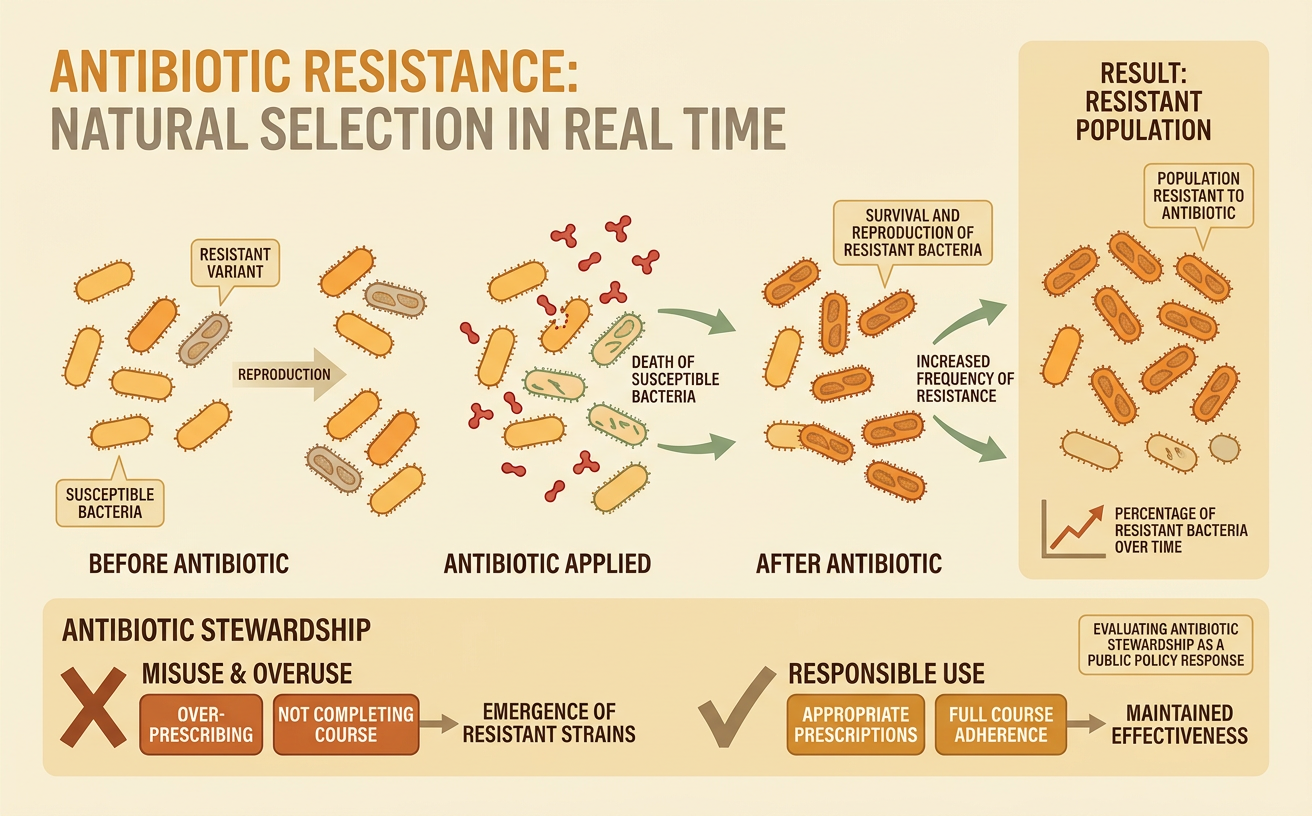
Illustrations are auto-generated and may be placeholders. They can be refreshed to match the narration.
Resistance Is Not Immunity
Antibiotic resistance and immunity describe different biological processes. Resistance is a heritable characteristic of bacteria that allows them to survive or reproduce despite exposure to an antibiotic. Immunity is the ability of a person’s or animal’s immune system to recognize and respond to a pathogen. A patient does not become resistant to an antibiotic; the bacterial population does. For example, if a patient with strep throat stops taking an antibiotic incorrectly, some Streptococcus bacteria may remain. If those survivors carry resistance traits, they can reproduce and become a larger share of the bacterial population. Meanwhile, the patient’s immune system may also attack the bacteria, but that immune response is separate from antibiotic resistance. Keeping these concepts distinct helps explain why an antibiotic that once treated an infection may later become less effective against the bacteria causing it.

Variation in Bacterial Populations
A bacterial population contains genetic variation even before an antibiotic is used. Random DNA mutations can create resistance traits, and bacteria can also receive resistance genes from other bacteria through horizontal gene transfer, often on small DNA molecules called plasmids. The antibiotic does not create a needed mutation; instead, it changes which existing variants are most likely to survive. Imagine a population of 10,000 bacteria in which 9,990 are susceptible and 10 carry a resistance gene. Before treatment, the resistant bacteria are rare and may even reproduce more slowly if resistance has an energy cost. After antibiotic exposure, however, many susceptible bacteria die while resistant bacteria remain. Those survivors can divide and pass resistance genes to descendants, increasing the frequency of resistance in later generations.

Interpreting Resistance Data
Resistance data should be examined as both counts and percentages. Suppose a culture initially contains 10,000 bacteria: 9,900 susceptible and 100 resistant, so resistance is 1 percent. After antibiotic treatment, 99 susceptible bacteria and 80 resistant bacteria survive. The total population falls sharply to 179, but resistant bacteria now make up about 45 percent of the survivors. This does not mean the antibiotic caused 80 bacteria to become resistant. It means resistant bacteria survived at a higher rate. Students should compare these population data with technical evidence, such as laboratory susceptibility tests that measure whether bacteria grow near antibiotic disks and surveillance reports that track resistance across hospitals. Sample size, collection methods, antibiotic dose, and differences among patients can affect conclusions, so trends supported by multiple sources are stronger than one isolated result.

Natural Selection Explanation
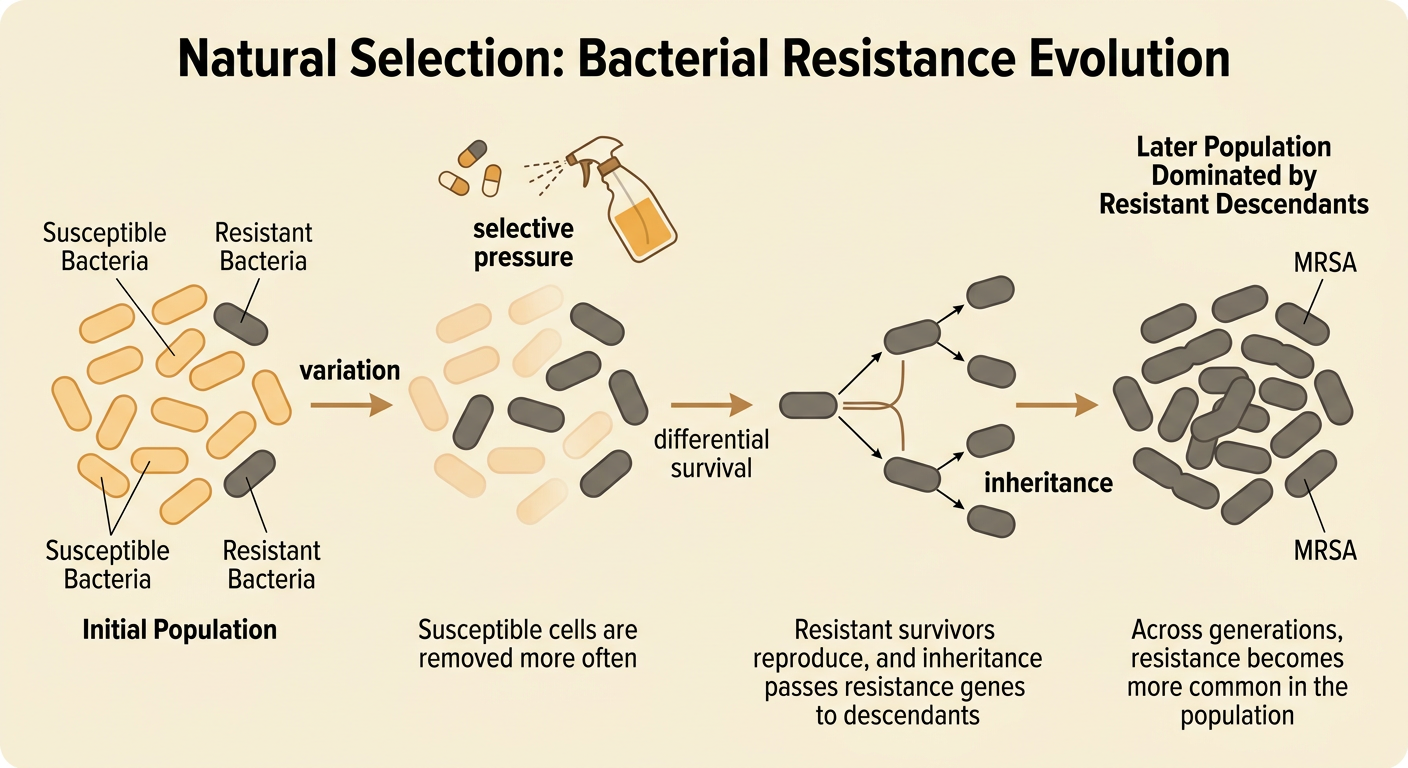
Natural selection explains the change in resistance frequency through a causal sequence. First, bacteria vary, and some possess heritable resistance. Second, an antibiotic acts as a selective pressure. Third, resistant bacteria survive and reproduce more successfully than susceptible bacteria in that environment. Finally, descendants inherit the resistance trait, so the population becomes better adapted to antibiotic exposure over generations. Individual bacteria do not decide to adapt, and the antibiotic does not give them resistance because they need it. For example, during repeated exposure to methicillin-related antibiotics, susceptible Staphylococcus aureus cells are removed more often than cells carrying resistance genes. The resistant lineage can then spread, contributing to methicillin-resistant Staphylococcus aureus, or MRSA. If antibiotic exposure is reduced, resistance may decline in some populations, especially when maintaining resistance carries a reproductive cost, but this outcome is not guaranteed.
Evaluating Antibiotic Stewardship
Antibiotic stewardship includes policies designed to use antibiotics only when they are likely to help and to select the appropriate drug, dose, and treatment length. For example, a hospital may require clinicians to review broad-spectrum antibiotic prescriptions after laboratory results become available within 48 to 72 hours. The intended outcomes are effective patient care, fewer unnecessary prescriptions, reduced side effects, and slower selection for resistance. Evidence can include infection outcomes, antibiotic use per 1,000 patient-days, resistance rates, costs, and rates of complications such as Clostridioides difficile infection. Possible unintended outcomes include delayed treatment, added clinician workload, or unequal access to rapid diagnostic tests. A fair policy should include emergency exceptions, timely laboratory support, patient education, and regular review. Policymakers should compare benefits and harms across communities rather than judging success only by a reduction in prescriptions.
