Ask and Answer Questions About Weather
Students listen to an informational read-aloud about weather, ask and answer questions using details from the text, and discuss how weather affects daily activities.
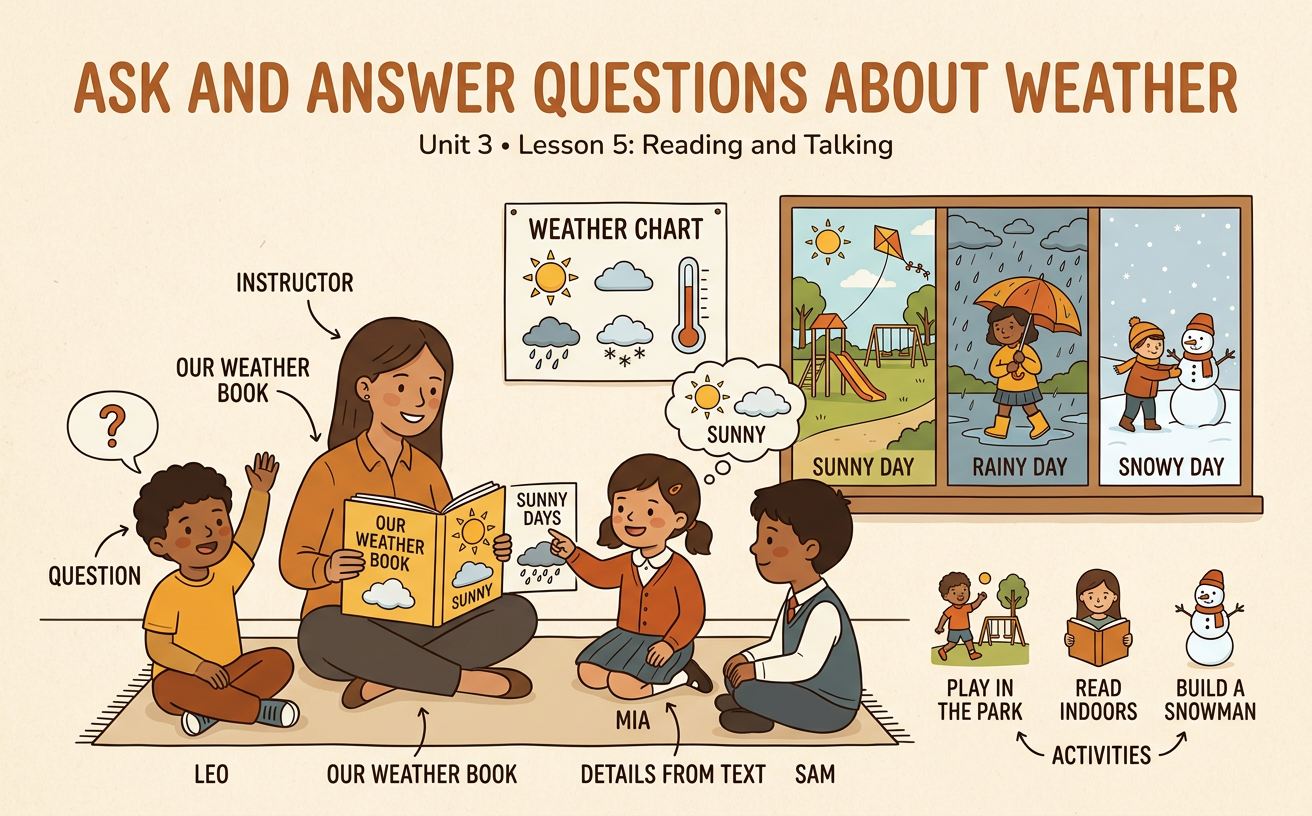
Illustrations are auto-generated and may be placeholders. They can be refreshed to match the narration.
Introduce Weather Words
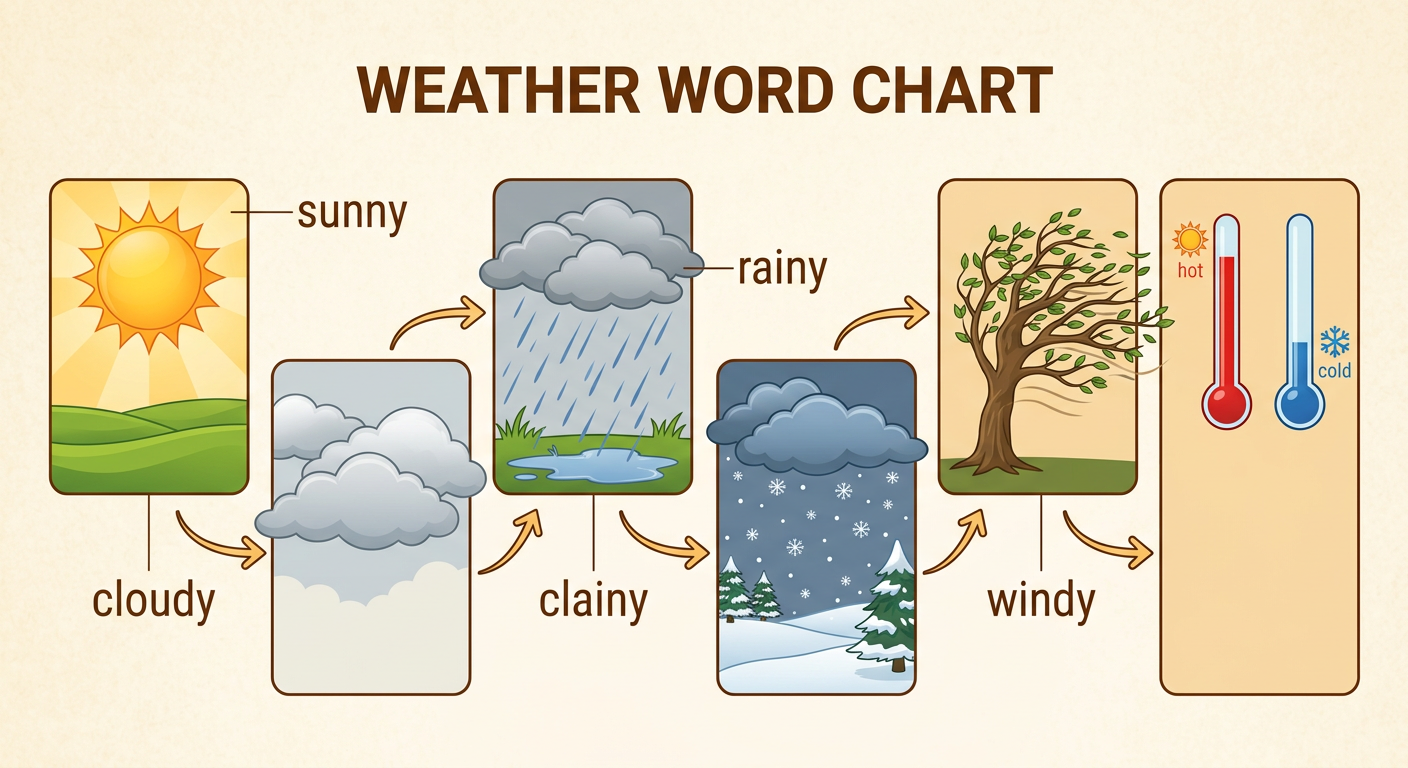
Weather tells what the air and sky are like outside at a certain time and place. Weather can be sunny, cloudy, rainy, snowy, windy, warm, or cold. We can observe weather by looking outside and feeling the air with an adult. We can also use tools. A thermometer measures how warm or cold the air is. A rain gauge measures rainfall. A windsock shows the direction the wind is blowing. Weather can change during the day. For example, the morning may be cool and cloudy, but the afternoon may be warm and sunny. Say a weather word, and then use it in a sentence. You might say, “Today is windy, so the tree branches are moving.”
Preview and Wonder
Before listening to a weather book, look closely at its cover, title, and pictures. A preview gives clues about what the text may teach. Ask yourself, “What do I notice?” and “What do I wonder?” A question is something you want to know. Many questions begin with who, what, when, where, why, or how. Suppose the cover shows a child holding an umbrella under dark clouds. You might notice that rain is falling. You might wonder, “Why does the child need an umbrella?” or “What happens after the rain stops?” Share one question before the reading begins. Listen for details that may answer it. Your question can also change when you learn new information.

Listen to the Read-Aloud
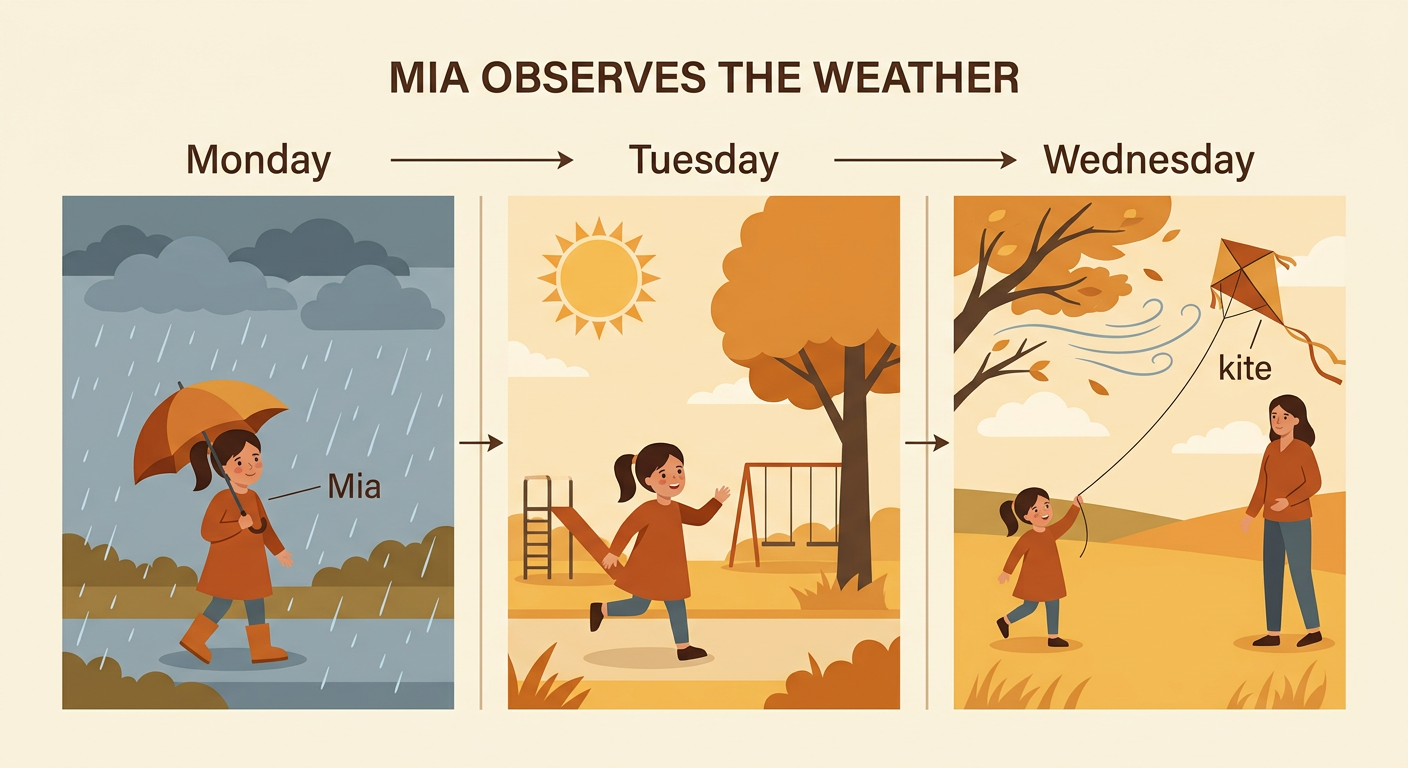
Listen carefully to this short informational text: “Mia checks the weather each morning. On Monday, dark clouds fill the sky, and rain falls. Mia wears boots and carries an umbrella. On Tuesday, the sun shines, and the air feels warm. Mia plays at the park. On Wednesday, strong wind moves the tree branches. Mia flies a kite in an open field with an adult. The weather is different each day. When people observe and record weather, they can look for patterns.” Think about the important details as you listen. Who observes the weather? What happens on each day? Listen for weather words and actions. For example, the detail “rain falls” explains why Mia carries an umbrella on Monday.
Ask and Answer Questions
After listening, ask questions about key details. Key details are important pieces of information that help explain the text. Use the words and events from the read-aloud in your answer. Ask, “What was the weather like on Monday?” The answer is, “It was rainy because the text says dark clouds filled the sky and rain fell.” Ask, “How did Mia get ready for the rain?” The answer is, “She wore boots and carried an umbrella.” You can use this helpful answer frame: “The answer is ___ because the text says ___.” If you are unsure, listen to the matching part again or look at a picture clue. Take turns asking and answering with a partner.

Connect Weather to Daily Life
Weather affects what people wear, where they go, and what they do. On a cold day, people may wear coats, hats, and mittens. On a hot, sunny day, people may wear light clothing, rest in the shade, and drink water. Rain may move a picnic indoors. Snow may make roads slippery and change travel plans. People in different places may make different choices because their usual weather is different. Observe your local weather and connect it to one safe activity. For example, you might say, “It is rainy today, so we will play inside.” Keep a class weather chart for several days. If many days are rainy or sunny, that repeated observation may show a short-term weather pattern.

Review Key Details
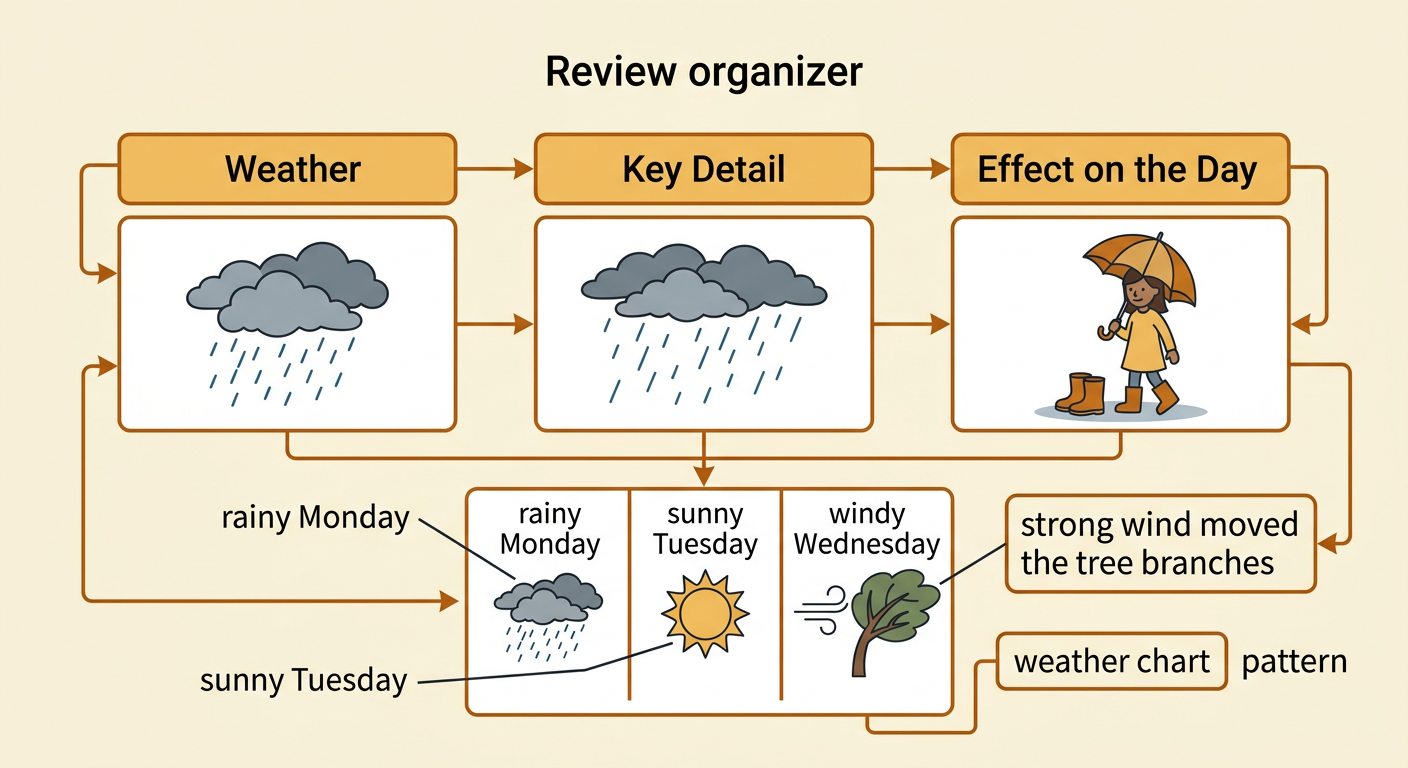
Review what you learned by naming the weather, one text detail, and one effect on Mia’s day. On Monday, the weather was rainy. The text said that dark clouds filled the sky and rain fell. Mia wore boots and carried an umbrella. On Tuesday, it was sunny and warm, so Mia played at the park. On Wednesday, it was windy, so Mia flew a kite with an adult. Now ask one final question, such as, “Which day was windy?” Answer with evidence: “Wednesday was windy because the text says strong wind moved the tree branches.” Then review the class weather chart. Count the sunny, rainy, cloudy, or windy days. Tell which kind of weather you observed most often.