
Asking and Answering Questions About a Story
Students use who, what, where, when, why, and how questions to identify and explain important details in a story.
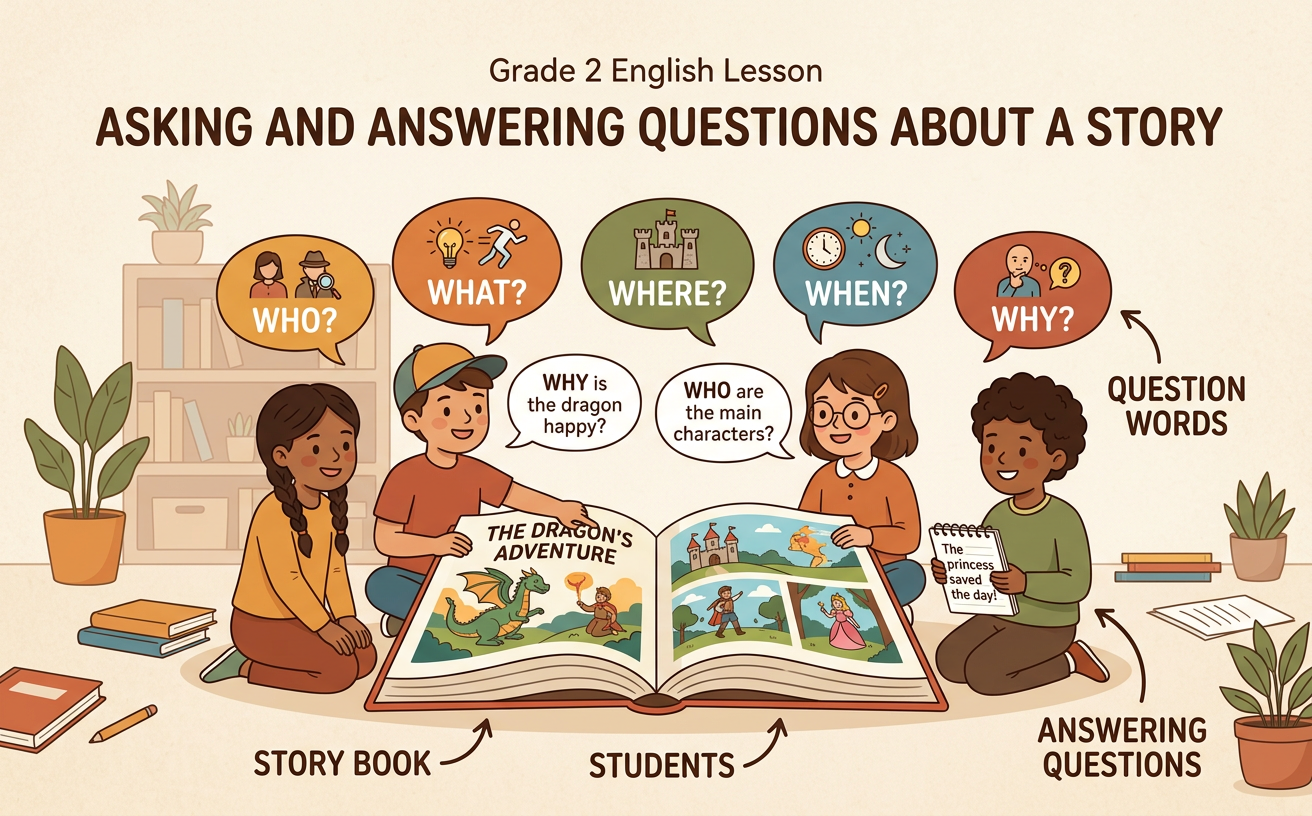
Illustrations are auto-generated and may be placeholders. They can be refreshed to match the narration.
Meet the Six Question Words
Good readers use six question words to understand a story. Who asks about a person or character. What asks about an action, event, or thing. Where asks about a place. When asks about a time. Why asks for a reason. How asks about the way something happened. Imagine a story that says, “Nina carried an umbrella to school because rain was falling.” You could ask, “Who carried an umbrella?” The answer is Nina. You could ask, “What did Nina carry?” The answer is an umbrella. You could also ask, “Why did Nina carry it?” She carried it because it was raining. Each question word helps you look for a different kind of key detail.

Listen to the Story
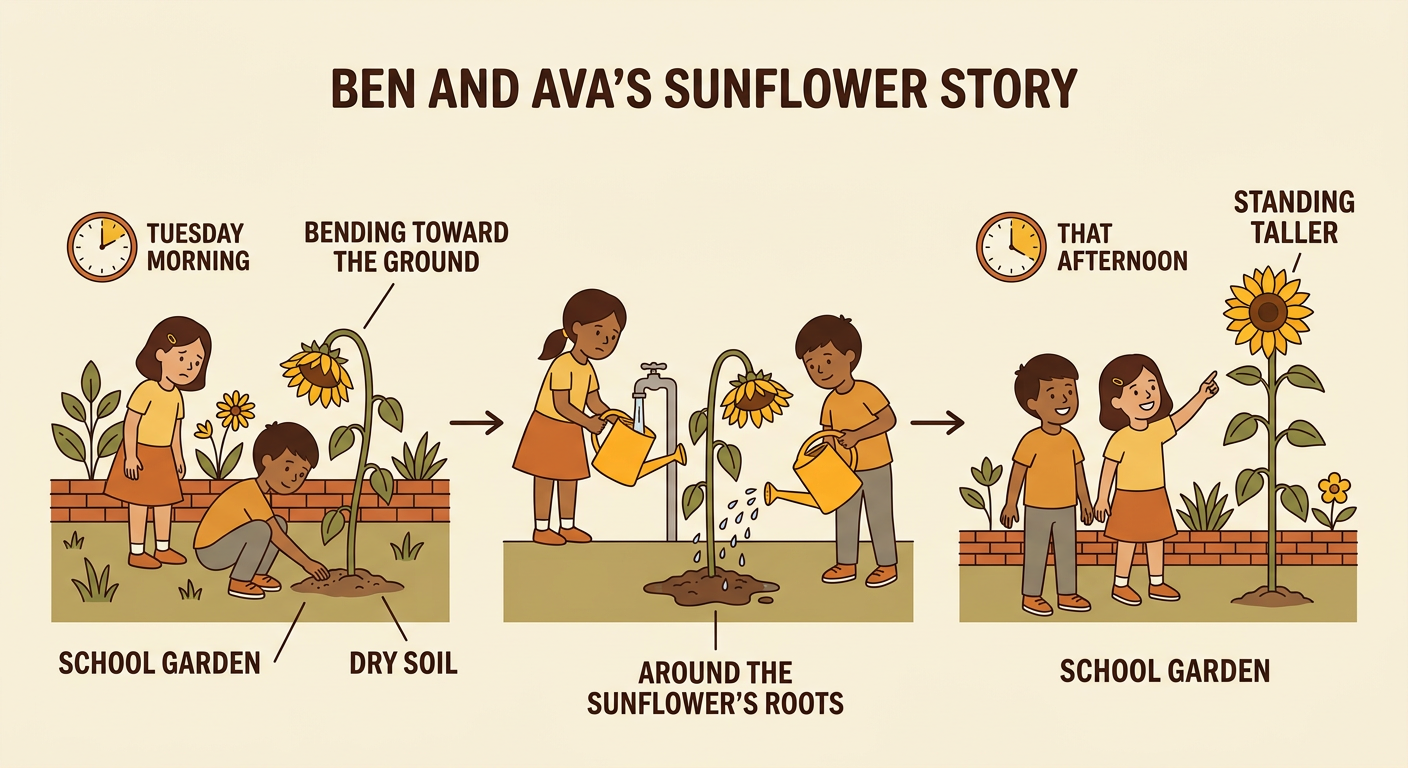
Listen carefully as this short story is read. “On Tuesday morning, Ben and Ava walked to the school garden. They saw a sunflower bending toward the ground. Ben touched the soil and noticed that it was dry. Ava filled a watering can at the faucet. Ben slowly poured water around the sunflower’s roots. When they returned that afternoon, the sunflower stood taller. ‘It needed water,’ Ava said.” As you listen, picture the characters, setting, and events in your mind. Notice names, places, times, actions, and reasons. These are key details. You may listen more than once. During the first reading, enjoy the whole story. During the second reading, listen for details that can answer questions.
Ask Questions About Key Details
Now use the six question words to ask about important details. Ask, “Who found the drooping sunflower?” Ask, “What did Ben and Ava do?” Ask, “Where did they find the flower?” Ask, “When did they first visit the garden?” Ask, “Why did they water the sunflower?” Ask, “How did Ben give the flower water?” Strong questions focus on details that help explain the characters, setting, problem, and events. A question such as “What color were Ben’s shoes?” is not useful because the story does not tell us and the detail is not important. Before answering, decide what kind of information the question word asks you to find. For example, where tells you to look for a place.

Find Evidence in the Text
Text evidence is a word, phrase, or sentence from the story that supports an answer. Return to the story instead of guessing. To answer, “Why did Ben and Ava water the sunflower?” find details about the problem. The story says that the sunflower was bending and that the soil was dry. It also says, “It needed water.” These details support the answer that they watered the sunflower because it needed water. To answer, “How did Ben water it?” look for the action words. The text says he slowly poured water around the roots. Point to or repeat the exact detail that proves your answer. If you cannot find support in the story, reread the part before and after the event.

Answer in Complete Sentences
Answer each question with a complete sentence. A complete sentence tells a whole idea and begins with a capital letter. It also ends with punctuation. Use words from the question to make your answer clear. For the question, “Where did Ben and Ava find the sunflower?” do not answer only, “In the garden.” Say, “Ben and Ava found the sunflower in the school garden.” For “Why did they water it?” say, “They watered the sunflower because the soil was dry and the flower needed water.” Check that your sentence answers the correct question and matches the text evidence. Read it aloud to see whether it makes sense. Clear, complete answers show that you understand the story’s key details.
