Asking and Answering Questions About Literature
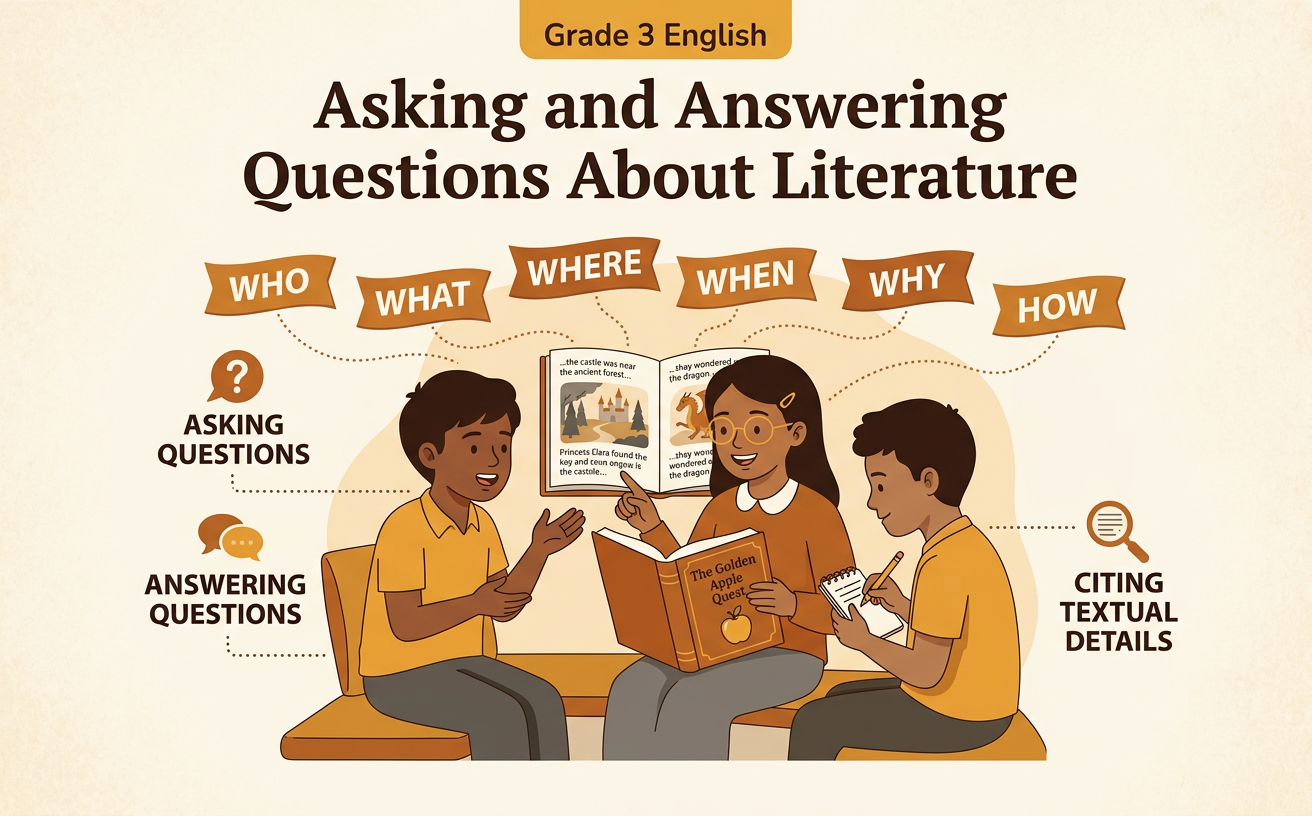
Students ask and answer who, what, where, when, why, and how questions while citing details from a literary text.
Illustrations are auto-generated and may be placeholders. They can be refreshed to match the narration.
Question Words Review
Question words help readers think carefully about a story. Who asks about a person or character. What asks about an action, event, or idea. Where asks about a place, and when asks about time. Why asks for a reason. How asks about the way something happens. For example, after reading about a girl who plants seeds in spring, you might ask, “Who plants the seeds?” or “When does she plant them?” The question “Why does she water the seeds?” asks you to explain her purpose. Before answering any question, identify its question word. Then decide what kind of information you need to find in the text. Strong readers use all six question words to explore characters, settings, events, problems, and solutions.

Read the Passage
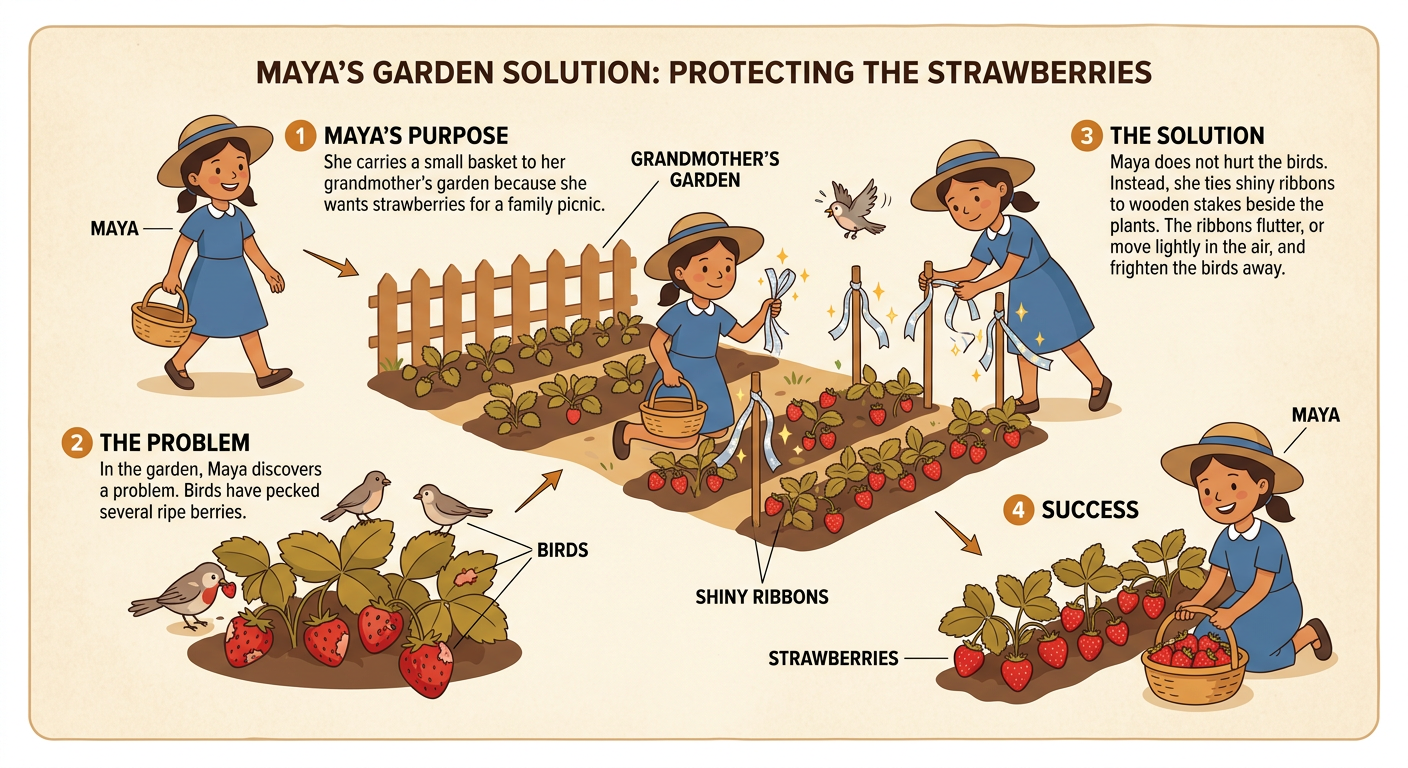
Read this passage closely. On Saturday morning, Maya carried a small basket to her grandmother’s garden. She wanted to pick strawberries for a family picnic. When Maya reached the garden, she saw that birds had pecked several ripe berries. Maya tied shiny ribbons to wooden stakes and placed them beside the strawberry plants. The fluttering ribbons frightened the birds away. Soon, Maya filled her basket with bright red strawberries. At the picnic, Grandmother smiled and said, “You solved the problem without hurting the birds.” Notice the characters, setting, problem, important actions, and solution. You may need to reread the passage because answers are not based on guesses. They are based on words and details the author included in the text.
Ask Text-Based Questions
A text-based question can be answered by using information in the passage. Begin with a question word, and ask about an important part of the story. You could ask, “Who went to the garden?” “Where did Maya go on Saturday morning?” or “Why did Maya place ribbons beside the strawberry plants?” You can also ask, “How did Maya solve the problem?” Each answer appears directly in the passage or can be explained using its details. Avoid questions that depend only on personal opinions, such as “What is your favorite fruit?” That question may be interesting, but the passage does not provide its answer. After writing a question, check it by asking, “Can I point to words in the text that help answer this?”

Find Supporting Details
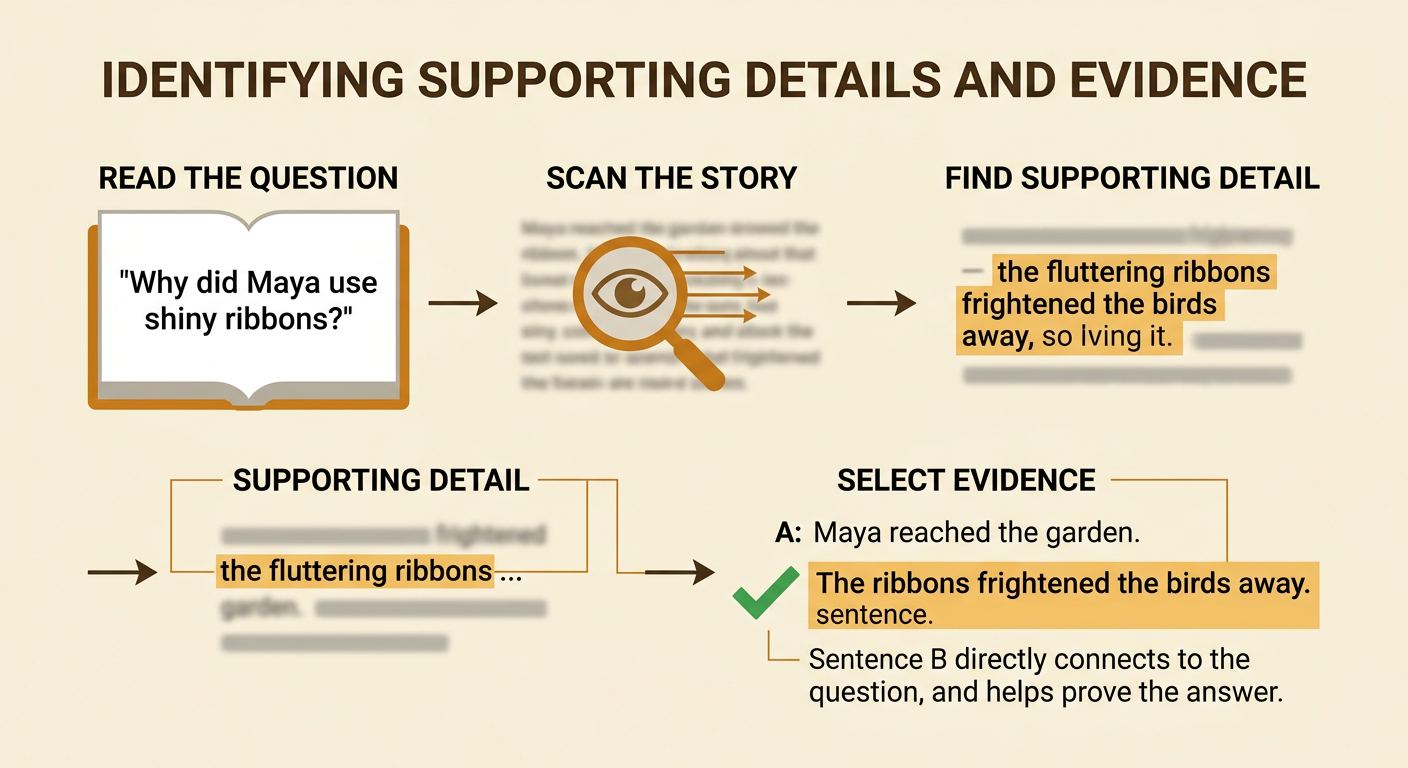
Supporting details are words or sentences that prove an answer is correct. First, reread the question and identify what it asks. Next, scan the passage for the same words or related ideas. For the question “Why did Maya use shiny ribbons?” look for the part that describes what happened after she placed the ribbons. The passage says, “The fluttering ribbons frightened the birds away.” This detail shows that Maya used the ribbons to protect the strawberries from the birds. You may underline or point to that sentence. Do not choose a detail only because it mentions Maya or the garden. The detail must connect directly to the question. Sometimes one sentence provides enough evidence, while other questions require details from two parts of the text.
Answer with Evidence
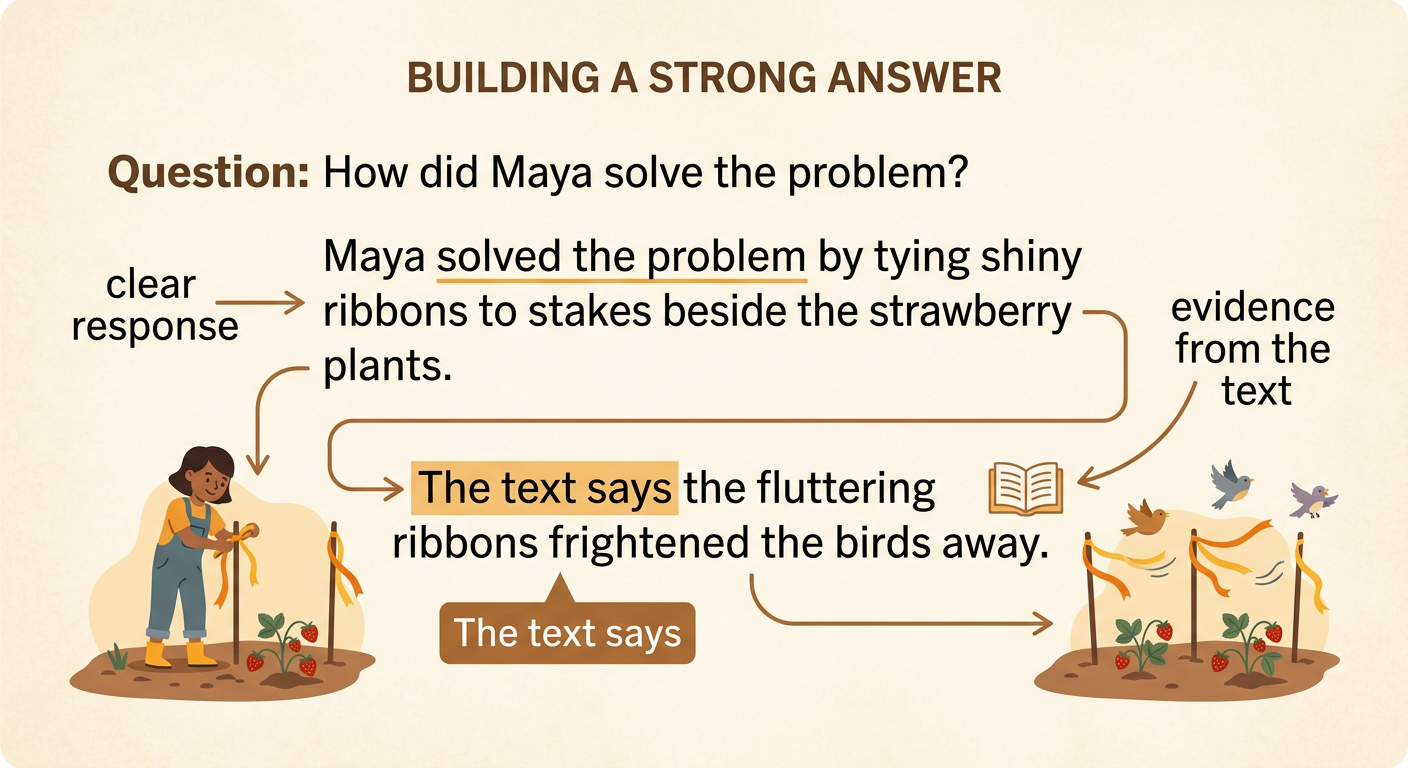
A strong answer includes two parts: a clear response and evidence from the text. Restate important words from the question so your answer makes sense by itself. For example, if the question is “How did Maya solve the problem?” you could answer, “Maya solved the problem by tying shiny ribbons to stakes beside the strawberry plants. The text says the fluttering ribbons frightened the birds away.” The first sentence answers the question, and the second sentence gives proof. Useful evidence starters include “The text says,” “In the passage,” and “The author explains.” Check that your evidence truly supports your response. Finally, reread your answer. A reader should understand both what happened and which detail from the story proves it.