
Balancing Blood Sugar: Feedback and Homeostasis
Students analyze blood-glucose data and model how insulin and glucagon create feedback loops that maintain homeostasis, then consider how health policies can support diabetes prevention and management.

Illustrations are auto-generated and may be placeholders. They can be refreshed to match the narration.
Defining Homeostasis
Homeostasis is the maintenance of internal conditions within ranges that allow cells and organs to function. It does not mean that conditions remain perfectly constant. Instead, the body detects changes and makes adjustments, usually through negative feedback. Blood glucose is one regulated variable because glucose supplies energy to cells, especially brain cells. After a meal, blood glucose rises as digested carbohydrates enter the bloodstream. Between meals, it may fall as cells use glucose. Sensors and signaling cells in the pancreas respond to these changes, while the liver and other tissues act as effectors. For example, if blood glucose rises above its usual range after breakfast, the body releases insulin and promotes glucose uptake and storage. As glucose returns toward its normal range, insulin secretion decreases, preventing an excessive response.

Tracking Blood Glucose Changes
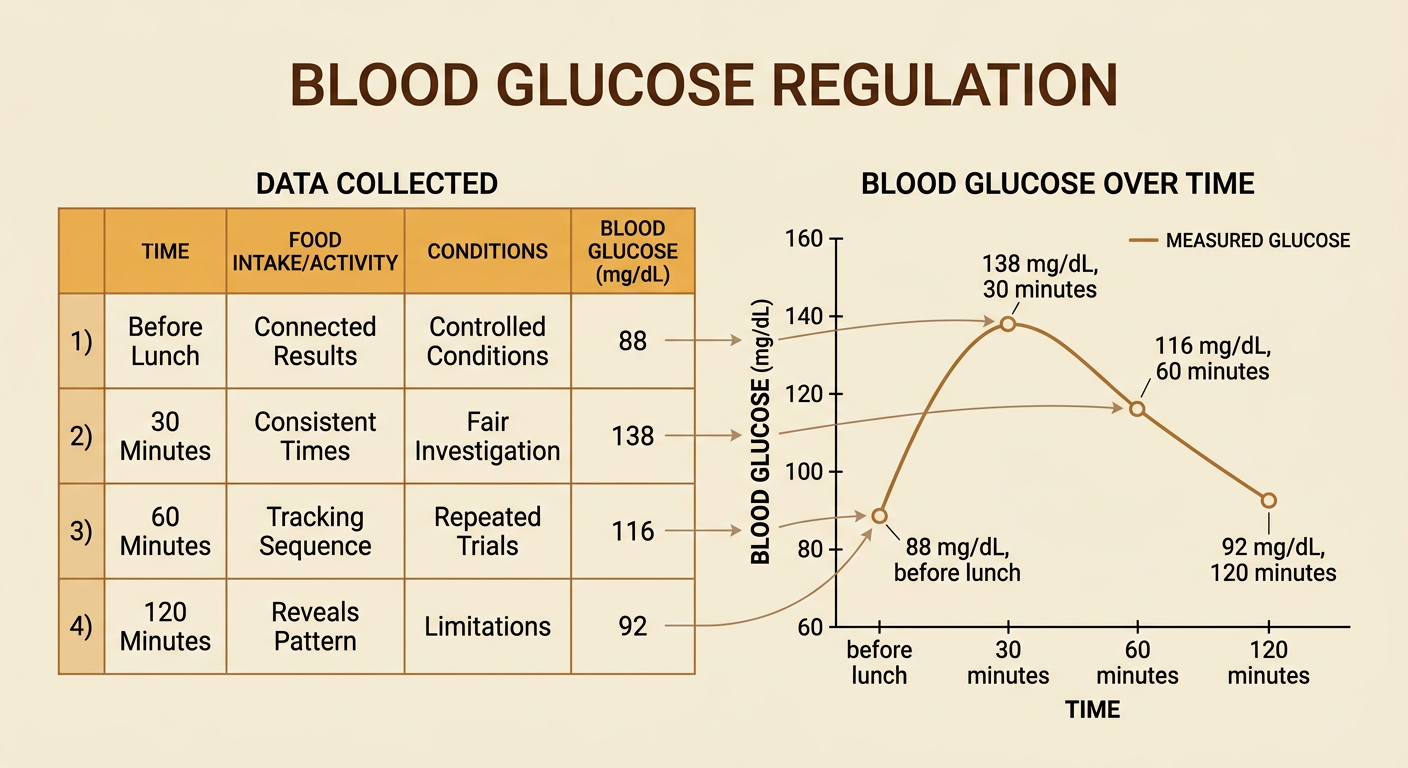
Scientists can investigate glucose regulation by measuring blood glucose at consistent times and comparing the results with food intake, activity, and other conditions. In a classroom investigation, students can analyze an anonymous data set rather than collect blood samples. Suppose a participant has a glucose level of 88 milligrams per deciliter before lunch, 138 thirty minutes after lunch, 116 after sixty minutes, and 92 after two hours. Students can organize these values in a table and plot them on a graph. Controlled variables might include meal size, measurement method, and timing. Repeated trials or data from several participants improve reliability. Students should also identify limitations: stress, sleep, exercise, medications, and meal composition can affect glucose. A single measurement does not establish a medical diagnosis, so conclusions should focus on patterns in the evidence.
Insulin and Glucagon Feedback Loops
The pancreas helps regulate blood glucose through two opposing negative feedback loops. When glucose rises, pancreatic beta cells release insulin. Insulin signals many body cells to increase glucose uptake and signals the liver and muscles to store glucose as glycogen. These actions lower blood glucose, so the original stimulus for insulin release becomes weaker. When glucose falls, pancreatic alpha cells release glucagon. Glucagon signals the liver to break down glycogen and make additional glucose, which the liver releases into the blood. As blood glucose rises, glucagon secretion decreases. For example, insulin activity usually increases after a carbohydrate-rich meal, while glucagon activity becomes more important during an overnight fast. The hormones do not work like simple on-off switches; their secretion changes continuously in response to internal conditions, helping keep glucose within a functional range.

Interpreting a Glucose Graph
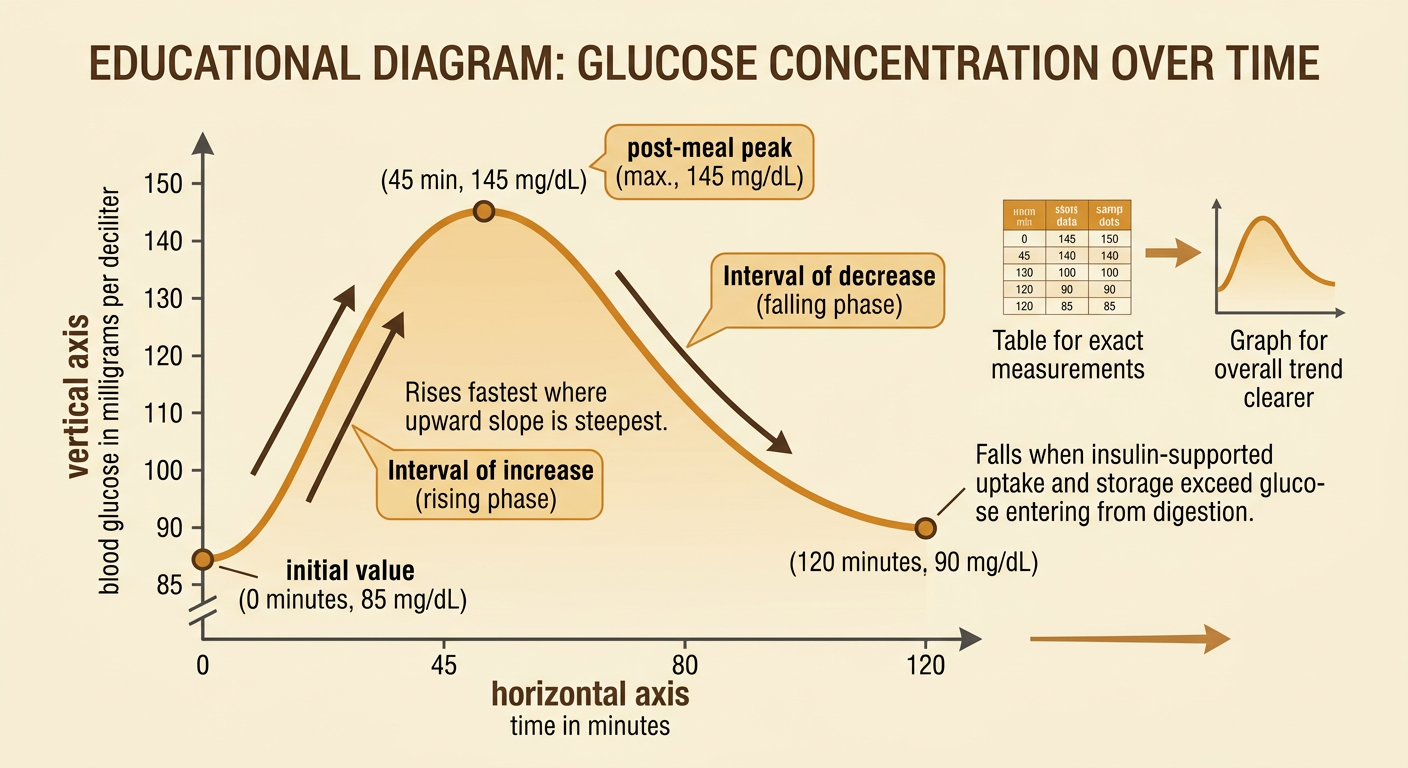
A glucose graph shows how blood glucose changes over time and helps students identify key features in context. Time belongs on the horizontal axis, and glucose concentration belongs on the vertical axis, commonly measured in milligrams per deciliter. Consider a graph that begins at 85, reaches a maximum of 145 at 45 minutes, and returns to 90 at 120 minutes. The maximum represents the post-meal peak, not the participant’s typical level. The graph increases most rapidly where its upward slope is steepest and decreases as insulin-supported uptake and storage exceed the entry of glucose from digestion. Students should compare the graph with a table to verify exact values because a graph may show the overall trend more clearly than precise measurements. They should also note intercepts, intervals of increase or decrease, and how close the final value is to the initial value.
When Regulation Breaks Down
Diabetes mellitus occurs when blood-glucose regulation is impaired. In type 1 diabetes, an autoimmune process destroys pancreatic beta cells, greatly reducing insulin production. In type 2 diabetes, body cells become less responsive to insulin, and the pancreas may eventually be unable to produce enough insulin to meet the body’s needs. In either case, glucose can remain elevated instead of returning efficiently toward the regulated range. Long-term high glucose can damage blood vessels, nerves, kidneys, and eyes. Treatment may include insulin, other medications, nutrition planning, physical activity, and glucose monitoring. Regulation can also overshoot: for example, a person who takes insulin and then skips a meal may experience dangerously low blood glucose. Symptoms and measurements require appropriate medical evaluation because patterns vary among individuals. These examples show how disruption of one feedback component can affect the entire system.

Connecting Biology to Health Policy
Public policies can change the conditions that influence diabetes prevention and management. A city might tax sugar-sweetened beverages to reduce consumption and fund nutrition programs. Its intended outcomes could include lower added-sugar intake and improved public health. Possible unintended outcomes include a greater financial burden on low-income consumers, purchases outside the taxed area, or replacement with other high-calorie products. Other policies may expand access to insulin, glucose monitors, preventive screening, safe recreation spaces, or nutritious school meals. Students can evaluate a policy by comparing scientific evidence, costs, access, individual choice, and effects on different communities. For example, insurance coverage for continuous glucose monitors may improve disease management, but eligibility rules could leave some patients without access. A strong policy evaluation identifies stakeholders, uses reliable data, distinguishes correlation from causation, and considers whether benefits and burdens are distributed fairly.
