
Balancing Community Land Use and Wildlife Needs
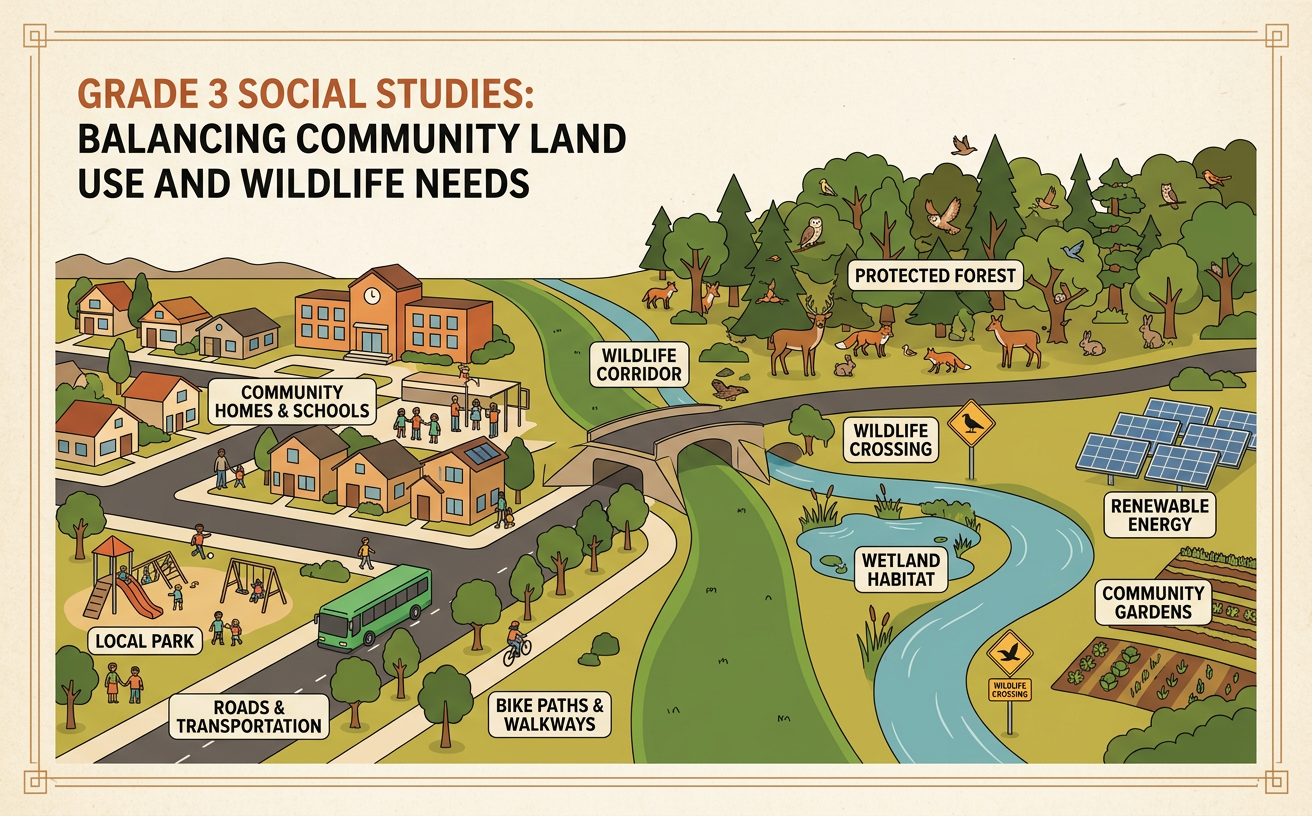
Students examine how communities can use land for homes, roads, and parks while also protecting local plants and animals.
Illustrations are auto-generated and may be placeholders. They can be refreshed to match the narration.
Land Uses in a Community
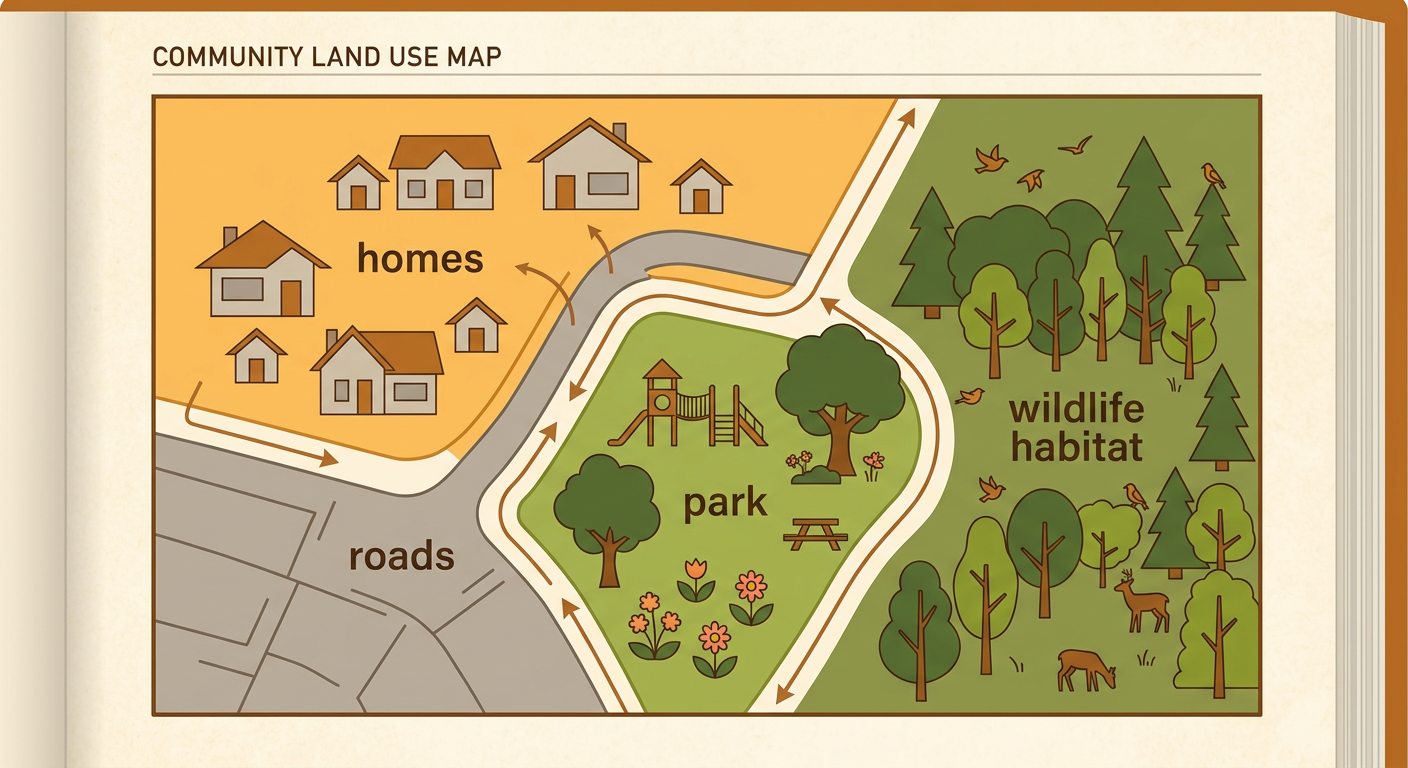
Land use means the way people choose to use an area of land. Communities need land for homes, roads, stores, schools, farms, and parks. Some land also remains as forests, wetlands, grasslands, or other wildlife habitats. A single place can sometimes serve several purposes. For example, a neighborhood park may include a playground for families, trees that cool the air, and flowers that provide food for butterflies. Culture influences land-use choices because groups of people have different traditions, needs, and values. One community might protect land for fishing, while another might create a garden for growing traditional foods. As you read about land use, ask questions such as, “Who uses this place?” and “How does this choice affect plants and animals?” These questions help explain why communities make different decisions.
How Development Changes Habitats
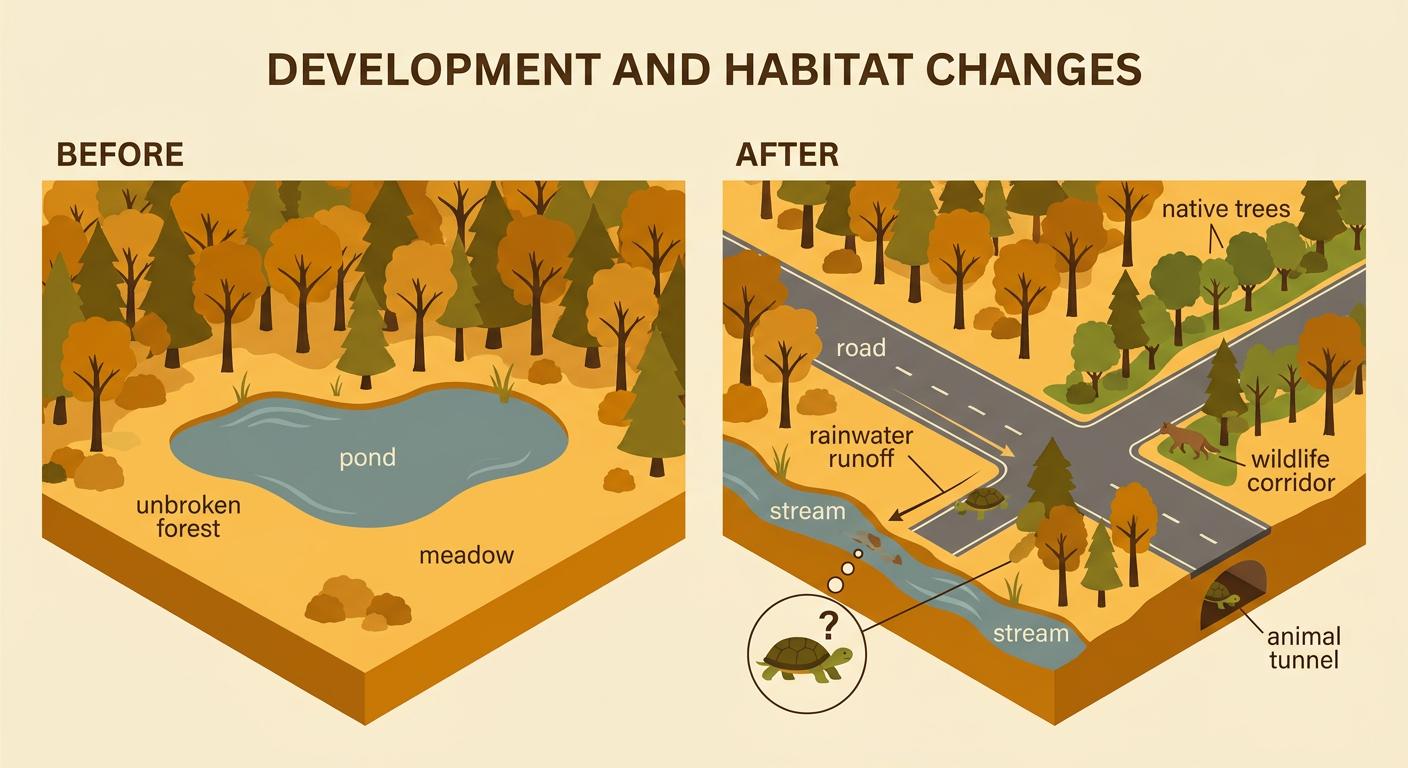
A habitat provides an animal or plant with food, water, shelter, and space. Development happens when people build homes, roads, stores, or other structures. It can remove plants, divide one habitat into smaller pieces, and change how water flows. For example, a new road through a forest may make it harder for turtles to reach a pond safely. Rainwater may also rush off pavement instead of soaking into the soil. Development does not always destroy all habitat. Communities can keep groups of native trees, protect streams, and connect green spaces with wildlife corridors. They can also build safe tunnels beneath roads for small animals. Ask, “What changed?” and “Which living things were affected?” The answers provide evidence about the environmental change and can guide people toward a better solution.
Reading a Community Land-Use Graph
A scaled bar graph can show how much land a community uses for different purposes. Suppose each square on a graph represents 2 acres. The homes bar reaches 12 acres, the roads bar reaches 6 acres, the parks bar reaches 8 acres, and the community gardens bar reaches 4 acres. To read the graph, use the scale instead of simply counting squares as single acres. The parks bar has four squares, so 4 times 2 equals 8 acres. We can ask and answer questions using the data. Which category uses the most land? Homes do. How many more acres are used for parks than gardens? Eight minus four equals 4 acres. The graph helps people compare choices, but it does not show every detail, such as whether a park contains native plants or safe wildlife shelter.

Comparing Possible Solutions
Communities often compare several solutions before changing land. Imagine that people want to build homes near a wetland where frogs, birds, and insects live. One solution is to fill the wetland and build on the entire site. This provides the most building space but removes important habitat. A second solution is to build fewer homes and leave a wide protected area around the wetland. A third solution is to build homes close together on one side while protecting the wetland and planting native vegetation. People can compare each solution by asking how it meets housing needs, how much it costs, and how it affects wildlife. They should also listen to residents whose culture or traditions are connected to the wetland. A strong claim identifies the solution with the greatest benefits and supports it with facts rather than personal preference alone.

Making an Evidence-Based Recommendation
An evidence-based recommendation states what a community should do and explains why using facts. Begin with a clear claim. For example: “The community should cluster new homes near the existing road and protect the wetland.” Next, provide evidence. A land-use graph may show that the community already has 8 acres of parks but only 4 acres of gardens. A habitat map may show that the wetland is the only local breeding area for frogs. Informational text may explain that wetlands absorb rainwater and provide food and shelter. Then connect the evidence to the claim: keeping homes near the road uses less new pavement, while protecting the wetland supports wildlife and reduces flooding. A complete recommendation can also recognize community culture, such as traditions of bird-watching or gathering near the water. End by explaining why the benefits outweigh the drawbacks.
