Be a Responsible Technology User
Students identify common classroom technology problems and create a simple reminder card showing one rule for using and sharing devices safely and responsibly.

Illustrations are auto-generated and may be placeholders. They can be refreshed to match the narration.
What Can Go Wrong?
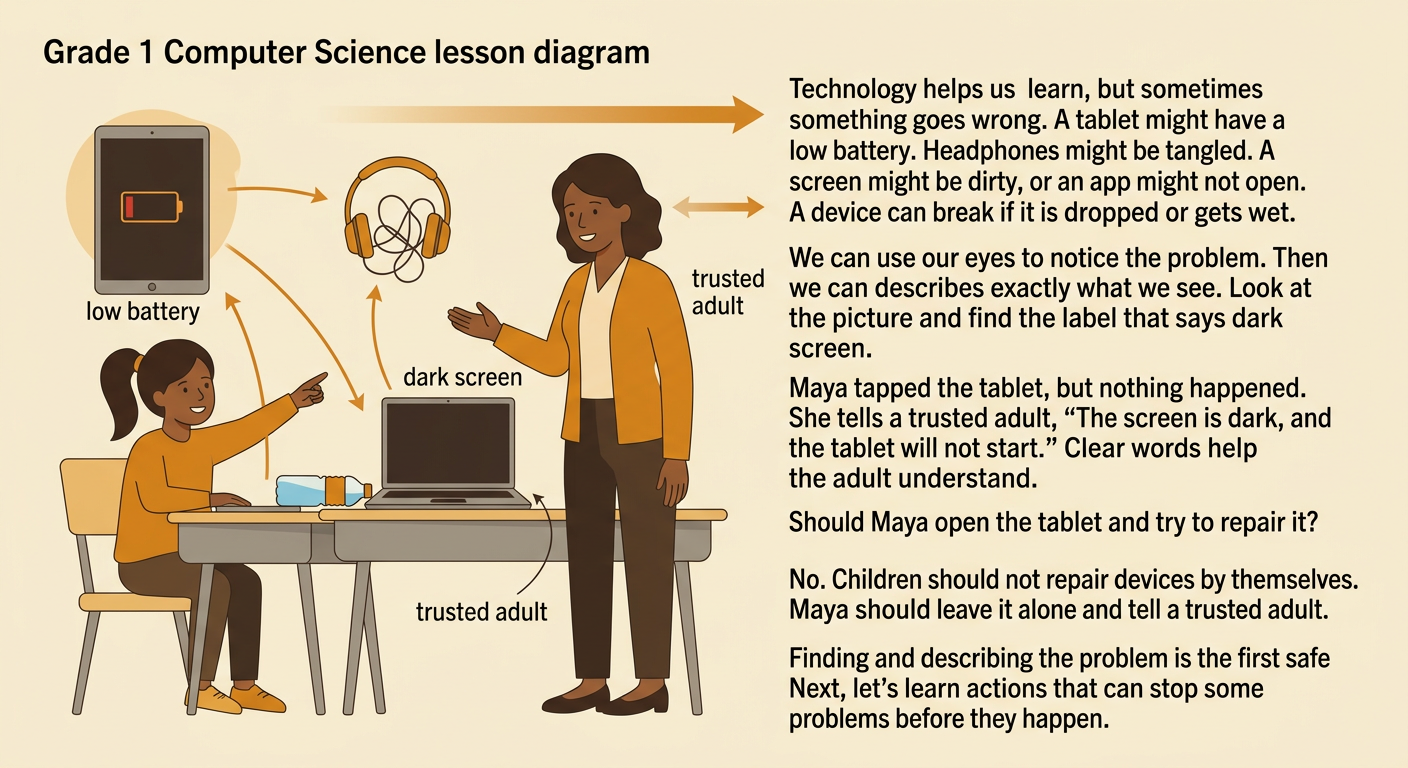
Technology helps us learn, but sometimes problems happen. A tablet may have a low battery. Headphones may be tangled. A screen may be dirty, or an app may not open. A device can also be damaged if it is dropped, carried with one hand, or placed near water. We can look carefully, make observations, and describe the problem. We should not try to repair a device by ourselves. We can tell a teacher or another trusted adult what we notice. For example, Maya sees that a tablet screen stays dark after she taps it. She says, “The screen is dark, and the tablet will not start.” Her clear words help the teacher understand the problem. Finding and describing problems is the first step toward solving them safely.
Safe and Careful Device Use
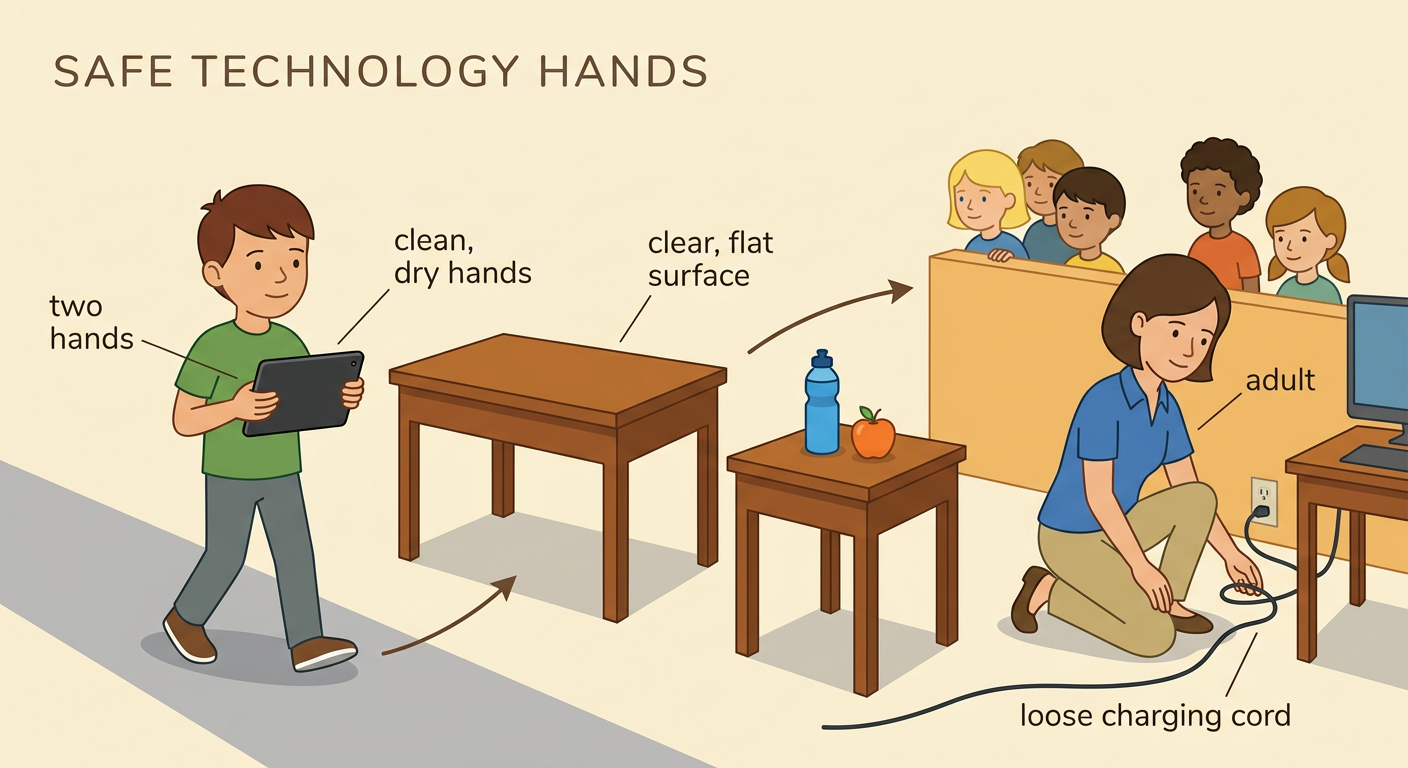
We can protect classroom devices by using safe, careful actions. Start with clean, dry hands. Carry a tablet or laptop with two hands, and walk slowly. Keep food and drinks away from technology. Set the device on a clear, flat surface. Tap keys and screens gently. Use only the app, website, or tool your teacher has approved. Never pull cords, change plugs, or use a cracked device. Tell an adult if something looks unsafe. For example, Ben notices a loose charging cord beside a computer. He does not touch it. He steps back and tells his teacher. Careful choices protect Ben, his classmates, and the computer. Everyone in the classroom community has an important job: students follow safety rules, and adults help with equipment and repairs.
Fair Turns and Kind Choices
Classroom technology belongs to our learning community, so everyone should have a fair chance to use it. We can make a turn-taking plan before we begin. Partners might use a timer, switch after one activity, or choose different jobs. One student can control the device while the other reads directions or records ideas. Then they can trade roles. We use kind words, listen, and keep another person’s work private. We do not erase, change, or share someone’s work without permission. For example, Ana and Leo have one tablet. Ana uses it for five minutes while Leo checks their picture list. When the timer rings, they switch. If they disagree, they pause and say what they need. Fair turns and respectful choices help every class member learn and contribute.

Design a Technology Reminder Card
A reminder card is a small tool that helps people remember one important rule. First, choose a classroom technology problem. You might notice that tablets are sometimes carried with one hand or that students forget to take turns. Ask questions such as, “What keeps the device safe?” or “What would help everyone remember?” Next, choose one rule that solves the problem. Write a short sentence and draw a clear picture. For example, write, “Carry the tablet with two hands.” Draw a student holding both sides of a tablet. Add arrows pointing to the hands. Use large letters, simple shapes, and only a few colors so the message is easy to understand. Check that your picture and words match. Then ask a partner whether the card makes the rule clear.

Share Our Responsible-Use Rules
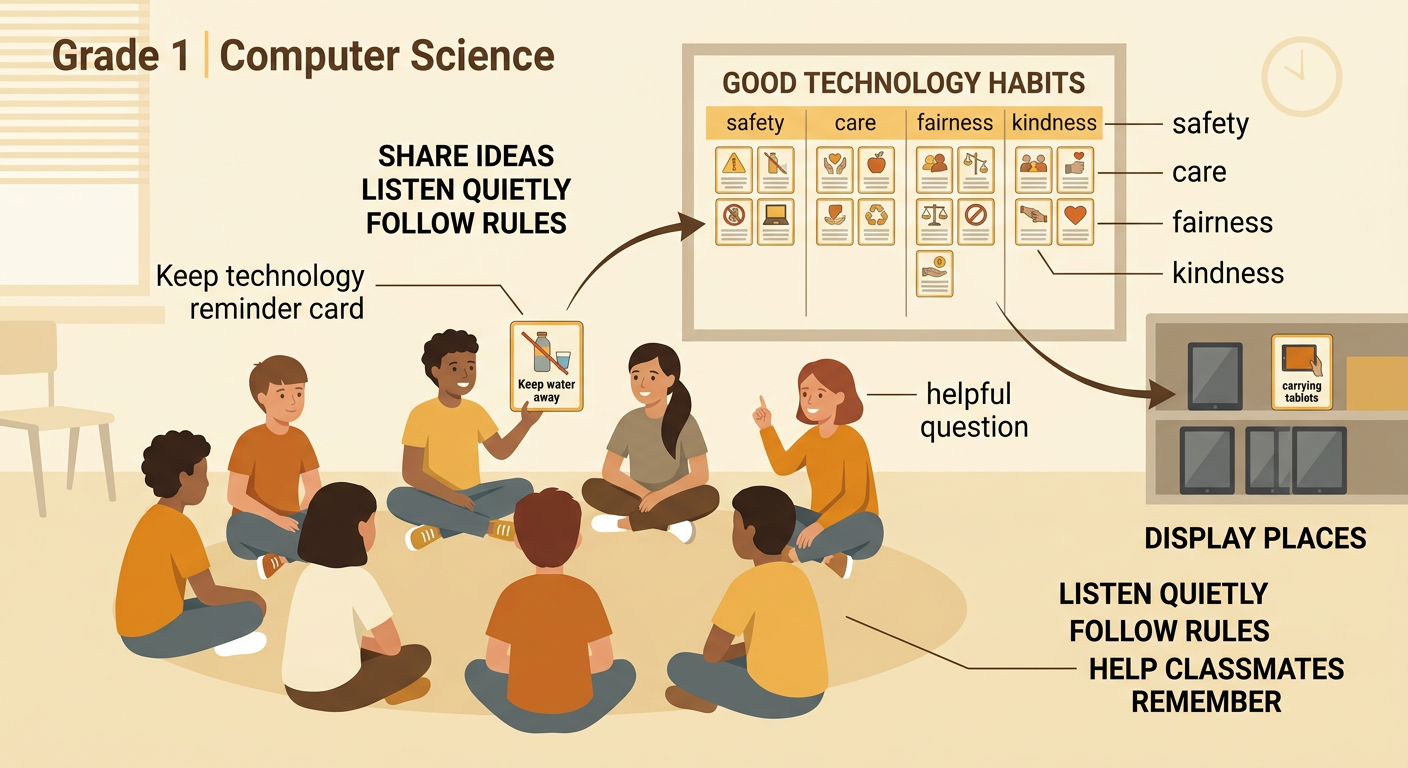
Sharing our reminder cards helps the whole class build responsible technology habits. Sit where you can see and hear each speaker. When it is your turn, hold up your card, read the rule, and explain why it helps. You might say, “My rule is ‘Keep water away.’ It protects devices from spills.” Listeners look at the speaker, listen quietly, and ask a helpful question. They may say, “Where should we put our water bottles?” The speaker can answer or ask the teacher for more information. After everyone shares, the class can group cards about safety, care, fairness, and kindness. Together, choose useful places to display them, such as near the tablet shelf or computer table. Every student plays an important role by sharing ideas, listening, following rules, and helping classmates remember them.