Body Systems Working Together During Exercise
Students analyze pulse and breathing-rate data to model how the respiratory and circulatory systems interact to meet cells’ increased needs during exercise.

Illustrations are auto-generated and may be placeholders. They can be refreshed to match the narration.
Observe Changes During Exercise
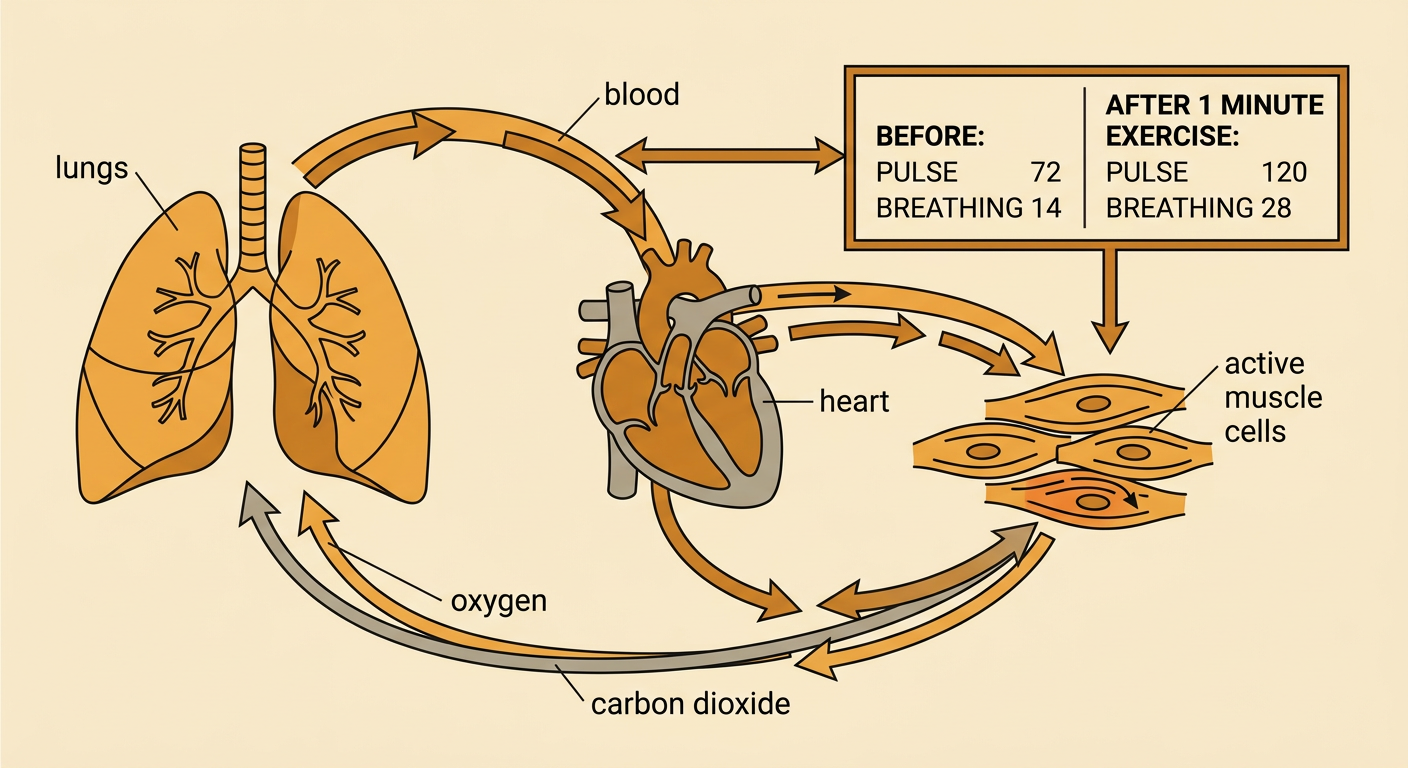
Before exercise, sit quietly for two minutes. Count your pulse for 30 seconds and multiply by 2 to find beats per minute. Count breaths for one full minute. Then perform one minute of safe activity, such as walking quickly in place, and measure again. For example, a student’s pulse might rise from 72 to 120 beats per minute while breathing rate rises from 14 to 28 breaths per minute. The student may also feel warmer and breathe more deeply. These changes occur because active muscle cells need more oxygen and release more carbon dioxide and heat. Use the same activity time and measurement method for each trial so comparisons are fair. Stop immediately and tell an adult if you feel pain, dizziness, or unusual shortness of breath.

Review Cells, Tissues, Organs, and Systems
The body is organized in levels that work together. A cell is the smallest living unit. Similar cells form tissues, different tissues combine to form organs, and organs cooperate in organ systems. For example, one cardiac muscle cell is part of cardiac muscle tissue. That tissue helps form the heart, an organ in the circulatory system. The heart cannot meet the body’s needs by itself. It works with blood and blood vessels to transport materials, and it depends on the respiratory system to add oxygen to the blood and remove carbon dioxide. During exercise, groups of muscle cells use energy more rapidly. Their increased activity affects tissues, organs, and systems throughout the body. This organization supports the claim that the body is a system of interacting subsystems made of groups of cells.

Connect the Respiratory and Circulatory Systems
The respiratory and circulatory systems interact to deliver oxygen and remove carbon dioxide. When you inhale, air travels through the airways to tiny lung sacs called alveoli. Oxygen moves from the alveoli into nearby capillaries, while carbon dioxide moves from the blood into the alveoli to be exhaled. The heart then pumps oxygen-rich blood through arteries toward body tissues. At active leg muscles, oxygen moves from the blood into cells. Carbon dioxide produced by the cells enters the blood and returns through veins to the heart and lungs. During running, faster breathing brings air into and out of the lungs more quickly, while a faster pulse moves blood more quickly. Neither system could meet the cells’ increased needs as effectively without the other.

Graph Pulse and Breathing-Rate Data
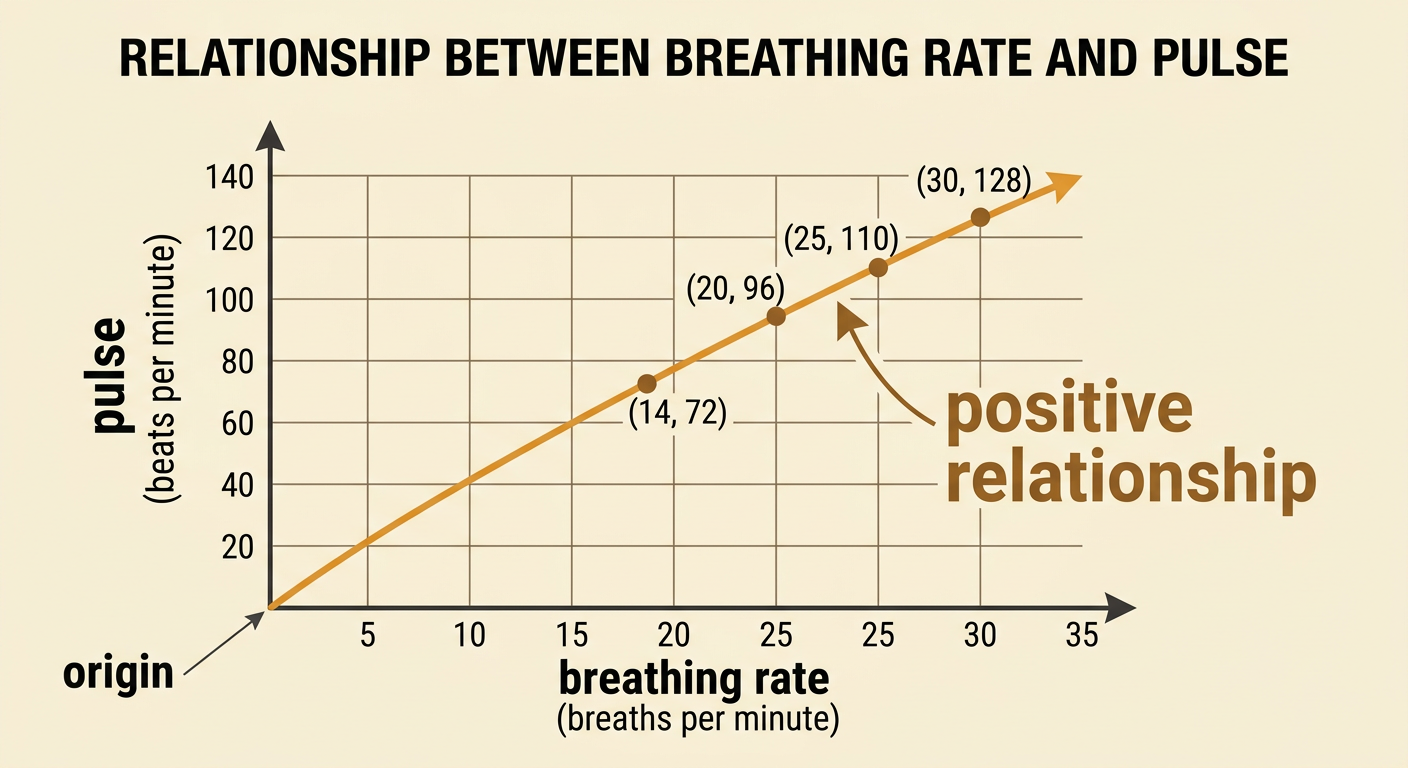
A graph helps show how pulse and breathing rate change together. Place breathing rate in breaths per minute on the horizontal axis and pulse in beats per minute on the vertical axis. Suppose a student records the ordered pairs (14, 72), (20, 96), (25, 110), and (30, 128) from rest through increasing activity. Plot each pair and look for a pattern. Both quantities increase, so the graph shows a positive relationship. To test whether it is proportional, divide pulse by breathing rate for each pair. The ratios are not all equal, and a line through the data would not pass through the origin. Therefore, these example quantities are related but not strictly proportional. Real biological data vary because exercise intensity, fitness, recovery time, and measurement error affect each rate.
Build an Evidence-Based Interaction Model
A scientific model should explain observations with evidence and show how parts interact. Begin with the evidence: after one minute of exercise, a student’s pulse increased from 72 to 120 beats per minute and breathing rate increased from 14 to 28 breaths per minute. In the model, show active muscle cells using more oxygen and producing more carbon dioxide. Draw arrows from the lungs to the blood for oxygen, from the heart toward muscles for oxygen-rich blood, and from muscles back toward the lungs for carbon dioxide. Use thicker or more frequent arrows to represent increased movement during exercise. Then write a claim: the respiratory and circulatory systems interact to meet the changing needs of cells. The measured increases support this claim because both subsystems respond at the same time as muscle activity increases.
Consider a School Wellness Policy
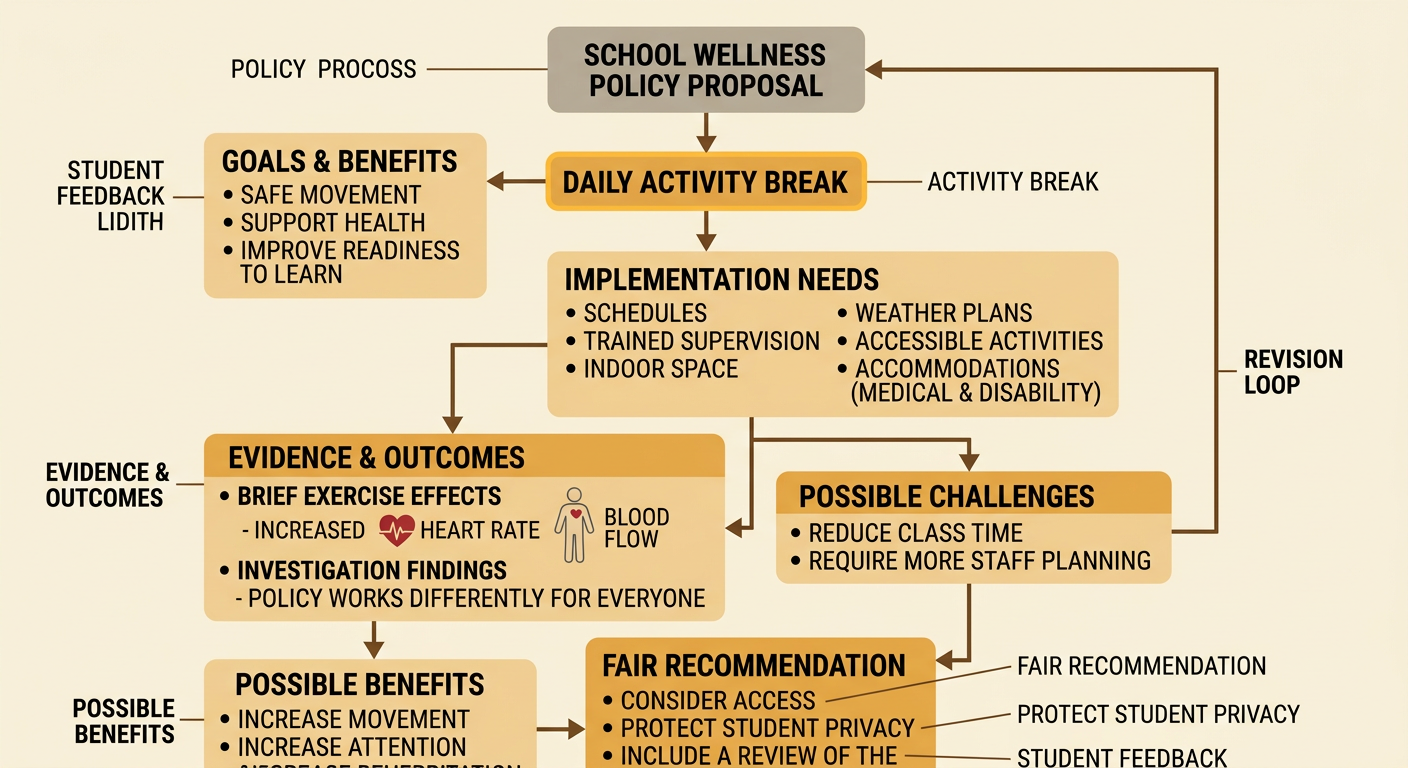
A school wellness policy might provide a daily activity break or require regular physical education. Its purpose could be to increase opportunities for safe movement, support health, and improve readiness to learn. Implementation requires decisions about schedules, accessible activities, trained supervision, indoor space, weather plans, and accommodations for students with disabilities or medical needs. Evidence from pulse and breathing-rate investigations can show that even brief exercise causes body systems to respond, but it does not prove that one policy will work equally well for everyone. Students can compare possible consequences. A daily activity break may increase movement and attention, but it may reduce class time or require additional staff planning. A fair recommendation should use scientific data, consider different viewpoints, protect student privacy, and explain how the policy’s results will be measured and reviewed.