
Build a Sun Shade
Students design, build, and test a simple structure that keeps a small area cooler by blocking sunlight.

Illustrations are auto-generated and may be placeholders. They can be refreshed to match the narration.
Notice Sunny and Shady Areas
Go outside with a partner and look for sunny and shady areas. Sunlight reaches a sunny place directly. A shady place is blocked from the sunlight by an object, such as a tree, roof, or umbrella. Without touching anything dangerously hot, hold one hand above a sunny patch of ground and then above a shady patch. Which area feels warmer? Use words such as warm, cool, bright, and dark to share what you notice. For example, the slide may feel warm in the sun while the ground under a tree feels cooler. Draw a simple map of the schoolyard. Add the building, playground, sunny areas, and shady areas. Your map represents a familiar place and helps show where a sun shade might be useful.

Explore Shade-Making Materials
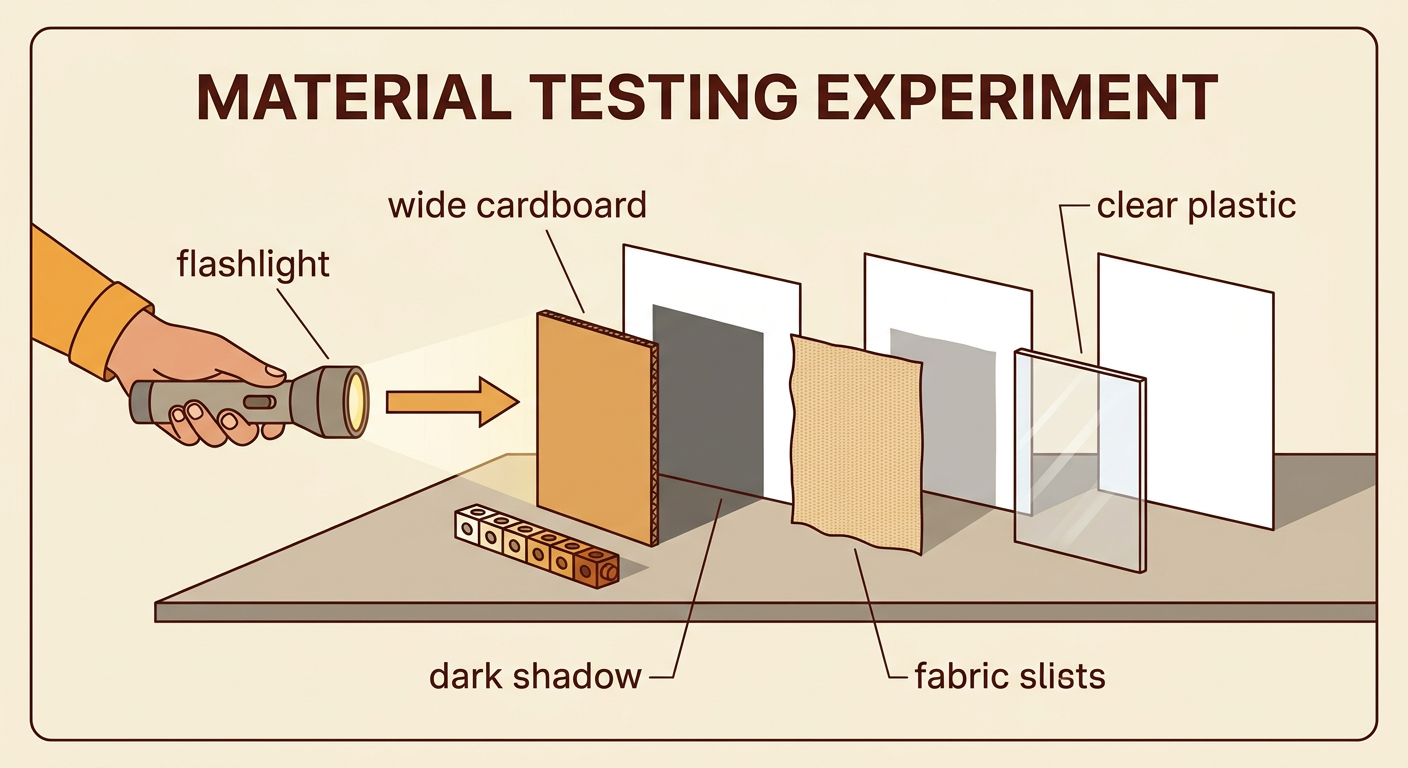
Explore materials that could block sunlight, such as cardboard, fabric, paper, craft sticks, foil, and clear plastic. Hold one material between a flashlight and a table. The flashlight models sunlight. Look at the area behind the material. Does it make a dark shadow, a light shadow, or almost no shadow? A material that blocks more light may make better shade. Also notice each material’s measurable attributes. Compare length, width, thickness, and weight using simple words such as longer, shorter, wider, thinner, heavier, and lighter. For example, a wide piece of cardboard may cover more space than a narrow craft stick. Record your observations with pictures or marks. Choose materials that block light and are strong enough to stay up when used in a structure.
Plan the Structure
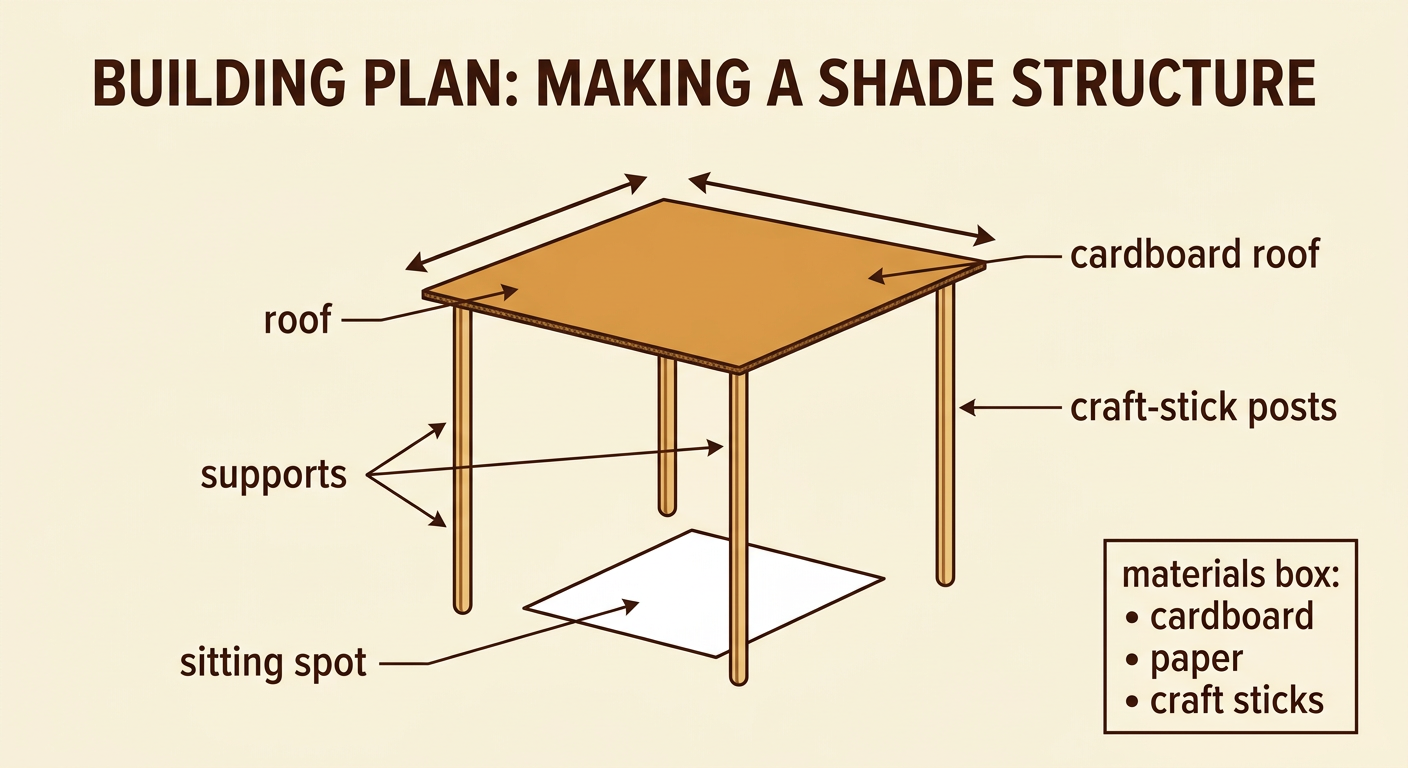
Before building, make a plan with your team. Decide what small area your shade will cover, such as a paper square that represents a playground sitting spot. Draw the structure from the side or from above. Show the roof that will block sunlight and the supports that will hold it up. Label the materials you plan to use. Measure or compare the planned parts. You might say, “The roof is wider than the sitting spot,” or “These two posts are the same length.” For example, your plan could show a cardboard roof resting on four equal craft-stick posts. Listen as each teammate shares an idea. Ask questions, take turns, and agree on a plan. A clear drawing helps everyone know what to build and where each part belongs.
Build a Sun Shade
Use your plan to build the sun shade. Work together and take turns with the materials. One teammate can hold the supports while another attaches the roof with tape or reusable putty. Make sure the roof covers the small test area and the supports keep the roof above it. Place the model under a lamp or in sunlight with an adult’s help. Never look directly at the sun, and do not touch a hot lamp. Check the shadow. If light reaches the test area, change the roof’s size, angle, or position. If the structure falls, make the base wider or add stronger supports. For example, two craft sticks taped into triangle shapes can help steady a cardboard roof. Building includes trying, noticing a problem, and improving the design.

Test, Compare, and Share
Test whether your structure reduces warming from sunlight. Place two matching paper squares or shallow trays side by side. Put one under the sun shade and leave the other in the light. Keep both in the same place for the same amount of time. With adult help, use thermometers to compare their temperatures, or carefully feel near each area without touching hot surfaces. Describe what you observe using words and measurements. For example, the shaded area might be cooler than the sunny area after five minutes. Record the results with a drawing, numbers, or comparison words. Then share with the class. Explain which materials blocked light, how your model changed, and what you would improve. Listen to other teams and ask a question. Shade blocks sunlight and can reduce how quickly an area warms.
