Build, Test, and Improve a Paper Bridge
Students design paper bridges, test how well they solve the same problem, and use evidence to choose and improve a design.
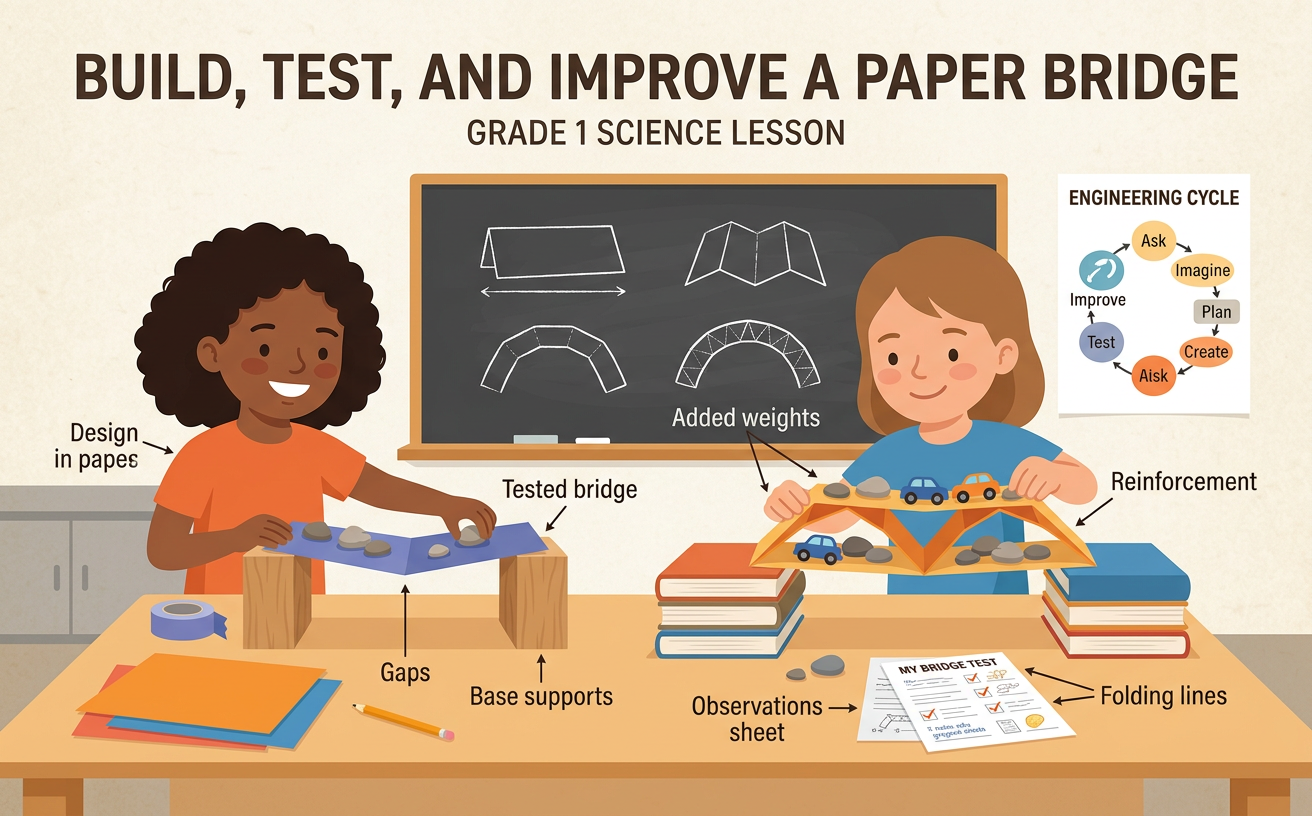
Illustrations are auto-generated and may be placeholders. They can be refreshed to match the narration.
Meet the Bridge Challenge
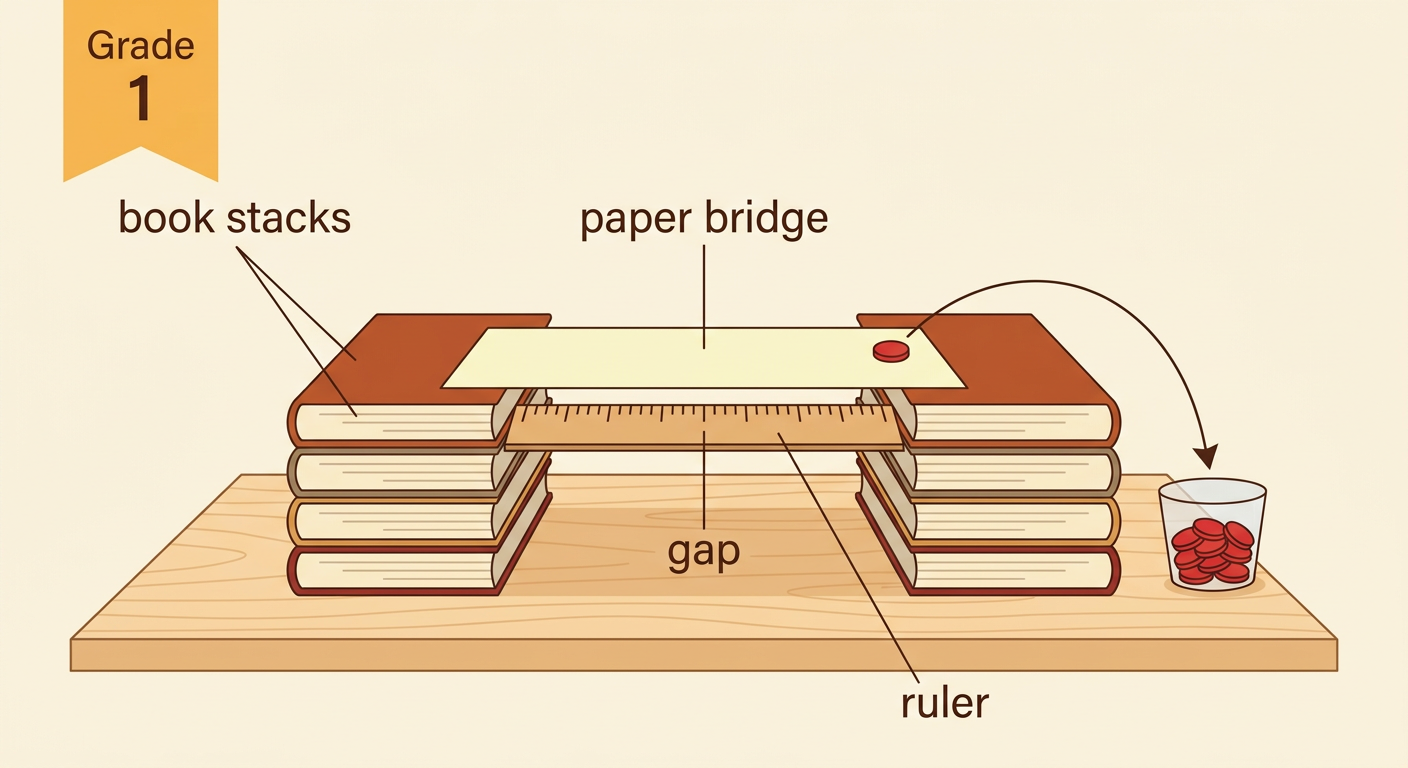
A bridge helps people or things cross a space. Your challenge is to make a paper bridge across the gap between two equal stacks of books. The bridge must use one sheet of paper and hold small counters without falling. Everyone will solve the same problem with the same materials. The book stacks must be the same distance apart for every test. For example, your class might make each gap 6 inches wide. Look at a ruler to check the gap. Ask questions, listen to your group, and take turns speaking. What shape might make paper stronger? Your goal is not to make a perfect bridge right away. Your goal is to build, test, learn, and improve.
Plan a Paper Bridge
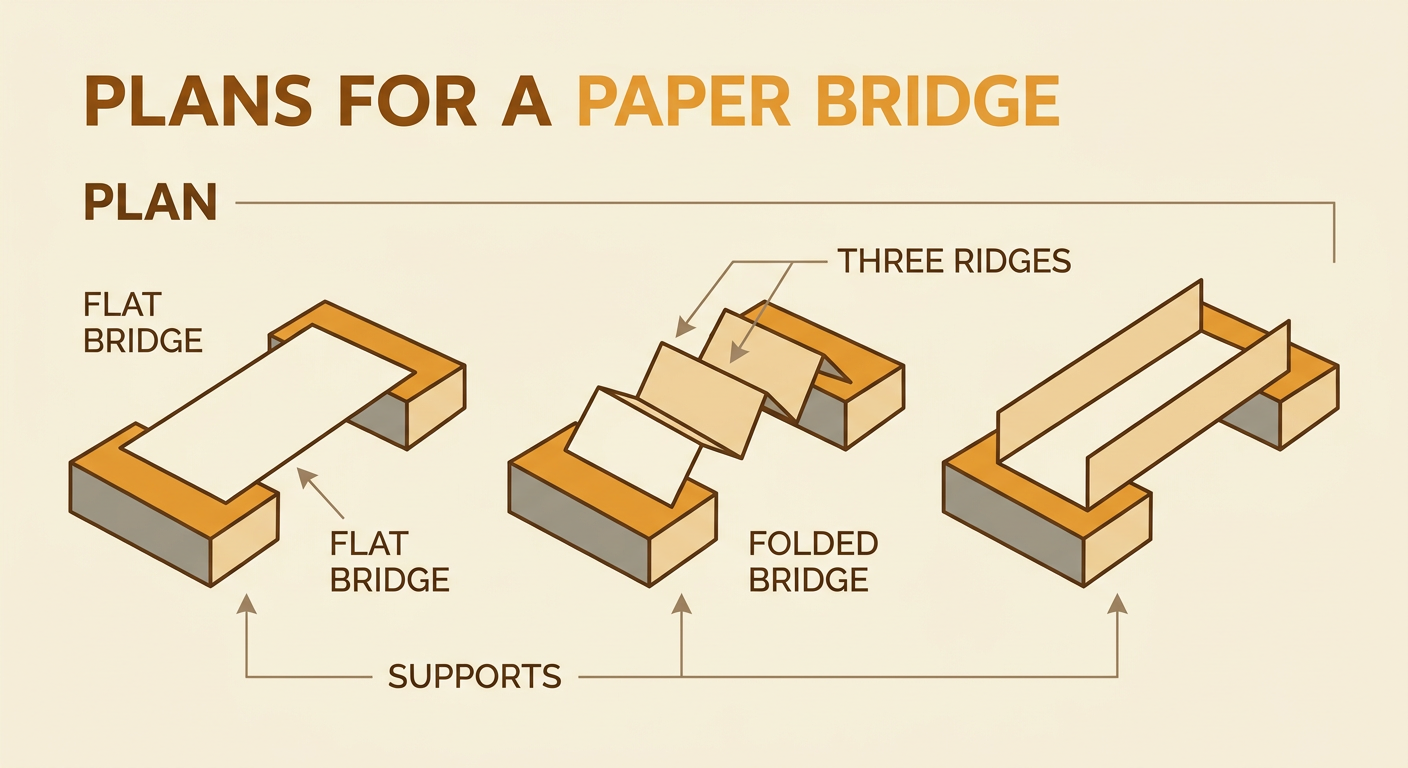
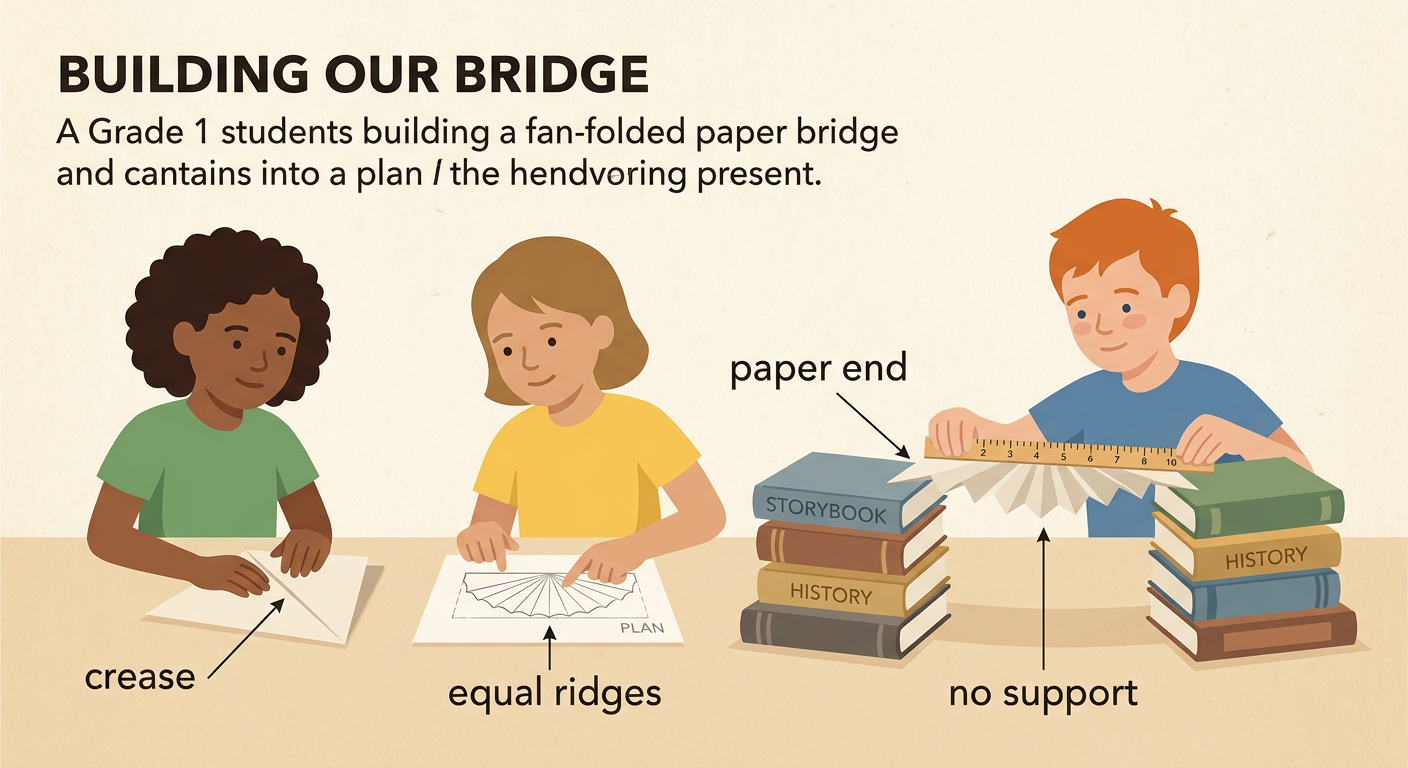
Before you build, make a plan with your group. Study the paper and think about different shapes. A flat sheet is one design. You could also fold the paper like a fan or bend up two long edges. Draw your idea and show where the paper will rest on the books. Compare measurable features. Is one plan longer, wider, or taller than another? For example, Mia plans a flat bridge, but Jay plans a folded bridge with three ridges. Their group listens to both ideas. Then they use a fair procedure, such as taking a vote, to choose one design to build first. Explain why you think the chosen shape might hold counters. A plan helps everyone understand what to do.
Build the Design
Now turn the plan into a real paper bridge. Place the book stacks at the measured distance. Fold or shape the paper as shown in your drawing. Make careful folds by matching the edges and pressing along each crease. Set one end of the paper on each stack. The middle must cross the gap without another support under it. For example, if your plan has three ridges, make each ridge about the same size so the bridge stays balanced. Group members can share jobs. One student may fold, one may check the plan, and one may measure the gap. Speak kindly if something does not match the drawing. You may adjust the bridge before testing, but keep the materials and challenge rules the same.
Test with Equal Loads
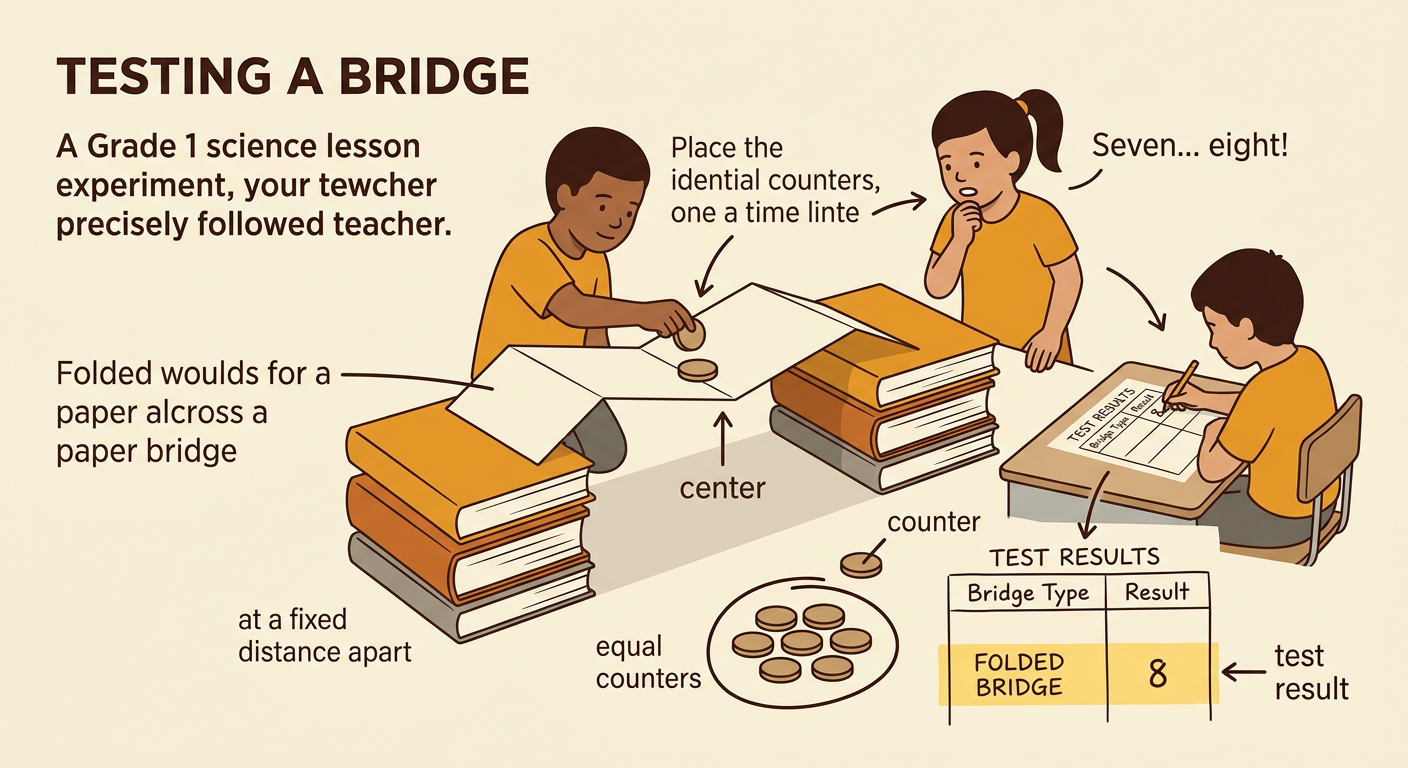
Test every bridge in the same way so the results are fair. Put one counter in the center of the bridge. Then add counters one at a time in the same place. Count aloud after each counter. Stop when the bridge bends into the table, slips off the books, or falls. Record the greatest number it held before it failed. For example, a flat bridge might hold 2 counters, while a folded bridge might hold 8. Use counters that are all the same kind and size. Keep the book stacks the same distance apart. One student can place counters, one can count, and one can record the result. Keep hands away during the test so no one is secretly helping the bridge.
Compare Strengths and Weaknesses
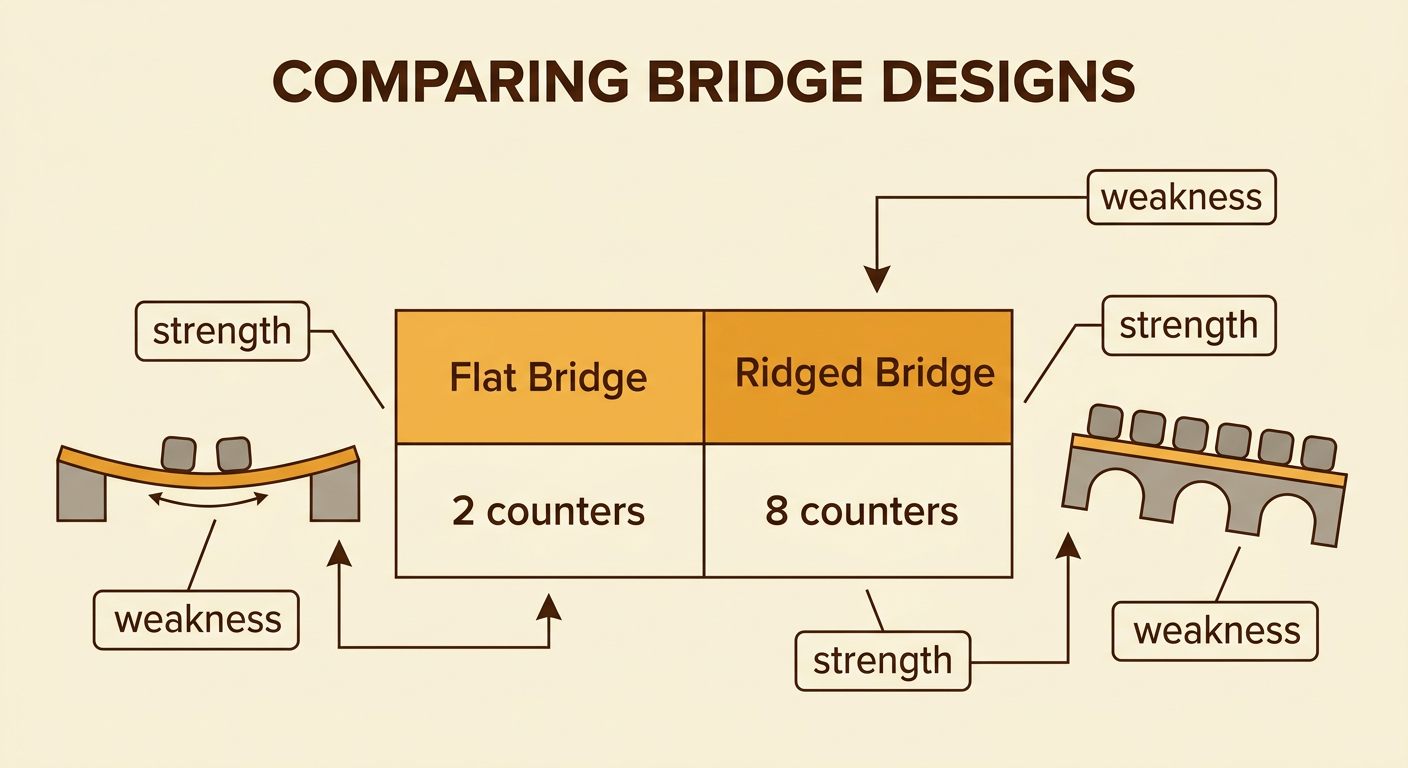
Look at the test data from two or more bridges. A strength is something a design does well. A weakness is something that could work better. Compare how many counters each bridge held. You can also compare features such as height, width, number of folds, and length across the gap. For example, the flat bridge held 2 counters and was quick to build, but its middle bent easily. The bridge with three ridges held 8 counters, but one uneven fold made it tilt. The data show that the ridged bridge held 6 more counters. Take turns sharing what you notice. Use evidence by naming a test result, not only saying which bridge you like. Listen carefully and ask questions about your classmates’ ideas.
Choose an Improvement
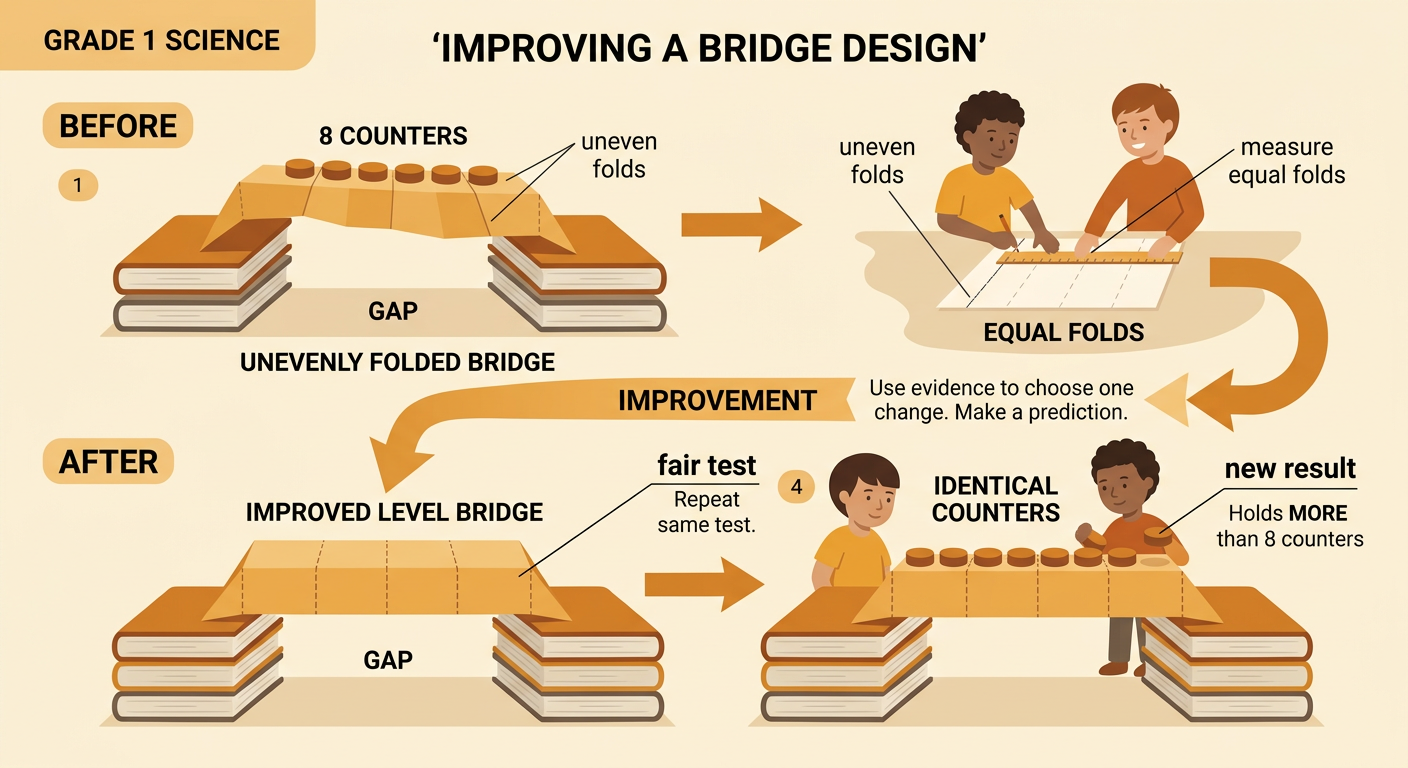
An improvement is a change that may help a design work better. Use the test evidence to choose one change, not many changes at once. This helps you learn whether that change made a difference. Each group member can suggest an idea. Then the group may vote or agree on the idea with the best evidence. For example, if a ridged bridge tilted because its folds were uneven, the group could measure and mark equal fold widths before rebuilding. Predict what will happen: “We think equal folds will keep the bridge level and help it hold more than 8 counters.” Build the improved bridge and repeat the same fair test. Compare the new result with the first result. Even if it does not hold more, the test gives useful evidence for another improvement.