Build Two-Digit Numbers with Tens and Ones
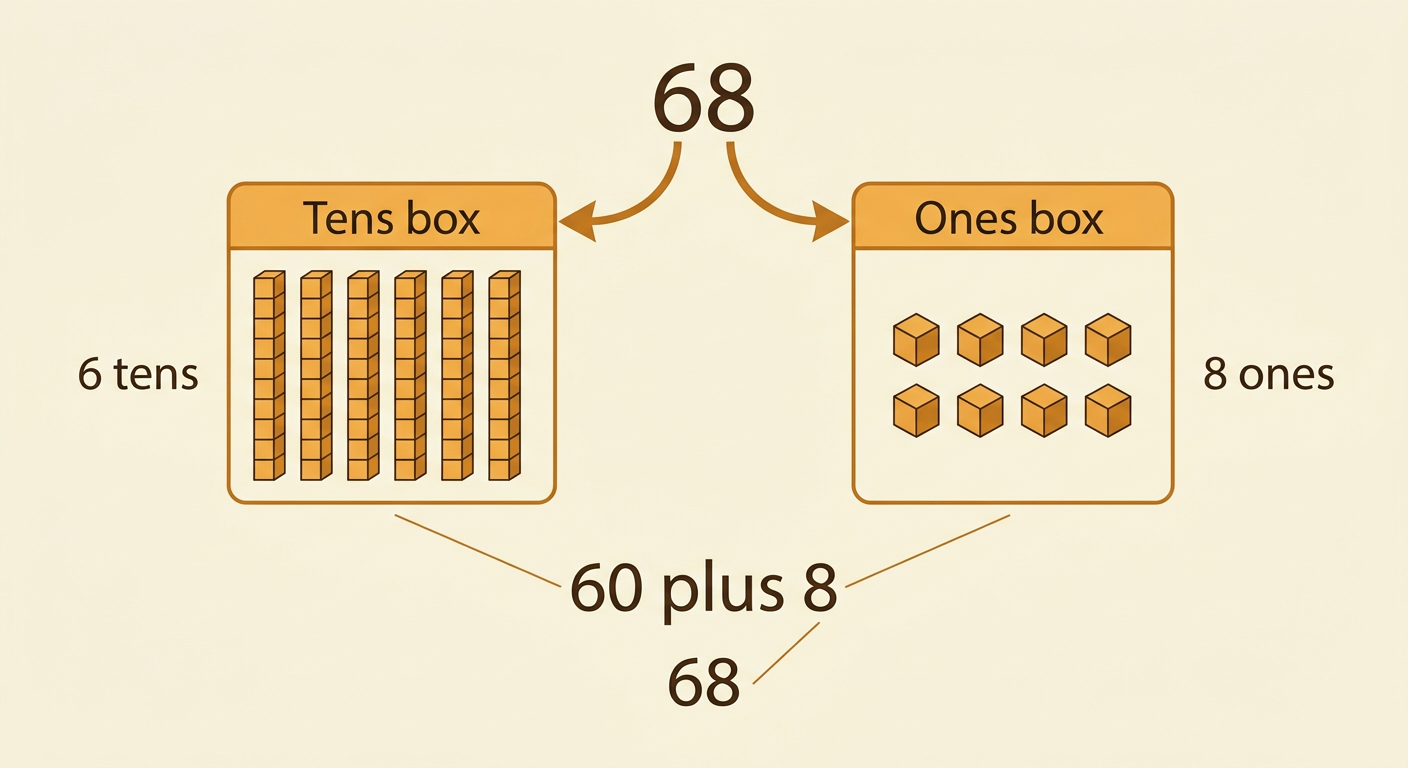
Students use base-ten blocks and drawings to represent two-digit numbers as groups of tens and leftover ones.
Illustrations are auto-generated and may be placeholders. They can be refreshed to match the narration.
Count by Tens
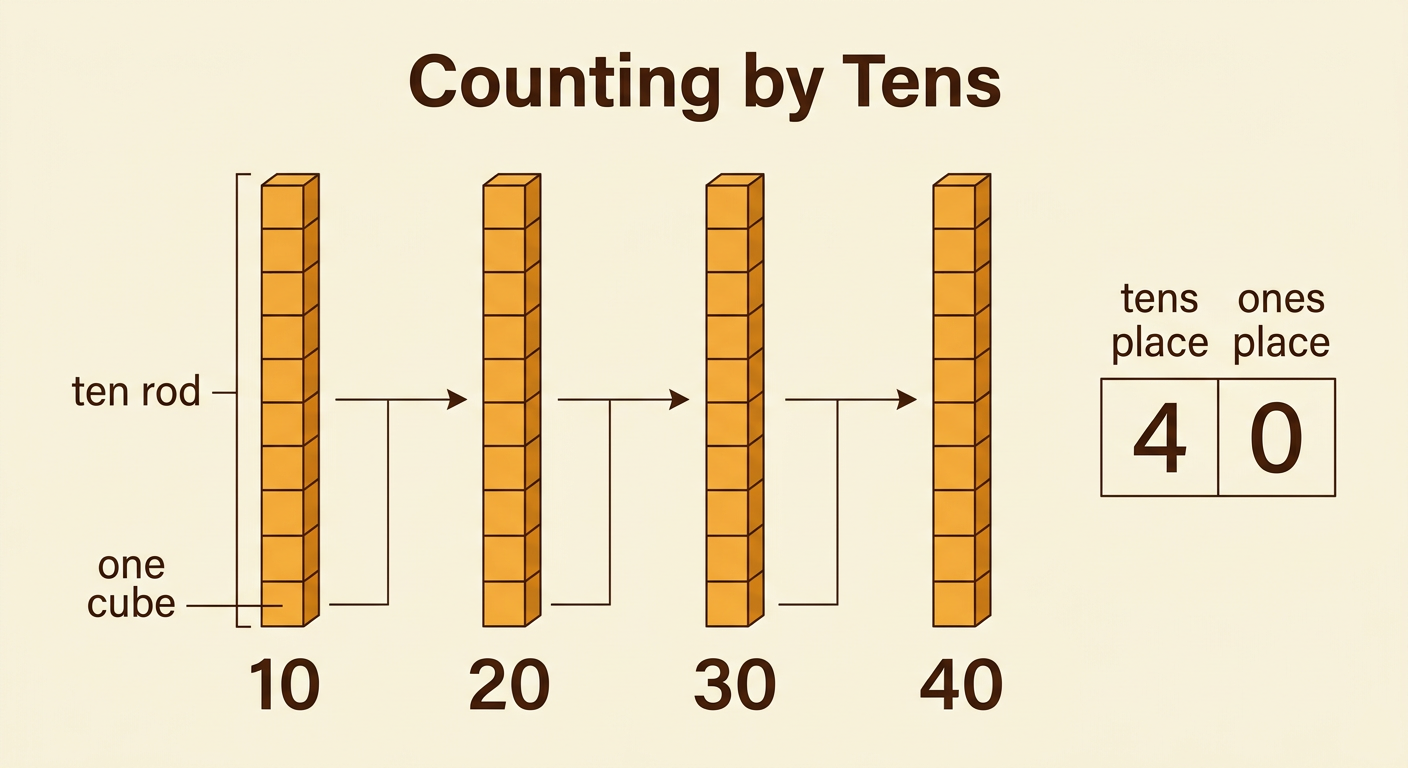
A ten is a group of 10 ones. Base-ten blocks help us see this group. One long ten rod has the same value as 10 small one cubes. When we count ten rods, we can count by tens: 10, 20, 30, 40, 50. Each new rod adds 10. For example, look at 4 ten rods. Count them by tens: 10, 20, 30, 40. The 4 rods have a value of 40. There are 4 tens and no leftover ones. The number 40 has a 4 in the tens place and a 0 in the ones place. Practice touching each rod as you say the next number by tens.
Explore Tens and Ones
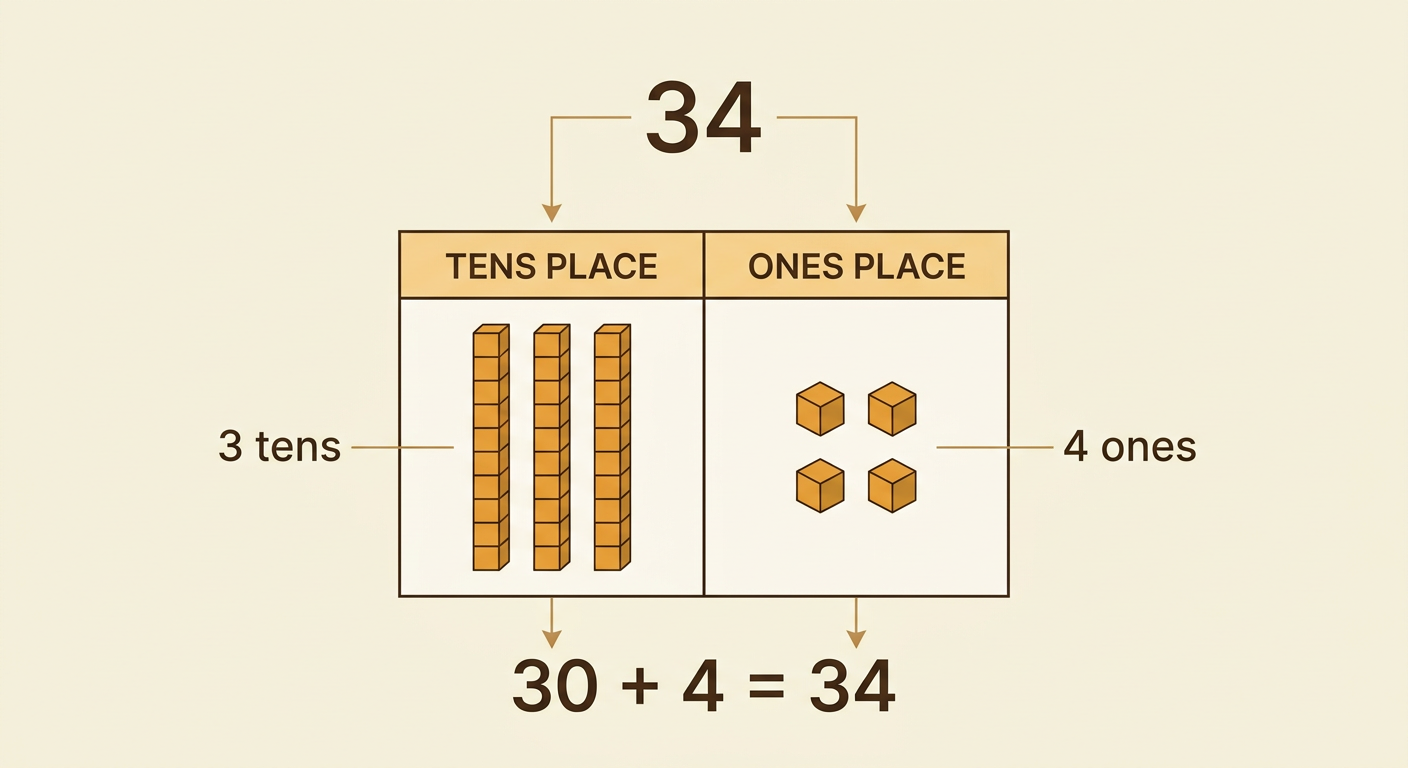
A two-digit number tells how many tens and ones it has. The first digit is in the tens place. The second digit is in the ones place. Think about the number 34. The digit 3 means 3 tens, or 30. The digit 4 means 4 ones. We can build 34 with 3 ten rods and 4 separate one cubes. Count the rods by tens: 10, 20, 30. Then count on with the cubes: 31, 32, 33, 34. The tens and ones work together to make the whole number. Say it this way: 3 tens and 4 ones make 34.
Build Two-Digit Numbers
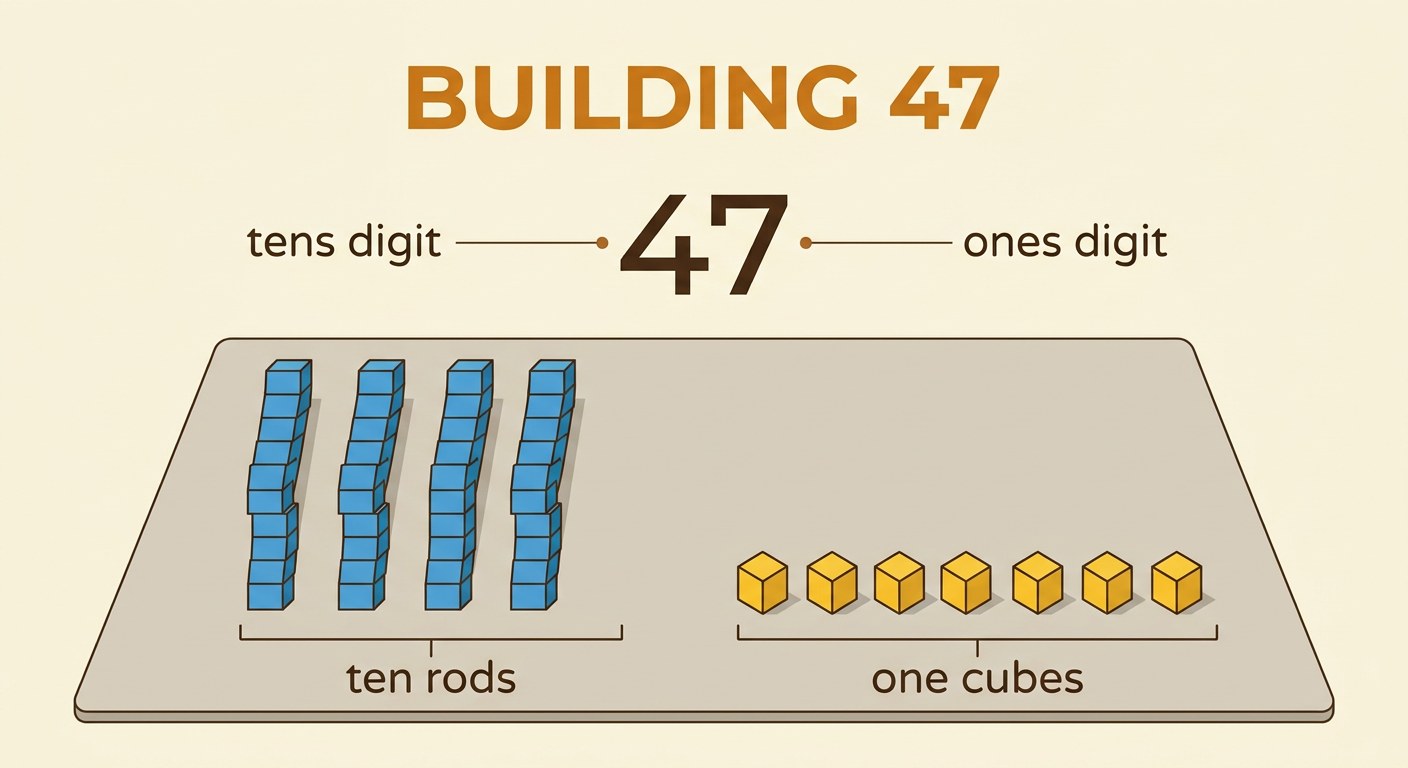
To build a two-digit number, look at each digit. The tens digit tells how many ten rods to use. The ones digit tells how many one cubes to use. Let us build 47. The digit 4 is in the tens place, so choose 4 ten rods. The digit 7 is in the ones place, so choose 7 one cubes. Count the rods first: 10, 20, 30, 40. Then count the cubes: 41, 42, 43, 44, 45, 46, 47. Check your model. It should have exactly 4 rods and 7 cubes. Together, 40 and 7 make 47.
Draw Base-Ten Models
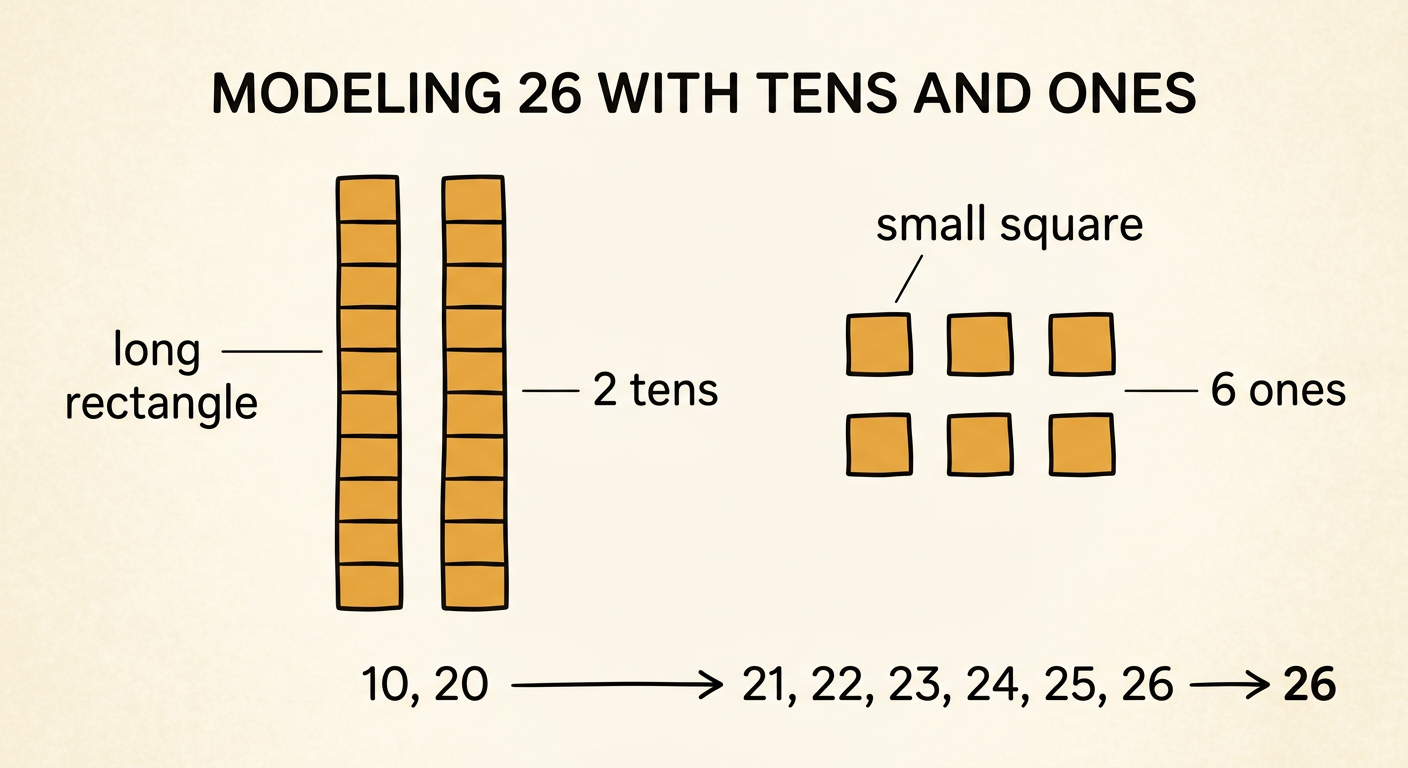
You can draw tens and ones when blocks are not available. Draw each ten as a long rectangle. Draw each one as a small square. Keep the tens together and the ones together so your picture is easy to count. To draw 26, make 2 long rectangles for 2 tens. Then make 6 small squares for 6 ones. Count the tens: 10, 20. Count on with the ones: 21, 22, 23, 24, 25, 26. Your drawing represents 26 even if it does not look exactly like real blocks. What matters is that each long rectangle means 10 and each small square means 1.
Match Numbers to Models
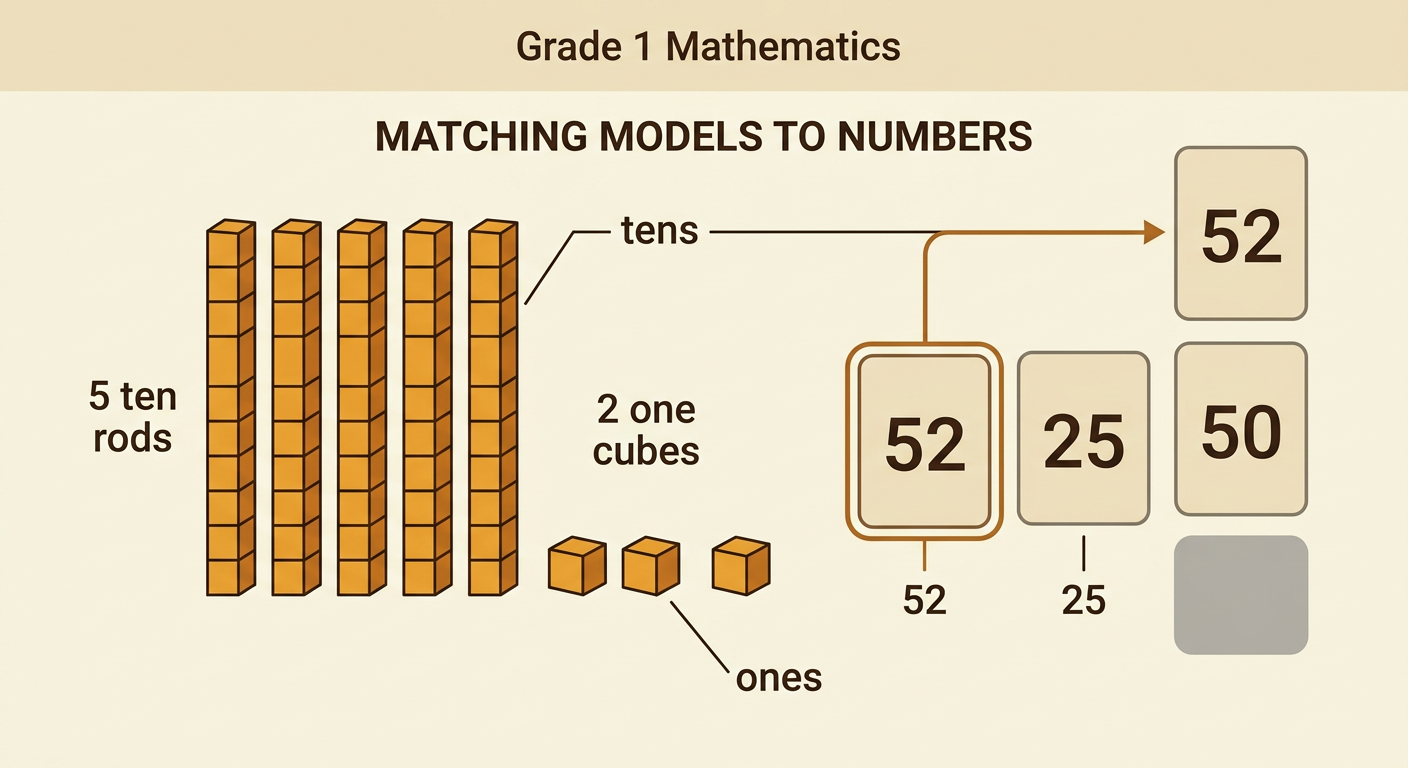
To match a number to a base-ten model, count the tens first and the ones second. Suppose a model has 5 ten rods and 2 one cubes. Five tens have a value of 50. Two ones have a value of 2. Put them together: 50 plus 2 equals 52. The matching number is 52, not 25. In 52, the digit 5 tells the number of tens, and the digit 2 tells the number of ones. In 25, the digits would mean 2 tens and 5 ones. Always check where each digit is placed before choosing your answer. The order of the digits matters.
Quick Place-Value Check
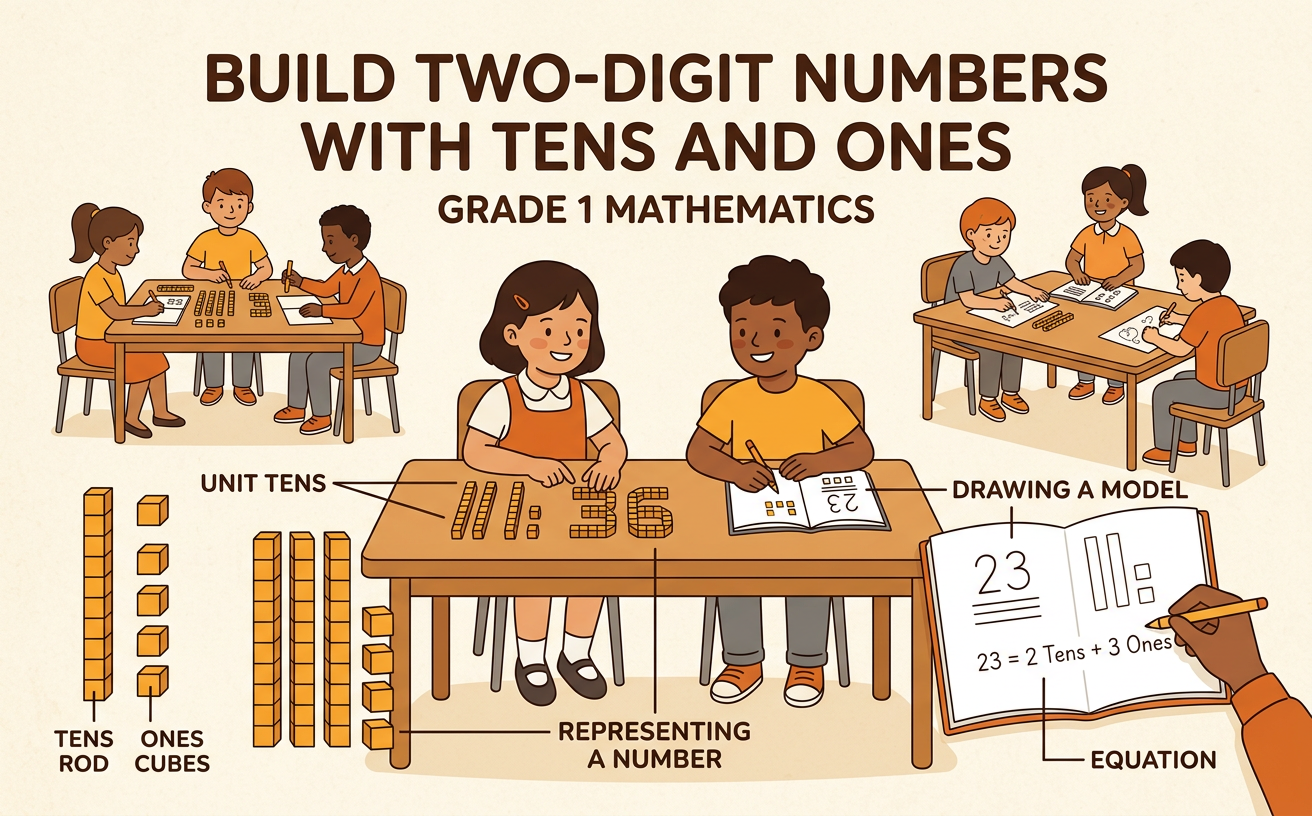
Use a quick check to explain any two-digit number. Ask two questions: How many tens? How many ones? For the number 68, the digit 6 means 6 tens. Six tens have a value of 60. The digit 8 means 8 ones. Eight ones have a value of 8. So 68 is the same as 60 plus 8. A model of 68 needs 6 ten rods and 8 one cubes. Check that the rods and cubes match the digits. Then say the complete place-value sentence: 6 tens and 8 ones make 68. You can use this check with any number from 10 through 99.