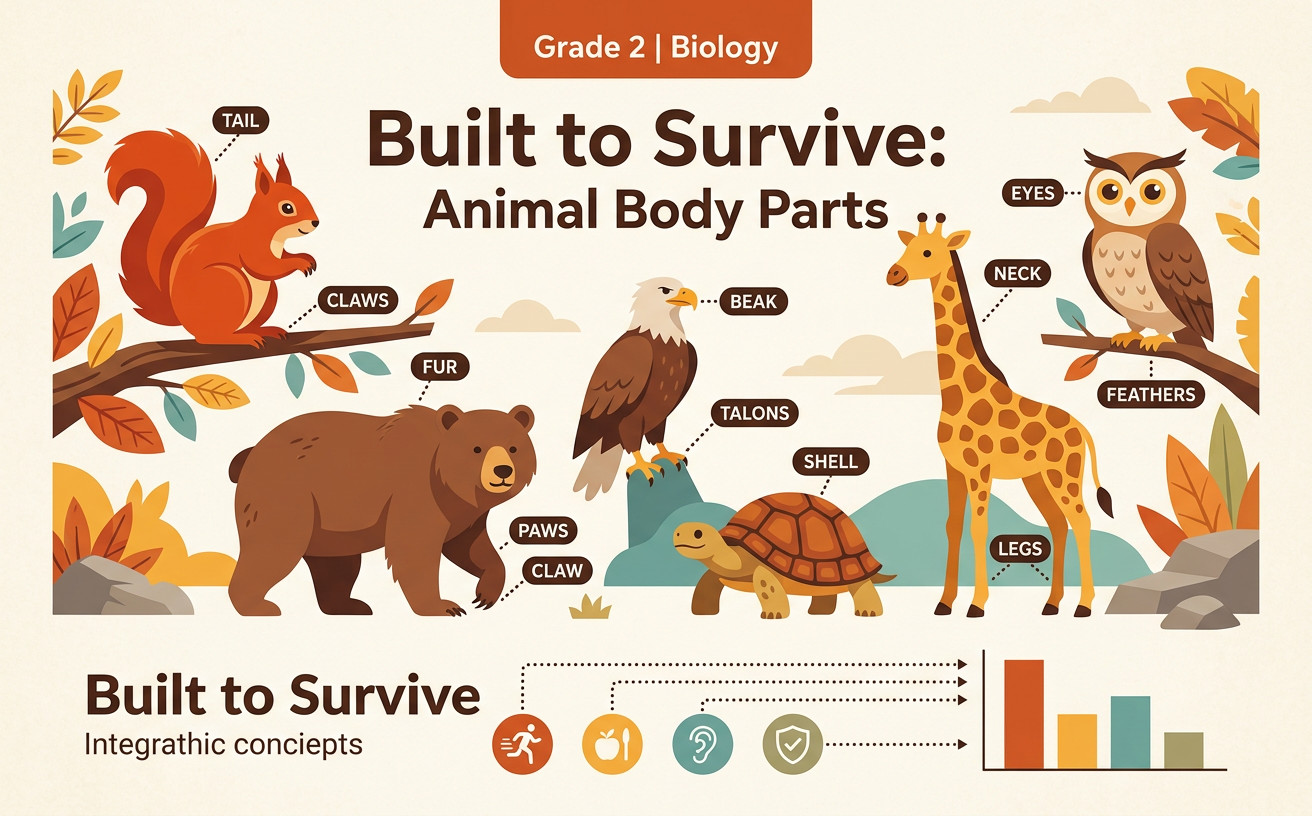
Built to Survive: Animal Body Parts
Students examine animal photographs, connect external body parts to survival functions, and graph how different parts help animals move, eat, sense, or stay safe.
Illustrations are auto-generated and may be placeholders. They can be refreshed to match the narration.
Observe Animal Photographs
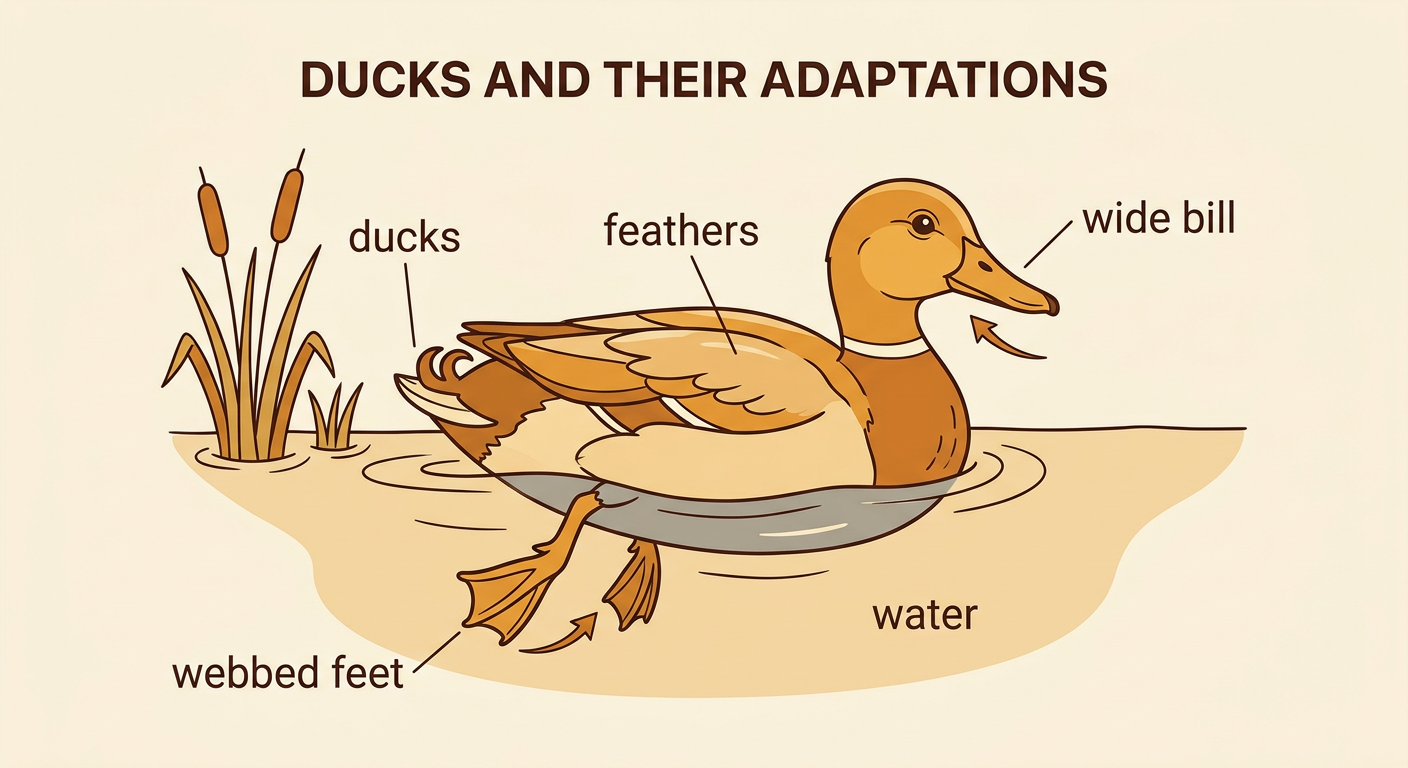
Look closely at each animal photograph before naming what you see. Notice the animal’s shape, color, covering, and visible body parts. Ask questions such as, “What body part stands out?” and “What might that part help the animal do?” Use details from the photograph to answer. For example, a photograph of a duck may show a wide bill, webbed feet, feathers, wings, and eyes. You can observe that the duck’s webbed feet spread out in the water. This detail is evidence that the feet may help the duck swim. Also study the place around the animal. Water, plants, rocks, snow, or trees can give clues about where it lives. Careful observers describe only what the photograph shows before making an explanation.
Name External Body Parts
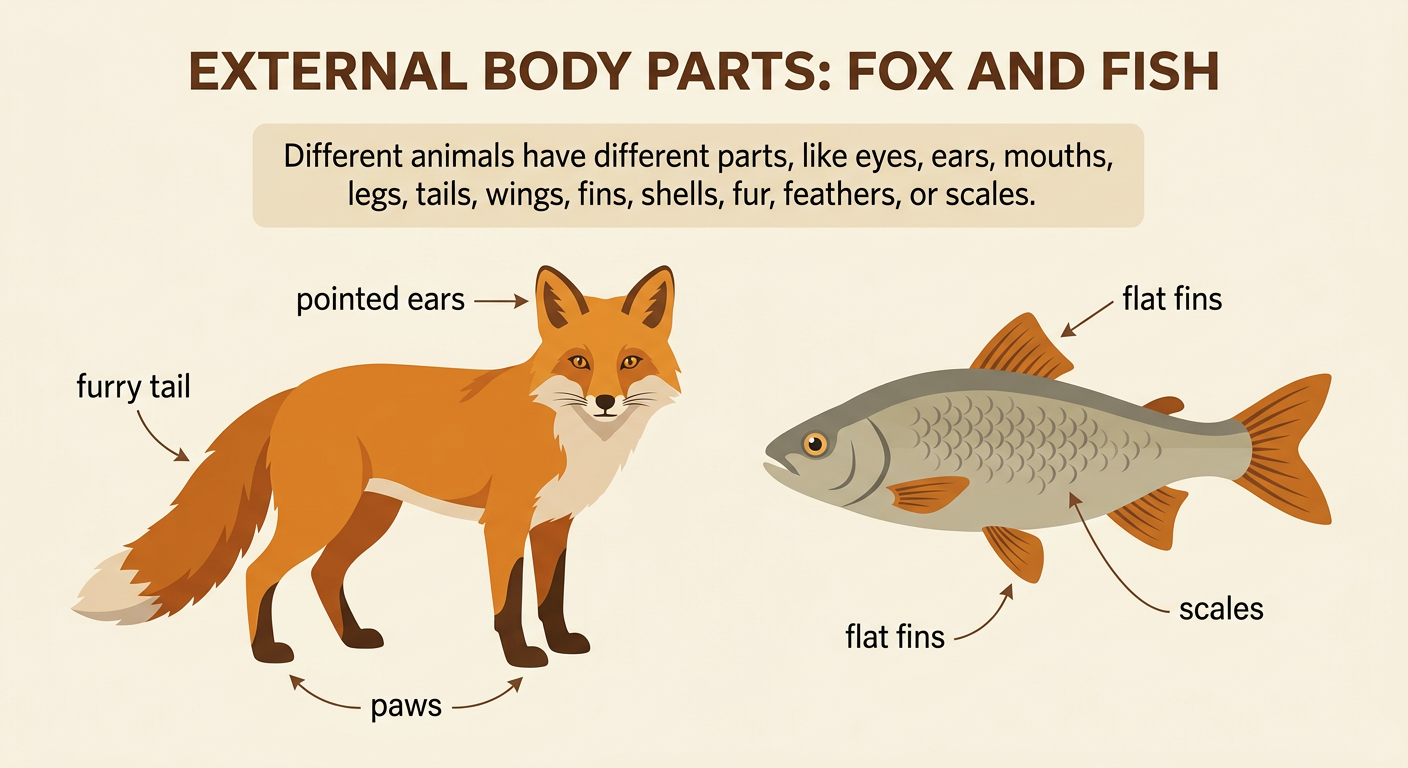
External body parts are parts found on the outside of an animal’s body. Animals may have eyes, ears, noses, mouths, legs, feet, tails, wings, fins, shells, claws, horns, fur, feathers, or scales. Different animals have different combinations of parts. A fox has pointed ears, eyes, a nose, four legs, paws, and a furry tail. A fish has eyes, a mouth, fins, scales, and a tail fin. Name each part with a precise word instead of calling it a “thing.” Then describe what you notice about it. You might say, “The fox has two pointed ears,” or “The fish has flat fins.” Naming and describing visible parts helps you compare animals and prepares you to explain how each part is useful.
Match Parts to Functions
A function is the job that a body part does. External parts help animals move, eat, sense their surroundings, or stay safe. Wings help many birds move through the air. Teeth or beaks help animals bite, tear, crack, or gather food. Eyes, ears, whiskers, and noses collect information about the surroundings. Shells, spines, claws, and some body coverings can help protect an animal. For example, a turtle uses its legs to walk or swim and its mouth to bite food. Its hard shell helps protect its body. One body part can sometimes have more than one function. A bird’s feet may help it move, hold a branch, or grasp food. Match a part to a function by using what you can see and facts from an informational text.

Connect Animals to Habitats
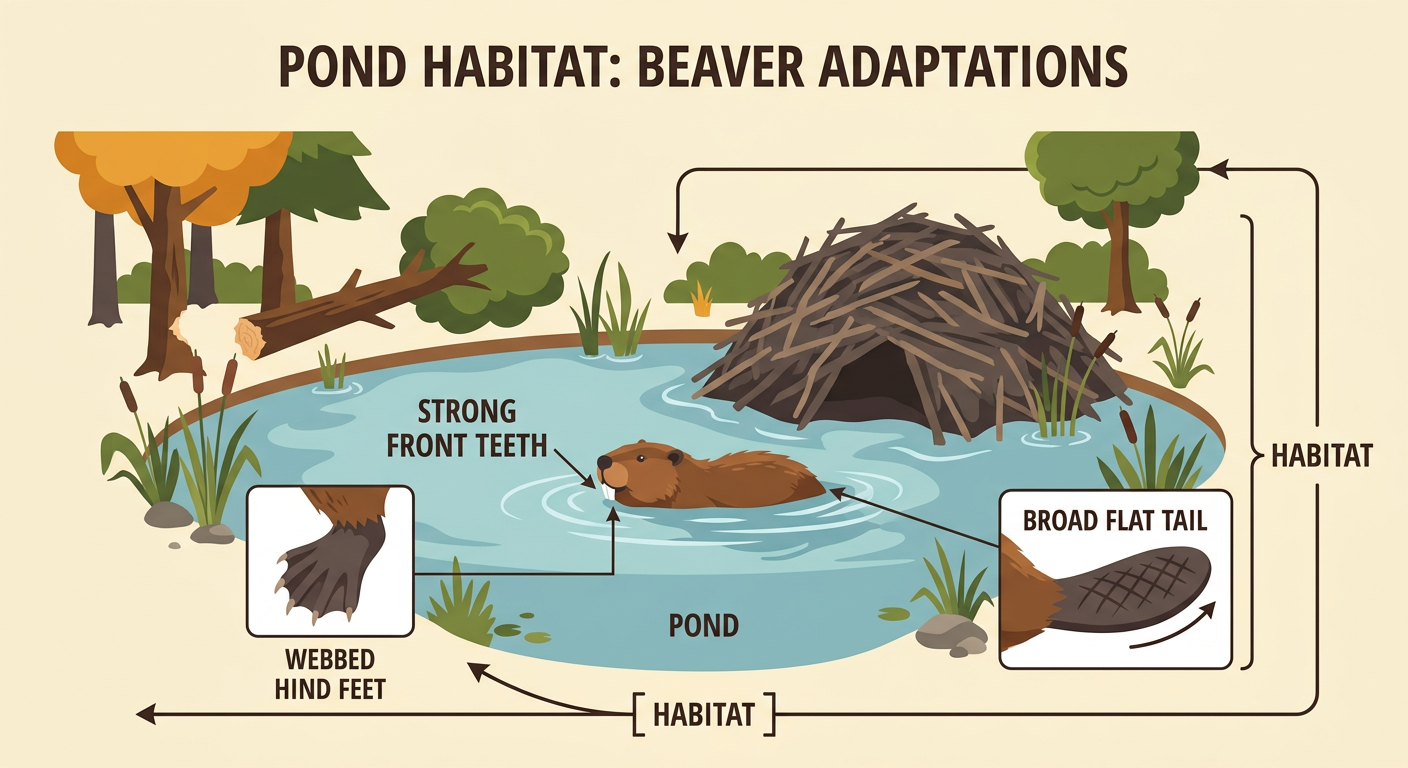
A habitat is the place where an animal lives and finds what it needs, including food, water, air, and shelter. Photographs can show how an animal’s body parts relate to that place. For example, a beaver often lives near ponds, rivers, and streams. Its webbed hind feet help it swim, and its broad, flat tail helps it steer in water. Its strong front teeth help it cut plant material for food and building. A beaver’s body parts fit the activities it performs in a watery habitat. Compare this animal with one from a dry grassland or a forest. Ask, “What is this place like?” and “Which body parts are useful here?” Use details from both the animal and the setting to describe their relationship.
Graph Survival Functions
A graph can organize information from animal photographs. First, choose one clear body part from each photograph. Decide whether its main function in the example is to help the animal move, eat, sense, or stay safe. Suppose a class sorts eight photographs. Three show parts used for moving, two show parts used for eating, one shows a part used for sensing, and two show parts used for staying safe. Draw a bar for each category. Each square in a bar represents one photograph. Label the categories and the number scale. Then interpret the graph by asking questions. Which bar is tallest? How many more examples show movement than sensing? In this graph, movement has three examples, which is two more than sensing. The graph makes comparisons easy to see.

Share Evidence-Based Explanations
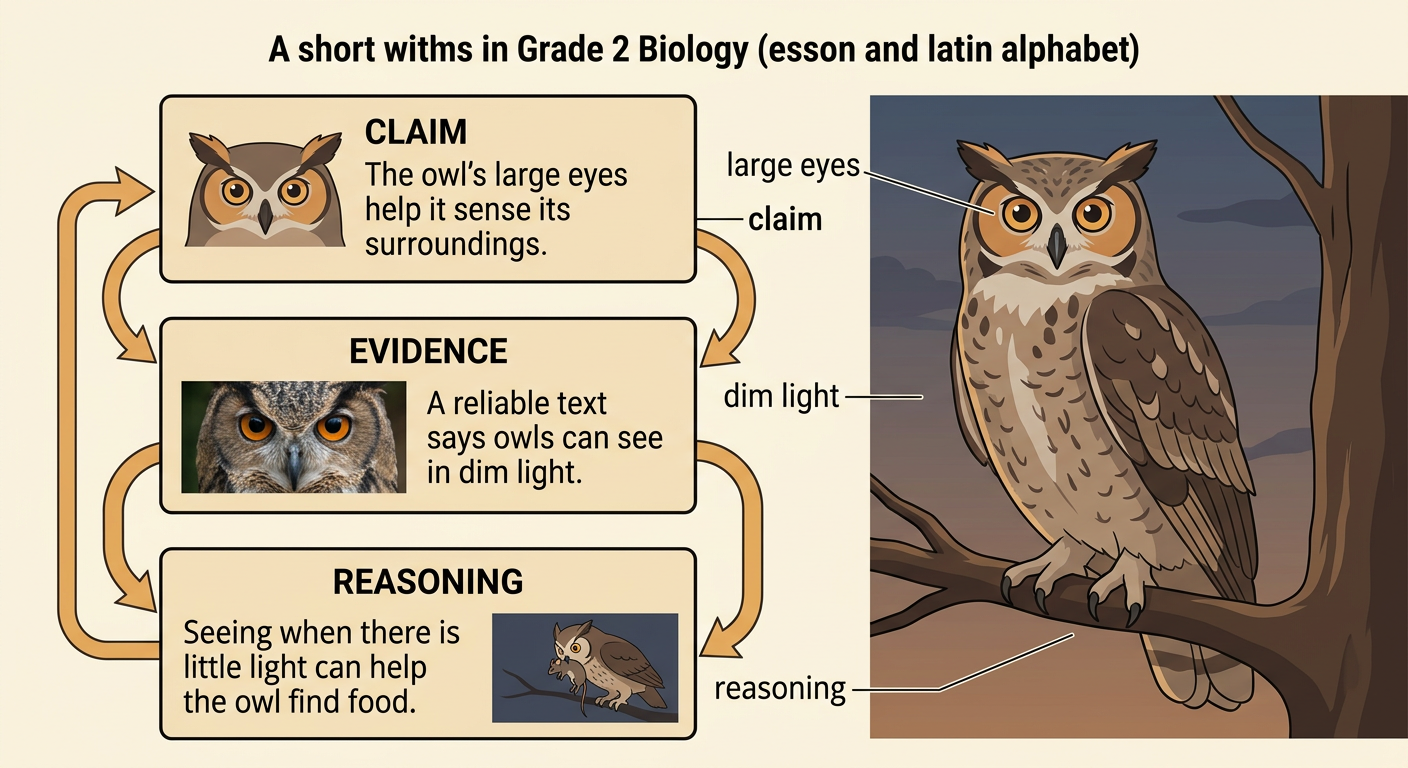
An evidence-based explanation tells what you think and supports it with details. Begin with a clear statement about a body part and its function. Next, give evidence from a photograph or informational text. Finally, explain how the evidence supports your idea. For example, you might say, “An owl’s large eyes help it sense its surroundings. In the photograph, the owl’s eyes face forward, and the text says owls can see in dim light. This helps the owl find food when little light is available.” A classmate can ask, “What detail supports your answer?” You can point to the photograph or reread a sentence from the text. Speak in complete sentences, listen to other explanations, and revise your idea if new evidence gives you a better answer.