Built to Survive: Plant and Animal Structures
Students compare plant and animal structures and explain how each structure supports survival, growth, behavior, or reproduction.
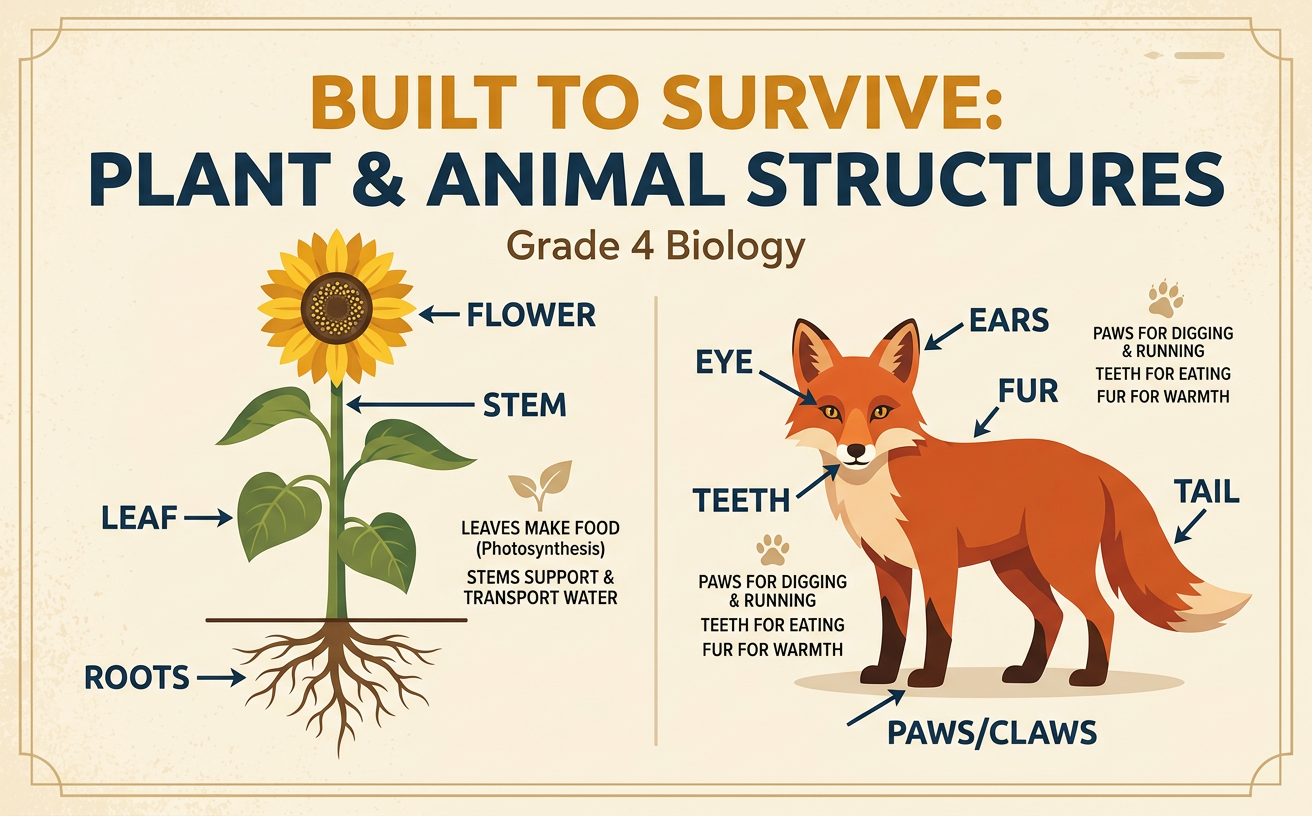
Illustrations are auto-generated and may be placeholders. They can be refreshed to match the narration.
Structure and Function Warm-Up
Living things have structures, or body parts, that do particular jobs. External structures are on the outside, such as a bird’s beak or a plant’s leaf. Internal structures are inside, such as a bird’s lungs or a plant’s water-carrying tubes. A structure’s function is the job it performs. For example, a rabbit’s large ears collect sounds, helping the rabbit notice danger and respond by running away. Its lungs take in oxygen, which its body needs to release energy from food. Ask two questions as you observe any organism: What structure do I notice, and how does it help? Structures may support survival, growth, behavior, or reproduction. The surroundings matter, too. A body part that works well in one environment may be less useful in another.

Plant Parts and Their Jobs
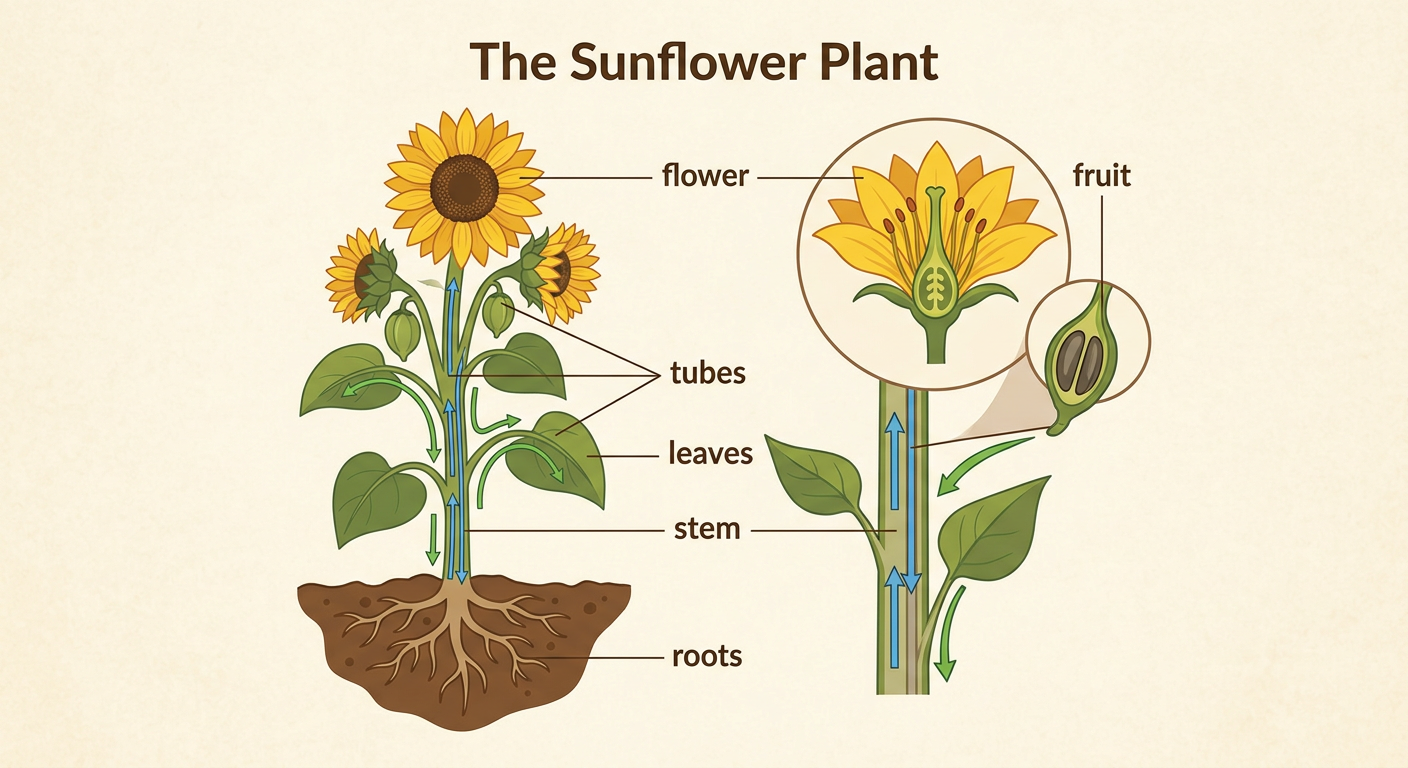
A plant survives because its parts work together. Roots anchor the plant and absorb water and minerals from soil. A stem holds leaves toward light, and tubes inside the stem move water and sugars. Leaves capture light and use carbon dioxide and water to make sugar, which supports growth. Flowers support reproduction: pollen must reach the part of a flower that contains ovules, which can develop into seeds after fertilization. Fruits often protect seeds and help spread them. For example, a sunflower has broad leaves that gather sunlight, a strong stem that lifts the flower head, and a flower head that can produce many seeds. In a windy grassland, its deep and spreading roots can anchor it and reach water. The environment helps determine which plant structures are especially useful.
Animal Structures in Action
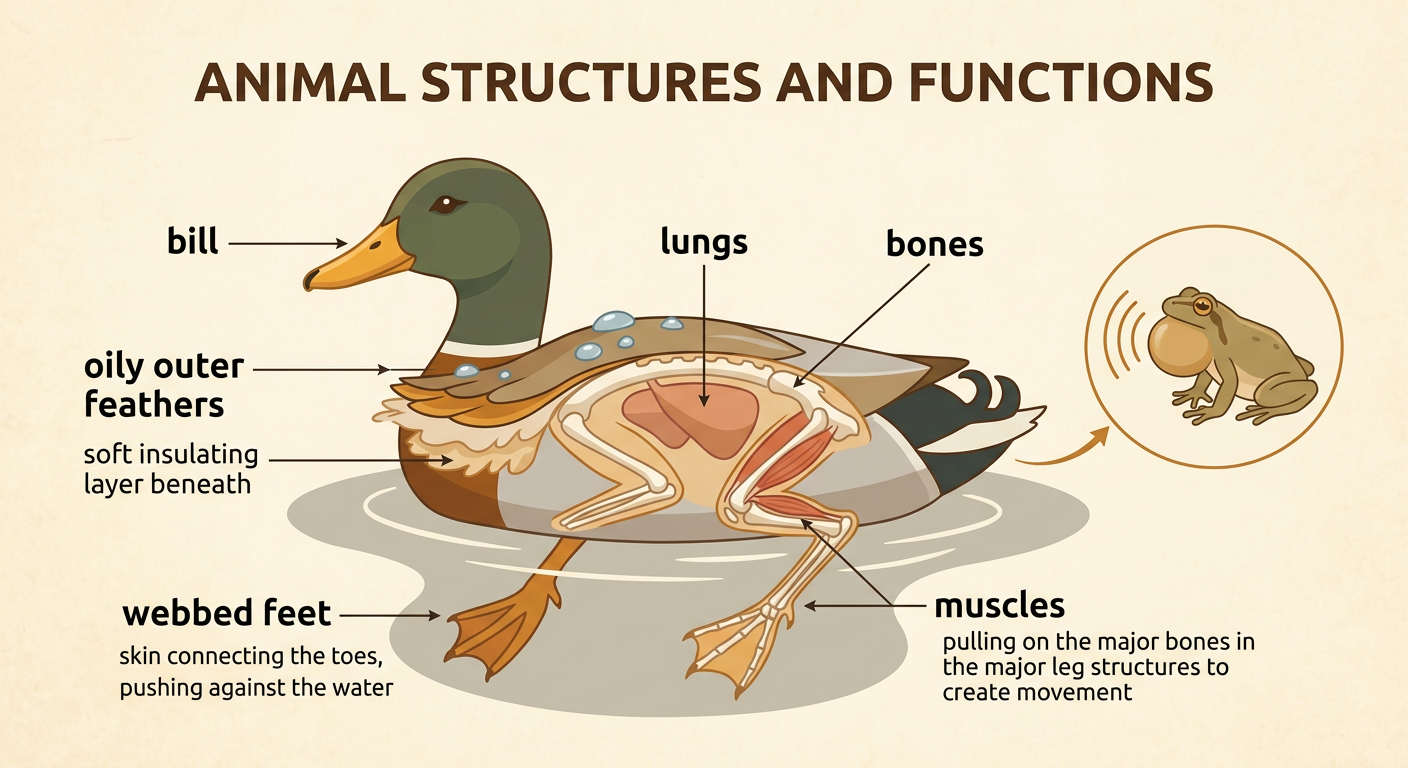
Animals also have external and internal structures that work together. External structures often help animals move, sense their surroundings, find food, stay protected, or attract mates. Internal structures support processes such as breathing, digestion, and movement. A mallard duck is one example. Its webbed feet push against a wide area of water, helping it swim. Its oily outer feathers help keep water away from the insulating feathers beneath them. Its bill gathers food, while its lungs take in oxygen. Bones support the duck’s body, and muscles pull on the bones to create movement. Structures can also support reproduction. For example, a male frog’s vocal sacs make its mating calls louder. These calls are a behavior, but the vocal sacs are structures that help make the behavior effective.
Compare Structures with a Model
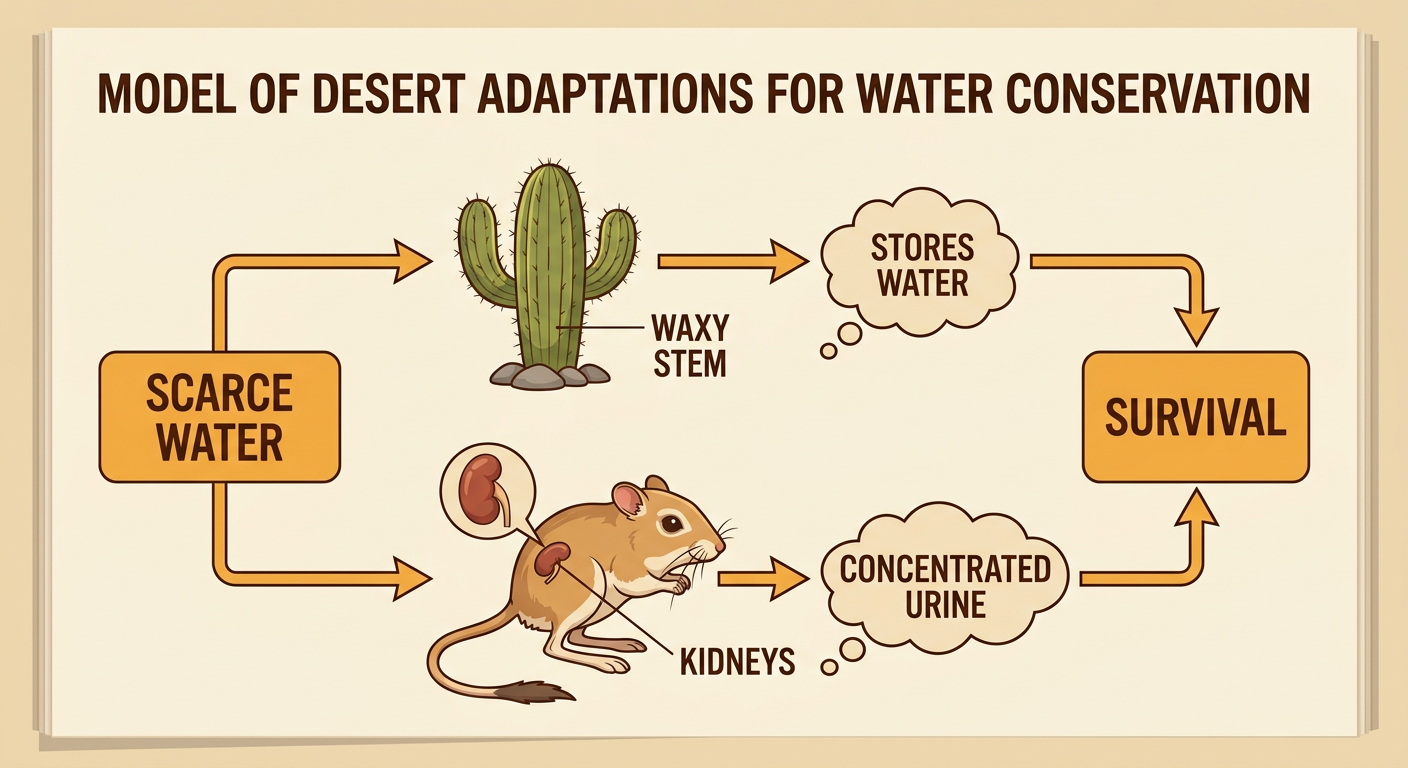
A model can show how an environment, a structure, and a function are related. Begin with an environmental condition, draw an arrow to a helpful structure, and then draw another arrow to its function. For example, water is scarce in a desert. A cactus has a thick, waxy stem surface that slows water loss, and its stem can store water. A kangaroo rat has kidneys that conserve water by producing concentrated urine. The cactus and kangaroo rat do not have the same structures, but both have structures that help them survive with little available water. This comparison can be represented as two parallel arrow chains. Models simplify real organisms, so they do not show every structure or influence. However, they help explain why certain living things are well suited to particular environments.
Build an Evidence-Based Explanation
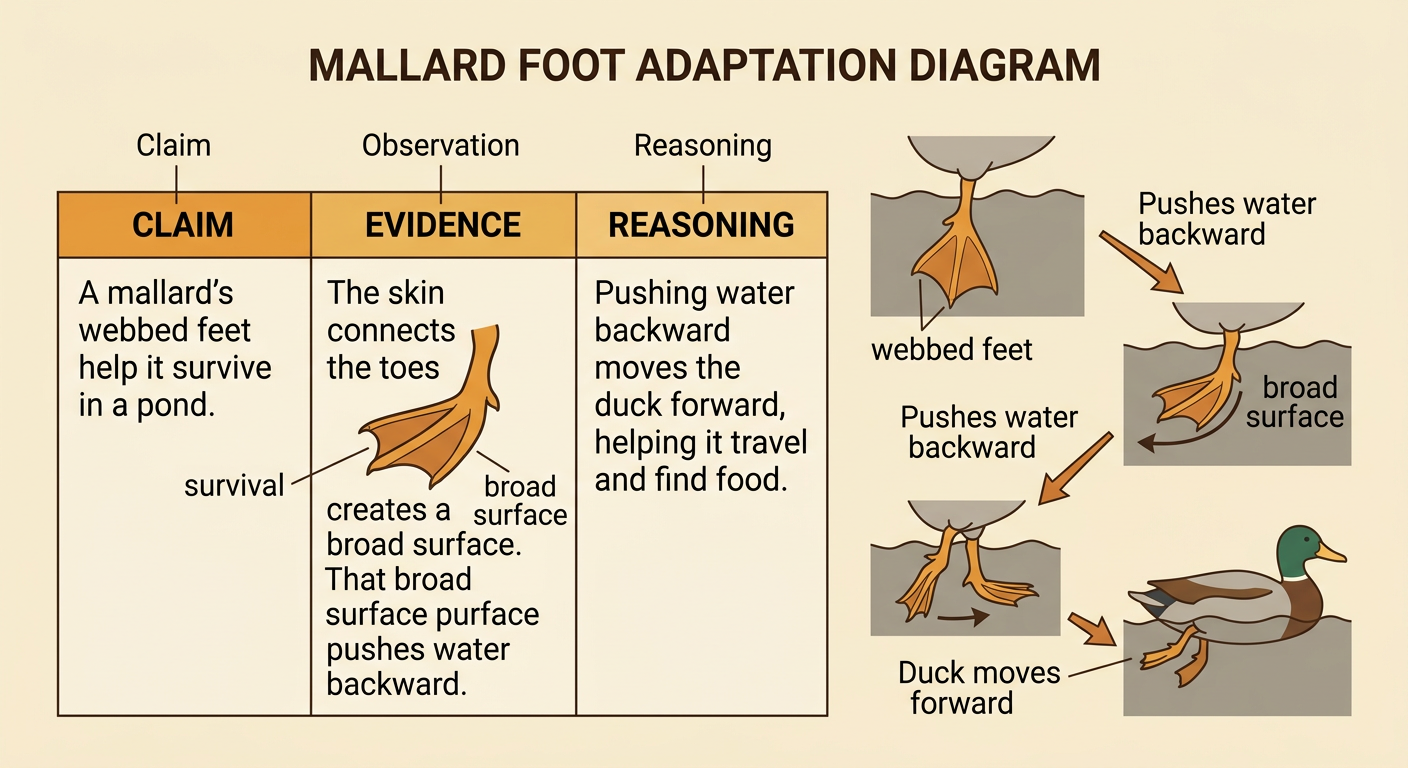
A scientific explanation includes a claim, evidence, and reasoning. The claim answers a question about how a structure helps an organism. Evidence includes accurate facts from informational texts, diagrams, measurements, or repeated observations. Reasoning explains why the evidence supports the claim. For example, claim that a mallard’s webbed feet help it survive in a pond. Evidence shows that skin connects the toes and creates a broad surface that pushes water backward. The reasoning is that pushing water backward moves the duck forward, helping it travel and find food. Before writing, organize information in a three-part chart. Count repeated observations or compare values in a simple data table when useful. Then write a clear paragraph that names the structure, describes its function, explains the cause-and-effect relationship, and connects that function to survival, growth, behavior, or reproduction.