Carbon Cycling Through Ecosystems
Students model how photosynthesis, cellular respiration, decomposition, and human activities move carbon among organisms, the atmosphere, water, and soil.

Illustrations are auto-generated and may be placeholders. They can be refreshed to match the narration.
Where Carbon Is Stored
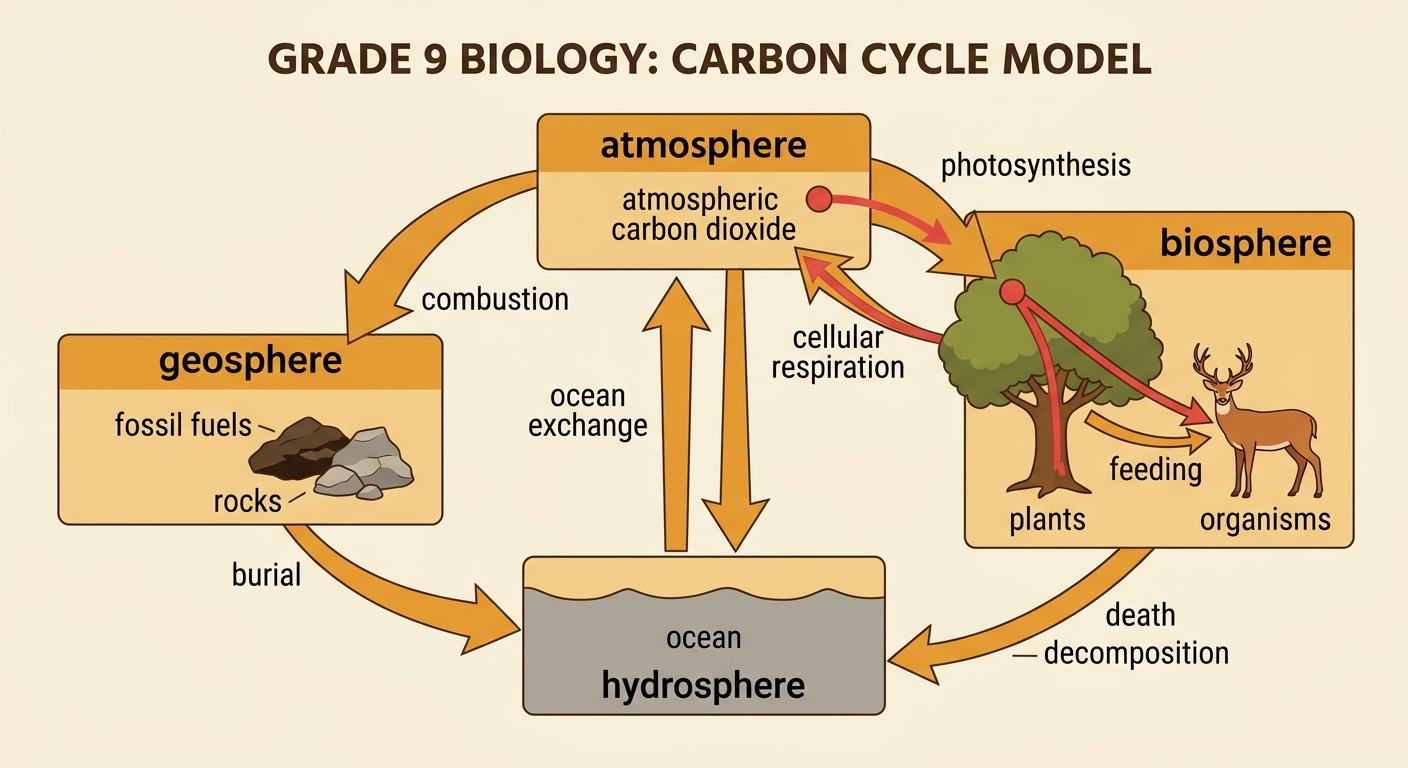
Carbon is stored in several parts of the Earth system called reservoirs. The atmosphere holds carbon mainly as carbon dioxide gas. The biosphere stores carbon in living organisms, including plants, animals, and microorganisms. The hydrosphere contains dissolved carbon dioxide and other carbon compounds in oceans, lakes, and rivers. The geosphere stores carbon in soil, sediments, rocks, and fossil fuels. Reservoirs hold carbon for different lengths of time. A carbon atom may remain in a leaf for one season but stay in limestone for millions of years. For example, a forest stores carbon in tree trunks, roots, animals, and soil. Carbon moves among these reservoirs through processes called fluxes, so the amount in any one reservoir can change over time.

Photosynthesis and Carbon Uptake
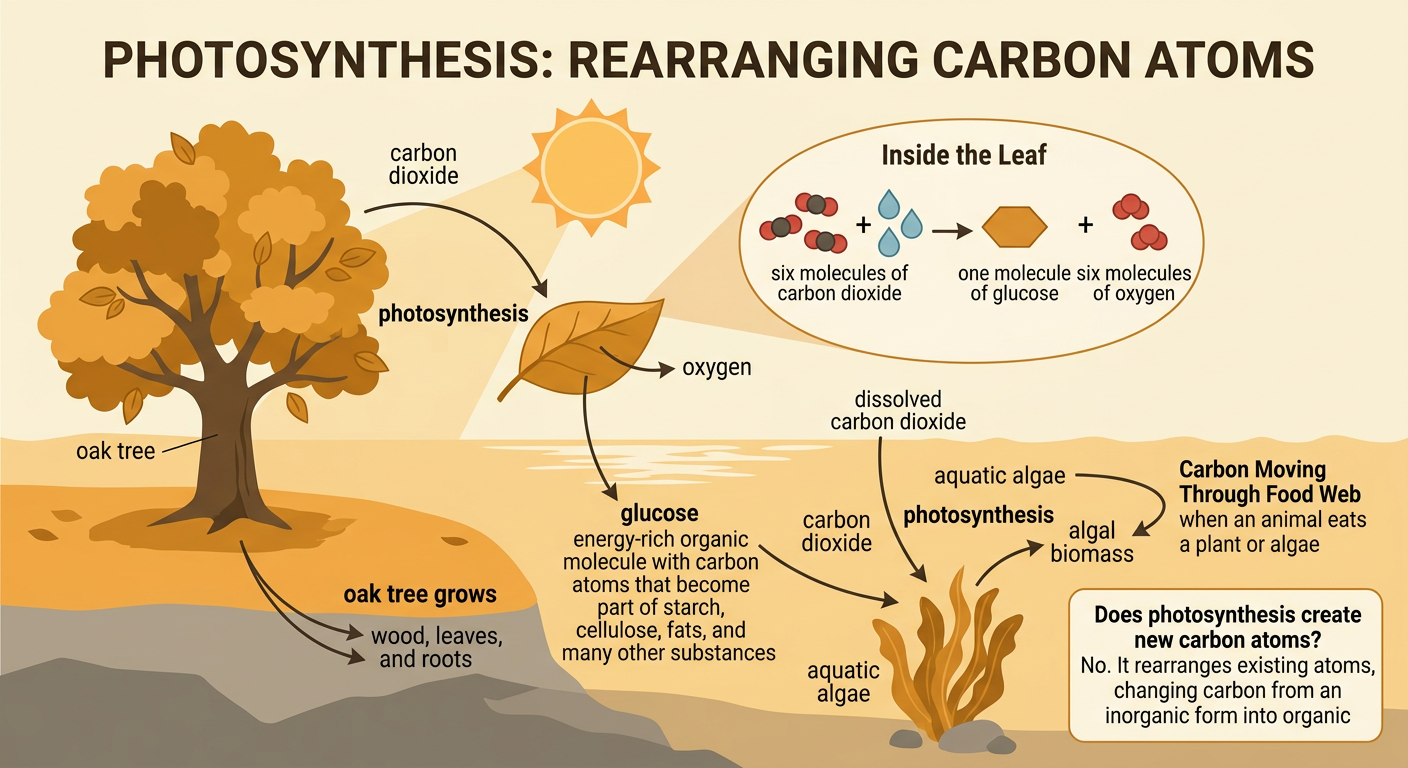
Photosynthesis moves carbon from the atmosphere or water into the biosphere. Plants, algae, and some bacteria use light energy to combine carbon dioxide and water, producing glucose and oxygen. The overall reaction is 6 CO2 + 6 H2O → C6H12O6 + 6 O2. The carbon atoms in glucose can become part of starch, cellulose, fats, and other molecules. When an oak tree grows, carbon from atmospheric carbon dioxide becomes wood, leaves, and roots. Aquatic algae similarly take up dissolved carbon dioxide from water. Some of this stored carbon moves through food webs when consumers eat producers. Photosynthesis does not create carbon; it changes carbon from an inorganic form into energy-rich organic molecules that organisms can use and store.
Respiration and Decomposition
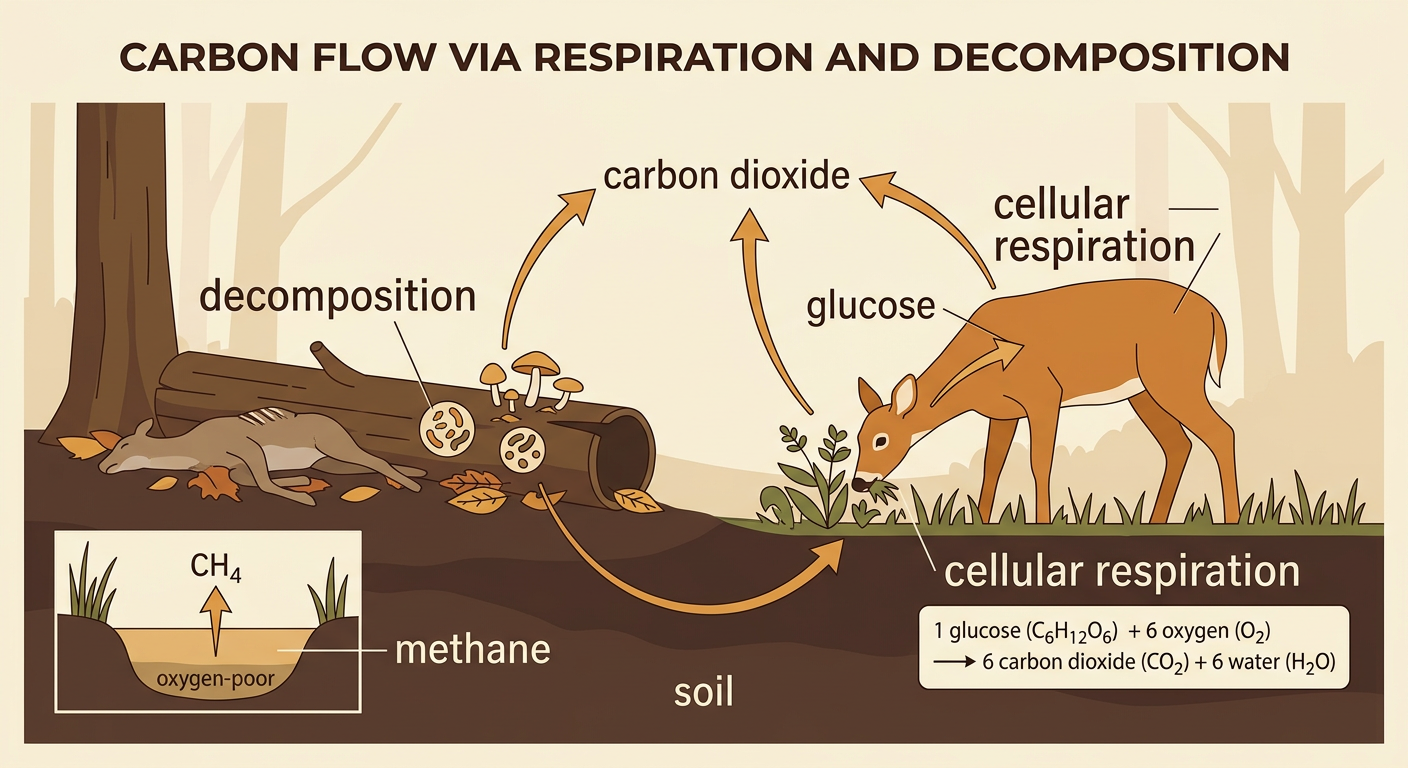
Cellular respiration returns carbon from organic molecules to the atmosphere or water. Most organisms, including plants, animals, fungi, and many bacteria, break down glucose with oxygen to release usable energy. The overall reaction is C6H12O6 + 6 O2 → 6 CO2 + 6 H2O, which reverses the main carbon changes of photosynthesis. For example, a deer obtains carbon by eating plants and releases some of it as carbon dioxide when its cells respire. When organisms produce waste or die, decomposers break down the material. Decomposers release carbon dioxide through respiration and add some carbon to the soil. In oxygen-poor wetlands, decomposition can also produce methane. Some buried carbon escapes rapid decomposition and may remain in sediments for long periods.
Building a Carbon Cycle Model
A carbon cycle model should identify reservoirs, show carbon transfers with labeled arrows, and distinguish processes from stored amounts. Begin with four boxes for the atmosphere, biosphere, hydrosphere, and geosphere. Add arrows for photosynthesis, feeding, cellular respiration, decomposition, ocean exchange, burial, and combustion. Arrow direction shows where carbon moves, while arrow width can represent the relative rate of transfer. For example, an arrow from atmospheric carbon dioxide to a tree should be labeled photosynthesis. A return arrow from the tree to the atmosphere should be labeled cellular respiration. Test the model by tracing one carbon atom through several steps. Then translate the visual into words, explaining each arrow in order. A useful model simplifies reality but must conserve carbon: carbon changes location or chemical form rather than appearing or disappearing.
Human Activities and Carbon Balance
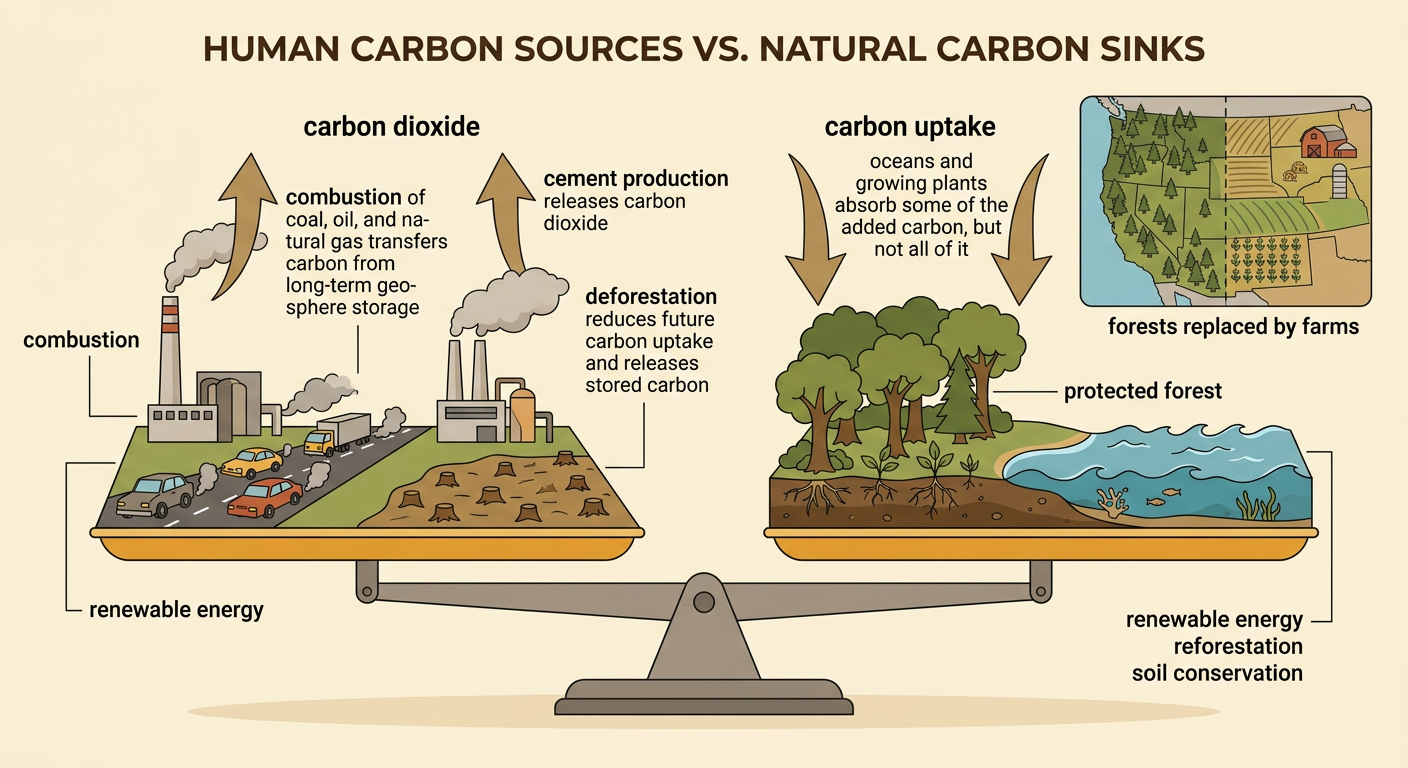
Human activities can transfer carbon faster than natural processes remove it, changing the carbon balance. Burning coal, oil, and natural gas moves carbon from long-term geosphere storage into the atmosphere as carbon dioxide. Cement production also releases carbon dioxide, while deforestation reduces carbon uptake and often releases carbon from wood and soil. Oceans and growing plants absorb some added carbon, but not all of it. For example, a region that replaces forests with farms may gain income and food production while losing a major carbon reservoir. Political and economic decisions about energy, transportation, land use, and conservation therefore shape both local environments and the global carbon cycle. Policies that support renewable energy, efficient buildings, reforestation, or soil conservation can reduce emissions or increase carbon storage. Different choices involve costs, benefits, and effects on communities.