Carbon on the Move: Matter Cycling Through Ecosystems
Students interpret a carbon-cycle model to explain how photosynthesis, cellular respiration, decomposition, and combustion move carbon among organisms, the atmosphere, water, and soil.
Illustrations are auto-generated and may be placeholders. They can be refreshed to match the narration.
Carbon Reservoirs and Pathways
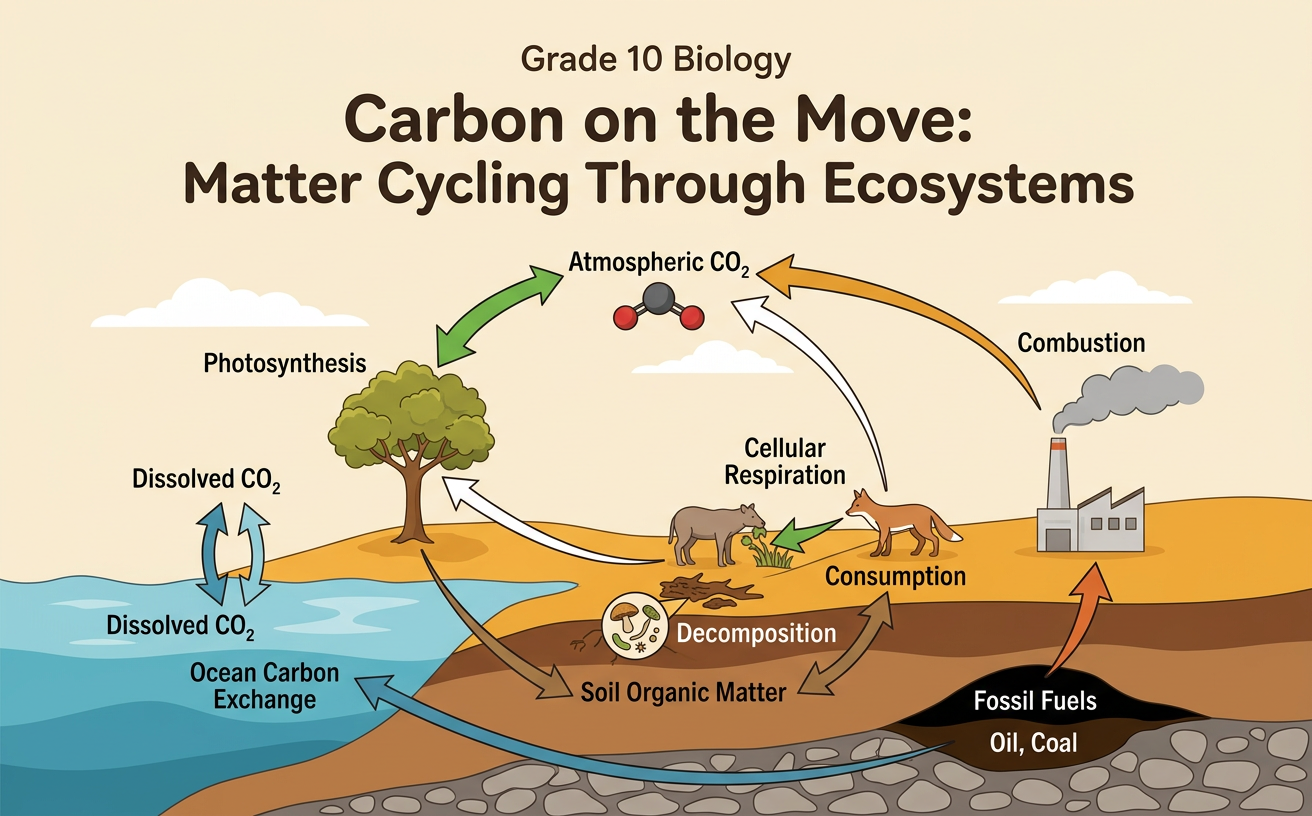
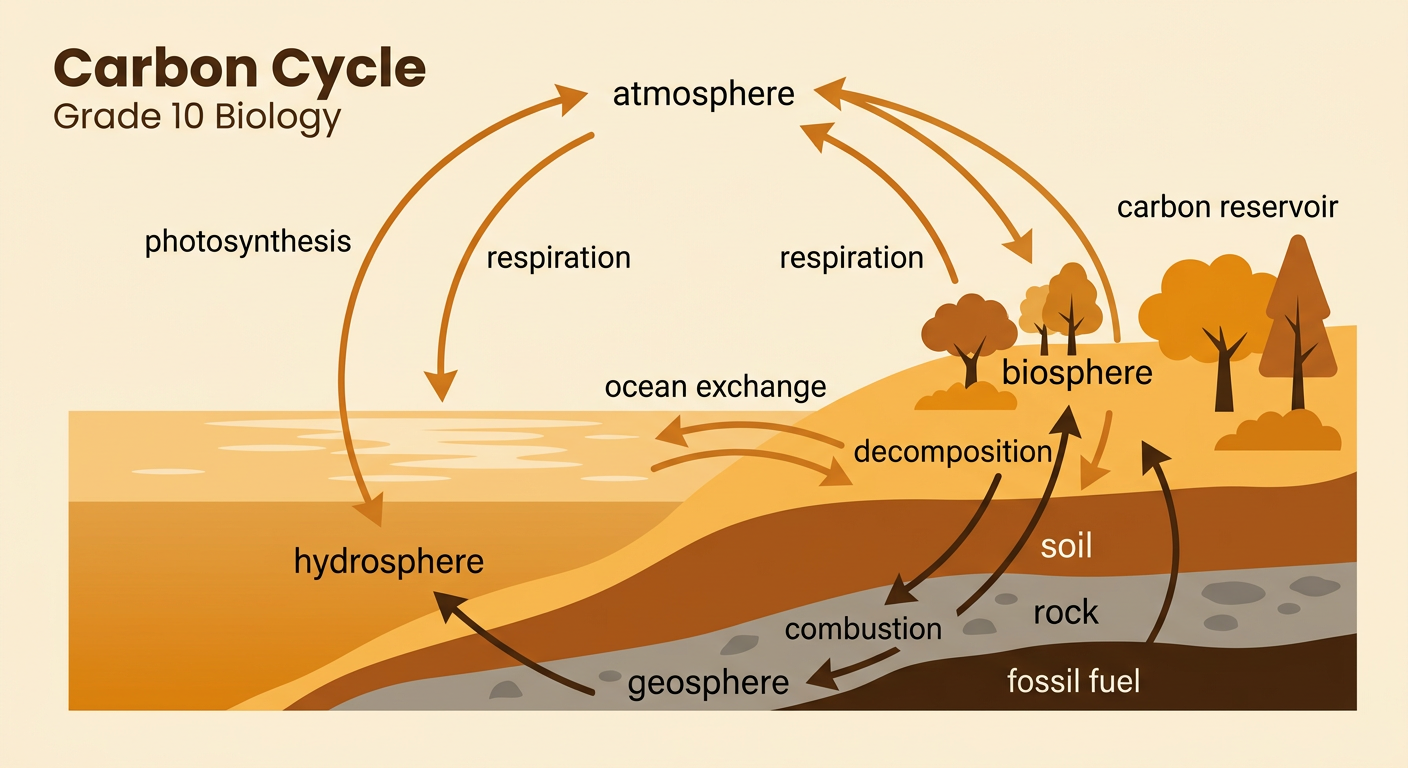
Carbon moves among four major Earth systems. The biosphere includes living organisms; the atmosphere contains carbon dioxide and methane; the hydrosphere includes oceans, lakes, and other water; and the geosphere includes soil, rocks, sediments, and fossil fuels. Each system contains carbon reservoirs, or places where carbon is stored. Processes such as photosynthesis, feeding, respiration, decomposition, ocean exchange, and combustion move carbon between reservoirs. Carbon atoms are conserved: they change location and become part of different molecules, but they are not created or destroyed. For example, a carbon atom in atmospheric carbon dioxide can enter a maple leaf through photosynthesis, move into a caterpillar that eats the leaf, and return to the atmosphere through respiration. A carbon-cycle model uses labeled boxes for reservoirs and directional arrows for pathways.
Photosynthesis Stores Carbon
During photosynthesis, plants, algae, and some bacteria use light energy to convert carbon dioxide and water into sugars and oxygen. The carbon atoms from carbon dioxide become part of glucose and other organic molecules. This process moves carbon from the atmosphere or hydrosphere into the biosphere. Organisms can use the stored chemical energy for growth, and carbon can become part of leaves, roots, wood, or other tissues. For example, a young oak tree takes in atmospheric carbon dioxide through tiny openings in its leaves. Some of that carbon becomes cellulose in its growing trunk, where it may remain for decades. In a model, an arrow labeled photosynthesis should point from atmospheric or dissolved carbon dioxide toward producers. The model may also show carbon moving from producers to consumers when animals eat plants.

Respiration and Decomposition Release Carbon
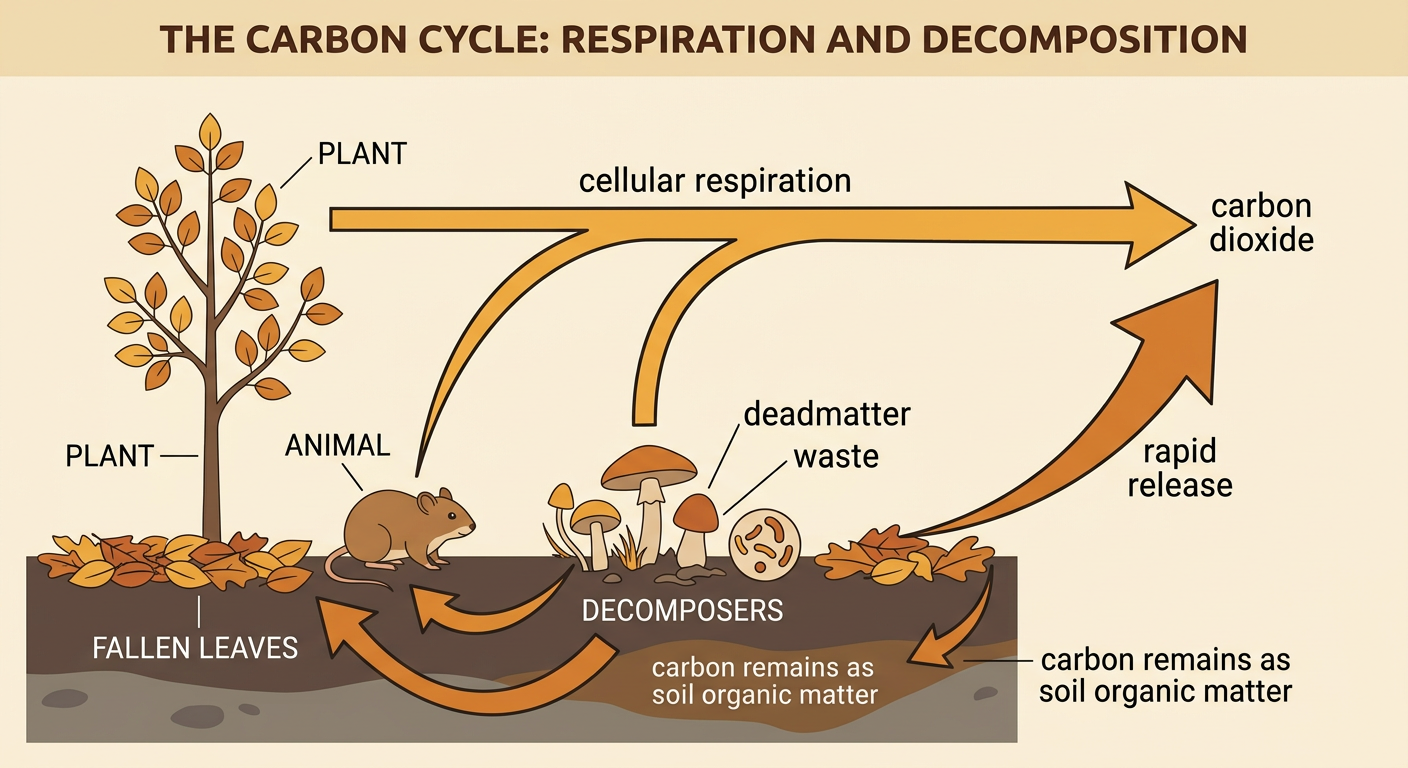
Cellular respiration breaks down sugars and transfers their stored chemical energy into a form cells can use. Plants, animals, fungi, and many microorganisms all perform cellular respiration. The process produces carbon dioxide and water, moving carbon from organisms back to the atmosphere or into surrounding water. When organisms die or release waste, decomposers such as bacteria and fungi break down the organic matter. Decomposers use some of its carbon for growth and release carbon dioxide through respiration. Some carbon remains in soil or sediment and may be stored for long periods. For example, when fallen leaves collect on a forest floor, fungi decompose them. Much of the leaf carbon returns to the atmosphere as carbon dioxide, while some becomes soil organic matter. Models should therefore show both rapid release pathways and slower carbon-storage pathways.
Combustion Changes Carbon Flows
Combustion occurs when carbon-rich material burns in the presence of oxygen, releasing energy and producing carbon dioxide. Wildfires and the burning of wood move carbon from recent plant biomass to the atmosphere. Burning coal, oil, and natural gas transfers carbon from geosphere reservoirs that formed over millions of years. Combustion does not create carbon, but fossil-fuel use moves stored carbon into the atmosphere much faster than geological processes remove it. Political and economic choices affect these flows. For example, a region may choose to generate electricity with a coal-fired power plant because coal is available and supports jobs. That decision increases carbon dioxide emissions and can affect local air quality and the global climate. Choosing renewable energy, public transportation, or greater energy efficiency can reduce the rate at which fossil carbon enters the atmosphere.

Interpret and Revise a Carbon-Cycle Model
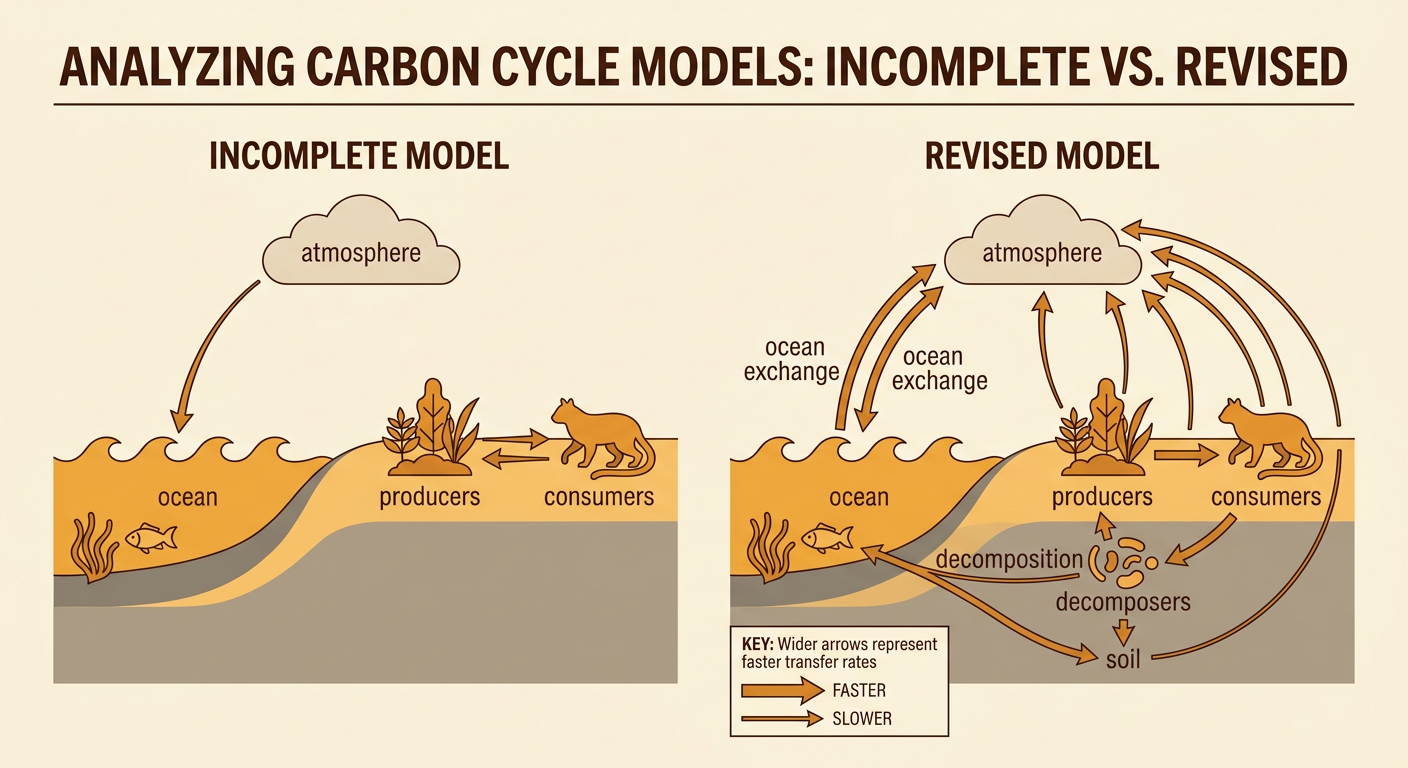
To interpret a carbon-cycle model, first identify each reservoir, then follow every arrow in its indicated direction. Explain what process each arrow represents and which Earth systems it connects. Arrow width may represent the relative amount or rate of carbon transfer, but only if the model includes a key. Check whether the model conserves matter and includes important pathways in both directions. For example, a model may show carbon dioxide entering the ocean but omit carbon dioxide returning to the atmosphere. Revising the model requires adding an ocean-to-atmosphere arrow labeled ocean exchange. A complete model should also connect producers, consumers, decomposers, soil, water, the atmosphere, and long-term geosphere storage. After revising, translate the visual into words by describing a possible route for one carbon atom and explaining how human activities could change the rate of one pathway.