
Caring for Earth by Reducing Trash
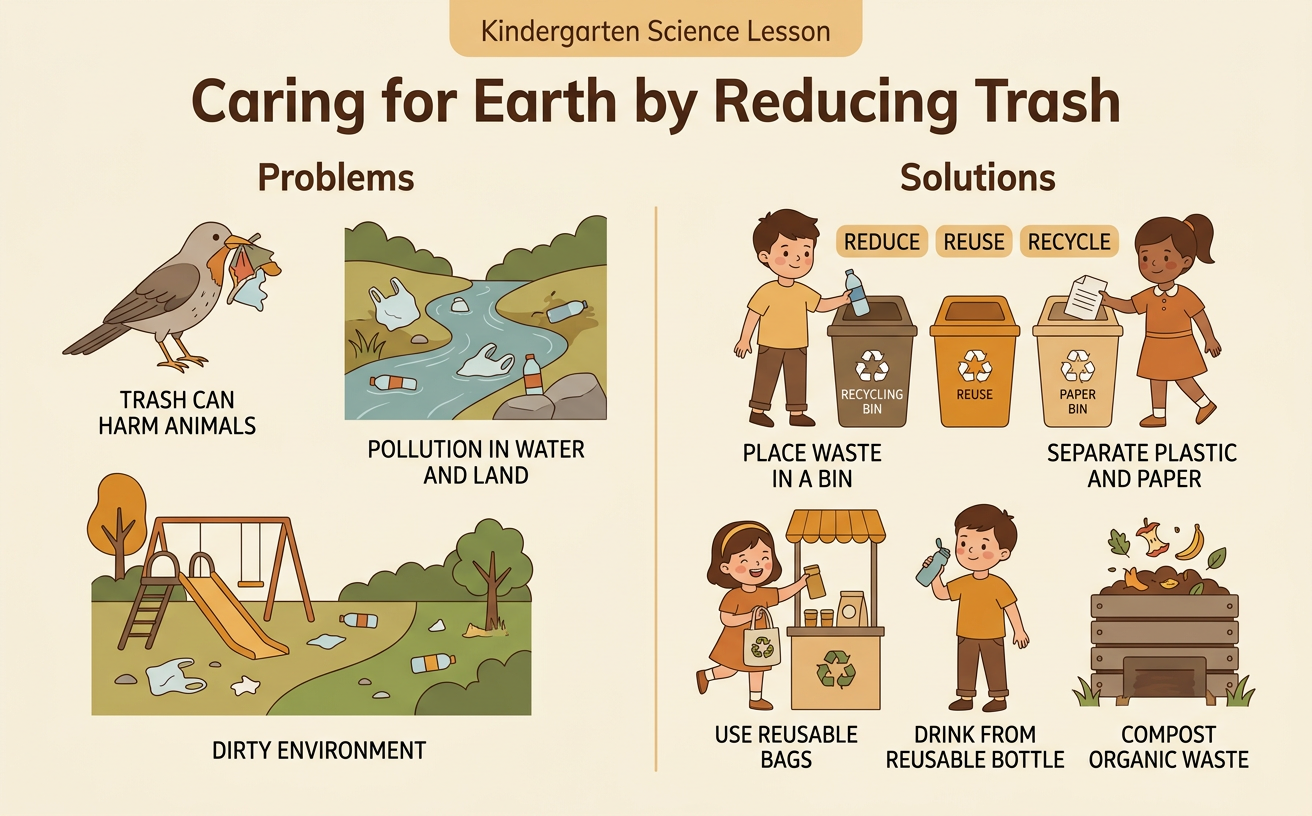
Students identify how trash can harm the local environment and communicate a simple solution such as reusing, recycling, or placing waste in a bin.
Illustrations are auto-generated and may be placeholders. They can be refreshed to match the narration.
Notice Trash in Our Environment
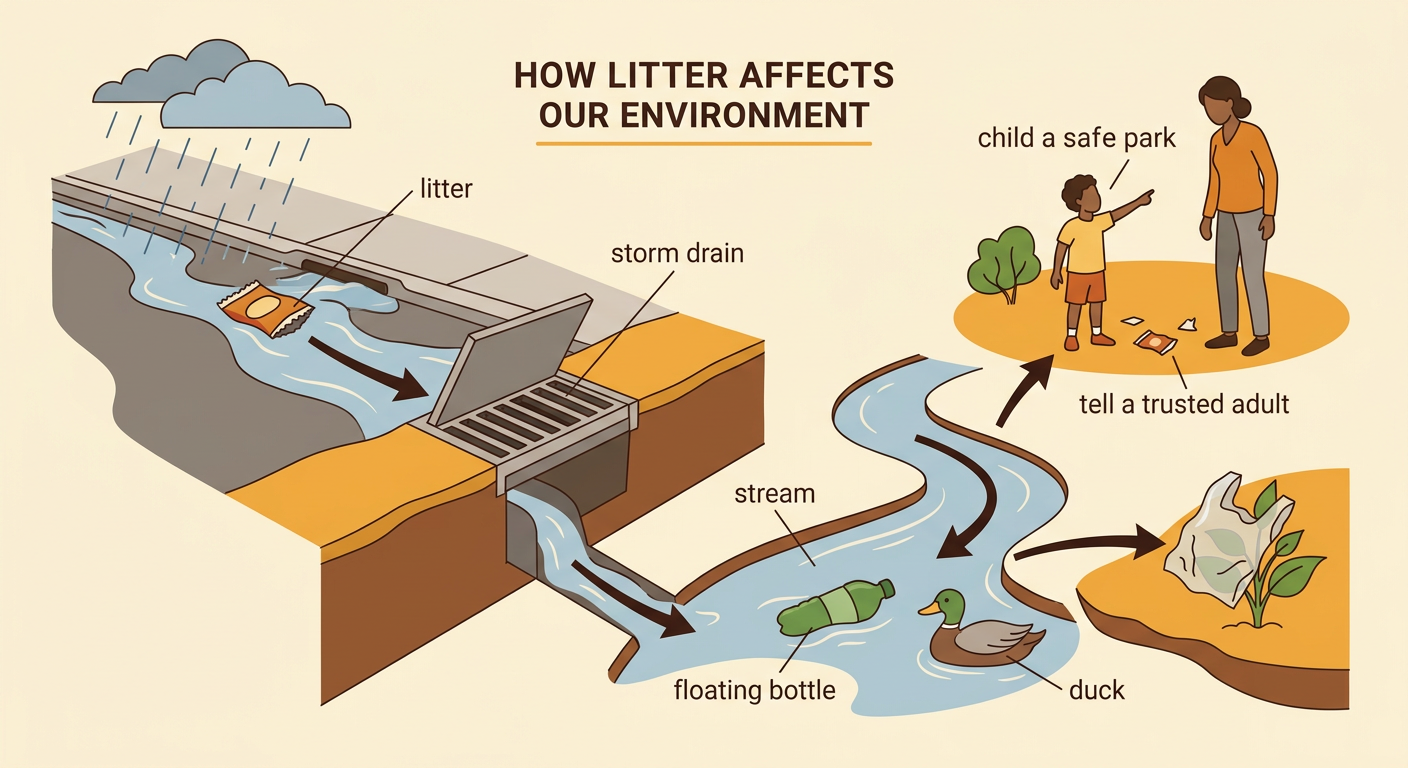
Trash is anything people no longer want and choose to throw away. We may see trash in a classroom, on a sidewalk, in a park, or near a stream. Look carefully at the place around you. Do you notice a paper wrapper, an empty bottle, or a used tissue? Trash does not belong on the ground. Wind and rain can move it to other places. For example, wind may blow a snack wrapper from a playground into a garden. We can help by noticing trash and telling a trusted adult. We should never touch sharp, dirty, or unknown objects. An adult can help decide how to handle them safely. When people use the right bins, shared places stay cleaner for people, plants, and animals.

How Trash Can Cause Harm
Trash can change land and water and can hurt living things. A plastic bag on the ground may cover a small plant and block its sunlight. A bird might mistake a small piece of plastic for food. Rain can wash litter from a street into a storm drain, and the water may carry it toward a stream. Trash can also make a park unpleasant or unsafe for people. Imagine a duck swimming near a floating bottle. The bottle does not belong in the duck’s home. We can prevent this harm by keeping waste off the ground and out of the water. If you see litter near an animal or in water, tell a trusted adult. Do not reach into the water or try to help an animal by yourself.
Sort: Reuse, Recycle, or Throw Away
We can sort unwanted items in different ways. Reuse means using an item again instead of getting rid of it. An empty, clean box can become a container for crayons. Recycle means putting accepted materials in a recycling bin so they can be made into new things. A clean paper sheet or empty metal can may be recyclable. Recycling rules are different in different communities, so check the bin sign or ask an adult. Throw away means placing waste in a trash bin. A used tissue belongs in the trash because it cannot be reused or recycled. Before sorting, ask: Is it safe and clean enough to reuse? Does our recycling program accept it? If not, does it belong in the trash? Careful sorting helps keep the wrong items out of recycling bins.

Choose an Earth-Friendly Solution
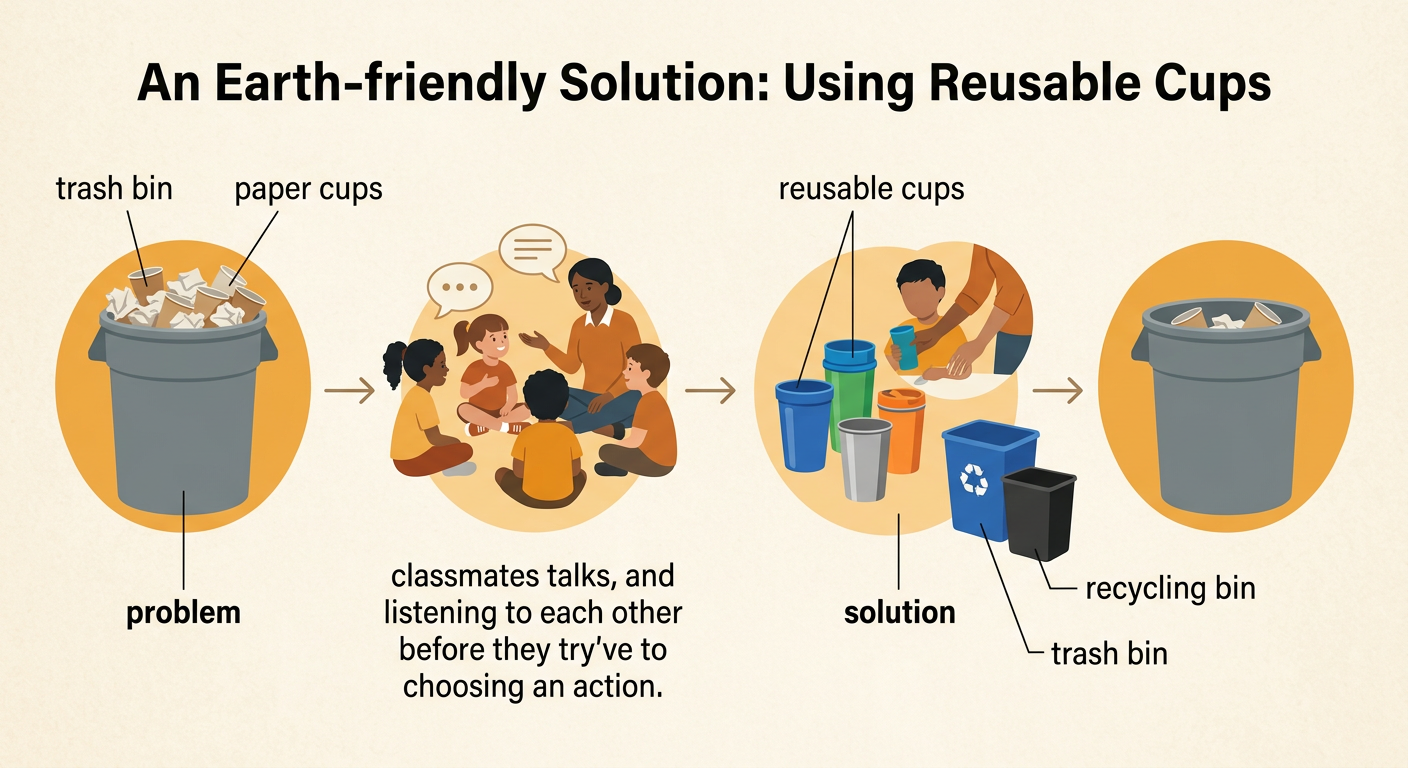
An Earth-friendly solution is an action that helps protect land, water, air, or living things. First, notice a problem. Next, choose one safe action that can make the problem smaller. Suppose students use many paper cups during snack time. The class could choose reusable cups that can be washed and used again. This solution reduces the number of cups thrown away. If a reusable item is not possible, students can place accepted materials in a recycling bin. Everyone can also put other waste in a trash bin so it does not become litter. Talk with classmates before choosing. Listen, take turns, and ask, “How will our idea help?” A useful solution should be safe, simple, and possible for children to do with adult help.
Draw and Share Our Ideas
You can communicate a solution with a drawing and words. First, draw the place you want to help, such as your classroom, playground, or neighborhood park. Show the trash problem. Then draw your solution. For example, draw a child putting a bottle into the correct recycling bin after checking the bin sign. Add details that show how the place changes, such as clean grass and animals away from litter. You can say, “My solution is to use the right bin. It helps keep trash off the ground.” When classmates share, look at the speaker and listen. Take turns speaking. You may ask a kind question, such as, “How does your idea help the park?” Different drawings may show different helpful solutions, including reusing containers, recycling accepted items, and throwing waste away properly.
