Caring for Our Local Environment
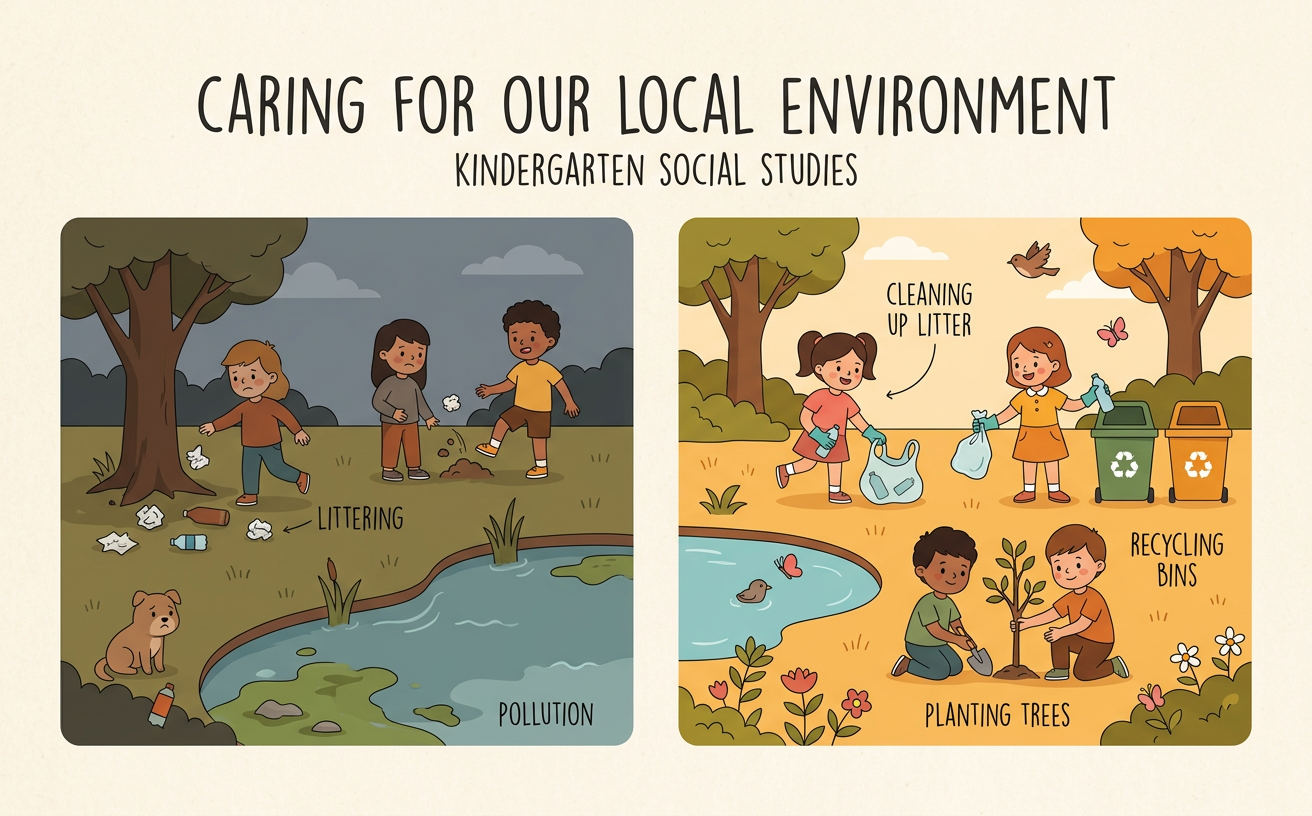
Students explore how people can harm or help shared outdoor places and choose simple actions that protect the local environment.
Illustrations are auto-generated and may be placeholders. They can be refreshed to match the narration.
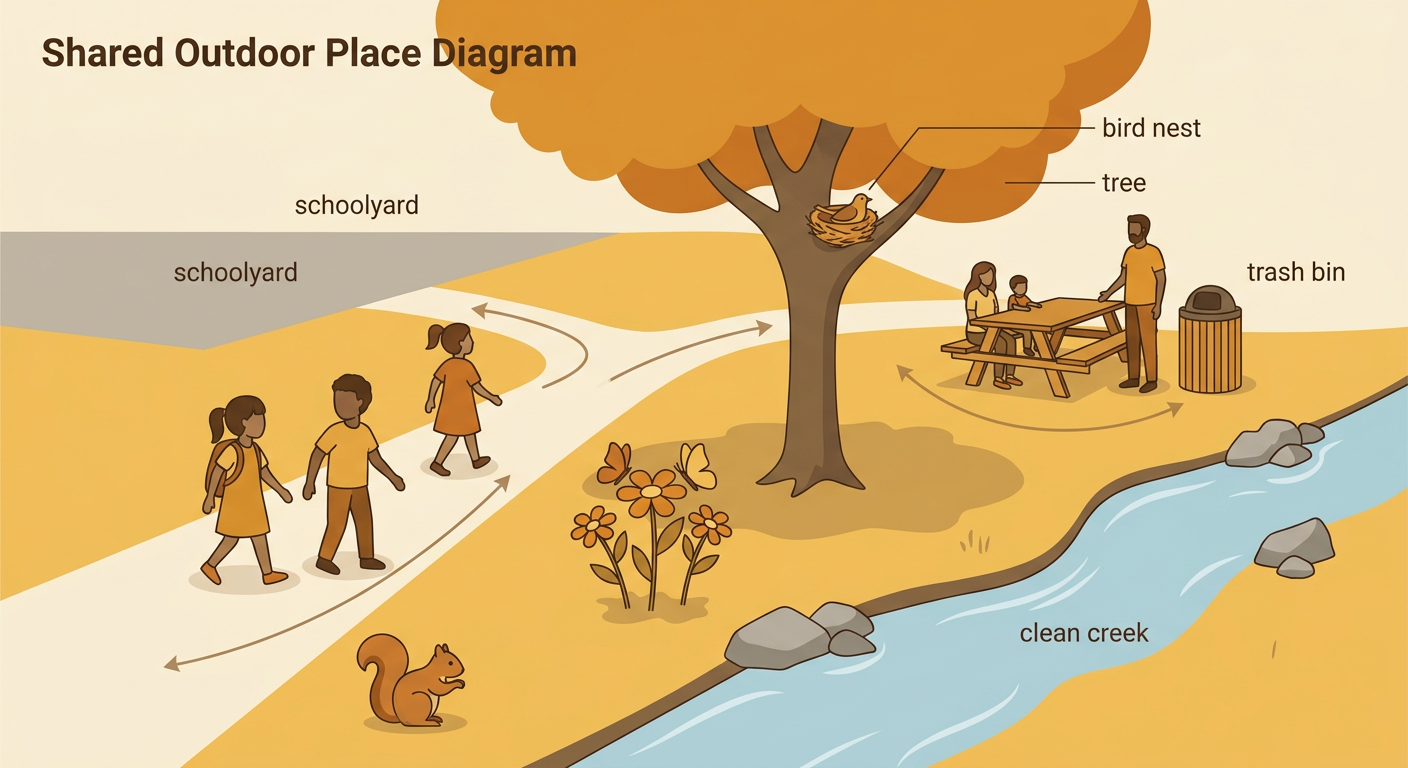
Our Shared Outdoor Places
A shared outdoor place is a place many people, plants, and animals use. It may be a schoolyard, park, sidewalk, garden, creek bank, or neighborhood field. People use these places to play, walk, rest, and meet neighbors. Birds may build nests there, insects may visit flowers, and trees may give shade. What people do can change the place. For example, when a family puts picnic trash in a bin, the grass stays cleaner, and animals are less likely to eat harmful litter. When we visit, we can look carefully and ask, “Who uses this place?” Talk with a partner. Take turns naming one person, plant, or animal that may need the place. Listening to one another helps us understand that outdoor places belong to a whole community.
Helpful and Harmful Actions
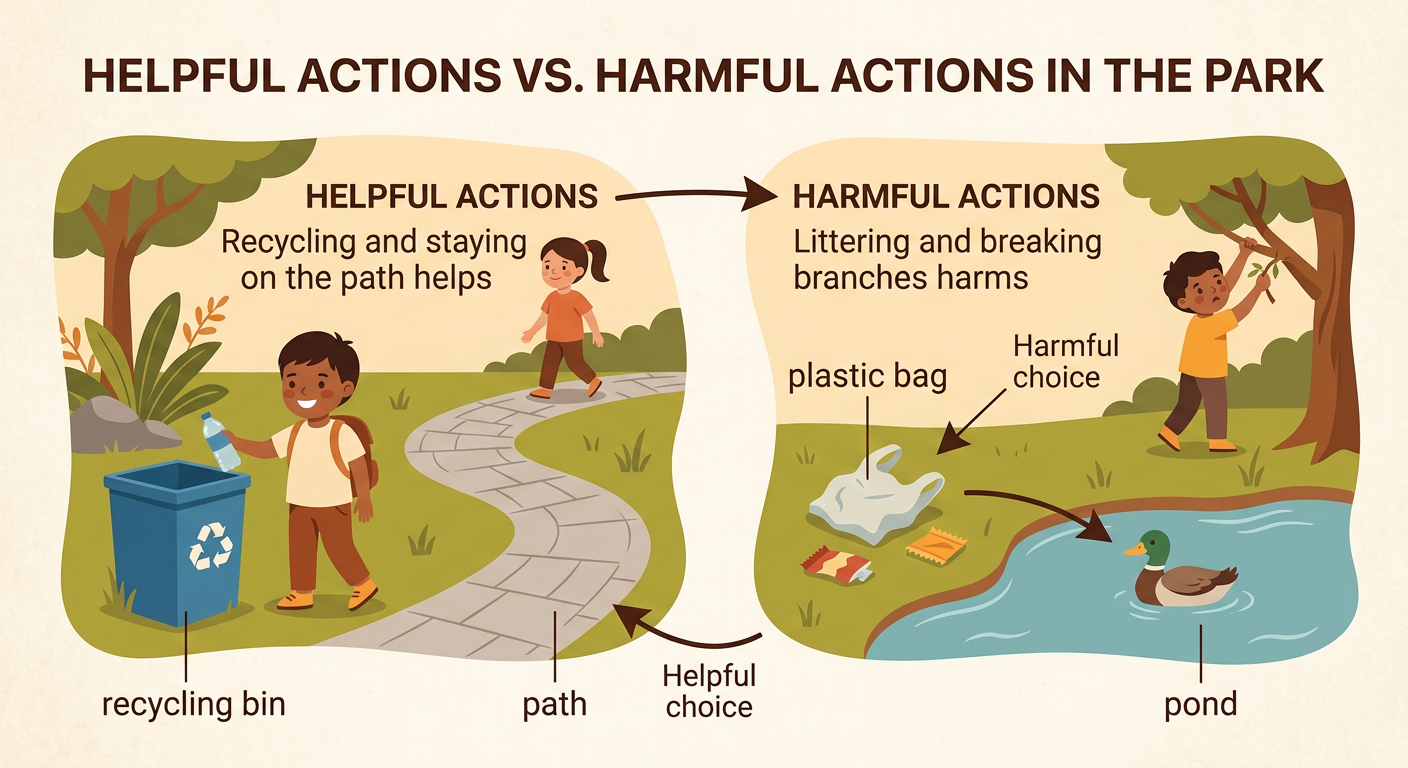
People can help or harm outdoor places through their actions. Helpful actions include using a trash bin, recycling when a recycling bin is available, staying on a path, saving water, and leaving plants and animals where they belong. Harmful actions include dropping litter, pouring dirty liquid into water, breaking branches, wasting water, or chasing wildlife. These actions can change the land, water, air, and homes of living things. For example, a plastic bag left on the ground may blow into a pond. A duck or fish could be harmed by it. Putting the bag in the correct bin keeps it away from animals and water. With a partner, describe one helpful action and one harmful action. Listen, then explain how each action changes the place.
Notice the Problem
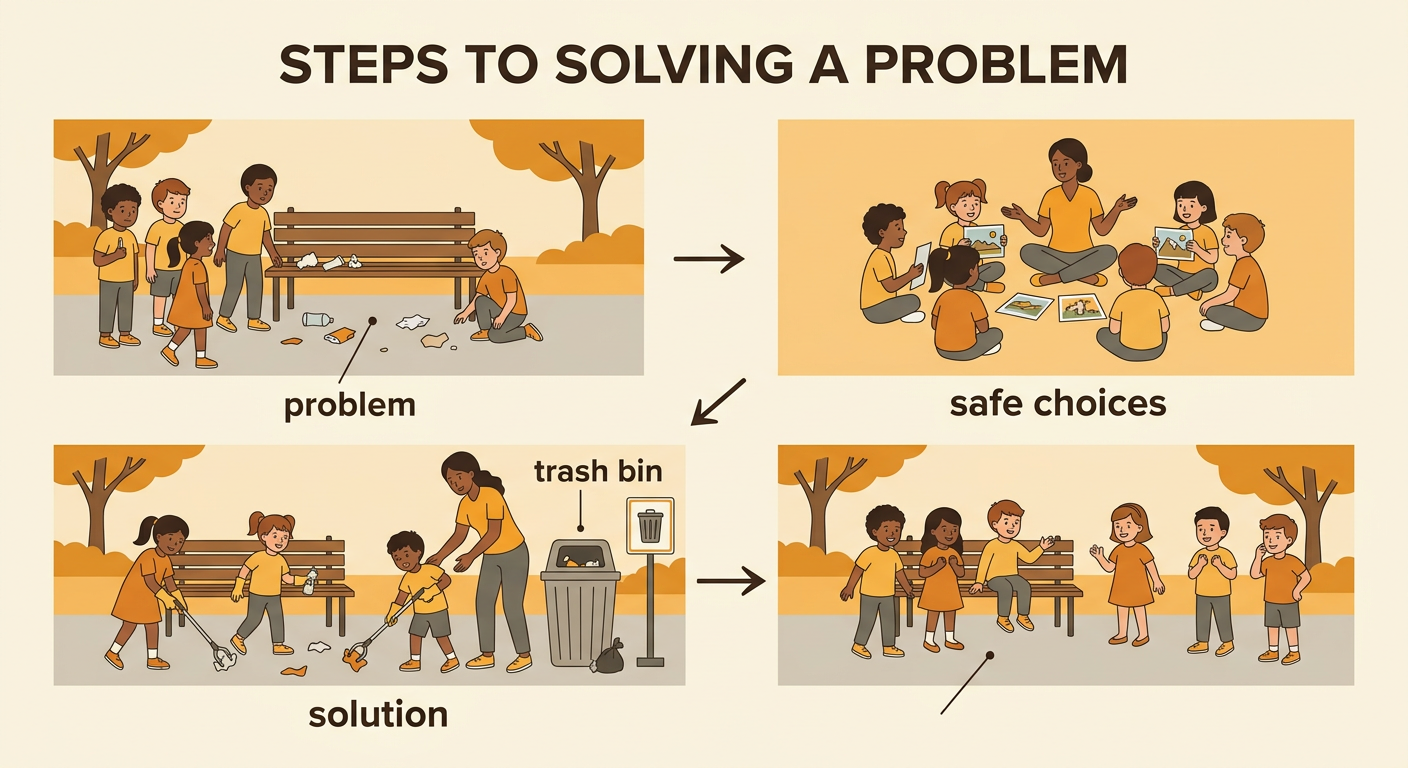
Before we solve a problem, we need to notice it. Use your eyes, ears, and nose to observe without disturbing plants or animals. Look for litter, damaged plants, muddy water, dripping faucets, or places where soil has been stepped on too much. Listen for ideas from classmates because they may notice something different. For example, imagine seeing paper cups beside a storm drain in the schoolyard. Rain could carry the cups or smaller pieces toward the drain and away from the yard. You can describe the problem by saying, “There is litter near the storm drain.” Do not pick up sharp, broken, dirty, or unknown objects. Tell a trusted adult instead. Careful observation helps the group understand what is happening and what needs protection.

Choose a Solution
A solution is an action that helps fix or reduce a problem. First, name the problem. Next, think of safe choices. Then, talk as a group and choose an action that matches the problem. If litter is scattered near a park bench, children can ask an adult to organize a cleanup with gloves and safe tools. The group might also place a clear reminder near an existing trash bin, with permission. If a faucet is dripping, tell an adult who can turn it off or arrange a repair. A good solution protects people and other living things without causing a new problem. Take turns sharing ideas. Ask, “Will this help the land, water, air, plants, or animals?” After trying the solution, look again to see whether the place improved.
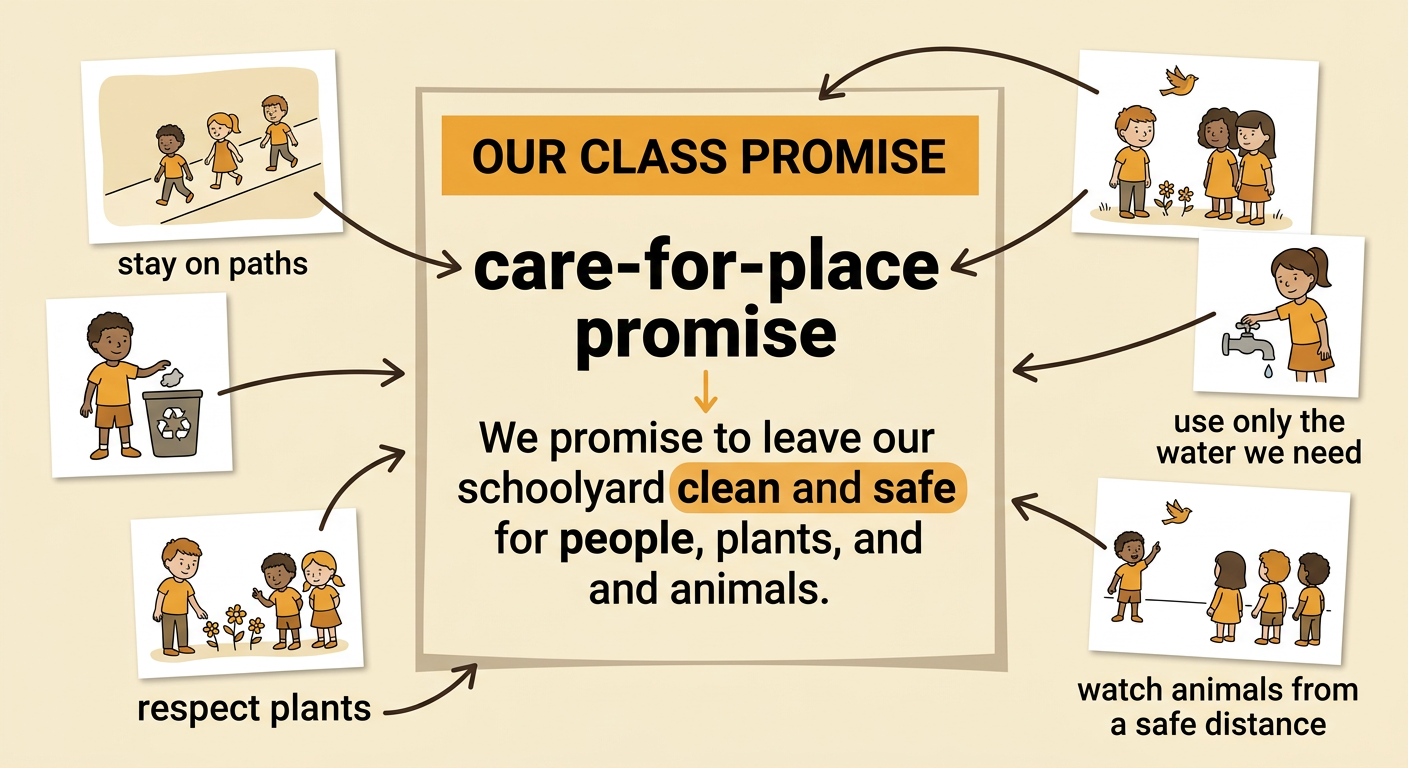
Our Care-for-Place Promise
A promise tells what we plan to do. Our class can make a care-for-place promise for the schoolyard, park, or neighborhood. Each person can suggest one simple action, such as putting trash in a bin, using only the water needed, staying on paths, respecting plants, or watching animals from a safe distance. Take turns speaking and listen while classmates share. Then choose words everyone can understand. For example, the class might say, “We promise to leave our schoolyard clean and safe for people, plants, and animals.” Draw or write one action you will take. The class can display the promise and practice it during outdoor time. Later, talk about what changed. Many small, repeated actions can keep a shared place healthy, welcoming, and enjoyable for the whole community.