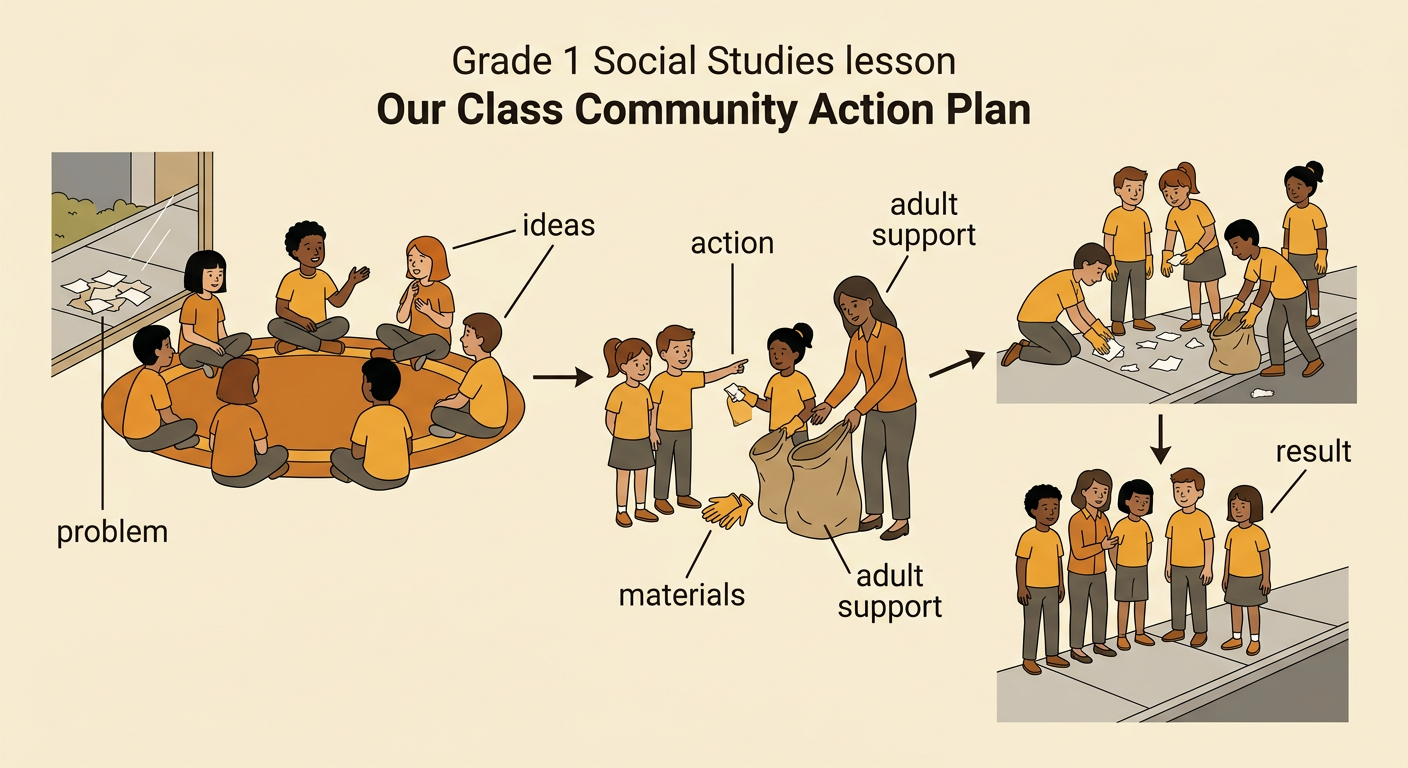
Caring for Our Shared Community Spaces
Students explore how people can help protect shared places such as parks, playgrounds, sidewalks, and waterways through responsible community actions.
Illustrations are auto-generated and may be placeholders. They can be refreshed to match the narration.
What Is a Shared Community Space?
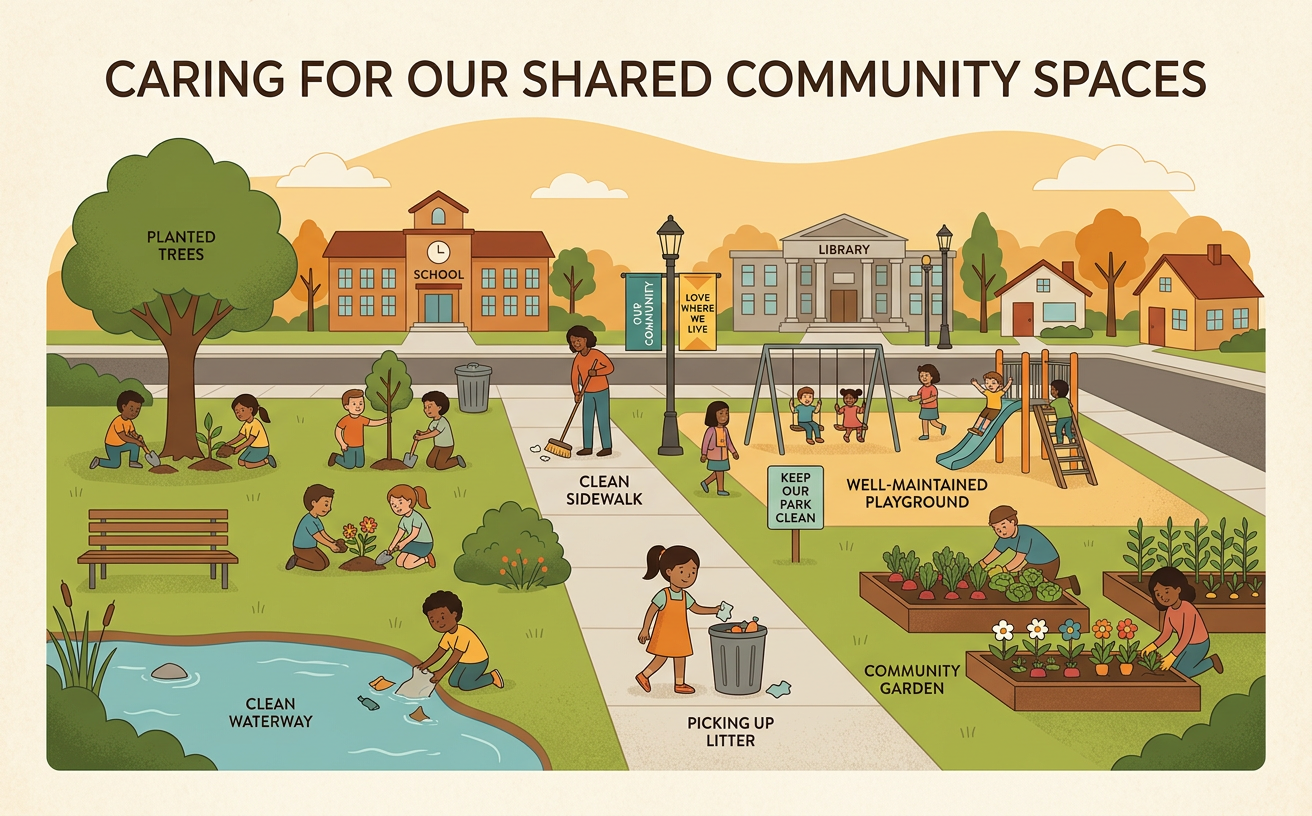
A shared community space is a place that many people use. Parks, playgrounds, sidewalks, libraries, and waterways can be shared spaces. No one person uses these places alone. Children may play at a park, families may walk on a sidewalk, and ducks may live in a pond. Everyone can help care for these places. Caring means using things safely, keeping areas clean, and respecting people, plants, and animals. For example, Maya has a snack at the playground. She puts her empty wrapper in a trash can instead of leaving it on the ground. Her choice helps keep the playground clean and safe for the next person. When people care for a shared space, the whole community benefits.
Spot the Community Problem
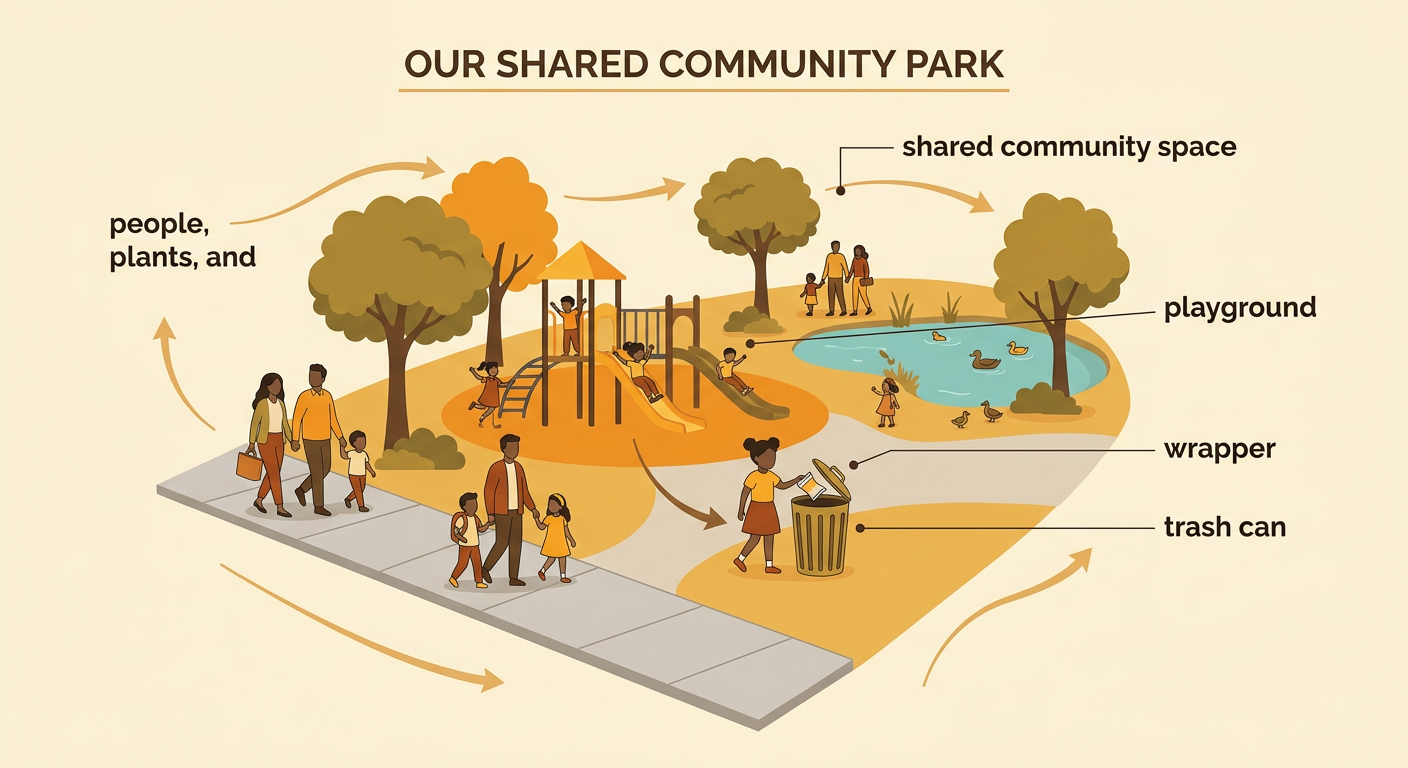
A community problem is something that makes a shared place less clean, safe, or healthy. We can use our eyes and ears to notice problems. We might see litter beside a bench, a broken swing, or water running from a leaking fountain. We might hear that neighbors need help keeping a sidewalk clear. Look carefully, but do not touch sharp, dirty, or unknown objects. Tell a trusted adult about anything unsafe. For example, Luis sees plastic cups near a park pond. The cups could blow into the water and harm animals. He tells his teacher and describes where he saw them. Spotting a problem is an important first step. People must understand a problem before they choose a helpful action.
How Our Choices Affect a Place
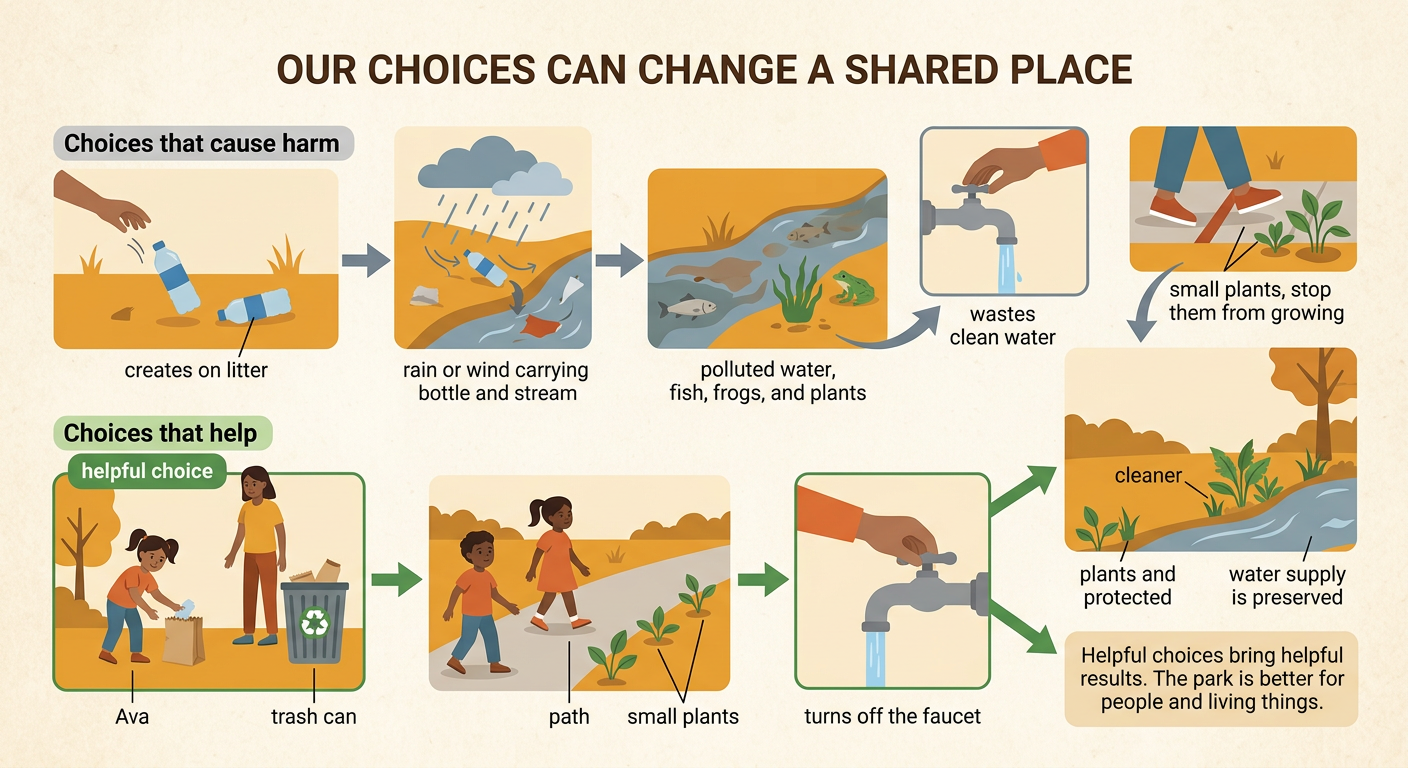
Our choices can change shared places. Some choices help, and other choices can cause harm. Dropping a bottle on the ground adds litter. Wind or rain may carry the bottle into a stream. Dirty water can hurt fish, frogs, and plants. Leaving a park faucet running wastes clean water. Picking flowers or stepping on young plants can keep them from growing. Helpful choices have different results. Using a trash can keeps litter off the land and out of water. Walking on a path protects small plants. Turning off a faucet saves water. For example, Ava sees a paper bag on the ground. With an adult’s help, she safely places it in a trash can. One small action makes the area cleaner for people and living things.
Ways People Can Help
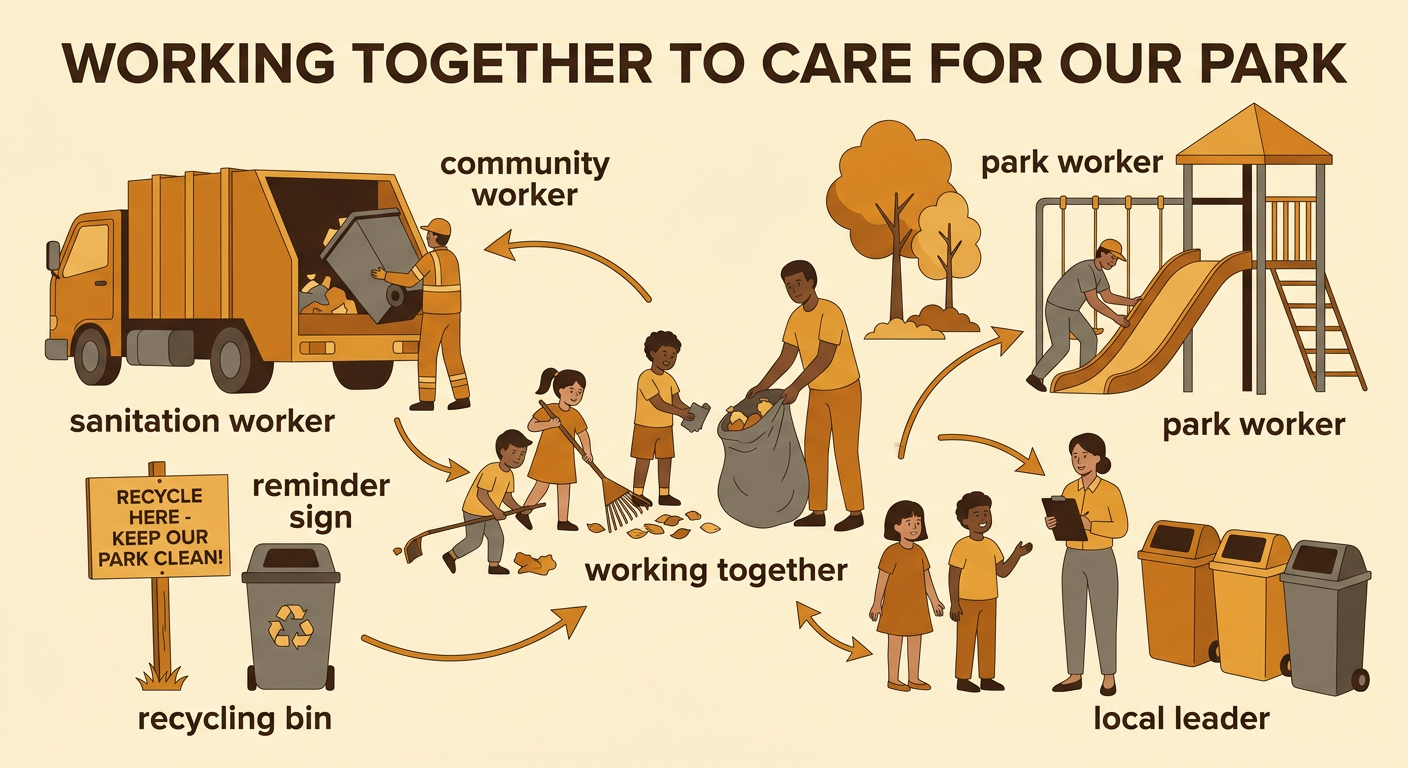
People can work together to care for community spaces. They can put trash and recycling in the correct bins, use less water, stay on paths, and leave plants and animals alone. Families can join a cleanup led by adults. Children can make reminder signs or ask others to help. Community workers also take action. Park workers repair playground equipment, sanitation workers collect trash, and local leaders may add recycling bins. For example, a class notices many empty bottles near a playground. Students talk with their teacher and share ideas. With permission, they make a sign that says, “Use the recycling bin.” Adults place the sign near the correct bin. Working together makes a bigger difference because each person can do one helpful part.
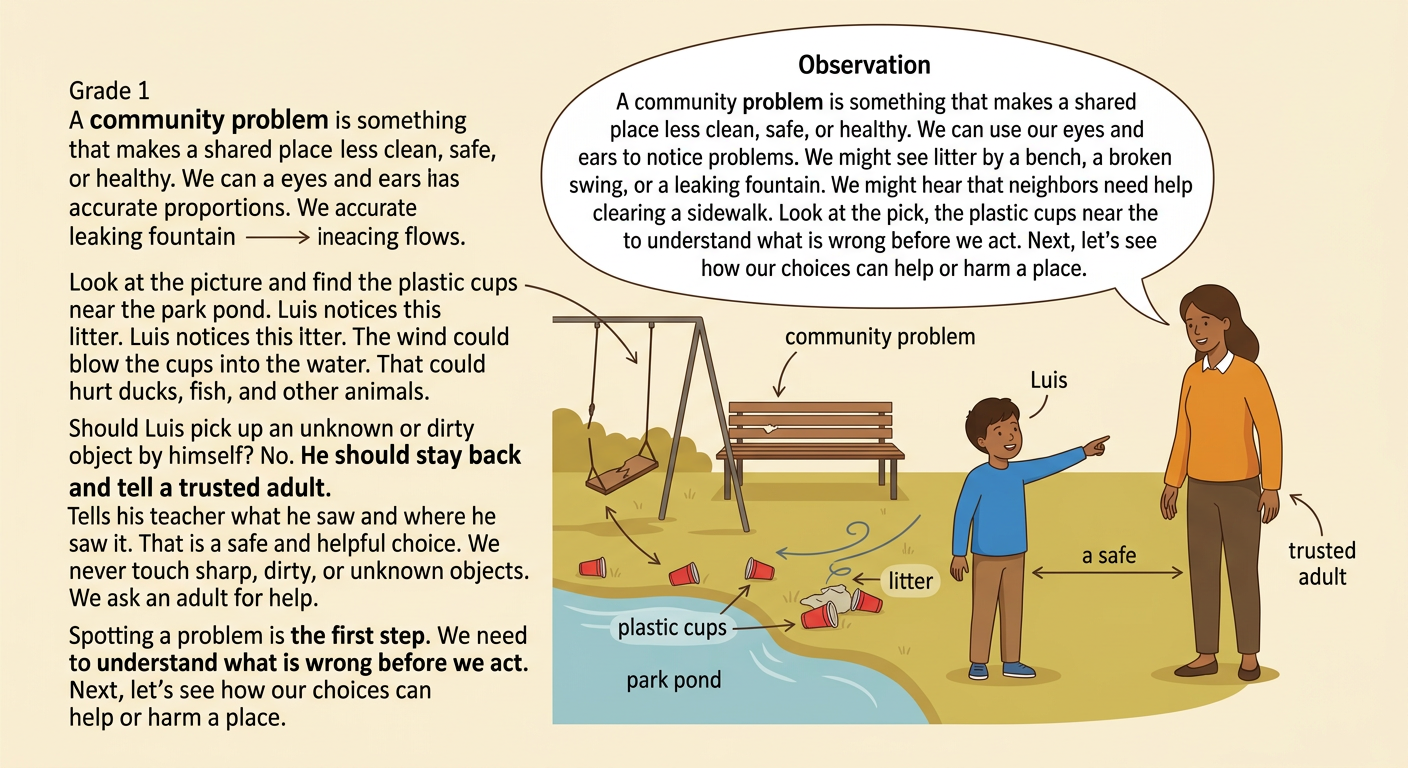
Choose a Community Care Action
You can help choose an action for a community problem. First, name the problem. Next, listen as classmates share ideas. Take turns speaking, ask questions, and build on one another’s ideas. Then choose an action that is safe, useful, and possible for children to do with adult support. Make a simple plan: say what you will do, what materials you need, and who will help. For example, your class may notice paper litter near the school sidewalk. The class could plan an adult-led cleanup, make signs about using trash cans, or ask for another bin. After taking action, look at the space again. Is there less litter? Share what worked and what could improve. Even a small, well-planned action can help the community.